A KPI for the Leaders of the Future: Return On Flourishing (ROFL)

First, I have to admit it feels really good to think something (or at least: say it “in the digital public”) for the very first time. At least with regard to Google hits, I´ve created a new expression:
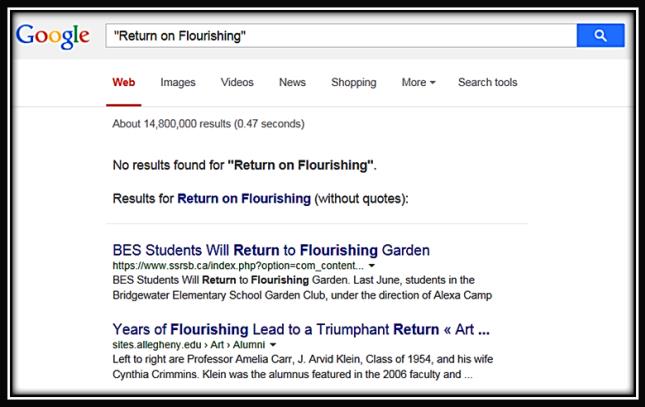
Return on Flourishing - Dr. Nico Rose

Return On Flourishing (ROFL – pun somewhat intended)

In my main occupation, I work as a human resources director. In most business organizations, Key Performance Indicators (KPIs) are of paramount importance. One of the most important KPIs in every organization is Return on Investment (ROI). In its simplest form, ROI is the return of some activity divided by the cost of that same activity. For instance, if a marketing campaign costs $10,000 and (identifiably) leads to $20,000 in additional sales in a certain period of time, the ROI of that project is 200%.

To this effect, it would also be possible to calculate a Return on Flourishing – which I propose to be the additional (financial) return that is generated by investing in measures designed to foster flourishing of the company´s workforce; minus the cost of those measures. By now, there´s an abundant body of research that is able to demonstrate that companies which invest in employee wellbeing do indeed fare better economically – which may ultimately even be detectable in stock prices (please check out the following paper: Does the stock market fully value intangibles? Employee satisfaction and equity prices).

By way of example, employee well-being could lead to a better quality of products or services; or a more engaged salesforce, leading to better sales figures. On the other hand, higher levels of flourishing may lead to cost reductions, e.g., by decreasing levels of absenteeism and healthcare costs; or lower levels of employee turnover which in turn helps to minimize recruiting costs. Therefore, it is reasonable to expect that investing in employee flourishing will lead to an increase in financial returns. In order to make this effect visible and clearly identifiable from the inside perspective, first, we would have to establish a baseline of overall flourishing in the workforce. Based on Seligman´s PERMA framework, we could rather easily measure the following:

Alternatively, there are existing “one-stop” questionnaires to measure flourishing, e.g., the PERMA Profiler (please check out my MAPP Capstone thesis for its items; this could be adapted so as to better fit to a working context).

Second, one or more activities to foster workforce flourishing would have to be implemented. For instance, there could be company-wide workshops on job crafting. Or rather, first we would have to implement that project with a part of the workforce (treatment group; e.g., a product line) in order to later compare those employees with another group that will receive the workshops at another point in time (control group; another product line). If, after implementation, the treatment group shows significantly higher levels of flourishing compared to the control group (manipulation check), we could move on to the final step.

Ultimately, the financial success of the different business units would have to be calculated for several ensuing periods. If the treatment group fares significantly better than the control group (e.g., a significant increase in sales), this difference could be attributed to the increase in employee flourishing. Of course, it is always tricky to make this kind of causal inference, but there are lots of steps one can take to rule out or control for other effects. Now, if the increase in financial returns surpasses the cost of the measures to increase flourishing (over time), we would assume a positive Return on Flourishing (ROFL).

Return on Flourishing (ROFL): the wider Perspective

Of course, this is still a rather limited point of view. Studies were able to show that an increase in well-being at work leads to higher levels of general well-being. To that effect, we can assume there could a be a wider ROFL – where higher employee well-being leads to an increased level of well-being with regard to the company´s community and stakeholder groups via a kind of ripple effect.

What are your thoughts on this?

Psychology is still ruled by the Disease Model. But Positivity and Strength-Orientation are gaining Ground

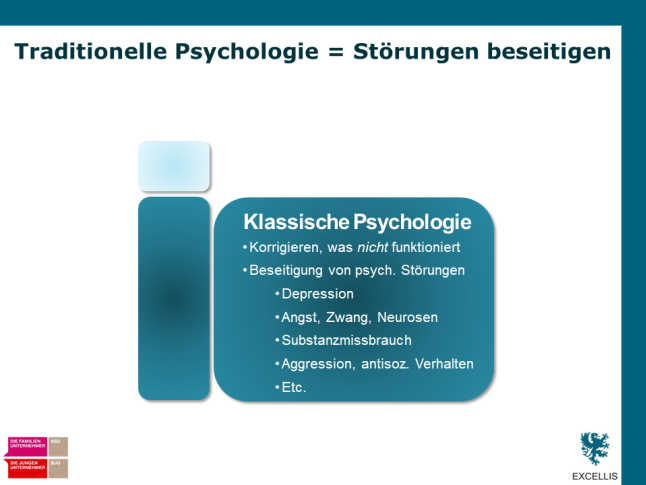
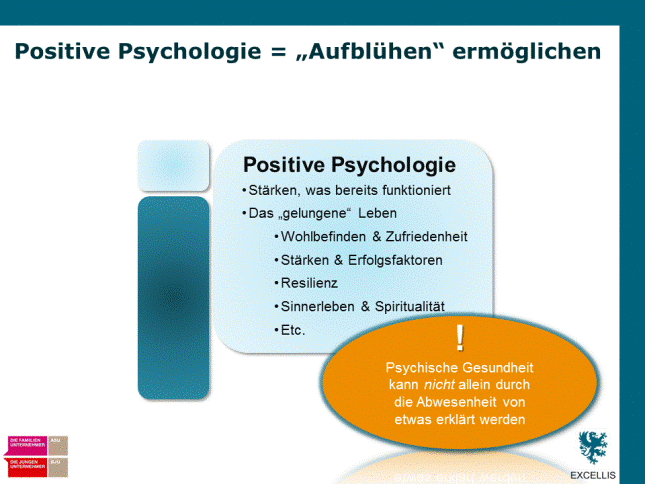
When I talk about Positive Psychology in Germany, I also talk about the necessity for this rather recent branch of research and practice (see the slides below), referring to the fact that most psychological research is centered around a disease model, thereby concentrating on mental illness, its antecedents, and cures – just as Martin Seligman and Mihály Csíkszentmihályi propose in their seminal article Positive Psychology: an Introduction.

Today, I wanted to check if this is really true – and if the onset of Positive Psychology at this millennium has does anything to change that conjectured imbalance. Therefore, I went to Google Scholar and searched for articles which titles` contain either the words depression, anxiety, happiness, or life satisfaction. For a first round, I limited the search to articles that were published between 1900 and 1999. For a second round, I counted all the articles that have been published afterwards. Here´s what I´ve found:

Depression Happiness Graph

A first stunning finding* is the fact that, in the last 15 years, more papers were published than in the previous 100, no matter on what subject. Whether that is a desirable development with regard to quality and impact remains to be seen.

But more importantly, the imbalance between research focusing on desirable vs. undesirable states is clearly visible in the chart. In the 20th century, papers focusing on depression outnumber those focusing on happiness by a factor of 13. For anxiety and life satisfaction, it´s factor 10.9.

Now what has changed over the last 15 years? The answer is: Positive Psychology has made quite an impact: an increasing publication rate in this branch of psychology results in a (at least slightly) more balanced ratio. Depression outnumbers happiness by “only” 5.7, anxiety outnumbers life satisfaction by “only” 5.8.

I´ve put the world “only” in parentheses since that still is very far away from a sort of equilibrium. But progress has been achieved. And there will be more…

Traditional Psychology  Positive Psychology - Dr. Nico Rose


* Of course, the overall number of publications is much higher. But I suppose that counting papers containing a specific word in the title is a pretty decent proxy for the general writing activity in a sub-branch of research.

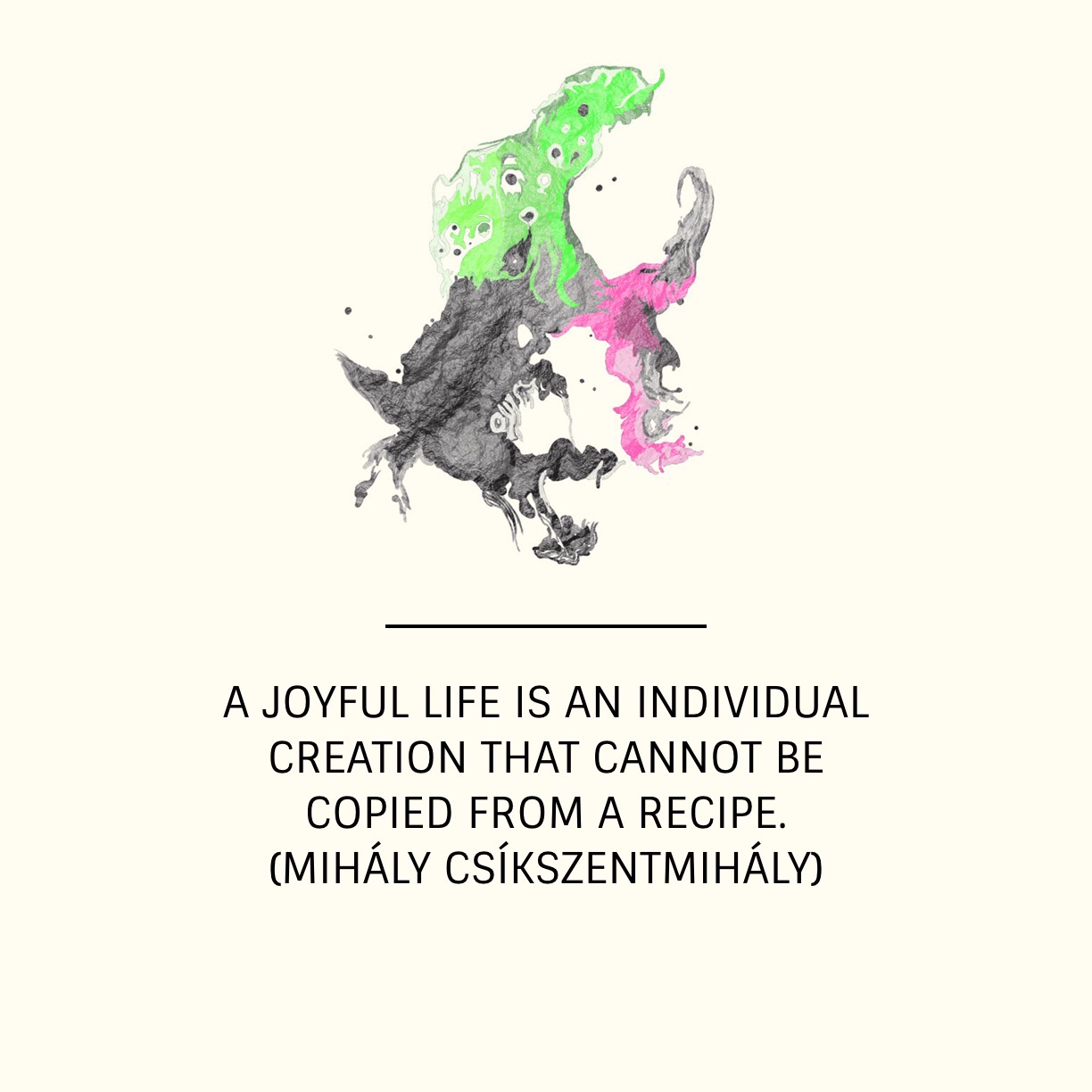
A joyful Life is an individual Creation that cannot be copied from a Recipe.

This powerful quote by Mihaly Csikszentmihalyi reminds us that we should approach conventional self-help “wisdom” (but also Positive Psychology interventions) with a certain amount of caution.

There will always be gurus who claim to know the way, and Facebook/Twitter are full of posts such as “These are the 7 things successful/rich/happy people do before breakfast”. These people greatly underestimate human individuality – and the power of context and timing.

Positive Psychology researchers also suggests doing certain things (such as being grateful frequently) but, in general, are very cautious when making claims about efficacy. Additionally, there’s a growing body of research investigating so-called fit models, showing that people may profit greatly from some Positive Psychology interventions, but may not do so with regard to other exercises, e.g., due to individual preferences. If you would like to find out more, I suggest checking out this research article: To each his own well-being boosting intervention: using preference to guide selection.

A new fantastic Resource: thepositivepsychologypeople.com

Positive Psychology PeopleFor all of you that just cannot get enough of first-class Positive Psychology content – here’s something brand new for you:

http://thepositivepsychologypeople.com

The site was launched yesterday (UN´s International Happiness Day). All content will be supplied by a truly international team of outstanding researchers and practitioners, among them Lesley Lyle, Sandip Roy (who is a part of Happiness India Project), and Seph Fontane Pennock (who also runs PositivePsychologyProgram).

I wish you best of luck and millions of studious readers!

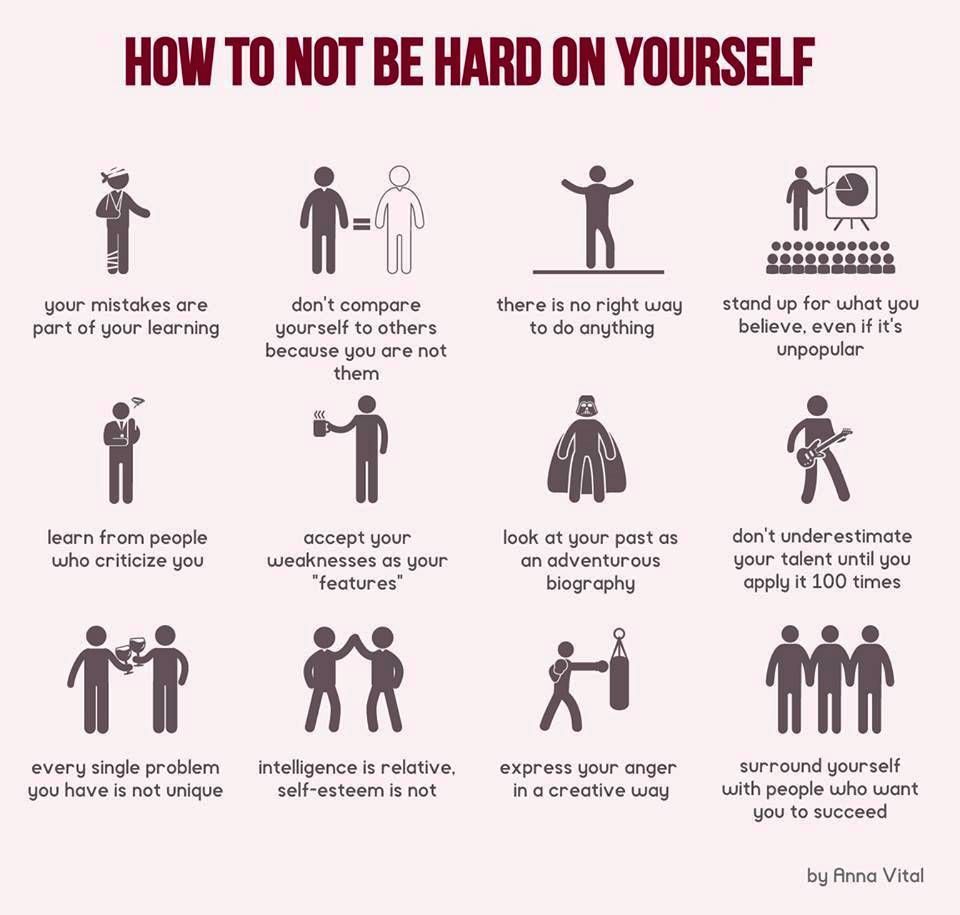
Great Infographic on Self-Compassion: How not to be Hard on Yourself

For UN´s International Happiness Day, I´d like to share with you this great infographic created by information designer Anna Vital. It´s a wonderful piece of advise on the art (and science) of self-compassion. Additionally, you might want to watch Kristin Neff´s TEDx talk on the same topic that you can find in my Positive Psychology TED suggestions. Enjoy!

Self-Compassion - Anna Vital


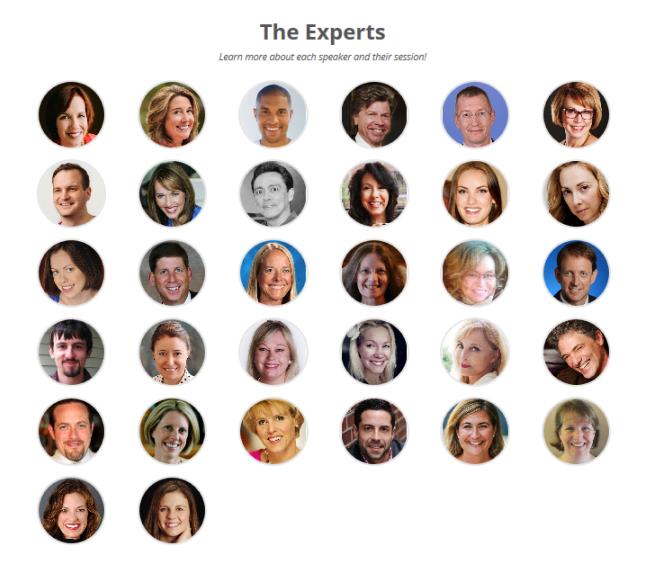
March 20 is International Happiness Day! Join our virtual Conference feat. +30 Positive Psychology Experts

International_Happiness_Day_2015Ever since 2012, March 20 is UN´s International Happiness Day. All around the world, people will celebrate and host events to educate their fellow human beings on all things happiness, well-being, and flourishing.

And I´m in as well – as part of a Virtual Happiness Conference. 32 fellow Penn Mappsters were interviewed on their favorite Positive Psychology subject, among them a lot of people you might already know because they were featured on Mappalicious in one way or the other, e.g. Emilia “Queen of Sisu” Lahti. All in all, there´s more than 24 hours of video material available.

All content will be online for free until March 26. After that, you can purchase the videos. Every cent will go to the Christopher Peterson Memorial Fellowship which helps future students to afford attending Penn´s MAPP program.

As for my part: I was interviewed by the fabulous Lisa Sansom on the role of Positive Psychology in coaching, the subject of Self-Permission, and the “German way” of Positive Psychology. This is the link to the conference site.

Enjoy – and please share to good news!

International Happiness Day Experts

Do you need an Aristotelian Friend in your Life?

A couple of days ago, I wrote a post highlighting a quote by Greek philosopher Epictetus:

The key is to keep company only with people who uplift you, whose presence calls forth your best.

This reminded me of a concept we discussed (and also used) in the MAPP classes at Penn. Aristotelian Friendship. While the concept of Platonic Friendship/Love (a non-sexual relationship that is pursued because the other person inspires the mind and the soul) has entered everyday speech, Aristotelian Friendship seems more uncommon.

Plato_AristotleThe ancient Greeks knew four kinds of love: Eros (sexual desire), Storge (parental/familial love), Agape (divine love, also: charity/compassion), and Philia. Now Philia is closest to our modern understanding of friendship. Aristotle described three kinds of Philia: friendships of utility, friendships of pleasure and friendships of the good.

Friendships of utility are of a shallow kind; today, I guess we would call that networking – it´s more about being acquainted (and potentially useful reciprocally) in the future. Friendships of pleasure take place on a deeper level. Nowadays, we would speak of drinking buddies, or people who share a passion with regard to the same hobby.

Now, the deepest kind of Philia is a friendship for the good. This means that two people enjoy each other´s company because of a mutual admiration for each other´s characters and personalities. And it can also mean not only admiring, but caring about and strengthening the other person´s character and well-being. Therefore, an Aristotelian friend (for the good) will:

  • listen actively when you have to share something good and advise you on how to get more of that into your life;
  • give you frequent feedback on your strengths and “what´s right with you”;
  • but is also honest with you pertaining to your weak spots. Today, we would say: that friend does not let you get away with your sh.t.

Do you have someone like that in your life? Good for you. And if you don´t? Go and find somebody. Now!

Beautiful Short Film on the Ripple Effect of Kindness and Gratitude

We all know the warm feeling of gratitude in our hearts when we’ve been the beneficiary of an act of kindness. And the really good thing is: in return, we typically want to be kind(er) to others, too. E.g., a recent study by the name of The Social Contagion of Generosity finds that receiving help from strangers prompts us to be kind to other strangers, thereby creating a ripple effect of gratitude and kindness.

This mechanism is beautifully depicted in the following short film from Turkey. Enjoy!

There´s a Negativity Bias in your News. But not, if you follow these People on Twitter

A couple of weeks ago, I pusblished a list of 77 Positive Psychology People and Institutions to follow on Twitter which has grown by now to more than 90 accounts and was also picked by the friendly folks at Fulfillment Daily.

Today, I thought it would be a good idea to check my blog stats to see who profited the most from this. All in all, the post resulted in +4,500 klicks on people´s Twitter accounts. Here´s the Top-10 (excluding the Twitter list I created to follow all of those people):

Positive Psychologists on Twitter

So congratulations to Robert Biswas-Diener, Sonja Lyubomirsky, Paul Bloom, Dan Gilbert, Amy Cuddy, Robert Emmons, David Cooperrider, Jane Dutton, Emilia “Queen of Sisu” Lahti, and Jon Haidt. I hope those clicks converted to a lot of new followers for you!