A Mappalicious Thank You to 2015

Every time a year draws to a close, people start saying something like “My, how time flies…”. Mostly, it is used in a slightly sniveling fashion – as if they might have missed something. I guess that´s why they show all those year-end retrospectives on TV. But then, they invite all these VIP and VEP (Very Exceptional People) – and at the end of the day, one´s own life might seem insignificant in comparison.

So in 2013, I´ve started to create my own personal year-end retrospectives to keep track of what really happened in the last 365 days. Ever since, I understand quite well where time went.

One year consists of 8760 hours!

Big Chunks

I´ve…

  • slept +2,400 hours (again, less than intended);
  • worked some 1,850 hours in my main job for Bertelsmann (weekends and holidays etc. are subtracted already);
  • travelled +110.000 km, visiting New York (several times), Boston, Philadelphia, and the San Francisco area, Barcelona, Madrid, Paris, the South of France, and Lanzarote.

Speaking my Mind

I´ve…

Anything else (interviews, citations etc. can be found here on Pinterest.

Working with People

I…

  • gave 25 speeches/keynotes. On that note, I have to say I was scared for the first time in a very long while before giving a talk. I gave a dinner speech on Positive Psychology for 50 CFOs at a conference. Me, being a non-finance guy, talking about a “fluffy” psychology topic, for these high-profile business leaders. But it worked out quite well;
  • coached about 40 hours.

 Personal Stuff

  • bought a house and moved in in March;
  • said “I love you” +365 times (not every day, but several times on some of the days);
  • cuddled with my son approx. 300,000 times;
  • read some 95 good-night stories (definitely not enough, please refer to kilometers travelled);
  • had approx. 700 cappuccinos and 4.5 kg Chicken Tikka;
  • been to 5 heavy metal concerts (not enough).

 It´s been a good year…

Odysseus, Luke Skywalker, and the Quick Fix

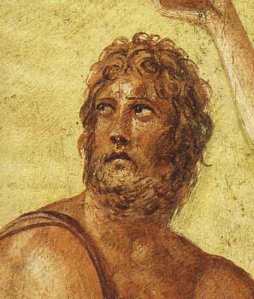
OdysseusAfter the end of the Trojan War, Odysseus could not find the way home for a minute or so. But then, a magic compass fell from the sky which brought him back to Ithaca in no time and without any trouble.

The end.

This is how Homer´s legendary Odyssey would have to be written in our time. Pity! One of the truly great pieces of literature goes down the drain.

The Hero’s Journey as a short trip?

The Odyssey is the prototype of a Hero’s Journey, a distinctive narrative structure in which a hero, reluctantly at first, embarks on a long and perilous journey, is confronted with trials and tribulations on the way, only to succeed in the end, oftentimes after being severely wounded. During that journey, he meets one or several (supernatural) mentors and discovers a (magic) elixir which helps him to fight his enemies. After winning the battle against the final enemy, he returns to the world from which he came. He has gained power and knowledge, and even wisdom – and is typically granted a long and prosperous life.

These kinds of stories exist in every corner of the world, and all cultures. Another important example is the Indian national epic Ramayana. But even today, many successful books and movies are based on this storyline. For example, Lord of the Rings, Harry Potter, and the original Star Wars-Trilogy are archetypal Hero’s Journeys.

There´s one distinctive feature that all these stories have in common: They tell the story of an inward journey, the protagonist´s way to find himself. The ultimate goal is purification of the hero´s character, it´s about the process of growing up and maturing. Yet, for the purpose of vividness, in literature and film, all places and characters are depicted as being part of the external word. But the story is not all about defeating exterior enemies. The whole voyage is a rite of passage, the ultimate objective is to accept the tasks and responsibities for which one is destined for.

The process of maturation happens by means of all kinds of trials and conflicts: Odysseus has to come to terms with prototypical human frailties such as being unable to resist temptation. Frodo´s task is to rid himself of greed and to recognize his own power and self-efficacy. Luke Skywalker has to learn how to transform the undesirable parts of his personality, those that he shares (to some extent) with his “Dark Father” (arrogance, anger, violence etc.). Generally speaking, the task of the hero is to learn how to integrate his shadow, as C. G. Jung, the founder of Analytical Psychology, has named it.

We have (no) time

The point is: apart from the narrative structure, all these stories share the following aspect: The travelling lasts for several months, often years. Odysseus was lost at sea for a decade after the Trojan War. Frodo and Luke (assumedly) travelled for months and years before reaching Mordor and Endor. Why? Because maturation, growing up, finding ourselves: it just takes a lot of time.

Against this background, I am critical of most modern varieties of “personality development” (in the broad sense). These days, everything is to happen super-quickly. Faster and higher is the motto, but – at best – without any effort:

  • A man has low self-esteem? A couple of positive affirmations will do.
  • A woman wants to generate a stable income by becoming self-employed? She can just “order” her customers directly from the universe via visualization.
  • A boy cannot concentrate properly at school? Just give him some Ritalin.

Brave new world. Let us return to my version of the Odyssey:

After the end of the Trojan War, Odysseus could not find the way home for a minute or so. But then, a magic compass fell from the sky which brought him back to Ithaca in not time and without any trouble.

Nobody would desire to read a book or watch a movie based on this plot. We´d say: “The story was dull and lifeless, and totally implausible. Oh, and the protagonist was flat and faceless, I could not relate to him.”

But in real life, it´s supposed work this way?

Will you help me to reach 100.000 Positive Psychology page views for 2015?

Mappalicious 100.000OK, so I know this a kind of cheesy request, but here I go anyway… 🙂

I´m putting a lot of time and effort in this blog, bringing together valuable information, inspirational things, and sometimes fun stuff on Positive Psychology and related topics. I´m doing this for free – and to be honest: for fun, because I just love writing. I´m not selling anything and I even pay 80$ (or so…) a year to WordPress so Mappalicious stays free of ads.

Nevertheless, I do have goals: I try to broaden the audience of Mappalicious year by year, because I want as many people as possible to learn about research and practice in the field of Positive Psychology. At the beginning of this year, I set a goal of reaching 80.000 page views for 2015 (after managing close to 60.000 in 2014). Due to some exceptional outreach in early summer, I extended that goal to 100.000 page views – but in the fall, I was too busy working in my main job, so I couldn’t write as much as I would have liked to do. Therefore, the audience dropped for some months. Still, right now the count is at 90.400.

In really, really good months I have +10.000 page views. So, if December will be a really, really good month for Mappalicious, I will be able to reach the goal I´ve set for myself in summer. And this is where you come in to play: Only you, my cherished readers, can help me to turn December into a really, really good month for my blog. So here´s my plea:

If you have found something useful/joyful on Mappalicious in 2015, I kindly ask you to share this (again) with your friends on Facebook, Twitter etc. pp.

To make life a little easier for you, here you´ll find a list of the 10 most-read articles on Mappalicious for 2015. But of course, you can share anything that you particularly liked.

  1. Positive Psychology People and Institutions to follow on Twitter
  2. Positive Psychology Articles – a topical Collection
  3. 5 essential brand-new & upcoming Books on Positive Psychology
  4. 7 wonderful TED Talks related to Positive Psychology (Self-Motivation, Body Language, Positive Stress… and more)
  5. Do you know “Action for Happiness”? Well, you should!
  6. 7 Methods to find almost any (Positive Psychology) Research Paper on the Internet
  7. 22 Positive Psychology-infused Articles every (HR) Leader should know
  8. Positive Psychology Constructs
  9. Study: Some Languages are Happier than others. Hint: German didn´t make No. 1
  10. Positive Psychology – a topical Collection of 45 TED Talks

Thanks a lot in advance!

Do you want to become a UPenn Master of Applied Positive Psychology (MAPP)? This way, please…

Right now, the 11. cohort of Penn´s MAPP program is well on its way. I was in cohort No. 9 (here you can find a summary of my experiences over the two semesters in 2013/14). Our alumni association asked us to pass on this information to potential students:

1) There will be a live information session in Penn´s Huntsman Hall on November 5. For more info and registration:

https://www.applyweb.com/fixie/form/s/T8413mk

2) There will be a virtual information session on December 3. For more info and registration:

https://www.applyweb.com/fixie/form/s/T8513ml

3) You can now apply! Deadline is March 1, 2016. Info on the application requirements can be found here:

http://www.sas.upenn.edu/lps/graduate/mapp/admissions/application

Nico Rose - Penn Commencement

Please like my new Facebook Page

Dear Mappalicious Visitor!

In the past, I ran a Mappalicious Facebook page where I basically re-posted all the articles that I’ve published on this blog.

Recently, I’ve decided to abandon this site. The reason is that I also publish regularly on other outlets, sometimes on topics that are not directly related to Positive Psychology.

In order to have “everything in one place” in the future, I’ve created a new Facebook page that is directly associated with my name: Dr. Nico Rose on Facebook Therefore, if would like to be notified about new Positive Psychology content via Facebook regularly, I kindly ask you to “like” this new page.

You can find it here.

Thank you!

Dr. Nico Rose

A mappalicious THANK YOU to all my Readers worldwide

Mappalicious PageviewsToday, I´d just like to say THANK YOU! to all those people who have visited Mappalicious in the past (and hopefully, will continue to do so…). Why?

Because yesterday has been the most successful day ever for my little blog project, and also August 2015 has been the month with the most visitors and page views – by far. All in all, more some 11,000 visitors created 16,000 page views during that period. Now, 11.000 visitors in a month is literally nothing compared to the numbers of big news outlets or super-successful blogs like Brainpickings – but Mappalicious is just my little fun project that I run on the side, while being a corporate manager, part-time coach/speaker, and of course husband and dad.

To me, it just feels incredible to be able to put my brilliant thoughts the brilliant thoughts of other people on this page so they can be found and read by friends and total strangers all over the world. I´m from this tiny town in Germany, and thanks to my participation in the Penn MAPP program, suddenly people from literally all over the world read my stuff. Isn’t that absolutely fantastic? Via the graph (click to enlarge) you can see where most of my page view came from this month. I find it absolutely staggering that, for instance, somebody in Jakarta will be able to read these lines once I´ve clicked on “submit” in a couple of minutes from now.

This is the true power and upside of the internet: giving those people a voice who otherwise would not be heard.

“Liebster Award”: 11 Questions for Dr. Nico Rose

Liebster AwardThis is a little off-topic: I´ve been asked to fill in a questionnaire on myself as part of the initiative “Liebster Award” that is meant to draw attention and to promote interesting blogs. I was nominated by Petra Becker of International Art Bridge. Now I am to answer her 11 questions, then I get to nominate up to 11 bloggers with my own 11 questions. So here we go:

Why did you start a blog?

Because it´s the greatest things about the internet: you´re a nobody from somewhere in the middle of nowhere in Germany, you get the chance to broadcast your (or other people´s great) ideas, and suddenly, people start to read. Literally, all over the world – even if it´s just a couple of hundred people per day. That´s the best thing since sliced bread.

How much time do you spend on your blog?

A couple of hours per week.

What do you expect of other blogs?

Relevance.

What do you like most about your friends?

That they are and will remain my friends – even though I regularly tend to disappear from their lives for prolonged periods of time.

Who´s your favorite author?

Used to be Nick Hornby, currently, I basically read non-fiction only.

Who´s your favorite artist?

My almost three-year-old son.

Bild Mika

Who are your everyday heroes?

Currently, I do admire the social media editors who run the Facebook account of the German Federal Government. They´re doing a darn good job (considering the severity and complexity of their topics) and have to put up with a lot crazy sh.t in return.

What´s your earthly bliss?

The gorgeous Indian food at Restaurant Maharani in my hometown.

What´s your favorite pastime?

Cuddling with my son. And writing. And speaking. And then a some more cuddling…

How and where do you want to live?

I am very content with what I have here and now.

What´s your motto?

Before you go out to change the world, walk three times through your own house. (from China)

And my “Liebster Award” goes to…

Here are your 11 questions … auf Deutsch 🙂

  • Was ist aus Deiner Sicht Dein bisher bester Blog Post?
  • Dein bester Tipp für wirklich gute Blog Posts?
  • Welche 3 Bücher sollte man 2015 auf jeden Fall lesen?
  • Flugzeug oder Bahn?
  • Was wolltest Du werden, als Du 8 Jahre alt warst?
  • Wäre Dein jüngeres Ich heute stolz auf Dich?
  • Wem möchtest Du gerne mal in der Sauna begegnen?
  • Wem möchtest Du auf keinen Fall in der Sauna begegnen?
  • Wunschlos glücklich: ein erstrebenswerter Zustand – oder nicht?
  • Wenn ich ein Tier wäre, dann ein/e…
  • Was ist der Sinn vom Leben, dem Universum und dem ganzen Rest?

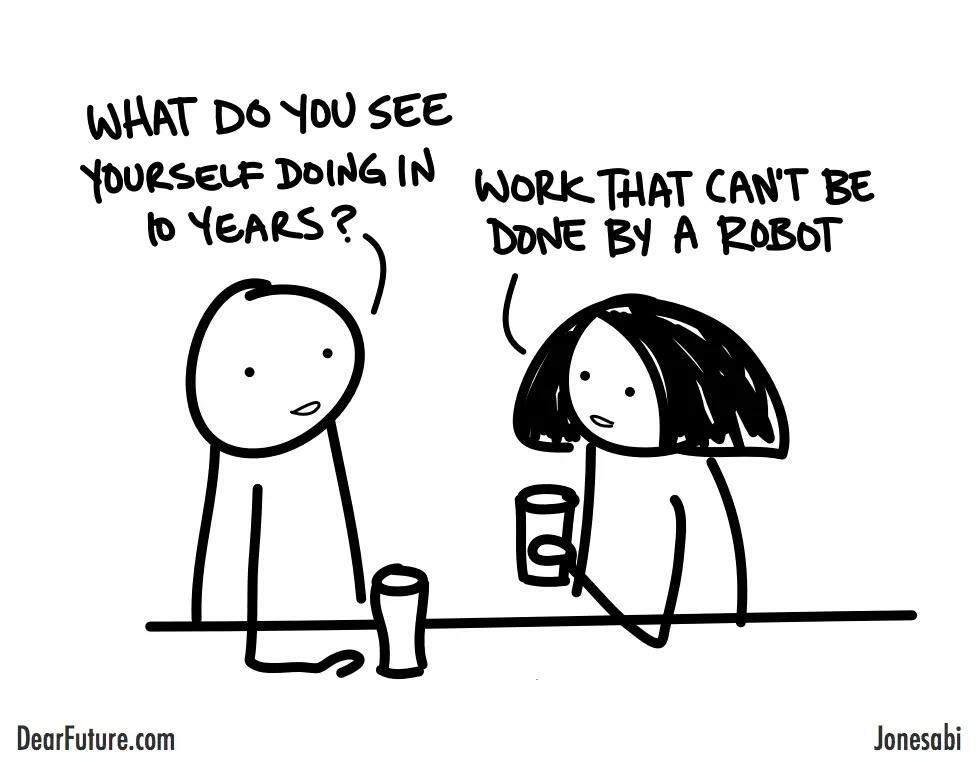
A Robot will probably take your Job soon. Here’s why we should be Happy about it

RobotThis is off-topic, but then, it might not be that off at the end of the day…

In June, I attended INSEAD, France’s premier MBA School, for a week of executive education. Basically, we were taught change management, strategy, and finance. At one point, we were discussing the consequences of artificial intelligence and advanced robotics. Over the last couple of years, a lot of articles and books have been published on this subject. Quite a lot of those take on a distinctly pessimistic perspective, claiming that squillions of jobs will be lost in the process. And indeed, a Chinese firm has announced that it plans to build the first robot-only factory site. Additionally, if you want to know the likelihood of being replaced by a computer in the medium run, please check this article on Fortune.com.

Now the fascinating question is: Is this a good or a bad development? The answer may, in fact, depend on the timeframe we´re looking at – and on the scope we´re considering. Have a look at this “arithmetic” problem that was given to us by INSEAD profesor Kevin Kaiser:

If a farmer with a tractor can do the work of 100 farmers without a tractor in the same amount of time: What´s the value of the tractor? The answer is: 99 farmers that are able to do something else.

This is basically what has happened over the last 1000 years or so. In the middle-ages, only a tiny fraction of the population was not working in farming. Even though, mankind could barely produce enough food to sustain itself. Today, only one percent of the U.S. population is working in that profession. The output per farmer has multiplied twelvefold – and that only covers the timeframe between 1950 and today. Just try to imagine the magnitude of the difference between a medieval and a modern farmer.

Now what has happened to those several hundred millions of people that aren’t farmers any more? Did they all become “unemployed farmers” and starved to death? The answer is no, of course. Over time, lots of them became craftsmen or merchants, later on, factory workers, service agents, psychologists, game designers, bloggers …,  [fill in whatever you like]. In short: they did something else – at least in the long run!

The idea that technological advancements will lead to large-scale unemployment is known as luddite fallacy, named after early 19th century textile workers in England, who protested against the implementation of mechanical stocking frames, culminating in riots and the destruction of factory equipment. It´s called “fallacy” because the machine breakers turned out to be wrong. They (mostly) did not starve: they did something else instead.

The fallacy is based on the assumption that there´s a limited amount of work in this world – so when a part of that whole is automated, it is “lost” to humans. This assumption is most likely wrong. We´re constantly developing new jobs (mostly services) that fulfill certain needs arising with the arrival of new technologies. By example, this article lists ten jobs that did not exist ten years ago. My question is: Why should this development suddenly come to an end?

Yes, it is true. Millions of people will lose their job to a computer or robot over the next 20 to 30 years. And from the vantage point of the individual, there will be tragedies. Some people clearly will not be able to cope. But: In the long run, people will do something else. They will not sit around and wait until they starve. They will do something else.

And again, it is true. For a lot of us, it is not clear as of now what this “something else” might be like. But I am a die-hard optimist. I am firmly convinced that whatever remains (or arises) will be more fulfilling than those jobs that are going extinct. Let´s be honest: Those jobs in that robot factory in China: how satisfying would they have been for human workers? And even if, somewhere in the near future, algorithms will be able to write news articles that are comparable in quality to those of human journalists, those journalists will find more creative work that cannot be matched by a computer program.

Recently, the German “new work guru” and former IBM executive Prof. Gunther Dueck said in a keynote:

“The simple part of work will disappear – for all of us. What remains is the challenging (or: sophisticated) part – for all of us.

Let´s all find out what the sophisticated part of our work is – the one that is truly creative and fulfilling: the one that cannot be matched by a silicone chip.

P.S.

If you want to know more, please read this article by Forbes contributor and new work expert Steve Denning: The ‘Jobless Future’ Is A Myth. Another angle on that story is provided by Pulitzer Prize-winning journalist John Markoff. In an intriguing long-read for Edge.org titled The Next Wave, he makes the point that we´re probably overestimating what artificial intelligence will be able to achieve in the near future. By way of example, he showcases results from a recent robotics contest, where most machines weren’t even able to properly used a door handle (“If you’re worried about the Terminator, just keep your door closed”).

The 7 Habits of Highly Obnoxious Self-Help Articles

Double Face-PalmIn the light of recent events, here´s my list of the seven habits of highly obnoxious self-help articles:

1) Know-what: They tell you what to do instead of how to achieve it.

That’s basically useless. People typically know what´s “good and right”.

2) Scienciness: They tell you that “science says ” (or “research says”) XYZ without further explanation or linking to the original sources.

I mean, seriously? Go and do your homework!

3) Sloppiness: They use vacuous stock photos.

That´s not a crime, but as a matter of fact, inconsiderate. If I see one more article on Positive Psychology adorned with a smiley, I´ll go bonkers (…yet I plead guilty to having done that in the past).

4) One-track mind: They claim to make you “successful” – equating success with money.

Life is complex and colorful – and success comes in all shapes and sizes. Cash is only a small part of the equation.

5) Lectio interruptus: They tell you part of the story but then require you to download/buy XYZ to get the whole picture.

Hey, if you mojo is really worth it, I´m more than happy to buy your book. But don´t force me to.

6) Megalomania: They tell you that “after reading this all your problems (in the area of XYZ…) are solved forever”.

Duh…

7) Simpleness: They tell you that whatever they propose is “easy”.

Adding two and two is easy. But life mostly is not, at least not those things in life that are worth striving for. Get used to it…