Watch out for “Fulfillment Daily” – the Science-backed news Source on “The Good Life”

I´m excited! On June 15th, a new website will launch. It´s name: Fulfillment Daily. What it says on their website: Fulfillment Daily is a place to get science-backed inspiring news to benefit your own life, inspire others, and, ultimately, contribute to uplifting all of society. We envision a world in which everyone has access to the science of fulfillment.

Fulfillment

Among the regular contributors will be some top experts in the field of Positive Psychology. And … um … well … me. The project´s founder is Emma Seppälä, Associate Director at Stanford´s Center for Compassion and Altruism Research and Education. Among the group of writers are Scott Barry Kaufman, author of Ungifted: Intelligence Redefined, Emilia Lahti, Queen of Sisu, and Wharton´s Adam Grant, author of Give and Take. How I managed to be among this group of magnificent people? I don´t know. The Lord moves in mappalicious ways…

You can also follow Fulfillment Daily on Facebook and Twitter.

Which Super-Power would You rather Possess: Fighting Evil or Promoting Good?

In order to learn more about the meaning of the word/concept “positive” in “Positive Psychology” (which the following post is all about), I highly encourage you to visit the website of James Pawelski, where he provides an in-depth analysis.


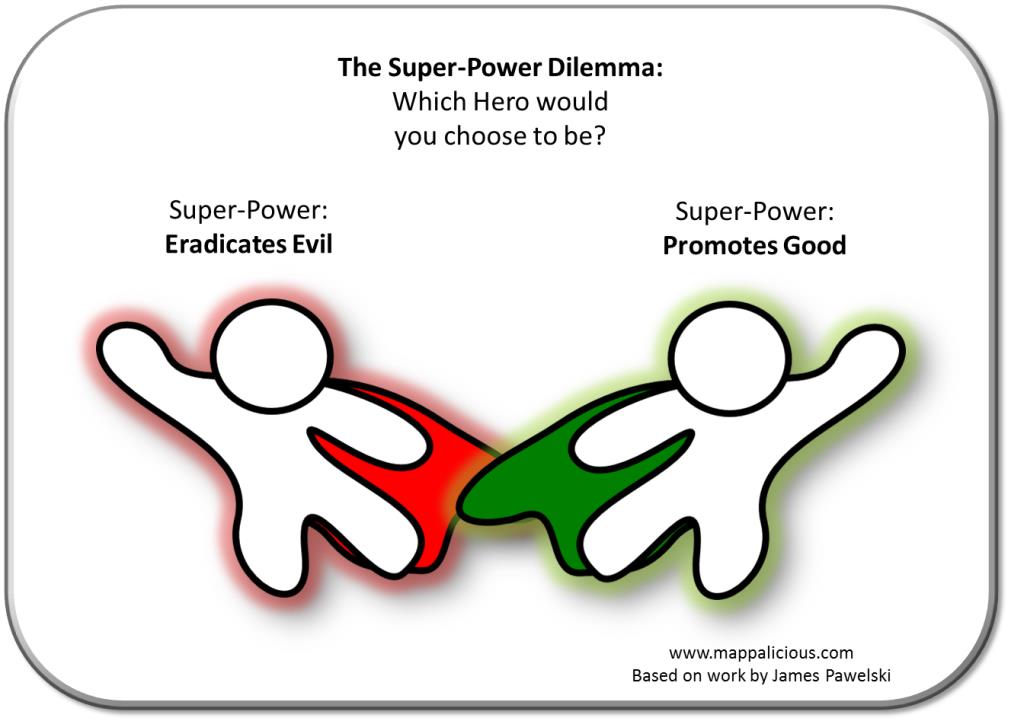
OK. So here´s a question for you: Some higher being has chosen to endow you with super-powers. You get to choose between two different profiles:

Superpower_Good_Evil

Let me elaborate a bit more on this:

  • So, you could either be Mr. Red Cape. He´s your typical super-hero. He fights “the Bad”: Kicks the shit out of the bad guys, saves people from collapsing skyscrapers, and might even have the power to fight epidemics and end the occasional war. But: he cannot create “the Good”.
  • Or, you could be Mr. Green Cape. He´s a different kind of super-hero. He has the ability to spread trust and love, and give meaning to individuals and whole communities etc. . But: he cannot eradicate “the Bad” – he definitely cannot end poverty and other calamities for good.

Mind you, this is an either-or story. You have 100% of one side – and 0% of the other. Who would you want to be – and why?

I won´t give you an answer here – because there is no single “right” solution.* But maybe, you´d like to think (or rather: feel) it through – and then share your thoughts in the comment section…?


*Although James Pawelski, MAPP´s academic director and Chief Philosophy Officer, is not too fond of simple and easy answers, he probably would have one for you here. But I´m not going to write it down – so as not to be the spoilsport for future Mappsters and listeners of his beautiful lectures in general…

Picture source: red cape, green cape

Does having a Child make us Happier or Unhappier? Or is that the wrong Question?

I´m pretty sure that all the parents among my readers will join into a roaring “HAPPIER!” when answering the first question in this post´s headline. Yet, it turns out that an unanimous scientific answer to that question is rather hard to find – as there´s a lot conflicting data out there.

There are papers that show well-being drops for both men and women when a first child comes into the house – and it typically does not rise that much until the children leave for college. Other researchers found that a first child markedly increases happiness, especially with the fathers, and the more so when it´s a boy. Then, there are papers that give the classic answer for lawyers (and psychologists as well): It depends. Or rather, there are upsides and downsides. E.g., mother are more stressed – but less depressed.

When there´s a lot conflicting research on a certain topic, it´s always a good thing to carry out a meta-analysis, which is a weighted integration of many studies on one area of inquiry. Such a meta-analysis has been done in 2004. Here´s the summary:

This meta-analysis finds that parents report lower marital satisfaction compared with nonparents (d=−.19, r=−.10). There is also a significant negative correlation between marital satisfaction and number of children (d=−.13, r=−.06). The difference in marital satisfaction is most pronounced among mothers of infants (38% of mothers of infants have high marital satisfaction, compared with 62% of childless women). For men, the effect remains similar across ages of children. The effect of parenthood on marital satisfaction is more negative among high socioeconomic groups, younger birth cohorts, and in more recent years. The data suggest that marital satisfaction decreases after the birth of a child due to role conflicts and restriction of freedom.

What they say is: On average, marital satisfaction drops slightly when a first child is born. The effect is stronger for women than for men, and the younger and richer the parents are. Parents struggle with stress due to role conflicts and a decrease in self-determination.

Are Children supposed to make us Happier?

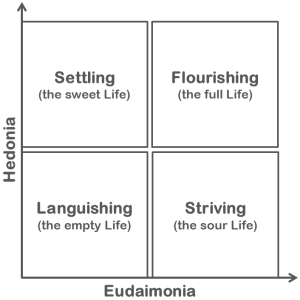
Eudaimonia - HedoniaBut maybe, asking about satisfaction and happiness is not the right question after all. Is it really the “job” of our children to make us happier and more satisfied as a parent? I don´t think so. When a child comes into your life, you lose tons of money, you lose tons of sleep (and that´s due to dirty diapers, not dirty sex…), and you have to carry out planning and preparations on a regular basis that in their complexity can be likened to the Normandy landing – just for going to the movies on a Friday night.

Having children does not make us happy all the time. Period.

Yet, we get something else, research suggests: Purpose. Meaning. Unconditional love (especially when you have some sort of food, that is…). Asking for satisfaction is looking at the wrong axis of the Eudaimonia-Hedonia-Grid depicted above.

Being a parent is not a “fun” job at times – especially for the mothers (given a more traditional role-taking). Remember that viral video about the toughest job in the world?

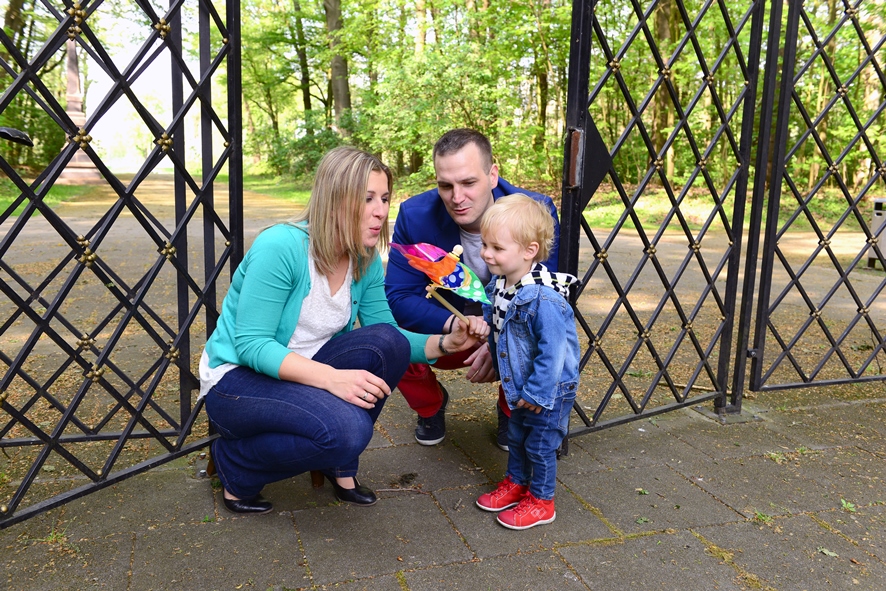
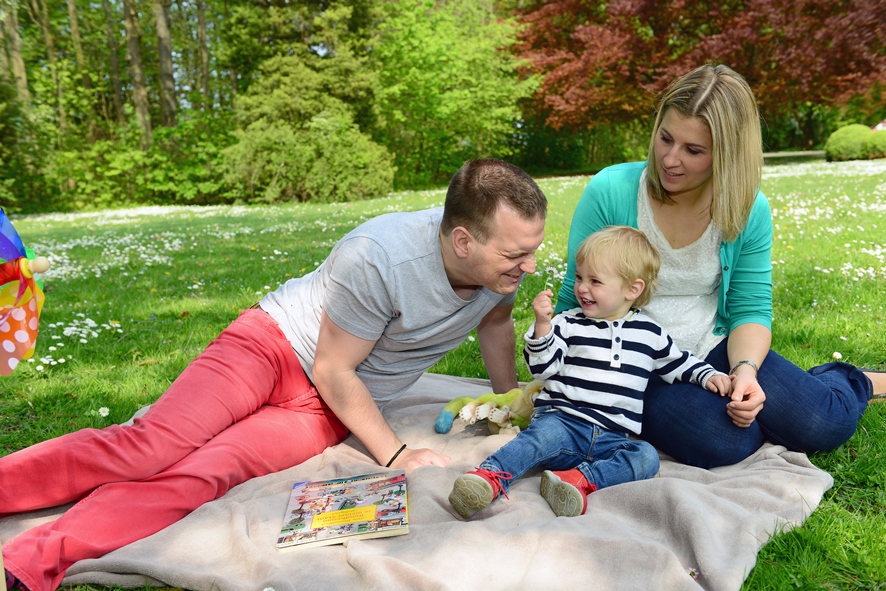
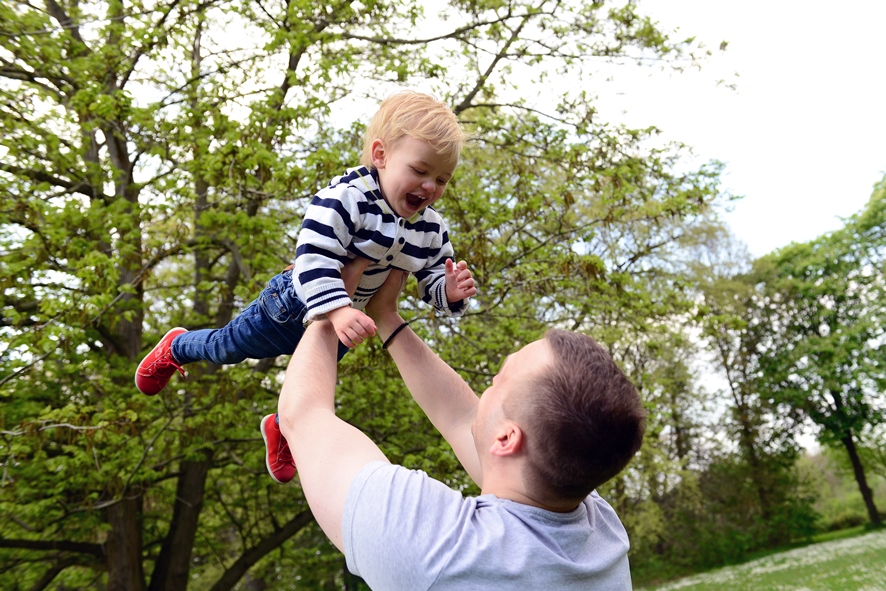
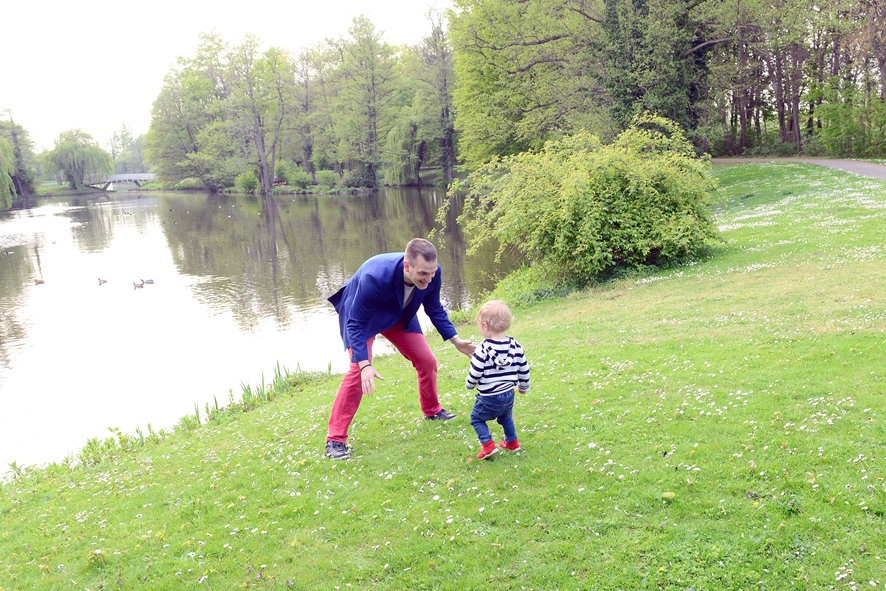
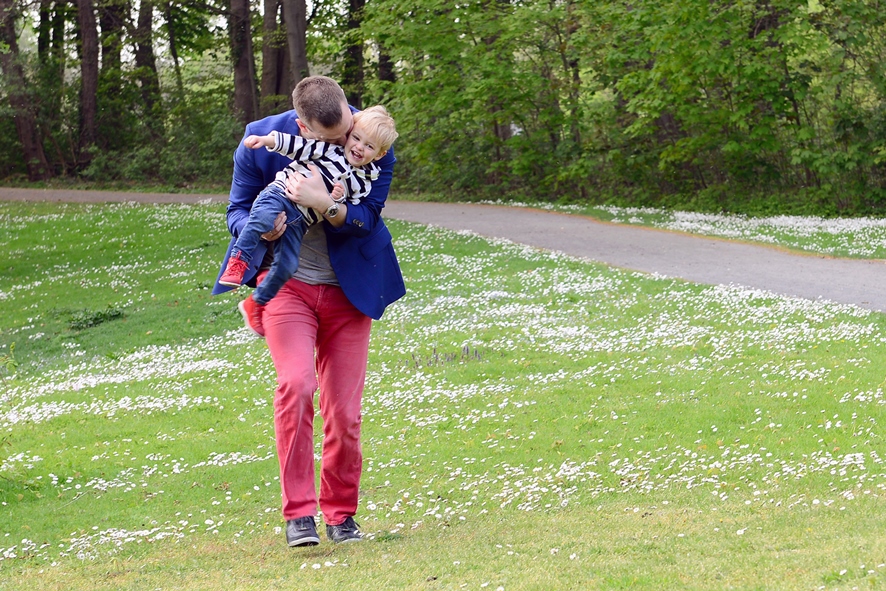
But then: it definitely can be a blast. When researchers see a lot of conflicting data, they sometimes turn to what in science lingo is called “anecdotal evidence”. They tell a story. Here´s a story about my family having fun in the park (Photos taken by Tina Halfmann).

Enjoy!

Family Rose

Rose Family

Rose Family

Rose Family

Rose Family

Rose Family

Rose Family

Rose Family

Rose Family

Family Rose

Want to be Happy today? Check out the “Good Day Theory”…

A couple of minutes ago, I went out to go to my favorite café in order to work on a MAPP final paper. Now, I´m blogging. By the way, if you want to have some real good advice on following through with your plans, check out Peter Gollwitzer´s research on implementation intentions. But I digress…

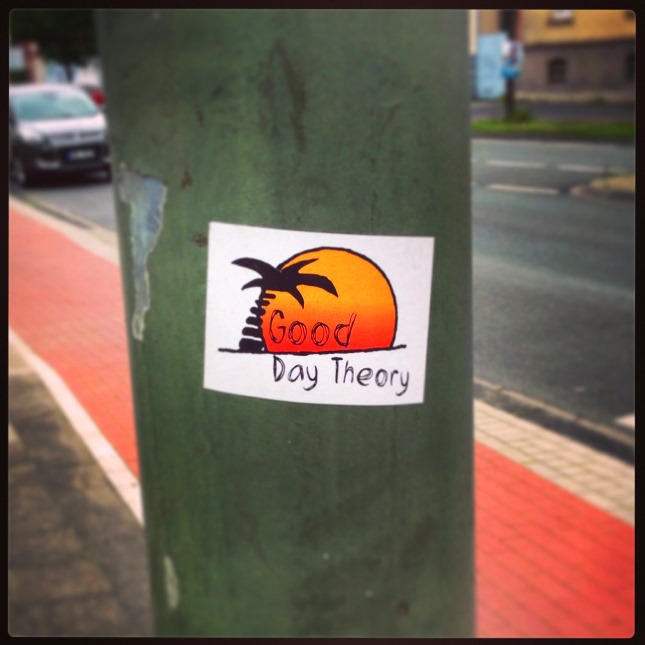
So, when I went out of the door, I saw this sticker on a street light – basically, directly in front of our home. And I wonder how many times I might have passed it without noticing – but of course, it could be new as well.

Good Day Theory

Via Google, I´ve found out that it´s the name of a local rock band – I´ve posted one of their videos at the bottom of this post. The good news is: there really is a kind of “good day theory” in Positive Psychology. At least, there´s a paper by the name of What makes for a good day? Competence and autonomy in the day and in the person

What they found: a good day typically is characterized  by frequent fulfillment of our needs for autonomy and competence. In plain English:

A good day in one where you decide what to do – and then choose to do something that you´re really good at.

So do that. Now…

Mappsterview No. 4: Dan Bowling on Turning the Tide at Coca-Cola and Lawyer (Un-)Happiness

I was in the ninth cohort of the Master of Applied Positive Program at Penn. Consequently, there are tons of brilliant MAPP Alumni out there that have very fascinating stories to tell: about their experience with the program, about Positive Psychology in general – and about themselves of course. I really want to hear those stories. That´s why I started to do Mappsterviews* with my predecessors.

Today, you are going to meet Dan Bowling, very successful lawyer turned very successful manager turned very successful Law and Positive Psychology teacher and researcher. Actually, I´m supposed to be writing MAPP finals instead of blogging right in this moment. Such is life. Our final papers are a lot about going through our former papers and teaching notes, about integrating and “hunting the good stuff”. Yesterday, I wrote a passage about my “heureka moments” in MAPP. And since I like to link my insights to the people that are “responsible” for those insights, here´s what I wrote about Dan Bowling:

If something is worth doing, it’s worth doing it with style.

Please introduce yourself briefly:

Dan BowlingMy name is Dan Bowling. I am Senior Lecturing Fellow at Duke Law School, where I teach courses on labor law, employment law, and positive psychology and the practice of law. These classes seem to be popular among the students, maybe because I bring pizza and wine for the class every now and then. I also run a small consultancy, Positive Workplace Solutions LLC, which provides executive coaching and legal consulting for C-Level executives and professionals (I am a licensed attorney). I work with Martin Seligman’s team at UPenn’s Positive Psychology Center doing empirical research on strengths and lawyers, and have helped teach in MAPP for the past 5 years. I speak regularly at legal and/or positive psychology conferences, and write a featured blog for Talent Management Magazine called Psychology at Work. I tweet silly and irrelevant stuff @BowlingDan if you would like to follow me.

What got you interested in Positive Psychology in the first place?

I have always been fascinated by different personality traits. I started my career after graduating from Duke Law in 1980 as a labor and employment litigator and it struck me how important a role personality played in why one employee sues you and another doesn’t, even if their job circumstances are the same. I made partner in a large Atlanta law firm in 1986 but was shortly thereafter recruited by Coca-Cola to help form the new law department of its bottling operations, which it spun off as Coca-Cola Enterprises in the largest IPO in history. My interests in the psychological components of work continued during my career with Coca-Cola Enterprises, where I held a variety of jobs including President of a nine-state, 2 billion dollar operating region, as I developed a firm belief in the link between optimism and positive emotions in employee and corporate performance.

I had the opportunity to put my theories into practice in the latter stages of my career, when I was named head of human resources for the entire company. Frankly, the organization was down. We were under legal assault by small groups of hostile employees. Rather than aggressively defending the claims – which I found spurious – our programs and energies were focused on an agonized self-examination of what we did to prompt such claims. The halls were full of consultants and lawyers and days were consumed by meetings, all focused on what was “wrong” with us and how we could treat it. Not surprisingly, our “disease” was metastasizing, and corporate maladies previously unknown (or non-existent) were being discovered and stern remedies subscribed. Managers and employees forgot about selling Coke and spent their time instead in a variety of “workshops,” the corporate equivalent of Mao’s re-education camps.

Our new HR team decided to flip the paradigm, and look at what was right about the company – a focus on the life above zero, as Marty Seligman says. It didn’t take long to learn that the vast majority of the employee grievances were brought by a handful of perpetually complaining employees, often sponsored by outside interest groups, and were generally unfounded. We also found that most of our employees were quite happy with us as an employer. We starting asking a very basic question of ourselves: “Why is it 95% of our HR programs and initiatives are focused on the 5% of employees who hate us? Why spend our precious resources and energies on the perpetually dissatisfied few? Why not focus on efforts on those who want to build a better company and believe we can?” Eventually, we resolved our issues quite successfully, the grumblers moved on, and we spent the rest of our time in HR doing things to hire and engage people who were a positive contribution to our company. When I turned 50, it was time to move on, so I joined the Duke Law faculty teaching labor and employment law, while continuing my research into optimism and positive personality traits by receiving a masters in applied positive psychology at the University of Pennsylvania.

Your are a lawyer, you teach law, and via MAPP (at the lastest…) you know that lawyers are among the unhappiest professions. Why do you think that is the case?

That question is at the core of my current research and writing interests. First, I must challenge the premise – I think the data is not conclusive that lawyers are among the unhappiest professions, although the majority of the literature seems to suggest so. Regardless, law school and law practice seem to exacerbate depressive tendencies in persons with those tendencies, which isn’t surprising given the number of hours lawyers work in pressurized environments on things they are not intrinsically motivated to do. But as to whether lawyers as a population are significantly unhappier than other large groups of highly educated professionals, more research is needed.

Do you have plans to do anything about that?

To effect real change in the profession, it is of critical importance to establish a link between well-being and legal professionalism for the happiness of lawyers to be taken seriously, and my goal is to help provide that framework for the legal profession.

According to what you´ve learned about Positive Psychology, if I were the CEO of a company: what are three things that I should start doing right away?

1) Identify and develop leaders who are optimistic and enthusiastic about the success of others; 2) incorporate strengths-based employee assessment and development programs; and 3) use better psychometrics to support the hiring and talent acquisition process.


Thank you, Dan, for this Mappsterview! If you are a MAPP alumnus and would like to have your story featured here – please go ahead and shoot me an e-mail!

On Music and Well-Being – or: The Garden of our Lord is Vast and Plentiful…

MAPP is a fulltime program – but combines onsite classes with long-distance learning periods. Part of the distance learning comprises a lot of reading (…who would have thought of that…) and writing essays about a wide array of positive psychology topics. I´ve decided to post some of those essays here on Mappalicious. Surely, they´re not the be-all and end-all of academic writing. But then again, it would also be a pity to bury them in the depths of my laptop…

Happy Metal

The sentence displayed in the title is a well-known proverb in Germany. I could not find a passage with that exact meaning directly in the Bible. Therefore, it seems to be more of a piece of folk wisdom. Mostly, one is inclined to use it situations where one is subjected to, by way of example, a piece (or genre) of music that one does not like – but that is highly appreciated by other people. It is a way of acknowledging that people have different tastes in just about anything – and that one “is fine” with that.*

In that sense, it has some shared meaning with the English figure of speech “different strokes for different folks”. While I am writing these sentences, there´s a portrait of Michael Wendler on TV, a leading protagonist of German “Schlagermusik”, a particularly corny, banal, uniform, and (to my ears) horrible style of pop music that sells really well and is played at most parties at some point or the other. For the most part of my life, I have enjoyed music that is often considered to be at the opposite end of the musical spectrum: heavy metal. In this essay, I would like to muse about this phenomenon: Why are people drawn to different kinds of music (and art in general) – and what does this phenomenon have to say about human well-being?

The question of how to lead a good life is a very old one. Religious leaders, philosophers, authors and laymen alike have tried to find answers to this mystery. At earlier stages of this quest, it was mostly put into question that feeling happy and experiencing positive emotions is an essential part of a life well-lived. Yet, with the appearance of the Enlightenment (at the latest), the pursuit of happiness can be seen as a central element of this overall endeavor (McMahon, 2008). Nowadays, there is convincing scientific evidence for the link between positive emotions and (psychological) well-being (Fredrickson, 2001).

For at least as long as people have pondered on the meaning of human life – and the question if (and how) the pursuit of happiness can play a role in finding the right answers – they have immersed themselves in art. Primitive forms of musical instruments, paintings, and pieces of stoneware have appeared at least 30,000 years before our time. Nowadays, due to its easy and ubiquitous availability, music may be the most widespread form of art (at least it seems to be most widely used). In a study using experiencing sampling, a method where subjects are to record what they do in their lives at certain intervals, it was found that music was present in 37% percent of the samples; and that this music influenced the emotional state of the listeners in 67% of these events (Juslin, Liljeström, Västfjäll, Barradas, & Silva, 2008).

The last-mentioned number hints to a possible explanation for the immense pervasiveness of music: it is a potent means for regulating affect. Listening to music can lift our mood, alleviate psychological stress as well as physical pain, and contribute to our overall well-being (Västfjäll, Juslin, & Hartig, 2012). This may be a consequence of the uplifting effect of listening to music, but could also be a byproduct of its social aspect, since it is often performed and listened to in the presence of other human beings (MacDonald, Kreutz, & Mitchell, 2012). Additionally, making and listening to music is able to induce flow (Csikszentmihalyi, 1996). For all these reasons, it is also used in a wide array of psychotherapeutic settings (Västfjäll, Juslin, & Hartig, 2012).

The introductory paragraph of this essay alludes to the fact that different people like to listen to different styles of music. Therefore, what brings pleasure, uplift, and well-being to one person may result in anger and unpleasantness for another. This may be a consequence of learning and a kind of “cultural conditioning”, but could also be explained by more basic psychological (even psycho-physiological) phenomena. Västfjäll, Juslin, & Hartig (2012) list several aspects that could account for music´s propensity to be a medium of mood control. Among them are

  • brain stem reflexes (e.g., reactions to loudness and speed);
  • rhythmic entrainment (reactions to the recurring metrical quality);
  • and visual imagery evoked by a piece of music.

Since different people obviously have different nervous systems (e.g., in terms of responsivity and sensibility) it seems self-evident that they should react more or less favorably to varying styles of music. Maybe, it is not even a choice that we make consciously.

Can we really choose what style(s) of music we are attracted to?

One of my favorite movies of all time is Gerry Marshall´s “Pretty Woman” (1990). There is a scene where the male main protagonist, successful businessman Edward Lewis (played by Richard Gere), invites the female mail protagonist, prostitute Vivian Ward (played by Julia Roberts), to the San Francisco Opera to see a premier of “La Traviata”. When Vivian is very moved by the music, Edward says:

People’s reactions to opera the first time they see it is very dramatic; they either love it or they hate it. If they love it, they will always love it. If they don’t, they may learn to appreciate it, but it will never become part of their soul.

From my own experience, I feel that I know very well what Edward is talking about. Only, in my case, it wasn´t opera but heavy metal. I was exposed to this style of music for the first time at age 14, specifically a song by the German metal band Helloween. They are considered to have established their own sub-genre in 1985 which can be characterized by the following attributes:

  • exceptionally high tempo;
  • frequent use of double-bass drum technique;
  • frequent use of double (harmonic) lead guitars;
  • distinctly high-pitched male singers;
  • lyrics that are oftentimes based fantasy and sci-fi topoi.

I remember my parents saying that heavy metal would be a “phase” I was going through – but so far, time has proved them wrong. I still love it and probably will do so until the end of this life. Of course I do listen to other music. I went to an opera premier of “Don Giovanni” in March of 2013, and I also enjoyed listening to Tschaikowski and other Russian composers when we went to an evening at the Philadelphia Philharmonic Orchestra as part of the MAPP program in January 2014 – but honestly speaking, classical music will (most likely) never captured my heart the way that heavy metal has done. I know that one can learn to appreciate classical music in the same way that one has to learn how to appreciate good wine – but to me, that´s not the same as “falling in love” with a particular style of music.

There is not much official (psychological) research on heavy metal. Yet, because of the above-mentioned attributes, it is oftentimes described as the most aggressive style of music. Following that notion, most of the few studies that do exist typically deal with supposed negative consequences (or correlates) of listening to heavy metal, such as aggressive behavior, suicidal risk, drug abuse, and low self-esteem (e.g., King, 1998; Arnett, 1992; Scheel & Westefeld, 1999). I am trying hard not to be lopsided here – but to me there seems to be something wrong about these studies. Heavy metal is – for the most part – aggressive music, agreed. But this does not automatically imply heavy metal fans are aggressive people. I have been to hundreds of concerts in my lifetime. From these experiences, I can say that heavy metal concerts are distinctly peaceful and non-violent places. My observation is echoed by one of those rarer studies that finds metal fans are just regular people that happen to feel good while listening to high-intensity music (Gowensmith & Bloom, 1997). The study concludes by stating that the

[…] most widely accepted conclusion is that heavy metal fans are in general angrier, more agitated, and more aroused than fans of other musical styles. The results of this study do not support this speculation. No […] differences were found among subjects’ levels of state arousal, state anger, or trait anger. (p. 41)

Instead, the researchers were able to detect an interaction effect. In fact, there were people in their sample that got overly aroused and even aggressive when listening to heavy metal: precisely, persons that stated they do not like heavy metal (especially fans of country music). For fans of metal music, listening to their favorite music did not result in elevated levels of arousal or negative emotion – quite the contrary. This finding is mirrored in an article on the internet site of the magazine “The Atlantic” by the name of Finding Happiness in Angry Music (Sottile, 2013). The author concludes that potentially there is “something cleansing about engaging with emotions we might not usually let ourselves feel”. Hence, music does not necessarily have to be happy in order to make us happy – and foster our well-being. It all comes down to “different strokes for different folks” again. In their review article on the connection of music and well-being, Västfjäll, Juslin, and Hartig (2012) draw a similar conclusion when making the point that music as a stimulus cannot be the same for all listeners:

Thus, there are no “pure” effects of music that will invariably occur regardless of the specific listener or situation. The response will depend on factors such as the listener´s music preferences and previous experiences, as well as on the specific circumstances of the context. (p. 408)

As a consequence, I feel we should be careful to make (too) strong judgments about other people´s taste in music (and art in general). Ever so often, many ways lead to Rome. I oppose to the distinction that is often made between “serious music” (sometimes called “art music”) and the more “popular” styles of music that also comprise heavy metal. The aspect of seriousness is inherent in the listener, not the music itself. One can listen to Mozart carelessly – while savoring heavy metal and thereby displaying a great amount of mindfulness.

The garden of the Lord is vast and plentiful. In order to find happiness, I believe, we must find our personal parcel of land in that garden – and then start to cultivate it.

References

Arnett, J. (1992). The Soundtrack of Recklessness Musical Preferences and Reckless Behavior among Adolescents. Journal of Adolescent Research, 7(3), 313-331.

Csikszentmihalyi, Mihály (1996). Creativity: Flow and the psychology of discovery and invention. New York: Harper Collins.

Fredrickson, B. L. (2001). The role of positive emotions in positive psychology: The broaden-and-build theory of positive emotions. American Psychologist, 56(3), 218-226.

Gowensmith, W. N., & Bloom, L. J. (1997). The effects of heavy metal music on arousal and anger. Journal of Music Therapy, 34, 33-45.

Juslin, P. N., Liljeström, S., Västfjäll, D., Barradas, G., & Silva, A. (2008). An experience sampling study of emotional reactions to music: listener, music, and situation. Emotion, 8(5), 668-683.

King, P. (1988). Heavy metal music and drug abuse in adolescents. Postgraduate Medicine, 83(5), 295-301.

MacDonald, R., Kreutz, G., Mitchell, L. (2012). What is music, health, and wellbeing and why is it important? In R. MacDonald, G. Kreutz, & L. Mitchell (Eds.), Music, health and wellbeing (pp. 3-11). Oxford: Oxford University Press.

Marshall, G. (1990): Pretty Woman [Film]. Los Angeles, Touchstone Pictures.

McMahon, D. M. (2008). The pursuit of happiness in history. In M. Eid & R. J. Larsen (Eds), The science of subjective well-being (pp. 80-93). New York: Guilford Press.

Scheel, K. R., & Westefeld, J. S. (1999). Heavy metal music and adolescent suicidality: An empirical investigation. Adolescence, 34, 253–273.

Sottile, Leah (2013). Finding happiness in angry music.

Västfjäll, D., Juslin, P. N, Hartig, T. (2012). Music, subjective wellbeing, and health: The role of everyday emotions. In R. MacDonald, G. Kreutz, & L. Mitchell (Eds.), Music, health and wellbeing (pp. 405–423). Oxford: Oxford University Press.


* Mostly though, the phrase will be accompanied by an incredulous shake of the head, thereby signifying that, at the end of the day, one´s own taste is to be valued higher.

Picture Source

My Year in MAPP: A 5-Step Course in the fine Art of Being Un-German

In general, I hate this sentence – but: time flies.

Right now, I´m in Philly, precisely: in room 340 of Wharton´s Huntsman Hall, for attending the final onsite period of the 2013/14 MAPP program at University of Pennsylvania. Seems like yesterday that I wrote that blog post on being admitted to my deepdive into Positive Psychology at UPenn. Maybe it´s still a little bit early for reminiscence, since there´s still a lot of work ahead (final papers, capstone projects) – but lately, I´ve been musing on a truly intriguing question:

Is MAPP a Course in being Un-German?

Flag - German SmileyThat question only makes sense when you´re German, of course – which I happen to be. My MAPP classmates surely know I´ve been using this definition a lot over the year: un-German. What do I want to say here?

Despite that disreputable first half of the twentieth century, I kind of like being German. According to most socio-economic (and also ecologic) indicators, it´s a very good place to live. Hey, according to BBC we might even the most popular country in the world. Go figure!*

But what do other countries like or maybe even admire about Germans? Let´s look at some of the (pretty thoroughly verified…) stereotypes:** People definitely love our cars (and the fact that there´s no speed-limit on most areas of the Autobahn), they indulge in our Bier, Schnaps, and Riesling-Wein (especially around the time of the Oktoberfest – which I´ve never visited by the way…), our ten trillion varieties of Wurst and the Schnitzels (although the original Wiener Schnitzel is from Austria, of course). So generally speaking, people like our products. They love things “Made in Germany”.

Because that´s what we´re good at. Germany has an “engineering culture”. We´re good at planning things and following through with it, that´s our Prussian heritage. We´re builders and craftsmen, planners and executors, not so much “poets and thinkers” any more. We´re industrious, punctual, orderly, dependable, and basically good at “being good at things”.

Emilia Lahti & Nico RoseRather not on top of the list is “the German” as a person(ality). Most other countrymen consider us to be blunt to the point of outright rudeness – if we´re talking at all, that is. We´re not the epitome of warm-heartedness, either (that may be a result of our language). And while Germany typically is considered to be the “export world champion”, our humor definitely is not one of our hit products.

Additionally, we´re just not a very optimistic people. I mean, compared to most other countries, we´re really really rich and really really healthy and long-living. We´re well-off – period. Still, collectively we´ve managed to have a special kind of fear being named after us: “German Angst” (roughly: being overly cautious and pessimistic). Oh, and we´re also good at feeling Weltschmerz – which can be described as the state of “being pissed off with existence in general and also in particular”.

So on the face of it, trying to be a good German and studying Positive Psychology (here´s a short definition) does not add up. At the end of the day, Positive Psychology is just too … ahem … positive. Rather, a German in a Positive Psychology course seems like a prototypal case of “opposites attract”.

Yet, in spite of it all, I did it. And here´s what I´ve learned…

Lesson 1: Greeting Somebody

In Germany, most people opt for a solid handshake when greeting somebody they do not know that well. Among younger people and goods friends, you’ll also see the occasional hug or that “kiss-kiss embrasser thing” we copied from our French neighbors.

In MAPP, people hug each other at all times. Basically, our bodies are completely entangled while being on campus. Was a little strange at first – but then I´ve found this piece of research that shows how important hugs are for our health.

LOVE_Penn_PhiladelphiaLesson 2: Engaging in Small-Talk

In Germany, when meeting somebody again after several weeks, of course you´ll engage in some microscopic dose of small-talk. E.g., when somebody asks you “How was you flight?”, you´re supposed to reply something like this: “Oh, it was the worst thing ever. There was a delay of at least five minutes. And they didn’t have Becks beer on board. I did not get the window seat I wanted and the food servings were tiny. The guy next to me smelled like a dead rodent and I had already seen all of the HIMYM episodes they showed on board.” The other person will then reply: “Oh, I know exactly what you´re saying. It´s been even worse for me…………..”

In MAPP, when people ask how your flight was, you´re supposed to say “Awesome!” That´s it. And the other person will respond: “That´s awesome. Let me give you a hug…”

Was a little strange at first – but then I´ve found this piece of research that shows how mostly looking on the bright side of life is really beneficial for your psychological and physiological well-being.

Lesson 3: Taking a Break

MAPP Energy BreakIn Germany, when you take a break (which we don´t do that often), you basically stop doings things. Maybe, you have a piece of Streusel-Kuchen, maybe you check your mobile phone for messages. And if you meet a German who is one of those rare positive outliers on extraversion, you might be able to get him engaged in a little small-talk – but don´t count on that.

In MAPP, when you take a break, you´re not allowed to sit down and just do nothing. Because breaks are supposed to be “energy breaks”. So basically, somebody will walk up front, put on some music that is not Rammstein, and then coerce all the other people in the room into frenetic singing and shouting, and moving their bodies in distinctly inappropriate ways. Afterwards, you return to your seat. But before that, you hug.

Was a little strange at first – but then I´ve found this piece of research that shows how taking short breaks from work for dancing is really good for your health and gets so creative juices flowing

Lesson 4: Answering “complicated” Questions

In Germany, when somebody asks you a (“complicated”) question, you answer. That´s it. If you don´t want to do something or disagree, you just say “Nein!” or “That´s not a good idea.” Works out fine.

In MAPP, when somebody asks you a (“complicated”) question, you´re supposed to say something like this: “Oh, that is a truly brilliant question (break into huge smile while speaking…). I really appreciate it. It´s just so thoughtful and deep. I could have never come up with that in a million years. By the way, I just love your hair today. So, about your question…”

When you want to say “No” to somebody, or “I think that´s a bad idea” things get a little more complicated. Because: You can´t. It´s sort of “not allowed”. So instead, you might want to start with something along the lines of the above-mentioned phrases. Now, proceed by putting on a (just slightly) less smiling face and say, e.g.: “Let me give you a little bit of context on that.”*** Then, in excruciating length and detail, you recount each and every item of information that may or may not be relevant to the current affair, starting roughly at Lincoln´s “Better Angels of our Nature” address. And basically, you keep on going until the other person has forgotten what she wanted in the first place. Afterwards, you hug.

Was a little strange at first – but then I´ve found this piece of research that shows how important it is to really be empathetic towards other people, and to engage in (what Positive Psychologists call) active-constructive responding.

MAPP White DogLesson 5: Finishing something

In Germany, when you´ve finished something, you start doing something else immediately (except for when we want to practice the art of Gemütlichkeit – but hey: drinking beer is also doing something…). That´s what we´re here for. We do stuff. We finish it. We do something else. I mean, one of the largest chains of building centers in Germany advertises the slogan “Es gibt immer was zu tun…” (“There´s always something to do…”).

In MAPP, when you´ve finished something, you cannot do something else immediately. Nohoo! Somebody will walk up to you and ask you to savor what you´ve just did. So you might have been to the rest room, reenter the classroom – and somebody will approach you and ask: “Nico, did you take enough time to savor that experience?” Not.

But savoring really is a big issue in MAPP. Now, that is really really un-German. I´ve understood that it´s close to the concept of being “gemütlich”, just (mostly…) without beer. Basically, it´s the opposite of feeling Weltschmerz. It´s about back-pedaling, admiring your recent accomplishments, and giving yourself (and the world in general…) a mental pat on the back – and a hug.

Was a little strange at first – but then I´ve found this piece of research that shows how taking your time to savor life and the beautiful things (and maybe even some of the not so beautiful things…) it entails is really important for our well-being and finding meaning in life.

So, that´s what I´ve learned. Here´s the management summary:

Wherever you are, it is your friends who make your world.

(William James)

Alternatively, in the words of Henry David Thoreau:

Nothing makes the earth seem so spacious as to have friends at a distance; they make the latitudes and longitudes.

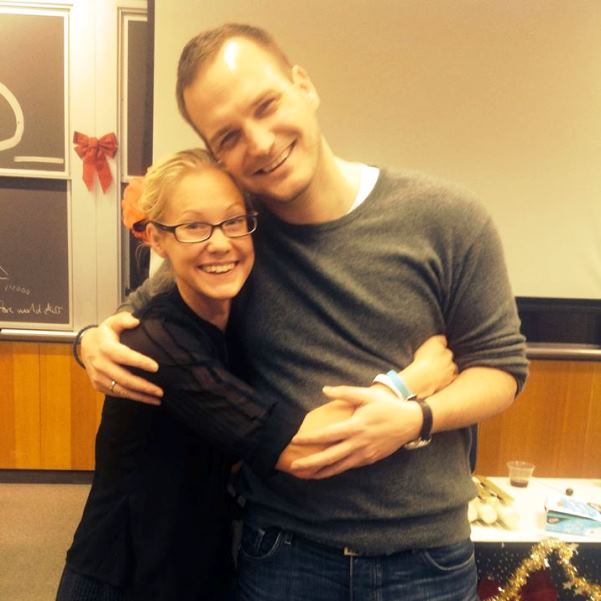
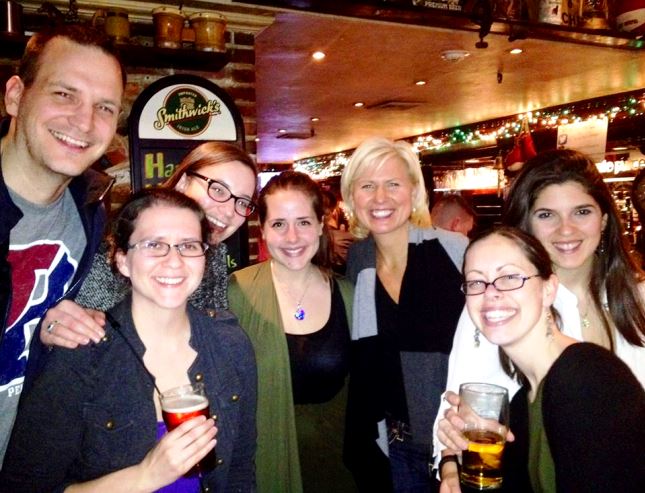
MAPP 9 & Co.: Thanks a million! Love you guys. Lots of hugs…

Nico

MAPP_White_dog


* But to be honest: that survey is from 2013, a year without any major soccer tournaments. That doesn´t really count…

**You will find 151 of those in Liv Hambrett´s hilarious and at the same time truly insightful piece What I Know About Germans.

*** Thank you for that one, James!

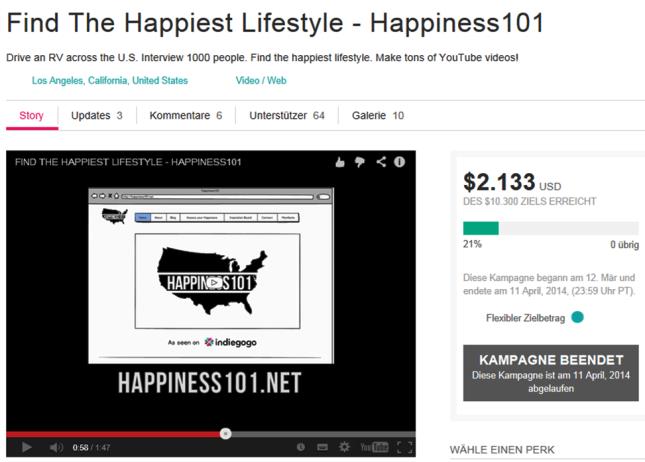
Help them to make their Dream come true: Finding the Happiest Lifestyle – Happiness 101

Find the Happiest LifestyleThey are two ordinary but quite special young guys from Germany. Right now, they´ve entered the USA – and will soon stop by a place near you. Their plan: completing a road trip from “sea to shining sea” (and back). And while on their way, the need YOU!

Chris and Michael plan to do a lot of crazy sh.t on their trip – and they would like to interview 1,000 people while on the road to find out what “the happiest lifestyle” is. Personally, I suspect they are going to find more than one – but let´s leave that up to them.

Via this link, you can find all the relevant info on their project: Why they do it, where they will be travelling, and how you can help them on their way (Do you want to be interviewed? Do have 10 bucks to spare? Maybe invite them to Chipotle?)

While on their way, they are going to shoot lots of videos to share their experience. But let the kids speak for themselves – and enjoy!


Bibliophilia: How Reading and Writing can Save our Soul

MAPP is a fulltime program – but combines onsite classes with long-distance learning periods. Part of the distance learning comprises a lot of reading (…who would have thought of that…) and writing essays about a wide array of positive psychology topics. I´ve decided to post some of those essays here on Mappalicious. Surely, they´re not the be-all and end-all of academic writing. But then again, it would also be a pity to bury them in the depths of my laptop…

Library - Mind - Hospital

I´ve visited the center of the earth. I´ve travelled 20.000 leagues under the sea. And I´ve toured around the world in 80 days. Three times, actually. And most of that journeying happened while sitting in the bathtub of my parent´s home. When I was a kid, I used to be a semi-professional tennis player. Upon returning home after long weekends of tournaments, I would head straight to my parent´s bathroom and into the bathtub – to stay there for hours and hours, until my skin would be all shriveled. Most of the times, my companion (and therefore, first literary love) would be Jules Verne, or rather, those heavy editions with linen covers of Verne´s most famous novels that my grandpa gave to my father – and my father to me. Ever since that time, I have been an enthusiastic reader. My taste in books changed, obviously. In came Stephen King, Jostein Gaarder, Nick Hornby, Douglas Adams, and even Joanne K. Rowlings Harry Potter, among others. And out they went again. For several years now, I have been reading non-fiction for the most part. But the pleasure of reading remains. For me, it is an act of uttermost hedonic value. But that is not what this essay is all about. Instead, I will try to convey how literature informs our understanding of (psychological) well-being, and how reading and writing can have a therapeutic effect and build psychological acumen and resiliency.

In the Beginning was the Word

There are many descriptions and analogies for the unique quality of the human race. Common wisdom from biology holds that we are “homo sapiens (sapiens)”, the knowing (or discerning) man (Semino, Passarino, Oefner, Lin, Arbuzova, Beckman, …, & Underhill, 2000). But that is by far not the only description for the “pride of creation”. There are researchers who argue the most important feature that distinguishes man from his mammalian ancestors is our ability to create, remember, and narrate stories – that we are “homo narrans”: the story-telling men (Niles, 1999). Through the narration of stories, man used to recollect and still does recollect his own history, interprets it, and transfers it to the future generation(s), thereby shaping Hegel´s “world spirit” that strives to recognize itself (Hegel, 1822).

But storytelling is almost never done for sheer fun of it, or for objectively reporting was has been before. Telling stories, be it in traditional oral style, in print, or some audio-visual presentation mode, almost always has some instructive, some prescriptive quality to it. Whoever creates or narrates the story oftentimes wants to instill a change in the recipient, wants him to know or even be something else when the story is over. This educational facet of storytelling can be traced all the way through the literary history, from Homer´s “Iliad” and “Odyssey” and Aesop´s fables, to early religious accounts such as the “Upanishads” and the Bible, to medieval works such as Dante´s “Divine Comedy”, Shakespeare´s works of drama (e.g., “Hamlet”), to the early (e.g. Goethe´s “Wilhelm Meister´s Apprenticeship”) and later (e.g. Dickens´s “Great Expectations”) “Bildungsroman” – all the way up to 20th century masterpieces such as de Saint-Exupéry “Little Prince” and New Age classics along the lines of Bach´s “Jonathan Livingston Seagull” or Coelho´s “Alchemist”.

Oftentimes, this educational element is conveyed by carefully depicting the protagonists´ lifestyles – in order to then confront the recipient with the outcomes of these modes of existence. By way of example, both Leo Tolstoy´s “The Death of Ivan Ilych” (1886/2010) and Willa Cather´s “Neighbour Rosicky” (1932/2010) try to educate the reader (among other things) on the value of and human need for close relationships. While Cather portrays the distinctly positive outcomes of understanding that “no man is an island”, Tolstoy´s narrative describes Ivan Ilyich as a human being that literally dies of social and emotional isolation. So, while both stories do not contain any “how-to advice” such as modern self-help books, it remains unequivocal that they try to convey some underlying and implicit understanding of human well-being, that they represent a prescription for “a life well-lived”.

It´s never too late to have a good Childhood*

A special and utmost important kind of story is the story that we tell about ourselves – to ourselves and other people. On that note, psychotherapy has long since discovered the importance of stories and story-telling. It´s not for nothing Freud´s Psychoanalysis is frequently referred to as a “talking cure”. More and more evidence emerges for the notion that being able to convey a coherent and meaningful account of one´s life is a fundamental building block of psychological well-being (Baerger & McAdams 1999). This idea is not only part of the academic literature, but also an important element of pop culture such as the “connecting the dots” element in Steve Jobs´ hugely popular Stanford Commencement Address (2005).

By now, there exists a multitude of ways that stories and storytelling are consciously imbedded into the psychotherapeutic process. By way of example, the branch of “Narrative Therapy” (Monk, Winslade, Crockett, & Epston, 1997) distinctly focuses on those (life) stories that a client brings into the therapeutic setting. Taking on another angle, Cinematherapy (Sharp, Smith, & Cole, 2002) and Bibliotherapy (Cuijpers, 1997) use the potential healing power of existing works of literature, poetry, and film to sow the seed for desirable changes in clients´ mental models and, subsequently, behavioral patterns. Taking on a more active approach, Writing Therapy (Pizarro, 2004) offers relief for patients suffering from severe stress and psychological trauma through the act of writing one´s own account of those stressful events. While the raw facts, the objective events that happened in the past, cannot be altered any more, it is very much possible to change once rational and emotional perception of that same past. It is absolutely possible to “come to terms” with one´s life history, e.g., by consciously creating mental distance to it, by altering its emotional valence, or retroactively finding a deeper meaning in what happened to us earlier (Pennebaker, 1997). Especially the act of discovering a heightened sense of meaning and purpose in life – which is a sign of post-traumatic growth (Tedeschi & Calhoun, 2004) – seems to have very beneficial on our psychological well-being (Singer, 2004).

But the favorable outcomes of writing are not limited to the stories of our past. Some psychologists, especially in the emerging field of Positive Psychology (Seligman & Csikszentmihalyi, 2000), stress the importance of (possible) future events for our well-being. Seligman, Railton, Baumeister, and Sripada (2013) describe the human species as beings that are drawn by the future rather than being driven by the past. As such, actively engaging in the creation of a desirable future is a sign of optimal psychological functioning. On that note, positive psychologists have tried to create interventions that help to consciously facilitate the process of optimistic prospection. One of these interventions is based on visualizing and writing about one´s “best possible self” – where subjects are instructed to “imagine yourself in the future, after everything has gone as well as it possibly could” (Sheldon & Lyubomirsky, 2006, p. 77). Doing this regularly has shown to boost satisfaction with life and an optimistic mindset, among other things – even beyond the time of actively carrying out the exercise.

To draw to a close, I´d like to cite Joseph Campbell, the famous mythologist who discovered that most well-known stories follow a very similar pattern, the so-called “Monomyth” (“The Hero´s Journey” in the pop culture). Campbell once said in an interview: “We must let go of the life we have planned, so as to accept the one that is waiting for us.” Campbell´s monomyth theory posits that compelling stories can typically be structured into twelve different stages (Lang & Trimble, 1988). In stage eight, the hero is supposed to find a magic elixir that will help him to overcome his enemies and bring long-desired changes to the world from which he originally came. Personally, I hope that Positive Psychology will be mine…

References

Andrews, D. H., Hull, T. D., & Donahue, J. A. (2009). Storytelling as an instructional method: Definitions and research questions. Interdisciplinary Journal of Problem-based Learning, 3(2), 6-23.

Sharp, C., Smith, J. V., & Cole, A. (2002). Cinematherapy: Metaphorically promoting therapeutic change. Counselling Psychology Quarterly, 15(3), 269-276.

Baerger, D. R., & McAdams, D. P. (1999). Life story coherence and its relation to psychological well-being. Narrative Inquiry, 9(1), 69-96.

Cather, W. (2010). Neighbor Rosicky. In Obscure destinies (pp. 1-38). Oxford, UK: Oxford City Press. (Original work published in 1932).

Cuijpers, P. (1997). Bibliotherapy in unipolar depression: A meta-analysis. Journal of Behavior Therapy and Experimental Psychiatry, 28(2), 139-147.

Hegel, G. W. F. (1822). The philosophy of history. New York: Dover Publications.

Jobs, S. (2005). Stanford Commencement Address, retrieved from: http://www.youtube.com/watch?v=UF8uR6Z6KLc

Lang, J. S., & Trimble, P. (1988). Whatever happened to the Man of Tomorrow? An examination of the American monomyth and the comic book superhero. Journal of Popular Culture, 22(3), 157-173.

Monk, G.,Winslade, J., Crockett, K., & Epston, D. (Eds.). (1997). Narrative therapy in practice: The archaeology of hope. San Francisco: Jossey-Bass.

Niles, J. D. (1999). Homo narrans. The poetics and anthropology of oral literature. Philadelphia: University of Pennsylvania Press.

Pennebaker, J. W. (1997). Writing about emotional experiences as a therapeutic process. Psychological Science, 8(3), 162-166.

Pizarro, J. (2004). The efficacy of art and writing therapy: Increasing positive mental health outcomes and participant retention after exposure to traumatic experience. Art Therapy, 21(1), 5-12.

Seligman, M. E., & Csikszentmihalyi, M. (2000). Positive psychology: An introduction. American Psychologist, 55(1), 5-14.

Seligman, M. E., Railton, P., Baumeister, R. F., & Sripada, C. (2013). Navigating into the future or driven by the past. Perspectives on Psychological Science, 8(2), 119-141.

Semino, O., Passarino, G., Oefner, P. J., Lin, A. A., Arbuzova, S., Beckman, L. E., … & Underhill, P. A. (2000). The genetic legacy of paleolithic homo sapiens sapiens in extant Europeans: AY chromosome perspective. Science, 290(5494), 1155-1159.

Sheldon, K. M., & Lyubomirsky, S. (2006). How to increase and sustain positive emotion: The effects of expressing gratitude and visualizing best possible selves. Journal of Positive Psychology, 1(2), 73-82.

Singer, J. A. (2004). Narrative identity and meaning making across the adult lifespan: An introduction. Journal of Personality, 72(3), 437-460.

Tedeschi, R. G., & Calhoun, L. G. (2004). Posttraumatic Growth: Conceptual Foundations and Empirical Evidence. Psychological Inquiry, 15(1), 1-18.

Tolstoy, L. (2010). The death of Ivan Ilych. New York: SoHo Books. (Original work published in 1886).

Vaughan, S. C. (1997). The talking cure: the science behind psychotherapy. New York: Putnam and Sons.

*That phrase is most commonly attributed to Novelist Tom Robbins.

Header picture taken from the Facebook fan page of Random House, Inc.

Grapes of Wrath: On Morality and Fairness in the Monkey House

One of the guest speakers at the recent MAPP onsite has been Isaac Prilleltensky, who is the Dean of Education at the University of Miami. His research focus is on community well-being and its antecedents. In his lecture, he elaborated on the notion of well-being as a consequence (or at least: side-effect) of perceived fairness and justice in our lives. There is now considerable scientific evidence that these issues can have a major influence on our satisfaction with life and other important measures of psychological functioning. E.g., there´s a substantial statistical connection between a nations´ overall well-being and those countries´ Gini coefficient which, roughly speaking, measures the level of inequality in the wealth distribution of a country. I do not want to take a deep-dive into this here. If you want to know more, I would like to direct you to one of Prilleltensky´s recent papers by the name of Wellness as Fairness.

What really caught my attention is just how deeply the notion of fairness is rooted in our mammalian, tribal nature. I´ve already written a post on Paul Bloom´s research on the intuitive moral judgments of babies. But that´s by far not the end of the (moral) story. In the following video clip, you´ll see a snippet from a TED talk given by Frans de Waal, a Dutch primatologist a Emory University. He shows footage of an experiment involving capuchin monkeys. Bascially, two of them are “paid” for repeatedly carrying out a certain task by receiving cucumbers. Everything is OK. But then, the researcher starts to give one of the animals grapes instead – which (very obviously…) is considered to be a higher paycheck in the capuchin society. Watch what happens…

Can you feel that little monkey´s rage? And just for a moment: Transfer this to the realm of human emotion, multiply it by 10,000,000 (or so) – and try to understand what´s going on in countries like Egypt, Syria, and the Ukraine over the last years?


P.S.

If you´d like to learn even more on Prilleltensky´s work on community well-being, you might want to watch his TED talk on that subject…