On the Intersection of Cat Content and Positive Psychology…

Samu & NellySometimes, the world seems to be divided into two different kinds of human species: by way of example, those who love cats – and those who love to hate them. I mean, I rarely meet people who say something like “You know…I mean…cats are…Ok”. Either we are totally infatuated with our feline friends – or we´ve come to believe they´re the devil´s brood – for whatever reason.

Now, I happen to be a cat lover. Therefore, I´d like to introduce you to Nelly (brown) and Samu (blotched), two British Shorthair kitten that live in our home since January 17. The reasons: first, I know that cat content is the most important type of internet content right after porn, so my secret hope is that you´re going to share this post like crazy. But I´d never admit that of course…

Second and more important, I´d like to convince you of the notion that there is a substantial correlation between Positive Psychology and having a cat (or several, for that matter). The argument goes as follows:

1) Cats do really cute things. I mean, they sleep about 90% of the day. And another 9% are reserved for eating. But in the 15 minutes that remain, they really do very cute things – like licking themselves, falling off the couch, or trying to fit in holes that are far too small.

2) Watching really cute things makes us happy. And being happy is one element of PERMA, Martin Seligman´s concept of flourishing. Quod erat demonstrandum.

But joking aside: there is some scientific research on why it could be healthy to have a pet (at least one that can be petted…): 

First, there the Biophilia hypothesis. Basically, this means there is considerable empirical evidence that humans profit from getting in touch with nature, be it a green forest – or animals.

And second, we need to touch and to be touched (warmly). A caress (be it on the giving or receiving end) is as good as medicine (without the side effects). It can lower our blood pressure and reduce stress hormones like cortisol – among other things.

So, if you still believe that cats are evil creatures, please watch this video:

A huge Meow! to that.

Great Overview of Positive Psychology Courses

The MAPP program at Penn probably is the most advanced Positive Psychology program on this planet.* You get to learn directly from Martin Seligman and some of his closest collaborators. But then, it´s not the only program on earth – there´s lots of cool stuff out there. So, if you cannot manage to move to Philadelphia for 10 month (or travel back and forth – as in my case), you might want to check our this website that lists 10 of the most promising courses and programs out there

Positive Psychology Courses

* Hey … I mean … what else did you expect me to say…?

Crying at Metal Concert is a little embarrassing – but then, by the 3. time, it´s kind of O.K.

Trans-Siberian OrchestraFirst, I´d like to make something clear: this is still a blog about Positive Psychology – even though I´m writing about Heavy Metal for the third time in eight days. But then, Heavy Metal and Positive Psychology are synonyms – at least in my wicked neural network.

Tonight, I´ve been to a concert of Trans-Siberian Orchestra, a “metal vs. classical music crossover project” that was founded by members of the mighty Savatage. Even though TSO is most famous for their Christmas albums, they played a lot of old Savatage songs tonight – since the Christmas season is obviously over.

And I cried. Three times.  Now I may be a little prone to tears anyway – but then again, there´s something to the sound of a distorted guitar that makes my heart vibrate at an inapprehensible, pre-verbal level. With a rare exception here and there, this can´t be done by any other kind of music. Why could that be the case?

Lord bring on the night, wrap it all around me
Let it hold me tight, soak up all that I bleed

Here´s a video of the full song from the same tour in a higher quality…

One of my favorite movies of all times is Pretty Woman*. There is this scene where the male main protagonist, successful businessman Edward Lewis (Richard Gere), invites the female mail protagonist, prostitute Vivian Ward (Julia Roberts), to the San Francisco Opera to see a premier of La Traviata. When Vivian is very moved by the music, Edward says:

People’s reactions to opera the first time they see it is very dramatic; they either love it or they hate it. If they love it, they will always love it. If they don’t, they may learn to appreciate it, but it will never become part of their soul.

Now, I totally agree with Eddie. It´s just that in my case, metal came first. And I am not sure if my soul can truly madly deeply “hold” more than one style of music.

So if you haven´t found out yet which music is cherished deeply by your soul – do it. Now! Music may be the Gods greatest gift to mankind. That´s why I always want to slap people across the face that answer the question “What do you listen to?” by something like “Oh…you know…whatever´s on the radio”.

That´s not how it´s supposed to be. Now I don´t care if you really really love Country, or Reggae, or Jazz, or…Celine Dion… ah…wait…the last one doesn´t count…well…whatever…as long as you really really love something.

´Cause when you´ve found it, you´re never going to be alone for a single moment for your entire life!


* Yes! It´s absolutely possible to love heavy metal and romantic comedies starring Richard Gere and/or Hugh Grant at the same time. I´m the living proof…

2051: Positive Psychology, Optimism, and the Florentine Moment in Time…

Tempus fugit. The first half of the MAPP program 2013/14 is over. Actually, the second and final semester is well on its way already. New subjects, new lecturers, lots of new homework…

I guess this is a good time engage in a little retrospection – and to have a look at the future as well.

I still remember sitting in the classroom at Penn on the first day, listening to Martin Seligman´s deep and sonorous voice, where he lectured on the history of positive psychology. At some point, one of my MAPP classmates asked him about his vision for positive psychology. What should be its contribution to mankind in the future?

Without much hesitation, Marty told us about his moonshot goal for positive psychology. “By 2051, I want 51% of the world´s population to be flourishing (according to the PERMA outline)”. Now in 2051, Marty will be 109 years old. So there´s good chance he´s talking about his legacy here. Could this be possible? After all, we still seem to be very far away from that number. War, poverty, and hunger are still raging in many parts of the world. But the truth is:

Things are getting better day by day, year by year.

Now I am a die-hard optimist. So if you feel I am not to be trusted, you may trust some experts (and their stats…).

  • Over the last 40 years, people have managed to rise above hunger and poverty by the billions. And this trend is very likely to continue. If you would like to know more, please watch this fabulous TED talk by Hans Rosling.
  • The likelihood of dying via homicide has decreased dramatically over the last century. Yes, there still are wars – and there still is murder. But the truth is: on a global scale, life on earth has never been safer. And once again, the trend is likely to continue. If you would like to take a deep dive, please watch Steven Pinker´s TED talk on the decline of violence.
  • Overall, we have very good reasons to be (fundamentally) optimistic about the future of mankind. Again, if you´d like to know more, please watch this TED talk by Robert Wright on zero-sum-games, optimism, and human progress.

Positive Psychology wants to play its part in this overall development by teaching people the art and science of flourishing – how to lead a meaningful, positive, and accomplished life while being actively engaged in our closer and larger social networks.

Positive Psychology has first been embraced by coaches, psychotherapists, and physicians. It is now entering the workplace more and more. And the next important step will be:

How can we bring Positive Psychology into education, community management, and policy-making? How can we bring it to China and India – those countries that account for almost 40% of the global population?

Marty Seligman believes that we (at least the western/developed world) now are at a Florentine moment in time. During what came to be known as the Renaissance, the Italian city of Florence became very rich via trading, and therefore at the same time developed into a flourishing center for all kinds of arts and culture because of all that affluence. So where are we – today? In Marty´s words (taken from his book “Flourishing”):

The wealthy nations of the world – North-America, the European Union, Japan, and Australia – are at a Florentine moment: rich, at peace, enough food, health, and harmony. How will we invest our wealth? What will our renaissance be?

Time will tell. I´ve decided for myself that I want to be a part of that movement and upward trajectory. Not only does it feel better to be optimistic – it´s also rational. The alternative, being a (fundamental) pessimist, doesn’t make any sense to me (and I´ve got the data on my side…). What´s the use of being pessimistic? I am a young father – and I would love to have more children. How could I want to want this without believing there´s a good (or at least: better) future ahead, without believing this world fundamentally is a good place to live in?

Once again, time will tell. The picture beneath these lines was taken at a party at Marty Seligman´s house when he generously invited the 2013/14 MAPP students and faculty to have a Christmas celebration at his house on December 7, 2013.
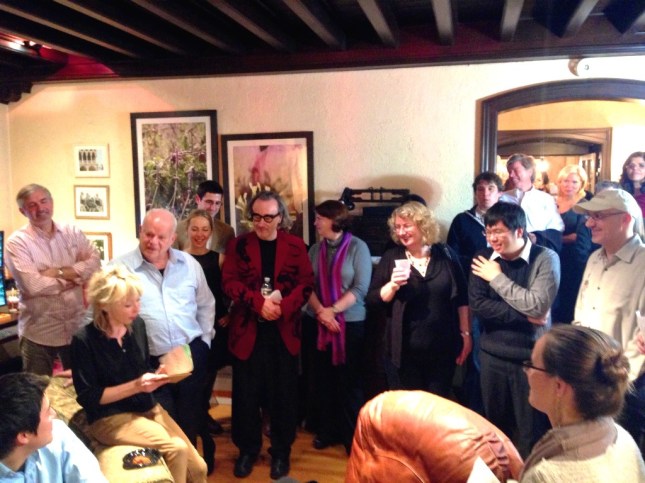
MAPP 9 - Christmas Celebration

The next day, final day of the first MAPP semester, it was also Marty´s part to speak the closing words. Quite obviously very moved, he cited a passage from Kim Stanley Robinson´s book The Years of Rice and Salt:

“We will go out into the world and plant gardens and orchards to the horizons, we will build roads through the mountains and across the deserts, and terrace the mountains and irrigate the deserts until there will be garden everywhere, and plenty for all, and there will be no more empires or kingdoms, no more caliphs, sultans, emirs, khans, or zamindars, no more kings or queens or princes, no more quadis or mullahs or ulema, no more slavery and no more usury, no more property and no more taxes, no more rich and no more poor, no killing or maiming or torture or execution, no more jailers and no more prisoners, no more generals, soldiers, armies or navies, no more patriarchy, no more caste, no more hunger, no more suffering than what life brings us for being born and having to die, and then we will see for the first time what kind of creatures we really are.”

Time will tell, Marty. But I´m with you…

Heavy. Metal. Heart. Finding Happiness in Angry Music…

The second and final semester of the 2013/14 MAPP program is under way. The first onsite period is history already. While the first semester has (more or less) focused on the theoretical underpinnings of positive psychology, the second semester focuses on the practical application of that knowledge in different contexts. One of this semester´s course is reserved exclusively for the connection between positive psychology and the humanities. We will systematically explore how “the good life” can be found in art, poetry/novels, and music (among other things).

Therefore, last Friday, the whole course went to see a concert of the Philadelphia Orchestra, an evening that focused on Russian composers, especially Tchaikovsky´s 4th Symphony. While I enjoyed this evening tremendously, it is unlikely that I will go to another classical concert in the near future – because for more than 20 years now, my heart has been captured by a different kind of music: Heavy Metal!

Mano Cornuta

By Heini Hansen (GFDL or CC-BY-SA-3.0) via Wikimedia Commons.

It started out around age 12 with “soft” stuff like German superheroes The Scorpions, moving over to (the at that time inevitable) Guns n’ Roses, than progressively getting heavier with classics such as Iron Maiden or Savatage, and German Speed Metal à la Helloween, Gamma Ray, and Blind Guardian. Later I moved on to neo-classical sounds such as Stratovarius, guitar heroes like Yngwie Malmsteen, and Symphonic Metal as played by Rhapsody (of Fire).

During my adolescent years, I´ve also had a long-term affair with some Dark/Gothic Metal bands such as Amorphis and Tiamat – but I never really embraced those growling or screaming vocals. As a consequence, I stayed clear of really heavy Thrash and Black Metal. Around 23, I got rid of most of the typical clothing – but the love for the sound of heavily distorted guitars and a solid double bass drum remained – and probably will do so until the end of this life.

Now where´s the connection to (positive) psychology here? The thing is: there´s not too much official (psychological) research on heavy metal. And the few studies that do exist typically deal with (supposed) negative consequences of listening to heavy music, such as aggression, suicidal risk, and drug abuse. At the same time, there´s no doubt about the fact that most people use music to control (dampen or amplify) and even create certain moods and emotions.

Heavy Metal concerts are distinctly peaceful and non-violent places – if you manage to avoid the mosh pit, that is…

I´m really trying not to be lopsided here – but to me there always seemed to be something wrong about these studies. Heavy Metal is – for the most part – aggressive music, agreed. But this does not automatically imply Heavy Metal fans are aggressive people. I´ve been to hundreds of concerts in my lifetime. From these experiences, I can say that Heavy Metal concerts are distinctly peaceful and non-violent places – if you manage to avoid those inevitable mosh pits, that is. 🙂

Most of us are truly amicable and fun-loving guys (and girls of course). It just so happens that some of us are also a little burly – and not to fond of shaving or going the hairdresser.

I did not choose it. It chose me. Listening to the arpeggios in the first solo of Yngwie Malmsteen´s Mad Dog elicits feelings in me that otherwise can only be aroused by sex and really really good dark chocolate.

Quite obviously, different people have different “internal energy levels” and therefore react to “different vibrations” when exposed to music (please excuse the esoteric language…). What I mean is: my favorite TV series of all times is Ally McBeal. I love shopping and romantic comedies starring Hugh Grant. And I happen to LOVE Heavy Metal. I did not choose it. It chose me. Listening to the arpeggios in the first solo of Yngwie Malmsteen´s Mad Dog (starts approx. at 1:42) elicits feelings in me that otherwise can only be aroused by having sex or eating really really good dark chocolate.

My esoteric hunch is echoed in one of those rarer studies that finds headbangers are just regular people that happen to feel good while listening to high-intensity music. It´s not a coincidence that a lot of metalheads are also very fond of Wagner. The study concludes by stating that the

“most widely accepted conclusion is that heavy metal fans are in general angrier, more agitated, and more aroused than fans of other musical styles. The results of this study do not support this speculation. No pretest differences were found among subjects’ levels of state arousal, state anger, or trait anger.”

In addition, the researchers find what is called an interaction affect. To cut a long story short: there actually are people who become angry when listening to Heavy Metal. Precisely, people who do not like Heavy Metal. Surpriiiise! Happens to me when I have to listen to Miley Cyrus. I mean, I love to watch Miley Cyrus – but only when the TV is muted. Wrecking Ball is a great piece of visual art when accompanied by Manowar´s Heavy Metal Daze.

Heavy Metal WheelchairI was inspired to write this post (and stole the second part of the title…) by a piece on The Atlantic magazine. The author elaborates on the potential uplifting effect of getting in touch with our innate animal-aggressive nature when listening to Heavy Metal: “There’s something cleansing about engaging with emotions we might not usually let ourselves feel.”

Closing remarks: While doing some research for this article, I was quite amused to find out that the Mano Cornuta (Sign of the Horns; as displayed in both pictures) is also an ancient Buddhist mudra by the name of Karana – which is used to fight off evil spirits. There you have it! We´re the good ones, really…


Source for picture of wheelchair headbanger

Bad is Stronger than Good! That is why our World desperately needs Positive Psychology…

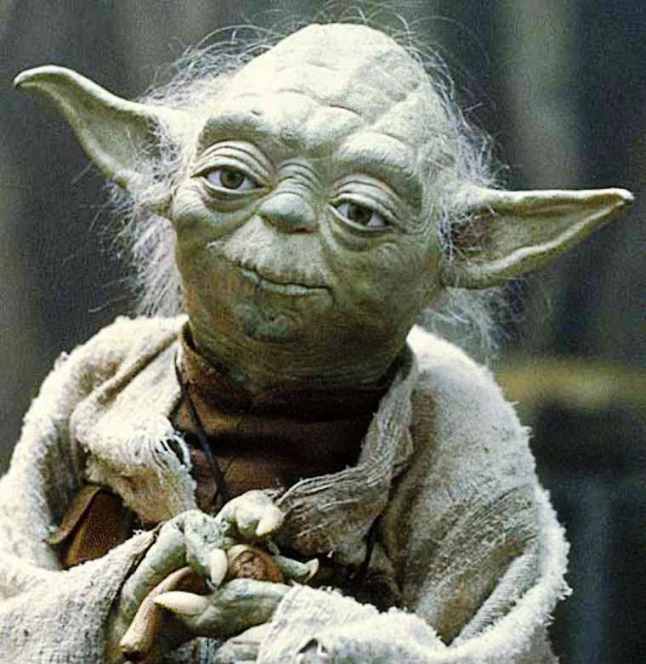
YodaLuke Skywalker: “Is the dark side stronger?”
Yoda: “No, no, no. Quicker, easier, more seductive.”

If you are one of the few people on the planet that have not seen Star Wars: the dark side (of the Force) was not stronger. As in most Hollywood stories, the good guys win in the end. That´s why we go to the movies in the first place. We want to see an entertaining plot. That means: We want to see the good guy struggling, we want him to take on his challenge. And we want him to win in the end. And they lived happily ever after…

Unfortunately, in real life things look a little different. In real life, “Bad” mostly is stronger than “Good”. I´m not talking about a metaphysical power struggle here, of course. I´m talking about psychological phenomena. Together with some colleagues, MAPP guest lecturer Roy Baumeister has written a review article that goes by the name of this blog post: Bad is Stronger than Good. They´ve gathered tons of empirical evidence on a wide array of psychological mechanisms to lend support to this stance:

  • On the preconscious level, we pay more attention to negative stimuli than to positive stimuli.
  • Negative information is processed more thoroughly than positive information. This can be demonstrated even on the level of neural activity.
  • In terms of impression formation, negative information by far outweighs positive information (telling one lie can make you a “liar” forever).
  • Bad memories are engraved deeper in our brains and can be retrieved more easily.
  • Losing a certain amount of money feels worse than winning the same amount of money feels good. Basically, that´s what Kahneman and Tversky got their Nobel prize for in economics in 2002.
  • Bad events in our lives have a stronger and longer-lasting effect than good events. This is nicely demonstrated by the fact that we do have word for the consequences of very very bad events (trauma), but there´s no corresponding term for the positive side of the emotional continuum.
  • Negative feedback has a stronger and longer-lasting effect on us than positive feedback.
  • Therefore, we put a lot more emphasis on avoiding negative information pertaining to ourselves than focusing on integrating positive information.
  • In close relationships, one bad event can ruin everything. Yet, a lot of positive events cannot save a relationship “forever”.
  • Bad parenting has a stronger negative effect on the development of the children than good parenting has on positive development.

This list could go on forever. And: there´s hardly any exception to be found.

But is it really that bad?

Baumeister et al. argue that we may be evolutionary hardwired to put a strong emphasis on negative stimuli in our environment. At the end of the day, 10,000 B.C., it probably was far more “adaptive” (= useful for spreading your genes) to be the first person in a group spotting that saber tooth tiger lurking behind the bush than spotting those sweet blackberry growing on the bush. In other words, there is an all-pervasive negativity bias that influences our thinking and feeling at all times.

So in a sense, every single human being wears the opposite of rose-colored glasses all the time (and mostly without knowing that we do). Now, if this true, for me, there´s another important implication:

If we are evolutionary hardwired to perceive, process, and remember bad information to a much higher extent than positive information, it follows that – on a more objective level – the world actually is a much better place than we think it is.

Now the big question is: What can we do about this inherent negativity bias? How can we overcome this urge to see everything through “concrete-colored” glasses?

Because I really feel we should! While looking out for threats at all times may have been adaptive in the Pleistocene – it probably is not as helpful in the so-called developed world. We live in relative safety. With very rare exceptions, nobody has to suffer from starvation. When we´re sick, we go to the doctor and receive treatment. Most of us die of old age, not of homicide or wild animals. From more than one point of view, this is a good place to live in.

In spite of this, mental disorders, especially depression and anxiety disorders, are “booming” – for decades by now. While this development certainly has multiple causes, I believe one reason is that the negativity bias has become maladaptive in our times. We are bombarded with thousands of messages via different media outlets each and every day. And the sad truth is that most media tend to focus strongly on negative news, events, and stories – precisely because they know we tend to focus on negative events. It drives their reach and circulation. So obviously, we are constantly exposed to a distinctly negatively biased fraction of what happens in this world – using a set of cognitive tools that are distinctly attuned to the worst part of that already distorted view of reality.

We are constantly exposed to a distinctly negatively biased fraction of what happens in the world – using a set of cognitive tools that are distinctly attuned to the unpleasant parts of that already distorted view of reality.

So what can we do?

Enter Positive Psychology. A short definition of positive psychology could be: “It´s the study of (psychological) things that go well”. By its nature, positive psychology studies positive phenomena: What makes us happy (instead of sad)? How can we find meaning in life (instead of languishing)? How do relationships flourish (instead of being a source of pain)? Etc.

By now, there´s a lot of scientific evidence on those questions. One finding that has popped up in several different domains of inquiry goes as follows: Good is stronger than bad – but only if good outnumbers bad to a considerable extent. In Baumeister et al.´s words:

“This is not say that the bad will always triumph over good, spelling doom and misery for the human race. Rather, good may prevail over bad by superior force of numbers: Many good events can overcome the effect of a single bad one.”

Let´s look at some examples:

Basically, raising the number of positive experiences in our lives is also one of the essential mechanics underlying positive (psychology) interventions, such as the What Went Well exercise or the Gratitude Visit. They create (or shift our attention to the) positive momentum in our lives to counterbalance the all-pervasive negativity.

The truth is: Each and every one of us has to make an effort for good to be stronger than bad.

But what about our daily lives? Who has the time to perform interventions all the time? The truth is: Each and every one of us has to make an effort for good to be stronger than bad. Good thing is: We do not have to be larger-than-life leaders such as Mahatma Gandhi or Nelson Mandela do make an impact. It´s the little things that count (a.k.a. micro-behaviors) – if they come in large amounts. A smile. A thumbs-up. An affirmative nod. A pat on the back. Putting the toilet lid back down…

A little kindness goes a long way.

If you need more inspiration, watch this – again and again if you like:


* For the expert reader: she may have gotten the math wrong initially – but the phenomenon itself can hardly be called into question.

Barry Schwartz on Good Decision-Making and Practical Wisdom

Paradox of ChoicePractical WisdomI really don´t have time to write to today – but I want to want to write something. So instead of composing a longer text, I´d just like to point you to two great TED talks by Barry Schwartz, Professor at Swarthmore and guest lecturer in the MAPP program. The first one is about decision-making and how having too many choices can make us miserable. The second one is about Barry´s conception of practical wisdom. He has also written books on both topics.

xxx

xxx

License for Satisfaction: German Book Trailer with English Subtitles

If you are a regular visitor of Mappalicious you may know by now that I´ve written a German book on positive psychology by the name of Lizenz zur Zufriedenheit (License for Satisfaction). Unfortunately, the book is still not available in English. But yesterday, I took some time to create English subtitles for the book trailer that we shot in 2012. I hope you´ll have as much fun watching it as we had while creating it. If you like the film, please share!

2013 – 8760h: How time flies…really?

Every time a year draws to a close, a lot of people start saying something like “Oh, how time flies…”. Mostly, it is used in a slightly sniveling fashion – as if those people might have missed something. I guess that´s why they show all those year-end retrospectives on TV. But then, they invite all these VIP and VEP (Very Exceptional People) – and at the end of the day, one´s own life might seem insignificant in comparison.

So why not create your own personal year-end retrospective?* Why not have a look at what really happened in those last 365 days?

Merry Christmas and happy new Year!

Nico Rose - Neon - Euromasters

One year consists of 8760 hours! I have…

Big Chunks

Need to Talk

Nico Rose - TEDxKoeln

Working with real People

New Beginnings

  • started to study (surprise, surprise…) positive psychology (and therefore spent 22 days in the U.S.)
  • started the blog Mappalicious (surprise, surprise…again…) and written 62 articles (including this one)
  • published 5 articles as “Digital Leader” via lead-digital.de
  • bought an acoustic guitar, taken 7 lessons and practiced about 10 hours (definitely not enough)

Endings

Not so nice

Very nice

  • been promoted at Bertelsmann

Nico Rose - Birthday

Personal Stuff

  • said “I love you” +365 times (not every day, but several times on some of the days)
  • canoodled with my son approx. one million times
  • read +80 good-night stories (definitely not enough, please refer to kilometers travelled)
  • had approx. 700 cappuccinos and 5 kg chicken tikka
  • been to 5 metal concerts and one opera premier

My New Year´s resolution: having myself cloned!

So, how might your very own year-end retrospective look like?

* Please excuse the fact that a lot links in this article will lead to German sites. I´ve really just started publishing in English this year – so most of my stuff is still in German…