What´s your Favorite Positive Psychology Book? (Poll)

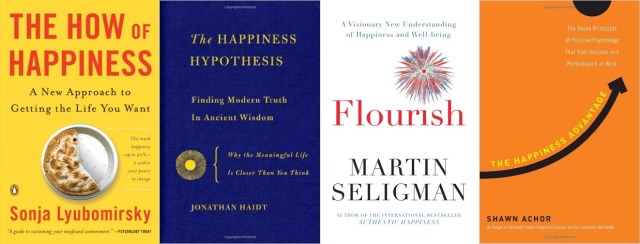
Today, I´d like to know which Positive Psychology Book you like best. I´ve provided a list with 10 of the most popular books (from my point of view). You can pick up to 3 books – or list other books that you prefer. Thanks a lot for your participation. Please share this post so others will vote, too!

Positive_Psychology_Books

Where can I get a University Degree in Positive Psychology?

Nico Rose - Martin SeligmanIf you have been following Mappalicious in the past, you´ll know that I was part of the 9th cohort of the Master of Applied Positive Psychology Program (MAPP) at University of Pennsylvania. To my knowledge, this program has been the first to offer a full-blown master´s degree in this specific area of psychology. And I guess it is save to say that – to this date – it is also the most renowned one, being (in part) taught by Marty Seligman himself, together with some of his closest co-workers.

Ever since running this blog, people have approached me to get info on alternative educational opportunities in the field of Positive Psychology. Accordingly, below you´ll find a list of university-based programs that offer an “official” degree (such as a Master´s) in or closely related to Positive Psychology.

If you are interested in obtaining additional information on alternative learning opportunities, I highly encourage you to visit Seph Fontane Pennock´s site. There, you´ll find a multitude of other programs, such as summer schools, graduate courses, certificates offered by private institutions, and online courses.

Positive Psychology Programs

Master of Positive Psychology at Aarhus University, Denmark: The information given is available in Danish only.

MSc in Applied Positive Psychology at Anglia Ruskin University: You’ll be introduced to research and interventions around topics like positive and negative emotions, character strengths, motivation, resilience, creativity, wisdom and other conditions shown to make a difference to the lives of individuals, groups and organisations. You’ll constantly test your skills and apply them to real-life situations, coming to understand which tools and strategies to use in delivering meaningful, high-impact interventions. The course is taught in Cambridge and Paris. The program is offered as a full-time program (12-15 months); or part-time (28-33 months).

MSc in Applied Positive Psychology at Bucks New University, Buckinghamshire (UK): The course will be of interest to individuals in a range of professions and occupational roles that include (but not limited to): teachers, human resources, organizational development, coaches in different disciplines (such as management or sports), psychologists, psychotherapists, counselors, and medical professionals. It´s a full MSc and can completed part-time over two years, though you may choose to study over three years and devote your final year to your dissertation.

M.A. Positive Developmental Psychology/M.A. Positive Organizational Psychology at Claremont Graduate University, California: Claremont offers several concentrations focusing on Positive Psychology as part of their M.A. program in psychology. For more info, please follow the link.

MSc in Applied Positive Psychology & Coaching Psychology at University of East London: The program fully integrates positive psychology and coaching psychology to create an innovative training programme for those promoting wellbeing. From the point of view of positive psychology, the course will have a strong foundation in cutting-edge theory and research relating to wellbeing. The coaching element will feature advanced training in working with clients and groups in professional capacities. The program is offered as a full-time program in one year; or part-time in two years.

Executive Master in Positive Leadership and Strategy at Instituto de Empresa (IE), Madrid: This program is designed for experienced executives interested in achieving outstanding business results via the proven, hands-on methods of positive leadership. By gaining a deep understanding of the hard science of positive psychology and human behavior, participants learn how to optimize overall strategy and business functions, architect new work processes, and design organizational structures to achieve optimal performance in themselves and the people they lead. The program is offered part-time over 13 months.

Executive Master in Applied Positive Psychology at University of Lisbon: The information given is available in Portuguese only.

Master of Applied Positive Psychology at University of Melbourne: The program will equip you to apply positive psychology principles in your professional and personal life, with a special focus on creating and evaluating positive and meaningful change, and promoting optimal leadership within organizations. Learning and assessment will take place through a range of tasks, including debates, case studies, role plays, videos, journal entries and research activities. In addition, you will be encouraged to apply positive psychology principles to your own life and to critically reflect on these experiences. The program is offered as a full-time program (12 months); part-time options are available.

Master of Arts in Positive Psychology (MAPP) at North-West University, Potchefstroom, South Africa: I´m not sure if the program is still offered as the link seems to be broken.

Master of Applied Positive Psychology at University of Pennsylvania, Philadelphia: The original, so to speak. The program was the first in the world to offer a degree in this rigorous field of study. Dr. Martin Seligman, founder of the discipline of positive psychology, created the program to educate and train students at the cutting edge of the field. The program’s hybrid model allows you to explore the theory and practice of positive psychology without relocating to Philadelphia, so you can continue working full-time. The program consists of nine courses, completed during one year of full-time study.

Specialization in Positive Psychology & Technology as part of the MsC program in psychology at University of Twente (Netherlands): The information given is available in Dutch only.

Certificate of Advanced Studies in Positive Psychology at University of Zurich, Switzerland: The information given is available in German only.
Want to learn about Positive Education? Here are some Opportunities

Pos_EdFirst, I’d like to point your attention to an upcoming conference: The International Positive Education Network (IPEN) will be hosting the first Festival of Positive Education in Dallas from July 18 to 20 next year. Among the speakers will be Martin Seligman, Angela Duckworth, and Anthony Seldon. For info and booking (please note there are some early-bird options) please visit this site.

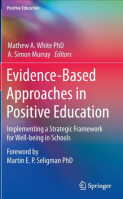
Second, a couple of weeks ago a parcel reached me all the way from Australia. It contained a copy of the book Evidence-Based Approaches in Positive Education: Implementing a Strategic Framework for Well-being in Schools edited by Mathew White and Simon Murray (foreword by Martin Seligman). I haven’t had a chance to read it yet but I’m sure it’s worth every penny.

Positive Psychologie in der SchuleAnd third, just in case your German: We don’t have to look to the other end of the globe for good stuff on Positive Education. Recently, Michaela Brohm and Wolfgang Endres published a book by the name of Positive Psychologie in der Schule: Die Glücksrevolution im Schulalltag. Mit 5 × 8 Übungen für die Unterrichtspraxis (Positive Psychologie at School).

Finally, I’d like to point your attention to the list of Positive Psychology papers on this site – it also contains a section on Positive Education.

Share and enjoy!

12 + 1 Articles on Positive Education (including links to PDFs)

Positive EducationI´m very happy to announce that recently, I have become an IPEN Global Representative. IPEN (International Positive Education Network) is an initiative to “bring together teachers, parents, academics, students, schools, colleges, universities, charities, companies and governments to promote positive education.” The group of Global Representatives volunteers to help IPEN to “spread the word” on Positive Education (in their respective countries of origin).

To start, I´ve compiled a list of 12 eminent research articles on Positive Education, the links will lead to the respective PDFs. Enjoy!

Bonus:

Positive Psychotherapy: A Collection of 5 Research Articles

Positive PsychotherapyPositive Psychology was founded on the belief that there is (or at least has been) an imbalance with regard to the amount of attention researchers and practitioners in the field of psychology give to the positive versus negative phenomena in (human) life (for some insights on this, click here). For the first 100 years, psychological science has give much more attention to the negative continuum of experiences (e.g., how to get rid of depression) than to the positive side (e.g., how to lead and sustain a happy and fulfilled life).
Nevertheless, just some years after Positive Psychology’s “inception”, some researchers and practitioners took the newly developed theories, tools, and interventions from the subclinical arena – and tried to apply them in a clinical context, e.g., to help people who suffer from depressive disorders. Thus, Positive Psychotherapy was born.*

Here, you’ll find four of the most important articles charting this territory (links lead to PDFs). The fifth article is a very recent one, there’s no free PDF available as of yet. But if you’re interested: I’ve made very pleasant experiences by just e-mailing authors and asking for a copy. Enjoy!

*Even though Positive Psychology’s official year of birth is 1998 (when Marty Seligman was elected president of the APA), the term Positive Psychotherapy has been in use long before that time. If you’d like to learn more, please click here.

Positive Psychology and Me: Confessions of a Science Fanboy

So on most other days, I´m trying to write super-smart and meaningful stuff here, educating people about the science of Positive Psychology. This is not one these posts. The purpose of this one really is to show off. There, I said it…

I´m just beyond grateful for having had the chance to attend this year´s MAPP Summit which, at the same time, was a 10 years anniversary celebration for this special program at University of Pennsylvania. As usual, the rooms were packed with beautiful people from all walks of life who share the passion for all things Positive Psychology – and top-notch researchers in the field of Positive Psychology and adjacent.

For some folks, it´s a big thing to get a selfie with, let´s say, Beyoncé. But I´m a professing “Science Fanboy” – so the rest of the article is just a bunch of photos along the lines of “me with some super-smart/super-important person”. It´s the visual equivalent of a blog post I wrote last year when I graduated from the program: Positive Psychology and MAPP at Penn: Doing that Namedropping Thing. So if you are crazy about Positive Psychology and you feel a bit jealous after seeing this, it´s because you probably should be… 😉

Nico Rose - Martin Seligman

Seligman Selfie No. 1

Nico_Rose_Barry_Schwartz

Prof. Barry Schwartz of Swarthmore, author of “The Paradox of Choice” (among many other books)

Edward Deci and Nico Rose

Prof. Edward Deci of Rocester, Co-Founder of Self-Determination Theory

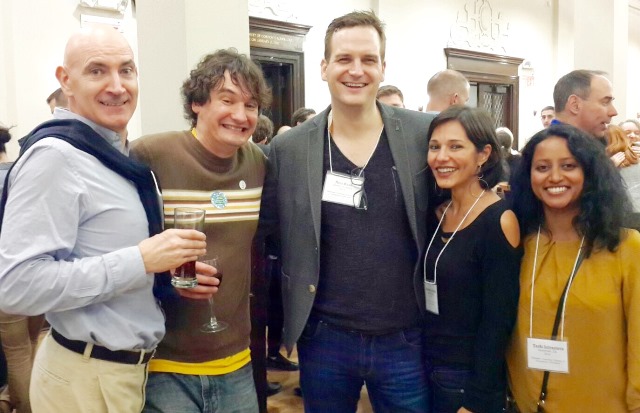
Nico Rose - MAPPsters

Sharing a laugh with past and future MAPPsters

Nico Rose - Martin Seligman

Seligman Selfie No. 2

Nico Rose - Angela Duckworth - Adam Grant

Two very brilliant and kind people: Angela Duckworth (who´s most notable for her research on Grit, and Adam Grant, author of “Give & Take”. By the way, both will have new books out in 2016.

I had to leave a bit early, therefore I didn´t get the chance to take a photo with Kelly McGonigal who also presented at the MAPP Summit – but I guess there will be a time for that in the future…

A Celebration in 12 Tweets: 10 Years of Master of Applied Positive Psychology (MAPP) at Penn

What a wonderful day! I haven´t been to Philadelphia ever since my graduation from Penn in August 2014. But now I´m back. This weekend, Martin Seligman´s Positive Psychology Center hosts the annual MAPP Summit. On this occasion, the current MAPP cohort gets to meet their predecessors. How? It´s a top-notch Positive Psychology conference combined with an alumni meeting of the previous MAPP cohorts.

The alumni gathering, the so-called MAPP Fete, had a special reason to celebrate. 2015 marks the year of the 10th anniversary of the MAPP program at Penn (and cohort 11 is well on it´s way). While Martin Seligman himself addressed us during the lunch hour, the greater part of the day was reserved for “Ignite Presentations”, 5-minute “Pecha Kucha”-style talks given by 17 of our distinguished alumni. Several of us tweeted using the hash tag #10YearsofMAPP. Here´s my little Twitter round-up of that beautiful day:

https://twitter.com/DrNicoRose/status/655031332603580416

https://twitter.com/DrNicoRose/status/655031646576648192

https://twitter.com/DrNicoRose/status/655035269725442048

https://twitter.com/ShannonPolly/status/655048874680303616

https://twitter.com/DrNicoRose/status/655060394797568000

https://twitter.com/DrNicoRose/status/655075881921191936

https://twitter.com/DrNicoRose/status/655090344992886785

https://twitter.com/DrNicoRose/status/655095785479151616

https://twitter.com/DrNicoRose/status/655128308758261760

Happiness lies in the Joy of Achievement and the Thrill of creative Effort.

There are literally hundreds of quotes and definitions on “the happy life”. I find that a lot of them point towards the quieter, more modest forms of happiness, such as practicing gratitude – being content with what we have. 

But there are others sides to happiness – those can be found in the letter A of Martin Seligman’s PERMA definition of the good life. Therefore, I was thrilled to stumble upon this quote by former POTUS Franklin D. Roosevelt. Enjoy!


Positive Psychology at the Movies: Character Strengths in “Love Actually”

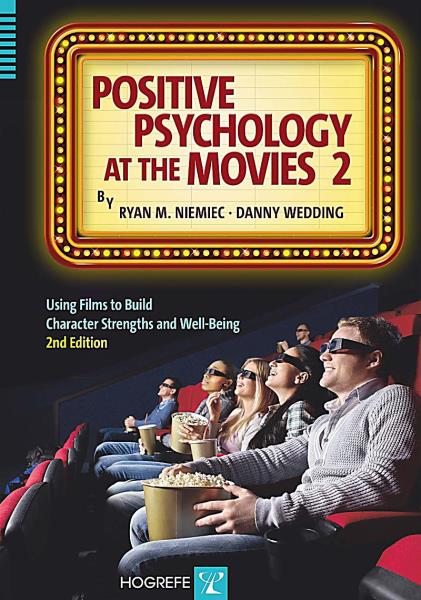
Positive Psychology at the MoviesOne of the central concepts in Positive Psychology is the framework of 24 character strengths that have been outlined by Chris Peterson and Martin Seligman in their 2004 tome. It was the foundation for the VIA Institute on Character – where you can take a test (for free) to find out what your top strengths are.

Ryan Niemiec, VIA´s Education Director, has published the book Positive Psychology at the Movies. It examines nearly 1,500 movies with regard to their display of the 24 character strengths throughout their plots. Frankly, so far I did not have the time to watch all of those movies – but considering general life expectancy, I will be able to so until I´m grey and old (don´t know where Ryan finds the time, considering how many books he publishes).

Anyway, I had an idea: instead of trying to find all of the character strengths throughout a ton of movies – would it be possible to find them all in just one? Therefore, I picked one of my all-time favorites, romantic (Christmas) comedy Love Actually, watched it for the hundredth time (or so…) – but for once, looked through the eyes of the VIA taxonomy. And tadaaa: I was able to spot all of them, even though I have to admit that two or three of the attributions may seem somewhat debatable.

Here´s what I´ve found:

  • Mark displays creativity when having arranged the special version of the Beatles´ “All you need is love” for Juliet and Peter´s wedding.
  • Karen displays perspective and humor when cheering up Daniel as he mourns for departed wife.
  • Mark displays creativity when having arranged the special version of the Beatles´ “All you need is love” for Juliet and Peter´s wedding.
  • Harry the Boss displays social intelligence and leadership when confronting his employee Sarah about her being in love with co-worker Carl.
  • Little Sam displays honesty and bravery when telling his step father Daniel about being in love with Joanna.
  • Little Sam displays spirituality when he tells his father about how he believes in love and that there’s one true love out there for each and every one of us.
  • Prime Minister David displays humor when he tries to cheer up Natalie after she told him how bad she has been treated by her ex-boyfriend.
  • The Prime Minister displays prudence and judgment when, at first, he does not want to confront the U.S. delegation during the meeting with U.K. ministers.
  • The Prime Minister displays leadership, humor, and bravery when confronting the POTUS at the press conference.
  • Jamie displays love of learning and perseverance when trying to learn Portuguese in order to be able to talk to Aurelia.Love Actually - Billy Mack
  • Colin displays zest, curiosity, hope, and bravery when deciding to leave the UK for Wisconsin.
  • Mark displays kindness, great honesty, love, and bravery when meeting Juliet at her house on Christmas Eve to confess his love, but also his approval of her living with Peter. (By the way, this is probably my all-time favorite movie scene).
  • Karen displays self-regulation and judgment when pulling herself together on Christmas Day after having found out Harry has cheated on her – in order not to spoil Christmas for their kids.
  • Sarah displays fairness and (the capacity to) love (and be loved) when spending Christmas together with her mentally ill brother.
  • John displays gratitude after having been kissed by “Just Judy” for the first time.
  • The school orchestra/choir displays teamwork when performing at the Christmas concert.
  • The whole audience displays appreciation of beauty and excellence when witnessing young Joanna sing “All I want for Christmas” at the school’s Christmas celebration.
  • Little Sam displays perseverance, and bravery when running to say good-bye to his love Joanna at the airport.
  • Jamie displays hope, bravery, and love when he leaves his family’s Christmas party to spontaneously board a plane to ask Portuguese housemaid Aurelia to marry him.
  • Billy Mack displays humility and gratitude when deciding to return to Joe, his ugly manager, instead of spending Christmas Eve at Elton John´s party.
  • Karen displays forgiveness when she consolingly welcomes her husband Harry at the airport after he has betrayed her.

What´s your favorite movie – and are you maybe going to see it with different eyes in the future?

A KPI for the Leaders of the Future: Return On Flourishing (ROFL)

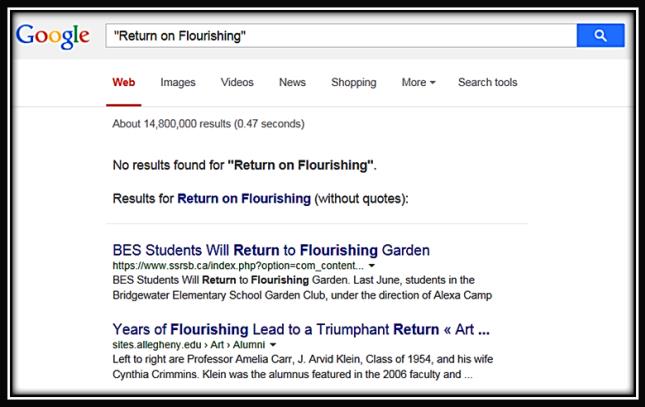
First, I have to admit it feels really good to think something (or at least: say it “in the digital public”) for the very first time. At least with regard to Google hits, I´ve created a new expression:

Return on Flourishing - Dr. Nico Rose

Return On Flourishing (ROFL – pun somewhat intended)

In my main occupation, I work as a human resources director. In most business organizations, Key Performance Indicators (KPIs) are of paramount importance. One of the most important KPIs in every organization is Return on Investment (ROI). In its simplest form, ROI is the return of some activity divided by the cost of that same activity. For instance, if a marketing campaign costs $10,000 and (identifiably) leads to $20,000 in additional sales in a certain period of time, the ROI of that project is 200%.

To this effect, it would also be possible to calculate a Return on Flourishing – which I propose to be the additional (financial) return that is generated by investing in measures designed to foster flourishing of the company´s workforce; minus the cost of those measures. By now, there´s an abundant body of research that is able to demonstrate that companies which invest in employee wellbeing do indeed fare better economically – which may ultimately even be detectable in stock prices (please check out the following paper: Does the stock market fully value intangibles? Employee satisfaction and equity prices).

By way of example, employee well-being could lead to a better quality of products or services; or a more engaged salesforce, leading to better sales figures. On the other hand, higher levels of flourishing may lead to cost reductions, e.g., by decreasing levels of absenteeism and healthcare costs; or lower levels of employee turnover which in turn helps to minimize recruiting costs. Therefore, it is reasonable to expect that investing in employee flourishing will lead to an increase in financial returns. In order to make this effect visible and clearly identifiable from the inside perspective, first, we would have to establish a baseline of overall flourishing in the workforce. Based on Seligman´s PERMA framework, we could rather easily measure the following:

Alternatively, there are existing “one-stop” questionnaires to measure flourishing, e.g., the PERMA Profiler (please check out my MAPP Capstone thesis for its items; this could be adapted so as to better fit to a working context).

Second, one or more activities to foster workforce flourishing would have to be implemented. For instance, there could be company-wide workshops on job crafting. Or rather, first we would have to implement that project with a part of the workforce (treatment group; e.g., a product line) in order to later compare those employees with another group that will receive the workshops at another point in time (control group; another product line). If, after implementation, the treatment group shows significantly higher levels of flourishing compared to the control group (manipulation check), we could move on to the final step.

Ultimately, the financial success of the different business units would have to be calculated for several ensuing periods. If the treatment group fares significantly better than the control group (e.g., a significant increase in sales), this difference could be attributed to the increase in employee flourishing. Of course, it is always tricky to make this kind of causal inference, but there are lots of steps one can take to rule out or control for other effects. Now, if the increase in financial returns surpasses the cost of the measures to increase flourishing (over time), we would assume a positive Return on Flourishing (ROFL).

Return on Flourishing (ROFL): the wider Perspective

Of course, this is still a rather limited point of view. Studies were able to show that an increase in well-being at work leads to higher levels of general well-being. To that effect, we can assume there could a be a wider ROFL – where higher employee well-being leads to an increased level of well-being with regard to the company´s community and stakeholder groups via a kind of ripple effect.

What are your thoughts on this?