After publishing a list of 5 essential upcoming books on Positive Psychology a couple of days ago, several friendly people approached me (Thank you!) to point me towards further noteworthy books that have just been published or are already appearing on the publishing horizon (a.k.a. on Amazon for pre-order). So, if you´re looking for further entertainment, enlightenment, or just plain Positive Psychology science, here you go. There´s books on women´s careers, rising strong after setbacks, good work and great organizations, world-changing individuals, and much more (click to enlarge the image). Enjoy – and share the good news!

Positive Psychology books that have already been published
Brené Brown: Rising Strong. Brené Brown is a professor at the University of Houston Graduate College of Social Work and author of the No. 1 New York Times bestseller “The Gifts of Imperfection”. About the book:
“It is the rise from falling that Brown takes as her subject in Rising Strong. As a grounded theory researcher, Brown has listened as a range of people — from leaders in Fortune 500 companies and the military to artists, couples in long-term relationships, teachers, and parents — shared their stories of being brave, falling, and getting back up. She asked herself, What do these people with strong and loving relationships, leaders nurturing creativity, artists pushing innovation, and clergy walking with people through faith and mystery have in common? The answer was clear: They recognize the power of emotion and they’re not afraid to lean in to discomfort.”
Beth Cabrera: Beyond happy: Women, Work, and Well-Being. Beth Cabrera is a senior scholar at the Center for the Advancement of Well-Being at George Mason University and works with companies to help them create positive work environments. About the book:
“Over the course of a decade, Beth Cabrera has surveyed and interviewed more than a thousand women to gather insight into how to effectively balance career and family responsibilities. Beyond Happy: Women, Work, and Well-Being gathers essential findings and offers women proven strategies for living more authentic, meaningful lives. Through the lens of shared experience, Cabrera thoughtfully examines the challenges women face and presents a simple yet powerful model for enhancing well-being that can both improve and transform lives.”
Tom Rath: Are you fully charged? Tom Rath is a Penn MAPP alum, now a regular guest lecturer in that program, and otherwise, regularly to be found at No. 1 spots on the New York Times bestseller lists with his heavily Positive Psychology-infused masterpieces. About the book:
The book “reveals the three keys that matter most for our daily well-being, as well as our engagement in our work. Drawing on the latest and most practical research from business, psychology, and economics, this book focuses on changes we can make to create better days for ourselves and others. Are You Fully Charged? will challenge you to stop pursuing happiness and start creating meaning instead, lead you to rethink your daily interactions with the people who matter most, and show you how to put your own health first in order to be your best every day.”
Barry Schwartz: Why we work. Barry Schwartz is a professor at Swarthmore College, author of the highly-acclaimed The Paradox of Choice and a regular New York Times contributor, and a regular guest lecturer in the Penn MAPP program. About the book:
“We’ve long been taught that the reason we work is primarily for a paycheck. In fact, we’ve shaped much of the infrastructure of our society to accommodate this belief. Then why are so many people dissatisfied with their work, despite healthy compensation? And why do so many people find immense fulfillment and satisfaction through “menial” jobs? Schwartz explores why so many believe that the goal for working should be to earn money, how we arrived to believe that paying workers more leads to better work, and why this has made our society confused, unhappy, and has established a dangerously misguided system.”
Robert E. Quinn: The Positive Organization: Breaking Free from Conventional Cultures, Constraints, and Beliefs. Robert E. Quinn is a professor at University of Michigan´s School of Business and author of “Deep Change”. About the book:
“Beholden to accepted assumptions about people and organizations, too many enterprises waste human potential. Robert Quinn shows how to defy convention and create organizations where people feel fully engaged and continually rewarded, where both individually and collectively they flourish and exceed expectations.”
Upcoming books on Positive Psychology
Amy Cuddy: Presence: Bringing Your Boldest Self to Your Biggest Challenges. Amy Cuddy is a professor at Harvard and best known for her research on body language and “power-posing” (watch her TED Talk here). About the book:
The book “shows us we need to stop worrying about the impression we’re making on others, and instead change the impression we’re making on ourselves. Cutting-edge science reveals that if we adopt behaviors reflecting power and strength, we liberate ourselves from the fears and doubts that obstruct us. By redirecting our thoughts, actions, and even physiology, we free ourselves to be our best.”
Adam M. Grant: Originals: How Non-Conformists Move the World. Adam Grant is a professor at Wharton Business School, author of the immensely successful book Give and Take, and regular guest lecturer in the Penn MAPP program. About the book:
“Using surprising studies and stories spanning business, politics, sports, and entertainment, Grant explores how to recognize a good idea, speak up without getting silenced, build a coalition of allies, choose the right time to act, and manage fear and doubt; how parents and teachers can nurture originality in children; and how leaders can fight groupthink to build cultures that welcome dissent.”




 I totally admire how top psychology researchers regularly get a lot of airtime in US mass media outlets – doesn´t happen that much here in Germany. The following list comprises 10 (more or less) recent pieces from the venerable New York Times. All of them were written (or cover work) by some of the figureheads of Positive Psychology.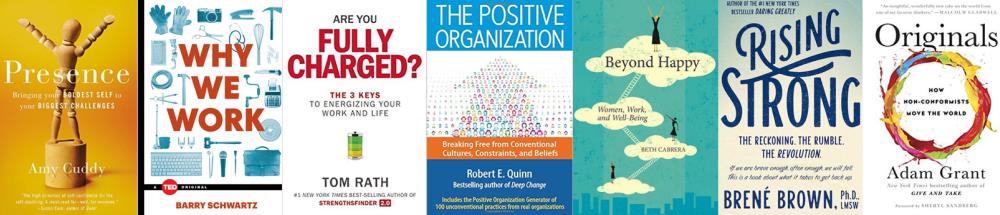

 Mappalicious