The internet is going mad about the soon-to-come launch of the Apple Watch. After checking out what it actually can do. some people think it´s a useless marketing fad, other feel it´s the best thing since sliced bread. Via Twitter, Wall Street Journal writer Geoffrey Fowler asked:
What do you wish the Apple Watch could do next? Door key? Subway pass? Send me your best, and we’ll use them on @WSJDpic.twitter.com/jCRiEk2c5e
For me, the true challenge would be turning it into a piece of positive technology. Here are my three ideas:
As far as I know, the Apple Watch can check my pulse. Then a fine-tuned app could very well detect irregular patterns or longer breaks to a pretty high degree of certainty. As such, it could possibly detect symptoms of an impending cardiac arrest – and then send a emergency SMS using GPS data.
As far as I know, the Apple Watch can record my speech (the iPhone can). As such, it could be used to prevent depression. There is some evidence that usage of certain words, but also certain speech characteristics (e.g., prosody) are predictive of depressive symptoms. If a person is prone to this kind of disorder, a speech recorder could automatically capture sound bites at random intervals over the day. If the elements of “depressive speech” increase over several days based on appropriate algorithms, the Apple Watch could notify the owner – or his/her doctor.
As far as I know, the Apple Watch can mow my lawn. Oh wait, it can´t? Well…
By now, a whole lot of people are writing and blogging about Positive Psychology. There´s also a pretty active Twitter community (please read the post 7 Positive Psychology People and Institutions to follow on Twitter). But as far as I know, people have not (intuitively) agreed on a single Twitter hash tag for the topic. Some use #PositivePsychology (which is quite long), some #PosPsychology (still long and rather unusual), some use #PosPsych – and others do not use hash tags at all when sharing their content. Following my fellow German #PosPsy evangelist Michael Tomoff, I propose to use the hash tag #PosPsy (or #pospsy) from now on whenever talking about this magnificent topic. Using a single unified hash tag as a community has a couple of advantages:
Content in general becomes more visible. Tweets with (more or less) popular tags profit from a higher interaction rate. Additionally, as people get accustomed to the expression, it´ll become the general search term for the topic – helping people to find all the good stuff that is out there on Twitter.
For the same reason, it will help your content to become more visible.
Ultimately, using #PosPsy as the unified hash tag will create a sense of community – just as e.g., all the tweets supporting a certain football team will display the same tag.
Of course, we should still use our more individualized tags like #Gratitude or #Happiness, but using #PosPsyin addition will create the additional attention our topics deserve. So, if you think that having a unified hash tag for all things Positive Psychology is a great idea, please share this post or the following picture! Would be cool to make it a trending topic on Twitter… 🙂
Update
Dear all,
I´ve received a lot of comments and feedback on this topic, via mail, Twitter, or here in the comments section – thanks a lot for your input. I´d like to make three points here:
Yes, I´ve done some research. If PP hashtags were a market, I´d say it´s “absolutely not consolidated”. On some days, one tag is used more often than others, and on other days, it´s something else. In general, when comparing “our” tags to really popular ones, the result would be: they´re all insignificant. That´s why it´s a really good idea in the first place to start using a single one as a community – whatever it may be at the end of the day.
My learning is: with hashtags, it´s all about brevity. You´d want a “minimum understandable solution” that is not occupied by another topic – that´s why I propose #PosPsy.
I´m not sure if hash tags are really important in terms of “resonance”. People resonate with content, not with hash tags. The thing is: in most cases when there´s no predefined tag given out by a source with a considerable outreach, it´s a sort of “winner takes it all” dynamic (you can monitor that e.g. with large sports events). The one that is used most in the beginning (and/or is supported by someone with a large audience) tends to win. First, due to “social pressure”, and second due to the Twitter algorithm that magnifies this effect by suggesting the one that is mostly used anyway.
Therefore: whatever we agree on as a group (and then use systematically…) will be the winner over time. 🙂
Warm wishes,
Nico
Update No. 2
The Positive Psychology Center at UPenn twittered that they support #PosPsy. That´s not like the Pope supporting us, but it´s not too far away either… 🙂
I´ve just moved into a new home – and that means I also had to renovate my coaching office. The new office is slightly larger than my old one – so I had a little more wall space to fill. In a local gallery, I´ve found the picture you can see below. I knew I wanted to buy it right away. Though being rather calm and monotonous, I feel it conveys optimism, confidence, and exuberant strength.
A successful coaching process often involves making a leap of faith, seeing things in a new way, leaving something old behind – sometimes, without knowing exactly what will appear instead. Believing in one´s own strength and resources in crucial when pursuing this trajectory.
I hope the picture will inspire this kind of self-efficacy my clients…
Two weeks ago, I had the great honor of attending the first Munich Leadership Conference, organized by the Munich Leadership Institute – and hosting brilliant speakers such as Prof. Barry Schwartz, Prof. Barbara Kellerman, and Prof. Franz-Josef Radermacher. The overarching motto of the conference was: “How to achieve true progress”.
I had an active part in the conference, being part of a panel discussion on the question of “What attitudes drive true progress? The other panelists were Thomas Sattelberger, former CHRO of Deutsche Telekom, Kerstin Bund, a journalist who works for the Zeit, Germany´s most popular weekly newspaper, and the aforementioned Prof. Radermacher.
The highlight of the conference was the first public presentation of the so-called “Vision Y” – a framework for a peaceful, more egalitarian, and sustainable future – which a group of students envisioned after having interviewed thought leaders such as Nobel Laureate Muhammad Yunus, scientist/author Nassim Taleb, and German Vice-Chancellor Sigmar Gabriel.
But if you are a little bit like me, you like to read an original research paper once in a while (here´s a collection of essential Positive Psychology papers), e.g., to do a fact-check, find additional articles, or just to get an in-depth perspective on a certain topic. Now, it can be a bit tough to get a hold of those papers since typically, they are hidden behind a database´s paywall. But then, the original publisher´s database is not the only way to obtain a certain paper. Here are seven alternative ways that don´t cost a cent.
Google Scholar
Nowadays, your first visit should always be Google Scholar. It indexes the sites of academic institutions but will also find a lot of research papers that are hosted somewhere else on the net. If you already know the paper´s name that you are looking for, just type that into the search field. But of course, you can also search for keywords, researchers, set a certain time frame, or limit your results to a certain branch of research etc. pp.
If a free PDF is available, it´ll typically open up directly when clicking on the article in the search results. But oftentimes, there are different references for the same articles. It´s always helpful to click on the “versions” button below the search result – sometimes, the link to a PDF does not work, but then you can find another link that actually does work via that button.
Another great feature is the button that letS you find “similar results”. If you have found an interesting article, clicking on that button will display papers that are very close to the one that you´ve found, e.g., because it´s from the same researchers, covers a similar topic, or cites a lot of the same references. Using this button cleverly will quickly deliver a decent overview of the really relevant papers for a certain research topic.
Google Scholar also shows you how often a paper is cited by other articles. Without changing the settings, articles are typically (sort of) ranked in that order. Once again, this helps a lot to understand what are the really relevant papers and/or researchers in a specific field.
Use Google´s “Filetype Search”
Even though Google Scholar is pretty good at finding research PDFs on the net, it will not find all of them. I´ve obtained a lot of papers by using a valuable tool from the regular Google search. You can limit your search results to PDFs by typing “filetype:PDF” before your search terms (of course, this also works with .doc; .ppt etc.). This way works most effectively when you already know the full title of the paper that your are looking for. In that case, limit your search to PDFs and then copy/paste the title into the search bar in parentheses. If the article´s PDF is to be found somewhere on the internet, you´ll get it that way.
Visit the Researcher´s academic Website
For good reasons, most of the researchers will have a publication list on their websites. If there´s a free PDF on the internet, most of those researchers (those that have an interest in being read and cited) will set a link to the respective PDFs or host them on their own website. While it is typically not allowed to host a research paper that resides behind a database pay wall, there are often exceptions for the authors of those papers (at least, after a certain amount of time has passed after publication). Even if you do not find the exact same paper that you´re looking for, you may find earlier working papers or conference papers that are very similar to the article that you are actually looking for.
Research Gate
There´s a (rather) new and very cool site by the name of ResearchGate. It´s something like a LinkedIn/Facebook for researchers – and a lot of articles are available via the participants´ profiles. So it´s a good idea to sign up. But typically, if a PDF is to be found there, Google Scholar will also reference it.
Send an E-Mail to the Researcher
Nowadays, you´ll find the e-mail address of the so-called “corresponding author” on the title page of every research paper (and in most cases, it´s also mentioned below the article’s abstract on the net). If there´s no way to get a free PDF via the WWW, you can just send an e-mail and politely ask for a copy of the paper. If the researcher in question is still active and has an interest in being read and published, there´s a good chance you´ll get a nice reply containing the PDF in no time.
Ask a Buddy
It´s always handy to know at least one professor, post-doc, or Ph.D. student. Even if they do not work in the specific field that you are interested in, there´s a good chance they can obtain a paper via their university´s database subscription – and e-mail it to you. Use this method sparingly as this group of people tends to work about 150 hours per week.
Pray
Just kidding. If the aforementioned six way don´t work, you’re probably screwed.*
*If you know additional ways of obtaining free research PDFs, please leave a comment below this article.
A couple of weeks ago, I was interviewed for a magazine that is issued four times per year by our municipal agency for economic development. The interview is centered on coaching for (aspiring) self-employed persons and freelancers. It was an inspiring conversation that dealt with an array of topics such as self-awareness and strengths, finding a good tax consultant, but also Joseph Campbell´s theory of the monomyth (the hero´s journey). You can download the article here (pages 2/3 in the document; only in German, unfortunately).
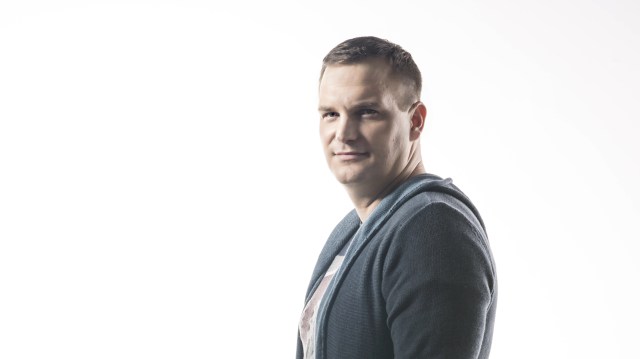
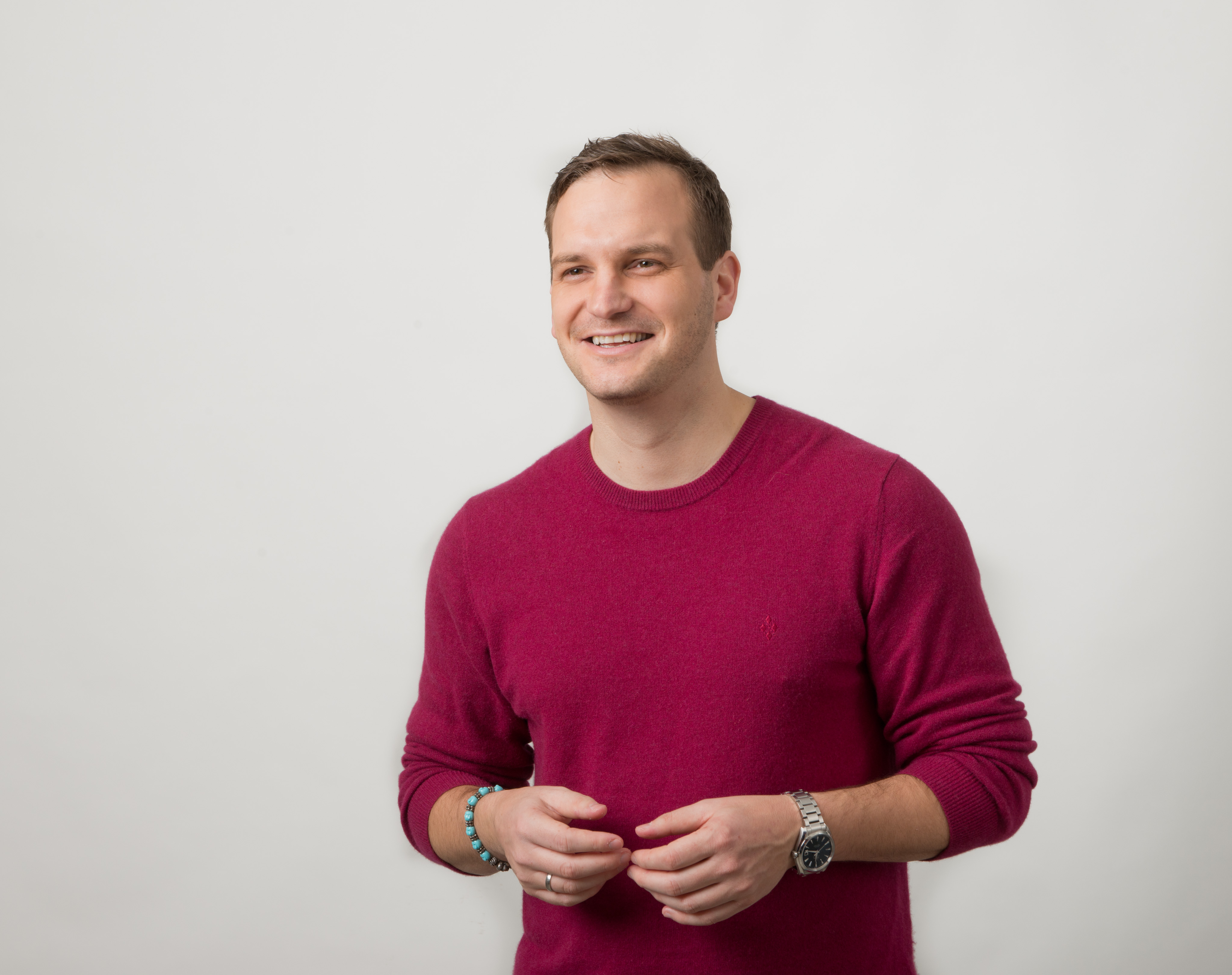
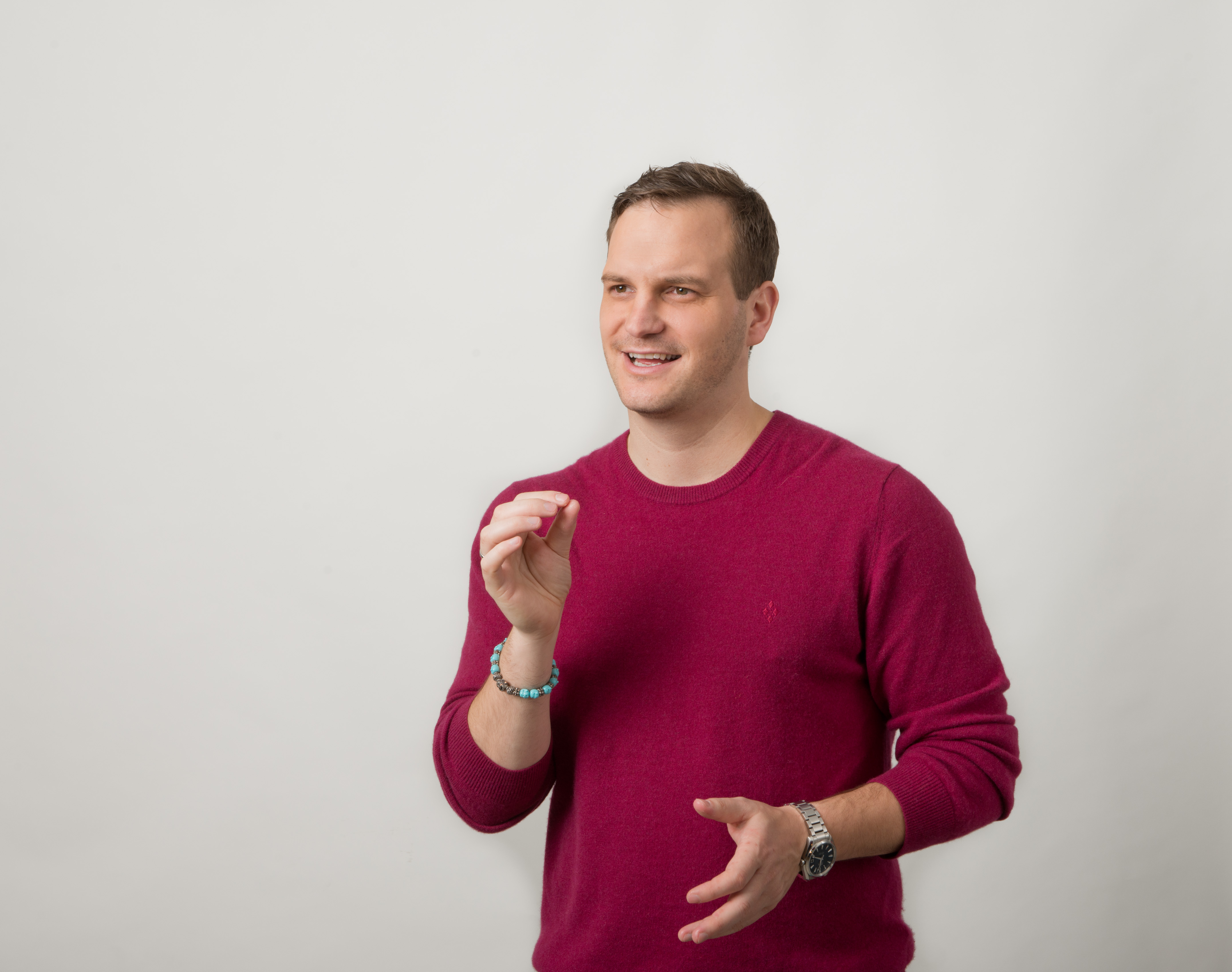
Additionally, there was a photo shooting for the article. I liked the photos very much – so I bought some of them to use them on websites, social media etc. Which one do you like best?
This is a little off-topic – but I feel a strong urge to post something like this right now. About 80% of Mappalicious´ visitors are not from Germany; I get lots of traffic from North-America, the UK, Australia, but also other European countries such as Finland or the Netherlands.
Now, I don´t know how often you follow foreign politics, but if you have a look at what´s going on in Germany right now, you may find articles like this one from the Guardian:
What this is all about: there´s an organization that call themselves PEGIDA, an acronym that roughly translates to “Patriotic Europeans Against the Islamization of the Occident”. Right now, this group is able to mobilize some 15.000 people to demonstrate in Dresden (former East-Germany) every Monday against immigrants, against the “mainstream media” (which they call liars and things a lot worse), and other issues which are too many and too obscure to mention.
Their main argument is that Europe, and especially Germany, will be overrun by Muslims in the near future (what they call “foreign infiltration”). That is especially absurd as the percentage of Muslim inhabitants of Dresden currently is at roughly 0.4-0.5% – which is about one tenth compared to the 5% of the general population in Germany. And by the way, that number is going to rise to ca. 7% by 2050. Whoa, now this is what I call infiltration…
The founders of PEGIDA are a bunch of convicted criminals and/or covert or blatant Neo-Nazis, and most of the people walking beside them are die-hard bozos and hillbillies, and what in the U.S. would probably be called rednecks, and people who´s eyebrows meet firmly in the middle. And then, beside those, there are some pensioners and unemployed people who feel “left behind” – people who are in dire need of a scapegoat for the (alleged) misery in their lives.
These people make me (and probably around 98% of the German population) want to puke my guts out. 25 years ago, at that same place, the people of the former German Democratic Republic were protesting against the reigning Communist regime, they risked their freedom and their lives to get rid of Erich Honnecker and his band of crooks. Their rallying cry back then was “Wir sind das Volk!” (We are the people!”). It was a cry for equality, humans rights, and freedom!
Now, those PEGIDA shitheads are misusing that very same slogan, in a sort of deformation, when they roister through the streets of beautiful Dresden to rant and rave against everything that is somehow foreign, alien, and exceeds the capacity of their shriveled brains.
PEGIDA, you´re not “the people”. You are a pitiful, gruesome shadow of the past.
Dear friends all over the world – please remember: This is not Germany, and these guys are not “the Germans”. I´ve just had a look at my wedding photo from 3,5 years ago. Our maid of honor is originally from Italy, and the bridesmaid is from Syria. My very first girl-friend was from Vietnam, and among my best German buddies are people from Poland, Tunisia, and India. They´ve been working, and living and loving here, for ages! That, my friends, is Germany!
And “dear” PEGIDA! You are not “the people”. You are a sordid, gruesome shadow of the past. There is no future for you – for it will be bright and colorful. Two days to go until you celebrate the birth of Jesus Christ. May you remember that his message was one of kindness and compassion, not ostracism.
Merry Christmas!
Not what you see (Savatage)
No life’s so short it can’t turn around
You can’t spend your life living underground
For from above you don’t hear a sound
And I’m out here, waiting
I don’t understand what you want me to be
It’s the dark you’re hating, it’s not who I am
But I know that it’s all that you see
No life’s so short that it never learns
No flame so small that it never burns
No page so sure that it never turns
And I’m out here, waiting
I don’t understand what you want me to be
It’s the dark you’re hating, it’s not who I am
But I know that it’s all that you see
Can you live your life in a day, putting every moment in play?
Never hear a word that they say as the wheels go around
Tell me if you win would it show – in a thousand years, who would know?
As a million lives come and go on this same piece of ground
(simultaneously)
Can you live your life in a day I’ve been waiting
Putting every moment in play?
Never hear a word that they say I don’t understand what you want me to be
As the wheels go around
Tell me if you win would it show It’s the dark you’re hating
In a thousand years, who would know?
As a million lives come and go It’s not who I am, but it is what you see
On this same piece of ground
I’ve been waiting
I don’t understand what you want me to be
It’s the dark you’re hating
It’s not who I am, but it is what you see
Can you live your life in a day
Putting every moment in play?
Never hear a word that they say
As the wheels go around
Tell me if you win would it show
In a thousand years, who would know?
As a million lives come and go
On this same piece of ground
Tell me would you really want to
See me leave this night without you
Would you ever look about you
Wondering where we might be
New York is so far away now
Tokyo, Berlin and Moscow
Only dreams from here but somehow
One day that world we will see
I don’t understand
I don’t understand
I don’t understand
I don’t understand
I don’t understand
I don’t understand
I don’t understand
I don’t understand…
…what I see.
I swear on tomorrow, if you take this chance
Our lives are this moment, the music – the dance
And here in this labyrinth of lost mysteries
I close my eyes on this night and you’re all that I see
You’re all that I see
Yesterday, I did something that I have done just twice this entire year: I drove a car.
I was booked to give a talk in a smalller city near the North Sea coast and had to drive up there for about three hours. As I do not own a car, I had to rent one and then took to the famous German Autobahn. Yes, you´ve read correctly: I´m a German man and I don´t own a car. And in fact, I´ve never had one and I probably never will in this life.
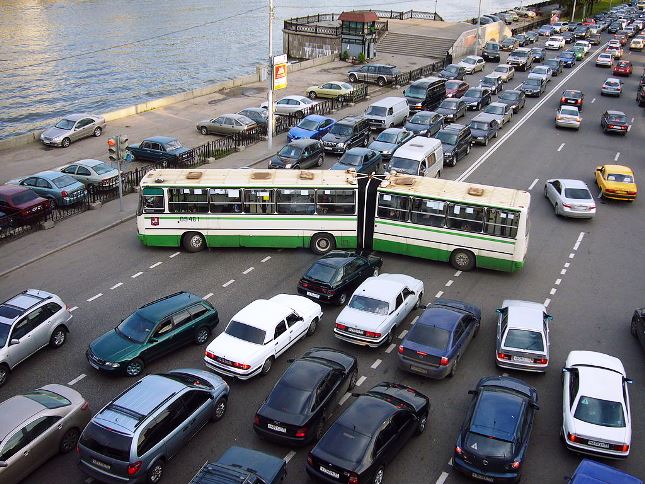
And yesterday, I was powerfully reminded of why this is the case: because it´s a stupid waste of time. I wonder how many billion hours of human consciousness are lost each and every day because people have to sit behind a steering wheel staring at the car in front of them (or the empty road if things go well). How many books could be read in that time? How many blog posts or love letters could be written? How many business plans could be created?
I wonder how many billion hours of human consciousness are lost each and every day because people have to sit behind a steering wheel staring at the car in front of them.
Ok, not each and every country has the same quality public transportation system as Germany does (I take busses, trains, and the occasional cab to go basically everywhere). And yes, I do concede some people have fun while driving. Supposedly, it gives them a sense of freedom and being in control. And yes, driving a car, you can listen to music, you can make phone-calls using a hands-free kit, and you could even see driving as a mindfulness exercise – but let´s be honest here: how many people really do this on a regular basis? It´s no surprise that CEOs and other “VIPs” typically have a chauffeur. Their time is seen as too valuable to be driving a car. But isn´t that true for all of us?
That´s why I believe that driverless cars will be one of the most important pieces of (positive) technology to hit the market in the near future. Yes, it´s not that far away. If you´re interested, please check out this superb article that´ll tell you that they are already driving around on our streets, at least in some parts of the USA – and they are already (at least) as safe as the average human driver.
The point of market entry can and will be postponed by a couple of years, mostly because of juridical problems in the context of accountability (Who´s responsible when a driverless car causes an accident?) – but as always, those things will be worked out at the end of the day. Market entry will probably be postponed by the car manufacturers themselves, because they will – ironically – be the biggest losers in this game (and that´s some very bad news for Germany, as millions and millions of jobs depend on the automotive sector). But it´s going to happen.
Here´s what we´re going to see in my imagination: Google will buy Tesla and afterwards Uber. Google has the navigational data and the necessary technologies in robotics and visual detection, Tesla has premium eco-friendly cars and especially the battery technology, and Uber will supply the reservation system. Of course, there could be lots of other contestants, but I don´t think this stunt can be pulled of by small start-ups – there´s too much money involved in R&D.
So, why is all of this bad news for car manufacturers?
Because personally owning a car is one of the most inefficient things a lot of us do. Cars that are not commercially used just stand around at least 90% of the day. And when we use them, we use them inefficiently. We´re driving alone most of the time instead of using up all of the available space, and we´re bad drivers in the sense that we do not take the shortest available route, that we create traffic jams, and so on. So basically, once the technology will be market-ready, the demand for cars is going to plummet to (my personal estimation) some 20% percent of the current level within a couple of years. This is also consistent with most surveys of Gen Y – most of them want connected and flawless mobility, but do not want to own a car. We will need to have a sufficient supply of driverless cars and they will have to be replaced regularly because they will be used almost without rest periods. And of course, some people still will want to own a car – just because. But otherwise, there´s going to be a lot less of them. And believe me, this is very(!!) good news for mankind, except for the automotive industry (and cab/truck drivers, probably).
Driverless driving means
more efficient usage (less standstill, more car sharing, always use of shortest distance etc.) = less cars = less use of fossil fuel/less pollution and other natural resources (this also pertains to the manufacturing process);
saver travel as driverless cars will produce far less accidents. More than 30.000 people are killed in the USA per year in car accidents. Most of those are caused by human error. Driverless cars will overlook fewer objects and they will also communicate with each other. This will not only minimize accidents but will also more or less eradicate traffic jams – as cars will be driving in a kind of convoy and otherwise, actively try to avoid crowded routes;
less stress and burnout and other health-related issues (see this Time article for an overview over negative effects of commuting);
massive unharnessing of human consciousness as people will be able to concentrate on more productive issues that steering a car from A to B.
The biggest hurdle to take (apart from the juridical challenges mentioned above) is the quality and cost of the visual detection unit that ensures the autonomous car does not hit other objects. The one that Google uses right now for their projects supposedly costs around 80.000 US$ per unit. But if you take a look at, e.g., the development of the cost for computer storage over the past decades, you basically know it´s just a matter of time until a system will be available for the mass market.
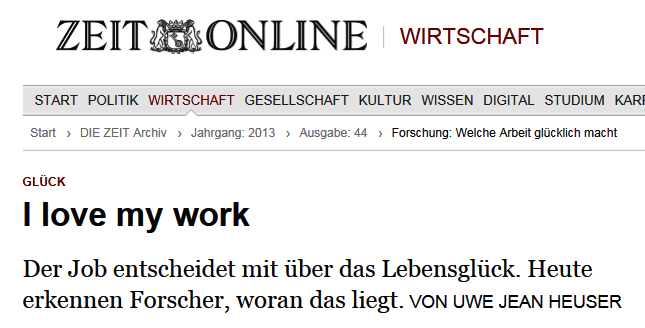
A couple of times, I´ve written about how German mainstream culture and Positive Psychology may just not be a perfect match. In spite of this, German mainstream media outlets start to discover the topic, especially reporting on the connection of being happy/satisfied and positive work outcomes. Heré, I´ve compiled a list of pieces that were published in 2013 and 2014.






 Mappalicious