I knew it! I kneeeeew it!!! If millions and millions of people do something, there must be a good reason. Even if those people don’t know exactly why they are doing it.
Do you fancy watching cat content on the Internet? I do. Well, I have two real cats myself, but still Iindulge in a feline YouTube spree at least once a week. Makes me smile, makes me happy. Love it…
Researchers at Indiana University now surveyed some 7.000 people on their behavior of watching cat content online. Here’s what they found (excerpts taken from the study report on the University’s homepage):
They were more energetic and felt more positive after watching cat-related online media than before.
They had fewer negative emotions, such as anxiety, annoyance and sadness, after watching cat-related online media than before.
They often view internet cats at work or during studying.
The pleasure they got from watching cat videos outweighed any guilt they felt about procrastinating.
That’s it! Cat content = happiness. For those that now go “Duh…” because they already knew: At least, now we have science on our side…
Thomas A. Edison seems to be an endless source of witty quotes and quotable wisdom. I stumbled upon this one some days ago. Transfer his words from medicine to psychology (which practically did not exist at that time) and you get a near-perfect description of what Positive Psychology tries to accomplish in the realm of mental and emotional well-being.
When I look at how often stuff like Prozac and Ritalin is given to people, there obviously is still a long way to go for us. But it will be done…
I have to admit: I weep easily. But then, I mostly cry for joy. Very frequently, my heart just overflows with love or gratitude – and my eyes seem to be the only outlet.
Today is a bank holiday in Germany, so unlike most workdays, I sat down to have an unhurried breakfast with my wife and the Little Guru. Towards the end, they played my wife´s favorite song on the radio, so she got up, went from the dining room into the living room and started to dance playfully. Of course, the Little Guru wanted to join in.
Ten seconds later, they were holding hands and jumping around in circles, laughing and shouting boisterously. All of that time, the bright morning sun entered the room through our large garden windows, lighting up their faces, giving them an almost angelic complexion.
I watched them for a minute or so – and that´s when I cried again. I am lucky.
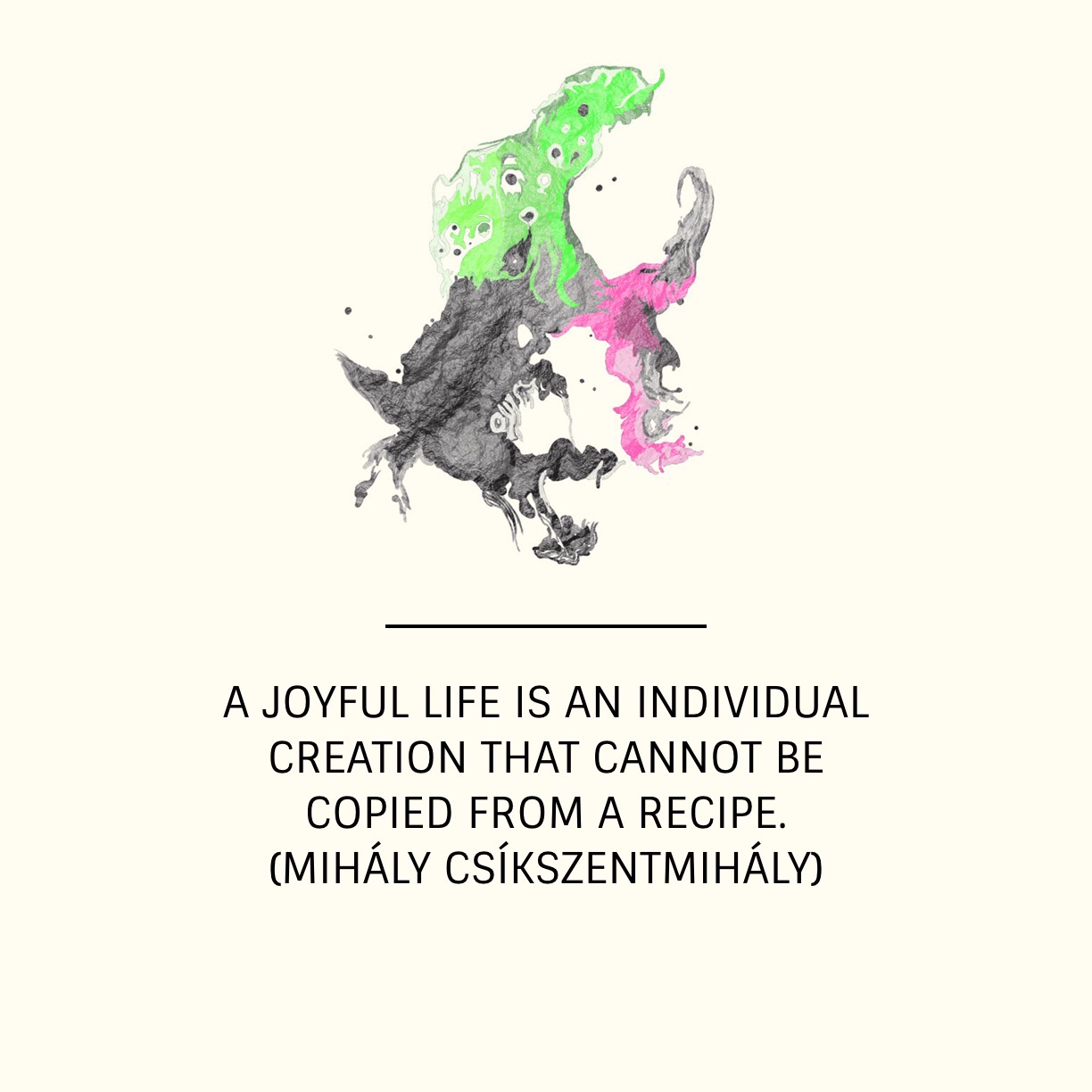
This powerful quote byMihaly Csikszentmihalyi reminds us that we should approach conventional self-help “wisdom” (but also Positive Psychology interventions) with a certain amount of caution.
There will always be gurus who claim to know the way, and Facebook/Twitter are full of posts such as “These are the 7 things successful/rich/happy people do before breakfast”. These people greatly underestimate human individuality – and the power of context and timing.
Ever since 2012, March 20 is UN´s International Happiness Day. All around the world, people will celebrate and host events to educate their fellow human beings on all things happiness, well-being, and flourishing.
And I´m in as well – as part of a Virtual Happiness Conference. 32 fellow Penn Mappsters were interviewed on their favorite Positive Psychology subject, among them a lot of people you might already know because they were featured on Mappalicious in one way or the other, e.g. Emilia “Queen of Sisu” Lahti. All in all, there´s more than 24 hours of video material available.
All content will be online for free until March 26. After that, you can purchase the videos. Every cent will go to the Christopher Peterson Memorial Fellowship which helps future students to afford attending Penn´s MAPP program.
As for my part: I was interviewed by the fabulous Lisa Sansom on the role of Positive Psychology in coaching, the subject of Self-Permission, and the “German way” of Positive Psychology. This is the link to the conference site.
to bring together teachers, parents, academics, students, schools, colleges, universities, charities, companies and governments to promote positive education. Our goals are to support collaboration, change education practice and reform government policy.
On the question “Why Positive Education?” the website states:
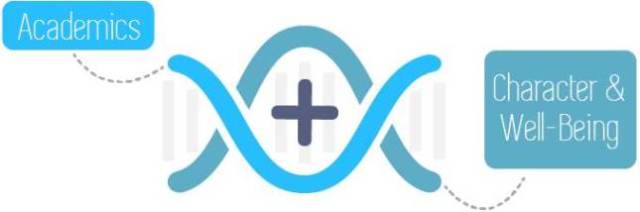
Positive education challenges the current paradigm of education, which values academic attainment above all other goals. Drawing on classical ideals, we believe that the DNA of education is a double helix with intertwined strands of equal importance:
The fulfillment of intellectual potential through the learning of the best that has been thought and known.
The development of character strengths and well-being, which are intrinsically valuable and contribute to a variety of positive life outcomes.
For quite a long time, Geelong Grammar School in Australia has been the hallmark of applied Positive Education. But more schools shall follow soon. Even in Germany – which typically does not pick up Positive Psychology topics that fast – has seen some Positive Education initiatives as early as 2007. We have a movement called Schulfach Glück (“School Subject Happiness”) which is backed by the “Fritz-Schubert-Institute”. They bring a positive curriculum especially to primary schools, helping teachers to teach topics to their classes such as joy and motivation, curiosity and courage, and mindfulness and respect.
By now, Fritz Schubert has authored three books on this initiative. The effectiveness of the program was recently evaluated in a study comparing classes who completed the curriculum to control groups. The treatment groups displayed higher subjective well-being and self-esteem at the end of the school year. The research article is written in German, but there´s an English abstract:
Applying a quasi-experimental pre-posttest design, we examined the effectiveness of a new teaching unit called school subject happiness. The investigation took place at two vocational schools that had established this subject in the school year 2010/11. Effects of one school year of instruction in the school subject happiness on students´ well-being, self-esteem, and self-efficacy are reported. In addition, a moderation effect of the personality traits emotional stability and extraversion was investigated. A total of 106 vocational school students who belonged either to the treatment or the control group participated in the study. At the beginning and at the end of the school year 2010/11, all students completed questionnaires. Beneficial effects were found for affective components of subjective well-being and self-esteem. Furthermore, the effects on self-esteem and cognitive components of well-being were moderated by emotional stability. Students who reported higher emotional stability benefited more from the new teaching unit. For self-efficacy no effect was found. The results are interpreted as partial effectiveness of the program.
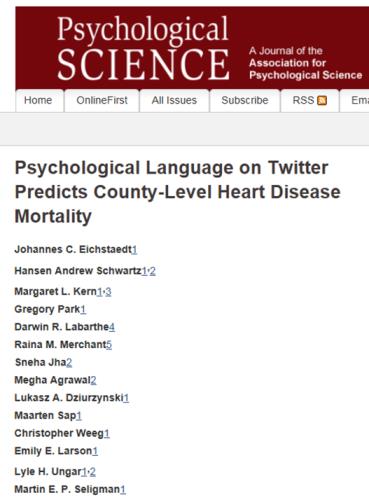
There are lots of anecdotes that portray how a careless social media post has destroyed a reputation, a career, or a romantic relationship. But can tweeting actually kill you?
They found that frequent expressions of negative emotions such as anger, stress and fatigue in a county’s tweets were associated with higher heart disease risk. On the other hand, positive emotions like excitement and optimism were associated with lower risk. Having seen correlations between language and emotional states in previous study using Facebook posts, the researchers now examined if they could detect connections between those emotional states and physical outcomes rooted in them.
Drawing on a set of public tweets made between 2009 and 2010, they used established emotional dictionaries to analyze a random sample of tweets from individuals who had made their locations available. There were enough tweets and health data from about 1,300 counties, which contain 88 percent of the USA´s population.
Eichstaedt et al. found that negative emotional language and topics, such as words like “hate” remained strongly correlated with heart disease mortality, even after variables like income and education were taken into account. Positive emotional language showed the opposite correlation, suggesting that optimism and positive experiences, words like “wonderful” or “friends,” may be protective against heart disease. In the future, this data could be used to marshal evidence of the effectiveness of public-health interventions on the community level, or serve as valuable input in the process of planning locations for new medical facilities.
While the study does not make any claims about the heart disease risk of individuals, I still suggest monitoring your Twitter timeline from time to time for prophylactic reasons. E.g., you can use the website www.tweetstats.com to obtain a free and easy overview of your tweeting behavior, for instance, a word cloud displaying your most frequently used words and hash tags.
A couple of times in the past, I´ve written about how immersing yourself in Positive Psychology is somewhat hard when you´re German – because it seems to be a slightly “Un-German” topic. Today, I´d like to explore this topic from a slightly different angle – that of language. Oscar Wilde supposedly said “Life is too short to learn German.” And he may have been right. It´s pretty complicated and therefore awfully hard to learn as a foreign tongue. Yet, it is the language of Goethe, Schiller, and Rammstein – that´s something to explore.
Speaking of the metal band Rammstein: there´s this thing about German pronunciation that makes just about everything sound like a declaration of war – even if you say something like “I love you”. There´s a funny video about this on Youtube. The guys overdo it a little, but then, this may just be what it feels like to a non-German ear:
But I digress. What I really want to talk about: I feel there´s a lack of positive words in the German language. Positive Psychology was (sort of…) invented in the U.S. – and most research papers and books are written in English. When I came to Penn, obviously I had to study the subject in English, too. But now that I´m back in Germany, I try to “sell” the topic over here, which has to be done in German of course. And that´s where the problems begin.
There´s this myth that the Inuit have an unusually high number of words to describe snow. We have “50 Shades of Grey”, they supposedly have 50 shades of snow. Actually, this is not true. But the idea behind the myth seems highly intriguing to me. In short it says: when something is valued very highly in a specific culture this tends to influence the use of language. Specifically, people pay more attention to the subject because of its importance, thereby learning to make more subtle distinctions, that ultimately are reflected in the amount of different words that can be used to talk about the subject.
To a certain degree, this idea mirrors one of Wittgenstein´s most famous dictums:
The limits of my language means the limits of my world.
When I do not have a word for something, that makes it hard to think about that subject, because it cannot be “grasped”. And it makes it even harder to speak about “that something” to other people. That idea is (probably) embodied in another Wittgenstein quote: “Whereof one cannot speak, thereof one must be silent.”
Which brings us back to my problem of “selling” Positive Psychology in German:
Where there are no words, you can´t “spread the word”.
When I first tried to talk and write about Positive Psychology in German, oftentimes I felt a lack of the “right” words. For example, the German language has the same word (ergo: a lack of distinction…) for the subjects of “Happiness” and “Luck”. Both are signified by the noun “Glück”. So whenever I talk about happiness and positive emotions in the context Positive Psychology, I have to use an awful lot of extra words to get across the intended meaning.
But it´s not only a lack of distinction. Sometimes, I even feel there are no words. For instance, the brilliant Jonathan Haidt gave a lecture on the subject of “awe” in one of our MAPP classes. This moved me very much and I wanted to talk about my experience with friends back in Germany. The problem is: obviously, there is no adequate translation for “awe”. If you type “awe” into a translation machine, you’ll get the German equivalents of “veneration” or “reverence”, “rapture” or “entrancement”. All the suggestions entail a very religious or, at least, old-fashioned connotation. They are not part of a modern, non-religious German “language game”. Therefore, talking about “awe” in German in a scientific (or just everyday) context seems awfully hard.
This bears some interesting implications. Whenever I fill in a questionnaire on happiness or life satisfaction (e.g., here on Marty Seligman´s website), there´s an interesting phenomenon when I look at the results. These will be displayed in the context of different normed groups. E.g., your scores will be compared to other people of your age, your educational background, but also your ZIP code (when provided). Now here´s the thing: Comparing my results to other people from my ZIP code (ergo: other Germans) will always put me in a higher percentile. This means: based on the same raw scores, the algorithm will display that I´m quite happy when comparing myself to other men in general, or other Ph.Ds, but that I´m extremely(!) happy when comparing myself to other Germans.
Now, there´s a couple of different explanations for this phenomenon. The easiest one would be: on average, the German respondents in that data base are not all that happy – and that´s why I score (relatively) higher vis-à-vis that group. But it may also be a phenomenon of language. What if Germans were just as happy on average as, let´s say, U.S. citizens, but were reluctant to use positive self-descriptions in an extreme specification – just because it´s not part of our “happiness language game”? Maybe, via studying Positive Psychology in English in the U.S., I became a little less German, thereby being able to mitigate the dissonance of describing my life in a very positive light?
I guess Positive Psychology has to integrate cultural perspectives more and more in order to be equally “useful” for all the people on this planet. Recently, the Scientific American published a piece by the name of “Not Everyone Wants to Be Happy” citing different studies that were able to show that the concept and meaning of happiness can vary significantly between different cultures (notably, between more Western and more Eastern cultures) – but has also evolved over time. Very though-provoking.
Which brings me to the final question for today:
Could Germany be a better place if somebody invented new positive words?
“The German” per se (as a stereotype”) is depicted as a sober-minded person. We´re perceived as being diligent, orderly, industrious, and a lot of other helpful attributes. But we´re also depicted as being rather anxious, risk-averse, and just not that open-minded (think “German Angst”). This is not just an academic discussion. The German economy has been doing comparably well over the last couple of years – but how long will this last? We´re really not that good at building and financially supporting start-ups. Forbes regularly updates a large list of all those startups that are valued at more than one billion $ in terms of private equity funding. Only one of those is based in Germany.
What if all this were (at least to some extent) a consequence of a lack of the right positive words? Would we become more optimistic, less risk-averse, and more open-minded if we were able to enhance our language, if we were able to broaden the (far) positive side of our verbal aptitude? I think it´d be worth a try. In 1999, a German publisher of dictionaries (together with ice-tea brand Lipton) hosted a contest for the invention of a new word. We have a German word for the state of being “full” (= not hungry any more) – but there´s no positively framed expression for being “not thirsty any more”. As far as I know, the winning word has not made it into our regular language use, but I guess it was worth the effort.
So why shouldn’t we – for starters – find a more awesome translation for “awe”? I´m eager to hear your suggestions…
 I knew it! I kneeeeew it!!! If millions and millions of people do something, there must be a good reason. Even if those people don’t know exactly why they are doing it.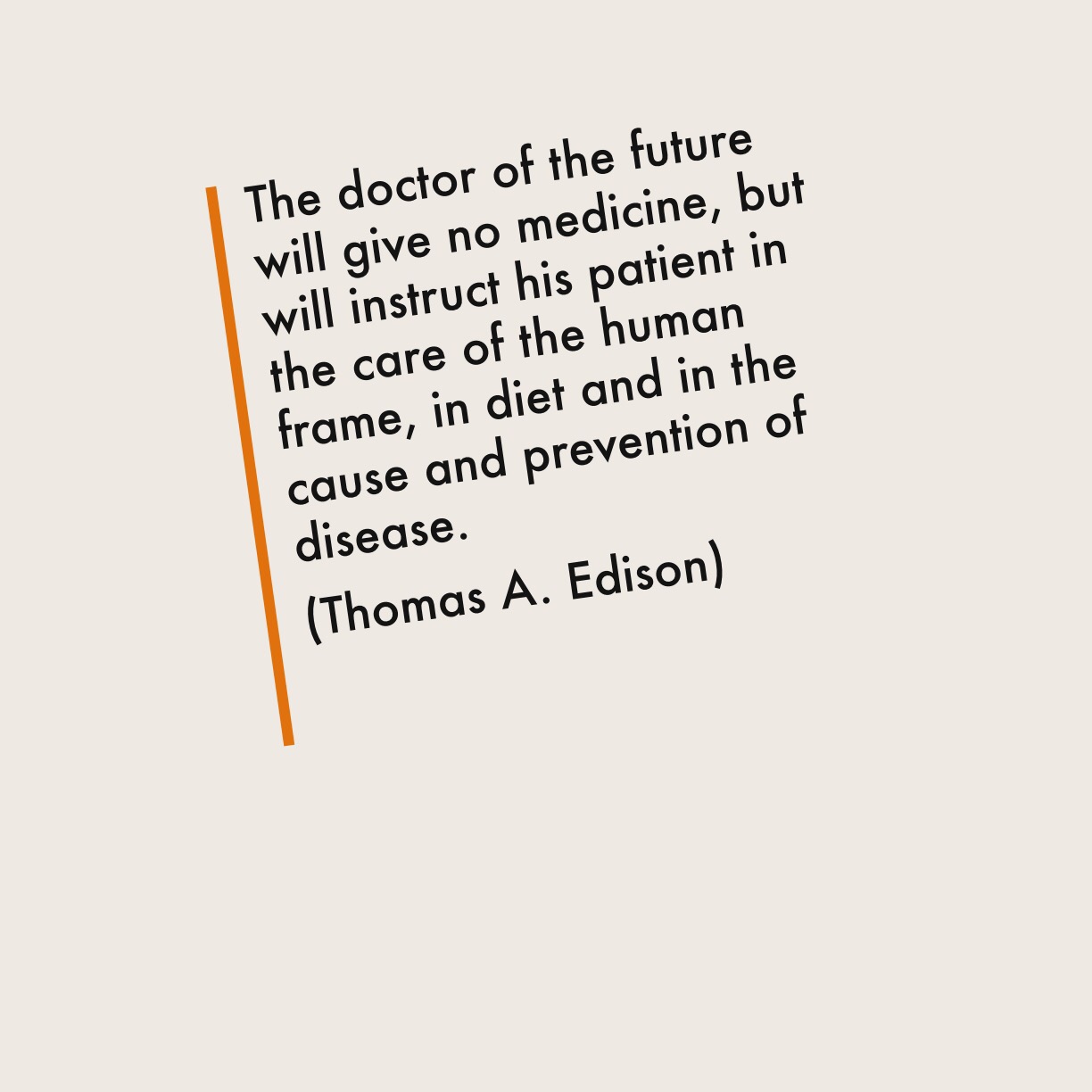


 For all of you that just cannot get enough of first-class Positive Psychology content – here’s something brand new for you:
 Ever since 2012, March 20 is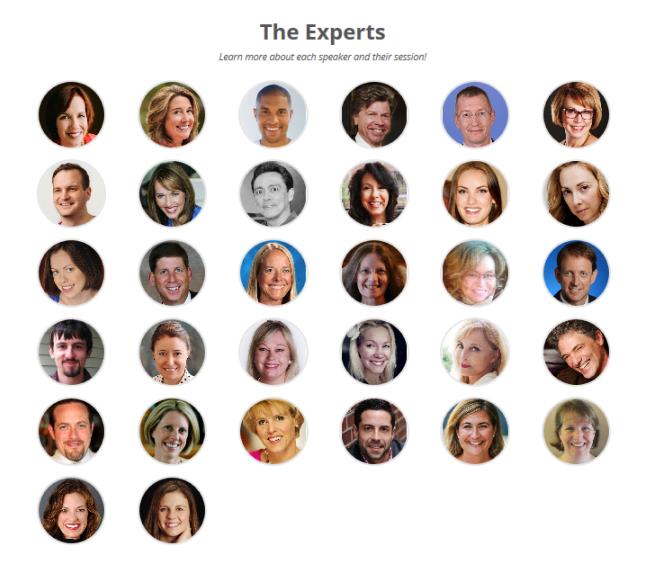
 Mappalicious