Boosting Meaning in Life by visiting Golden Gate Bridge

I’m writing this while sitting in a whirlpool in Stanford Park Hotel, Palo Alto. I’m on an extended business trip to the U.S. which has taken me from Philadelphia (where I got to attend the 10 year anniversary of the MAPP program at Penn) to Boston, then New York, and now the San Francisco area.

Today is a day off and I took the time to do some classic SF sightseeing – since this is my first time ever on the West Coast: I visited the Twin Peaks, Fishermen’s Wharf, and Lombard Street. But first and foremost, I was eager to see the Golden Gate Bridge.

Nico Rose - Golden Gate

Ever since doing that, I have a warm feeling in my heart and my guts – and after looking at some research, I’m pretty sure I know why this is the case.

Growing up in Germany in the early 80s, I used to watch all those classic TV series like “Hart to Hart”, “The Fall Guy”, or “The A-Team”. Ever since, just being in the U.S., walking around and looking at the skyscrapers, yellow cabs, and the ambulances just is a cool thing to do for me (as it probably is for most Germans).

But at the end of the day, I guess there is no other sight that is able to carry the same quality of “longing to be in the USA” as Golden Gate – probably, because it is also the longest way to go from my home. For me, it’s a classic case of reveling in nostalgia, it conveys a sense of excitement, insouciance, and spending time with my beloved grandparents (who all have passed away long ago).

As stated before, I found a piece of research that is able to show reveling in nostalgia may be a viable pathway for boosting the presence of meaning in life. Here is what the researchers have to say:

The present research tested the proposition that nostalgia serves an existential function by bolstering a sense of meaning in life. Study 1 found that nostalgia was positively associated with a sense of meaning in life. Study 2 experimentally demonstrated that nostalgia increases a sense of meaning in life. In both studies, the link between nostalgia and increased meaning in life was mediated by feelings of social connectedness.

So thank you Empire State Building, thank you yellow cabs, thank you Golden Gate Bridge, for bringing back colt Colt Seavers, Hannibal Smith – and first and foremost, grandma and grandpa! Love you…
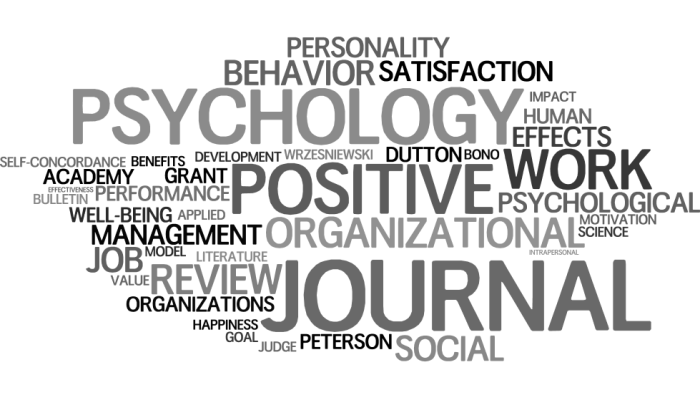
22 Positive Psychology-infused Articles every (HR) Leader should know

Positive Organizational ScholarshipPositive Psychology has a lot to offer for leaders, especially those people taking on a leadership role in human resources and people management. In this post, I´ve gathered 22 research articles infused by Positive Psychology (more specifically: Positive Organizational Scholarship) that, in my opinion, have tremendous value for aspiring as well as established managers and entrepreneurs.

The topics comprise desirable attributes and personality variables such as grit, character strengths, and core self-evaluations, how to create positive relationships at work, how employee motivation is created and sustained, how to find meaning and purpose in work, and several review articles, e.g., on the connection of positive emotions and job performance. Enjoy!

P.S.
This is my 300. post since I’ve started Mappalicious about two years ago. Giving myself a slight pat on the back right now…

No Pain, no Gain? Think again! We are able to experience Post-Ecstatic Growth, Science says

Post Ex GrowthOriginally coined by German philosopher Nietzsche, the following quote has become a piece of common knowledge: “That which does not kill us makes us stronger”. Most people have – at one point or another – made the experience that going through really tough times may render us stronger than before, and not shattered as one would initially expect. In psychology, this mechanism is labeled Post-Traumatic Growth (PTG; here´s an overview of the idea).

Some people might even claim that there is no gain without pain. Turns out, that this view may be wrong, or at least incomplete. In a 2013 article published in the Journal of Positive Psychology titled Gains without pains? Growth after positive events, Ann Marie Roepke, Ph.D. student at Penn´s Positive Psychology Center, presents evidence for what she calls Post-Ecstatic Growth, based on a survey among some 600 people. Basically, Roepke had people name the one experience in peoples lives that they remember as the most positive (e.g., the birth of a child). Then, she asked people to specify which category best characterized their positive event, based on Seligman´s PERMA framework and which positive emotions had been evoked by the event (e.g., in awe, inspired, uplifted, joyful, content, fascinated etc.). Additionally, she assessed the outcome of that event, for instance, feelings of personal growth or “doors opening up” for new possibilities in life.

In short, Roepke found clear evidence for the existence of Post-Ecstatic Growth. Here are some excerpts from the discussion section of her article:

Positive events can, in fact, catalyze growth. Although hedonic happiness levels tend to return to baseline after positive events, important changes in eudaimonic well-being and in worldview may remain. Four domains of growth are particularly important after positive events:

  • new meaning and purpose in life;
  • higher self-esteem;
  • spiritual development;
  • and better relationships.

Some positive experiences are more likely to lead to (self-perceived) growth than others. […] Events that evoke stronger positive emotions are more closely linked to growth. This is consistent with Fredrickson’s broaden-and-build theory: positive events can provide opportunities to expand one’s thought-action repertoire, and this expansion can be perceived as growth. Indeed, participants who reported that a positive experience opened their eyes to new opportunities, goals, roles, and values also felt they had grown more. […] Inspiration, awe, and elevation are especially important positive emotions for growth. […] In contrast, more hedonic positive emotion (e.g. feeling joyful and content) predicts less growth.

Inspiration is related to meaning, a sense of connection to something greater than the self. Meaning, like inspiration, is closely tied to growth: meaningful experiences are associated with more growth than experiences of accomplishment, engagement, relationship, and hedonic positive emotion.

Roepke´s conclusion:

Our best moments can inspire us, connect us to something greater than ourselves, and open our eyes to new possibilities, ultimately giving rise to growth.

Hence, there is gain without pain. If we seek out the right positive experiences, we are able to experience gain from previous gains, possibly entering into an upward-spiral of growth.

Study: To Belong is to Matter: Sense of Belonging Enhances Meaning in Life

Nico Rose - Meaning in LifeOne of the central tenets in Positive Psychology goes as follows: Other People Matter. It was coined by the late Christopher Peterson as the shortest possible summary of research on human wellbeing. Peterson wanted to make the point that having healthy relationships with family, friends, and coworkers turns out to be the strongest predictor of happiness (and oftentimes: health) in most studies on human wellbeing.

A recent study by Nathaniel Lambert et. al titled To Belong is to Matter: Sense of Belonging Enhances Meaning in Life sheds additional light on this relationship. Here´s a shortened version of the article´s abstract:

We found correlational, longitudinal, and experimental evidence that a sense of belonging predicts how meaningful life is perceived to be. Additionally, we found a strong positive correlation between sense of belonging and meaningfulness. Furthermore, we found that initial levels of sense of belonging predicted perceived meaningfulness of life, obtained 3 weeks later. Furthermore, initial sense of belonging predicted independent evaluations of participants essays on meaning in life.

In short, what they are saying is:

Belonging = Meaning

Or, more precisely: If I matter to other people, my life matters.

Study Alert: The Smell of Happiness 

If you are somewhat like me, you don’t really fancy smelling other people’s sweat. But if – for whatever reason – life puts you in a situation where you have to: Make sure it’s the sweat of happy people. Why?

Because it just might make you happy (at least: happier), too. A recent study titled A Sniff of Happiness finds that people who are exposed to the body odors of happy people tend to show increasing signs of happiness themselves, e.g., they smile more compared to the time before that “exposure”.

In the words of the researchers:

We observed that exposure to body odor collected from senders of chemosignals in a happy state induced a facial expression and perceptual-processing style indicative of happiness in the receivers of those signals. Our findings suggest that not only negative affect but also a positive state (happiness) can be transferred by means of odors.

So if you are a happy person: Please throw away that antiperspirant. Make the world a more joyful place… 😉

In Memory of Chris Peterson…

Unfortunately, I never had a chance to meet Chris Peterson in person. He died before I entered the MAPP program at Penn. But everyone I meet who knew him speaks very highly of him, highlighting his good nature and humor. I guess it comes alive again in his writing.

And it makes me (sort of) proud, that, while speaking about Positive Psychology at a conference in Munich some days ago, the photographer took a shot right in the moment where I talked about Chris Peterson´s signature line “Other People Matter“…

Dr. Nico Rose - Other People Matter

Picture source: Haufe Gruppe


Crying for Joy on Father´s Day (Little Guru series)

Nico - Little GuruI have to admit: I weep easily. But then, I mostly cry for joy. Very frequently, my heart just overflows with love or gratitude – and my eyes seem to be the only outlet.

Today is a bank holiday in Germany, so unlike most workdays, I sat down to have an unhurried breakfast with my wife and the Little Guru. Towards the end, they played my wife´s favorite song on the radio, so she got up, went from the dining room into the living room and started to dance playfully. Of course, the Little Guru wanted to join in.

Ten seconds later, they were holding hands and jumping around in circles, laughing and shouting boisterously. All of that time, the bright morning sun entered the room through our large garden windows, lighting up their faces, giving them an almost angelic complexion.

I watched them for a minute or so – and that´s when I cried again. I am lucky.

Happy Father´s Day to all of you!

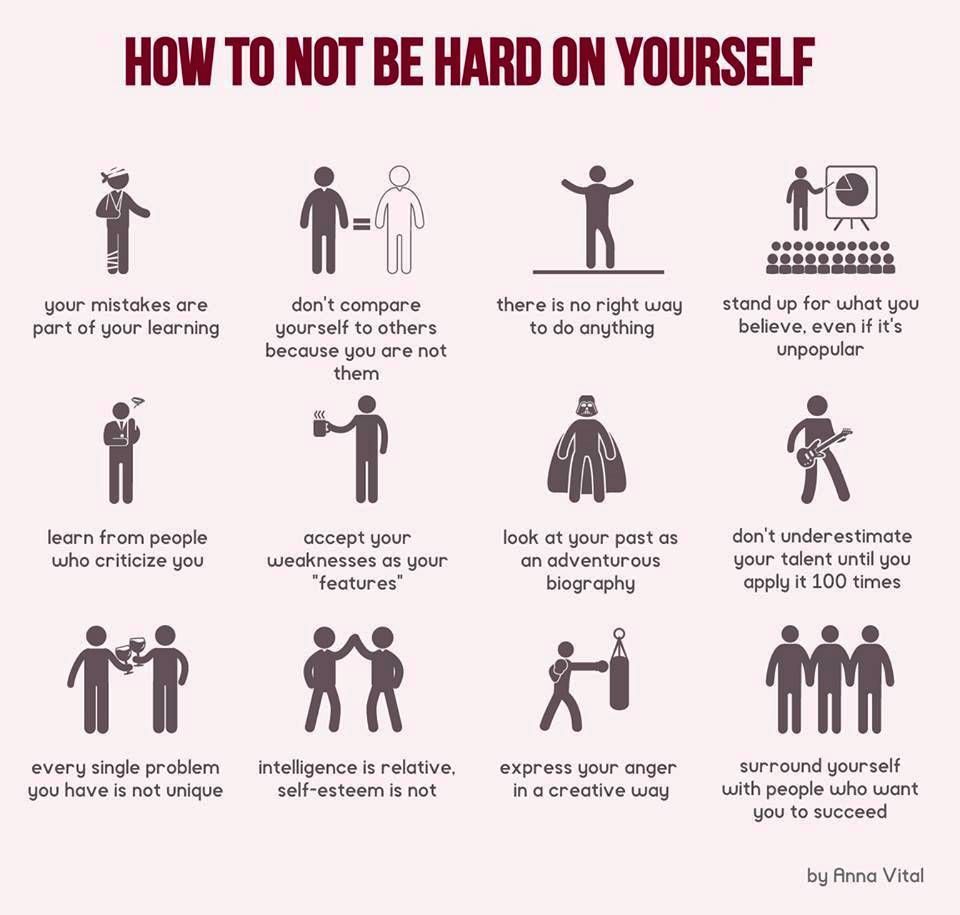
Great Infographic on Self-Compassion: How not to be Hard on Yourself

For UN´s International Happiness Day, I´d like to share with you this great infographic created by information designer Anna Vital. It´s a wonderful piece of advise on the art (and science) of self-compassion. Additionally, you might want to watch Kristin Neff´s TEDx talk on the same topic that you can find in my Positive Psychology TED suggestions. Enjoy!

Self-Compassion - Anna Vital


Do you need an Aristotelian Friend in your Life?

A couple of days ago, I wrote a post highlighting a quote by Greek philosopher Epictetus:

The key is to keep company only with people who uplift you, whose presence calls forth your best.

This reminded me of a concept we discussed (and also used) in the MAPP classes at Penn. Aristotelian Friendship. While the concept of Platonic Friendship/Love (a non-sexual relationship that is pursued because the other person inspires the mind and the soul) has entered everyday speech, Aristotelian Friendship seems more uncommon.

Plato_AristotleThe ancient Greeks knew four kinds of love: Eros (sexual desire), Storge (parental/familial love), Agape (divine love, also: charity/compassion), and Philia. Now Philia is closest to our modern understanding of friendship. Aristotle described three kinds of Philia: friendships of utility, friendships of pleasure and friendships of the good.

Friendships of utility are of a shallow kind; today, I guess we would call that networking – it´s more about being acquainted (and potentially useful reciprocally) in the future. Friendships of pleasure take place on a deeper level. Nowadays, we would speak of drinking buddies, or people who share a passion with regard to the same hobby.

Now, the deepest kind of Philia is a friendship for the good. This means that two people enjoy each other´s company because of a mutual admiration for each other´s characters and personalities. And it can also mean not only admiring, but caring about and strengthening the other person´s character and well-being. Therefore, an Aristotelian friend (for the good) will:

  • listen actively when you have to share something good and advise you on how to get more of that into your life;
  • give you frequent feedback on your strengths and “what´s right with you”;
  • but is also honest with you pertaining to your weak spots. Today, we would say: that friend does not let you get away with your sh.t.

Do you have someone like that in your life? Good for you. And if you don´t? Go and find somebody. Now!