Vision Y: Is true Progress possible? Some German Kids think the Answer is: Yes!

Nico Rose - Munich Leadership ConferenceTwo weeks ago, I had the great honor of attending the first Munich Leadership Conference, organized by the Munich Leadership Institute – and hosting brilliant speakers such as Prof. Barry Schwartz, Prof. Barbara Kellerman, and Prof. Franz-Josef Radermacher. The overarching motto of the conference was: “How to achieve true progress”.

I had an active part in the conference, being part of a panel discussion on the question of “What attitudes drive true progress? The other panelists were Thomas Sattelberger, former CHRO of Deutsche Telekom, Kerstin Bund, a journalist who works for the Zeit, Germany´s most popular weekly newspaper, and the aforementioned Prof. Radermacher.

The highlight of the conference was the first public presentation of the so-called “Vision Y” – a framework for a peaceful, more egalitarian, and sustainable future – which a group of students envisioned after having interviewed thought leaders such as Nobel Laureate Muhammad Yunus, scientist/author Nassim Taleb, and German Vice-Chancellor Sigmar Gabriel.

A lot of the things that were presented reminded me of what Martin Seligman told us in the last MAPP class of 2013 about his personal vision for the year 2051. If you are interested in the “Vision Y” (and you should be…), please watch the following short clip that provides an audio-visual summary.

Additionally, Wikipedia founder Jimmy Wales was awarded with the “Deutscher Vordenker Preis 2015” (German Thought Leader Award).

With ordinary People to extraordinary Returns

Nico Rose - Handelsblatt Jahrestagung Private EquityA couple of weeks ago, I was invited to give a dinner speech at a private equity convention that was hosted by Handelsblatt, one of the most eminent (business) newspapers in Germany. I was a little surprised since – to be honest – I don’t know sh.t about private equity, mergers & acquisitions, etc.

So instead, I decided to talk about some subjects I do know, e.g., Positive Psychology, Self-Determination, and alternative forms of leadership.

Subsequent to my talk, I was invited to put into writing what I said that evening. The result is a feature that spans topics such as burnout, employee engagement, managing organizational energy, and the theory of the Kondratieff waves. My tagline was:

Extraordinary returns will be realized where ordinary people are empowered to achieve extraordinary results.

An English version of the piece is available available here. Enjoy!

Nico_Rose_FYB

Excellence in Creativity: Of Poets and mad Conductors

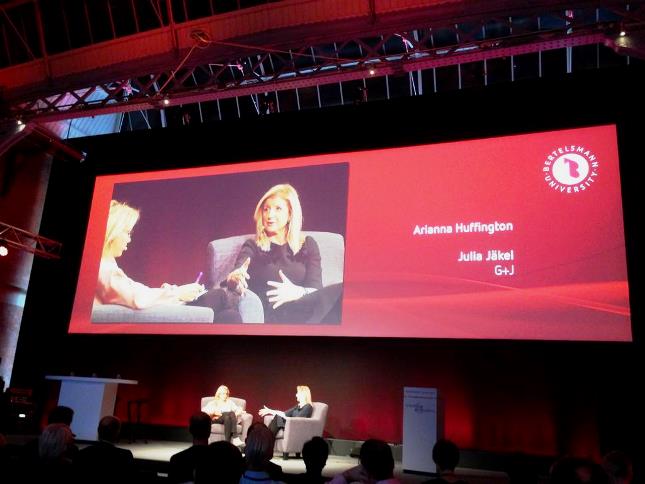
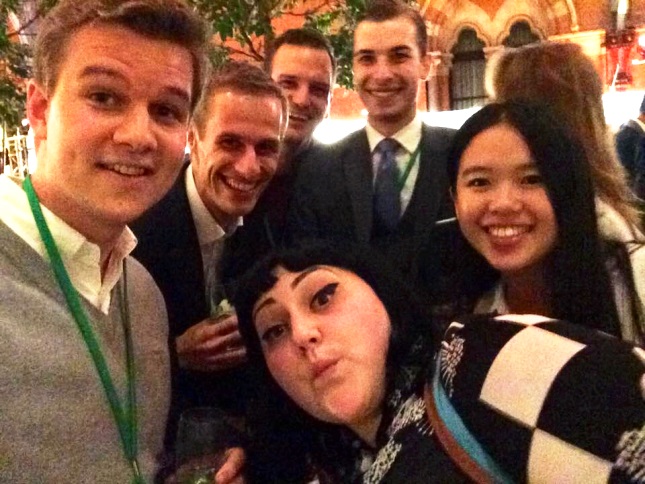
Arianna HuffingtonFrom last week’s Wednesday to Friday I stayed at London’s beautiful St. Pancras Renaissance Hotel (where the Spice Girls’ “Wannabe” video was shot) to attend a conference that my employer Bertelsmann held for about 200 top executives. The overarching motto for the conference was creativity – since, as a media company, our biggest asset is creative output in all of its forms. Among the many guest speakers were people such as Ed Catmull, CEO of Pixar, Simon Cowell, Arianna Huffington, E.L. James (author of “50 Shades”), will.i.am, and Beth Ditto.

DittoHere, I´d like to share three things (or rather: people) that impressed me the most – and whose topics also have a distinct connection to Positive Psychology.

First in line is Arianna Huffington who said a lot of smart things about mindfulness, meditation, getting enough sleep etc. – while gracefully marketing her book “Thrive”. Here´s the one sentence that really lingered in my mind:

Your eulogy will not be resumé.

Second, I was deeply impressed by poet David Whyte – who taught me about the power of words, allowing for repetition, long pauses – and speaking without PowerPoint. It is really hard to recount his talk without sounding corny – so instead you might want to watch his TED talk:

And finally, I tremendously enjoyed the talk of conductor Itay Talgam, who illustrated different leadership styles by showing video footage of some of the greatest conductors of the past and present. He also has a TED talk out there. So enjoy!


Mappsterview No. 5: Margaret Greenberg on how Companies can Profit from the Positive

I was in the ninth cohort of the Master of Applied Positive Program at Penn. Consequently, there are tons of brilliant MAPP Alumni out there that have very fascinating stories to tell: about their experience with the program, about Positive Psychology in general – and about themselves of course. I really want to hear those stories. That´s why I started to do Mappsterviews with my predecessors.

Today, you are going to meet Margaret Greenberg from MAPP 1, the very first group of Mappsters to be taught at Penn. She co-authored a very successful book that I also included in my Positive Psychology at Work Book List.  

Profit from the PositivePlease introduce yourself briefly:

Like all of us, I wear many hats. I’m a wife to my sweet husband Neal of 30 years. I’m a mother to our two bright and beautiful twenty-something daughters. I’m an entrepreneur, having started my consulting/coaching practice, The Greenberg Group, in 1997 after spending the first 15 years of my career in corporate HR/Learning & Development. I’m a certified executive coach, speaker, and co-author of Profit from the Positive: Proven Leadership Strategies to Boost Productivity and Transform Your Business with fellow MAPPster Senia Maymin, and positive business columnist for Live Happy Magazine. I also do fundraising for the American Foundation for Suicide Prevention in honor of both my mother and mother-in-law. Finally, I enjoy being outside in nature, as well as inside baking, as you can probably tell from all the photos I post on Facebook!

What did you do before MAPP?

I’m doing after MAPP the same thing I did before MAPP – coaching business leaders and their teams to achieve more than they ever thought possible. The only difference is that I now have more research and resources to draw upon, and I’m writing a heck of a lot more. We all entered MAPP with our own set of experiences and education. To prevent positive psychology from becoming just another fad (I don’t even like to use the term “movement”) I believe it’s prudent for us practitioners to view positive psychology as just one more body of knowledge that we bring to our professions and lives.

What got you interested in Positive Psychology in the first place?

I had been in practice for 8 years as an executive coach when I learned of MAPP. What was missing from my coaching certification was the science behind what we do as coaches. I’ll never forget the day an email popped up in my inbox about this new graduate program in positive psychology. I ran, yes ran, outside to share my excitement with my husband who was gardening. “Go for it,” he said. “Yeah, but what if I get in, then what?” The rest is history as they say.

I´ve noticed that you´ve written your MAPP thesis on optimistic managers. Shouldn´t managers be more the critical, discerning type of person?

Most certainly managers need to think critically to come up with innovative solutions to business challenges. The trouble arises when managers apply this same critical thinking to the people they lead. Case in point: If all I do is look for things you are not doing right, and skip over the things you’re doing well, that can be pretty discouraging. In our book  we offer several practical tools to combat this tendency. We call them “Capitalize on What’s Right”, “Find Solutions Not Faults”, and “Obsess Over Strengths, but Don’t Ignore Weaknesses”.

The title of your book is “Profit from the Positive”. Please tell us a bit more about that!

Writing PFTP with a fellow MAPPster has been one of the most rewarding experiences. Senia and I each brought different strengths to the virtual table (Senia is on the west coast of the US and I’m on the east). We really wanted to bring what we were learning from applying positive psychology with our coaching clients to a much broader audience. The book is written for business leaders, HR professionals, and coaches in particular, but we have had readers tell us they found one or more of our 31 tools helpful in their own personal life. I’m happy to report that it will be translated into Chinese next month, and Korean and Japanese early next year. People can see what we’re up to by visiting our website, Facebook page, or connect with us on our LinkedIn Pulse blogs or @profitbook on Twitter.

OK, in my day job, I´m a manager myself. Which three things should I (personally) start doing right away?

First, recognize what we call the “Achoo! Effect”. Our emotions are contagious. Be sure you are spreading cheer, not fear at work (or at home). Second, if you do performance reviews at your company, be sure to preview, don’t just review Performance. Finally, I’d also recommend that you give FRE, which stands for frequent recognition and encouragement, to your employees, peers, and even your Boss. This was one of the key research findings from my Capstone that I collaborated on with another MAPPster, Dana Arakawa. Chris Peterson was our advisor and I will be forever be grateful for his guidance on this study, which is available on the University of Pennsylvania’s Scholarly Commons, and has been downloaded over 7,000 times.

And what kind of initiatives would you recommend on the organizational level?

I think there are lots of opportunities to be what Senia and I call a “positive deviant”. We’ve worked with companies large and small at the individual, team and organizational levels. Here are a few practical applications of positive psychology at the org level. To improve:

  • Strategy and Planning: Use the S.O.A.R. analysis (Strengths, Opportunities, Aspirations, and Results) rather than the traditional S.P.O.T. analysis (Strengths, Problems, Opportunities, and Threats).
  • Recruiting: Revamp hiring practices to include “Hiring for What’s Not on the Resume” to get at the more intangible social and emotional intelligence skills that are most predictive of success and higher Retention. In fact, there are many HR practices that need to be revamped to focus more on what’s going right, such as performance reviews that I mentioned earlier.
  • Meetings: Start and end meetings on a positive note.
  • Leadership and Talent Development Programs: That’s a topic for a whole other interview!
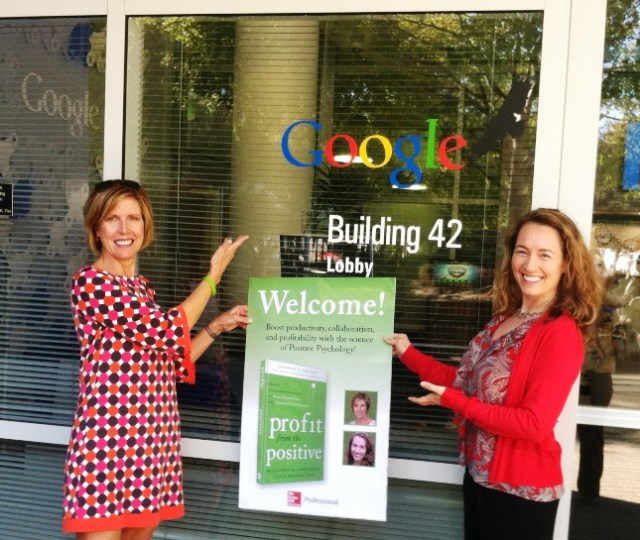
Margaret Greenberg and Senja Maymin

Thanks a lot, Margaret (on the left), for this Mappsterview!

Being a better Leader by managing organizational Energy [Video]

A couple of days ago, I wrote a post about Positive Organizational Capital as introduced to the Positive Psychology community by Fred Luthans. Today, I´d like to point you to another concept based on Positive Organizational Scholarship (POS), precisely: (Positive) Energy. I´ve already touched upon that topic quite a while ago – when introducing some of the work of the marvelous Jane Dutton.

Below, you´ll find a 3-minute video of Kim Cameron, one of the founding fathers of POS. He talks about the concept of (Positive) Energy, and how to assess and manage it – and why it´s crucial when being in a leadership role.

And it´s not that complicated after all. We should ask ourselves:

  • Is it an uplifting experience when working with colleague XYZ?
  • Do I feel elevated when being around this person?
  • Is this relationship live-giving?

The goal is too have as many people “on board” where you can answer those questions with “yes”. You can read more about the concept of energy in Jane Dutton´s book Energize Your Workplace. And please also check out the work of Esa Saarinen on Systems Intelligence.

Who´s the Boss? A Tale of Cops and Cheerleaders…

Cop CostumeOk, whatever you think…the title is not the tag line for some special interest porn flick. It’s about leadership. Precisely, COP and CHEERleader are acronyms that I stumbled upon yesterday in an article by the name of Forty things every Manager should know about Coaching. They define two antagonistic frameworks of leadership, and ultimately, underlying views of the nature of man.

COP stands for “Coerce – Organize – Punish”. Basically, it describes what effective leadership was thought to be for most of the 20th century (and the eons before that…). You can still “smell” a lot of Taylor´s “Scientific Management” in there. What is says between the lines: People are inherently lazy and incapable. That´s why the leader has to motivate his “followers” using external rewards and punishment to get the desired results. And above that, there´s one person that knows which form of organizing the tasks at hand is the best: the leader – and no one else.

On the other end of the spectrum, CHEERleader stands for Challenge – Empower – Encourage – Reinforce. It´s based on the assumption that people are intrinsically motivated (please read my article on Self-Determination Theory for a little background information), capable or organizing themselves (alone as well as in groups), and eager to learn, grow, and achieve – in short: that people are grown-up individuals capable of deciding what´s best for themselves as well as the companies they work for.

What do you think of this?


Picture source


It was a very good Year…

Thank You DanceOne of the oldest and therefore thoroughly researched interventions in positive psychology is deliberately focusing one´s attention on being grateful. So why not express gratitude for a whole year? Here were go … *

Thank you to Carl-Christoph Fellinger for being an awesome colleague to talk to, an awesome co-author, and an awesome person in general.

Thank you to Dr. Hays Steilberg, my boss at Bertelsmann. You know why.

Thank you to Bernd Rathjen and his team at Corporate Candy for making me look good as a manager (not easy …).

Thank you to the organizing team of WHU Euromasters 2013 for making me feel like 23 again.

Thank you to Annette Mattgey, Anja Tiedge und Petra Diebold (out of the journalists I´ve worked with over the year).

Thank you to the participants of McKinsey´s CEO of the Future for making me believe the future will be a good one.

Thank you to Russell Ackoff for writing the best business book of all times (most likely …).

Thank you to Arjen Lucassen (Ayreon) for re-introducing me to the art of listening to whole albums – instead of taking in whatever the “shuffle” shuffles…

Thank you to the whole MAPP gang, especially James Pawelski (Master of Ceremony), Esa Saarinen (Master of Elevation), Art Carey (Master of Style), Emilia Lahti (Queen of Sisu), and Patricia De La Torre (Mistress of elevated conversion, good food+wine, and staying up way too late…) for making my stay in the U.S. a one-of-a-kind experience.

Last not least:
Thank you to my wife for letting me be who I am. And to the Little Guru for making me better than I really am.


* Thank you for this inspiration, Christoph…


Clip art source

Generation Y: Why we don´t want to lead … like you lead!

I know that about half of my pageviews come from Germany – so I´d like to share with you a presentation I just uploaded on Slideshare. It´s about Generation Y and the future of leadership – but there´s a strong link to positive psychology, especially on the subject of meaning in life.*

* To all English readers: I apologize – maybe I´ll put up a translated version someday…