Mappsterview No. 4: Dan Bowling on Turning the Tide at Coca-Cola and Lawyer (Un-)Happiness

I was in the ninth cohort of the Master of Applied Positive Program at Penn. Consequently, there are tons of brilliant MAPP Alumni out there that have very fascinating stories to tell: about their experience with the program, about Positive Psychology in general – and about themselves of course. I really want to hear those stories. That´s why I started to do Mappsterviews* with my predecessors.

Today, you are going to meet Dan Bowling, very successful lawyer turned very successful manager turned very successful Law and Positive Psychology teacher and researcher. Actually, I´m supposed to be writing MAPP finals instead of blogging right in this moment. Such is life. Our final papers are a lot about going through our former papers and teaching notes, about integrating and “hunting the good stuff”. Yesterday, I wrote a passage about my “heureka moments” in MAPP. And since I like to link my insights to the people that are “responsible” for those insights, here´s what I wrote about Dan Bowling:

If something is worth doing, it’s worth doing it with style.

Please introduce yourself briefly:

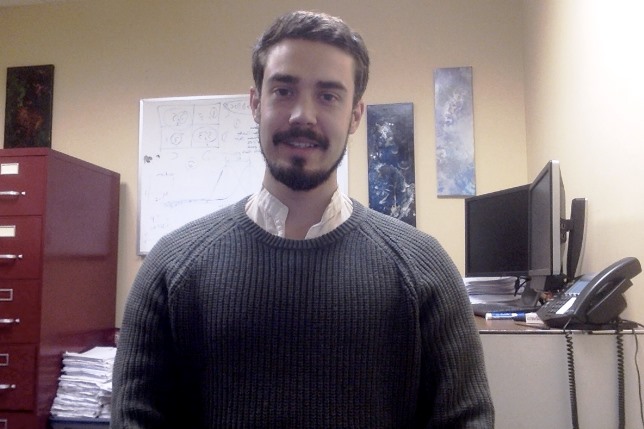
Dan BowlingMy name is Dan Bowling. I am Senior Lecturing Fellow at Duke Law School, where I teach courses on labor law, employment law, and positive psychology and the practice of law. These classes seem to be popular among the students, maybe because I bring pizza and wine for the class every now and then. I also run a small consultancy, Positive Workplace Solutions LLC, which provides executive coaching and legal consulting for C-Level executives and professionals (I am a licensed attorney). I work with Martin Seligman’s team at UPenn’s Positive Psychology Center doing empirical research on strengths and lawyers, and have helped teach in MAPP for the past 5 years. I speak regularly at legal and/or positive psychology conferences, and write a featured blog for Talent Management Magazine called Psychology at Work. I tweet silly and irrelevant stuff @BowlingDan if you would like to follow me.

What got you interested in Positive Psychology in the first place?

I have always been fascinated by different personality traits. I started my career after graduating from Duke Law in 1980 as a labor and employment litigator and it struck me how important a role personality played in why one employee sues you and another doesn’t, even if their job circumstances are the same. I made partner in a large Atlanta law firm in 1986 but was shortly thereafter recruited by Coca-Cola to help form the new law department of its bottling operations, which it spun off as Coca-Cola Enterprises in the largest IPO in history. My interests in the psychological components of work continued during my career with Coca-Cola Enterprises, where I held a variety of jobs including President of a nine-state, 2 billion dollar operating region, as I developed a firm belief in the link between optimism and positive emotions in employee and corporate performance.

I had the opportunity to put my theories into practice in the latter stages of my career, when I was named head of human resources for the entire company. Frankly, the organization was down. We were under legal assault by small groups of hostile employees. Rather than aggressively defending the claims – which I found spurious – our programs and energies were focused on an agonized self-examination of what we did to prompt such claims. The halls were full of consultants and lawyers and days were consumed by meetings, all focused on what was “wrong” with us and how we could treat it. Not surprisingly, our “disease” was metastasizing, and corporate maladies previously unknown (or non-existent) were being discovered and stern remedies subscribed. Managers and employees forgot about selling Coke and spent their time instead in a variety of “workshops,” the corporate equivalent of Mao’s re-education camps.

Our new HR team decided to flip the paradigm, and look at what was right about the company – a focus on the life above zero, as Marty Seligman says. It didn’t take long to learn that the vast majority of the employee grievances were brought by a handful of perpetually complaining employees, often sponsored by outside interest groups, and were generally unfounded. We also found that most of our employees were quite happy with us as an employer. We starting asking a very basic question of ourselves: “Why is it 95% of our HR programs and initiatives are focused on the 5% of employees who hate us? Why spend our precious resources and energies on the perpetually dissatisfied few? Why not focus on efforts on those who want to build a better company and believe we can?” Eventually, we resolved our issues quite successfully, the grumblers moved on, and we spent the rest of our time in HR doing things to hire and engage people who were a positive contribution to our company. When I turned 50, it was time to move on, so I joined the Duke Law faculty teaching labor and employment law, while continuing my research into optimism and positive personality traits by receiving a masters in applied positive psychology at the University of Pennsylvania.

Your are a lawyer, you teach law, and via MAPP (at the lastest…) you know that lawyers are among the unhappiest professions. Why do you think that is the case?

That question is at the core of my current research and writing interests. First, I must challenge the premise – I think the data is not conclusive that lawyers are among the unhappiest professions, although the majority of the literature seems to suggest so. Regardless, law school and law practice seem to exacerbate depressive tendencies in persons with those tendencies, which isn’t surprising given the number of hours lawyers work in pressurized environments on things they are not intrinsically motivated to do. But as to whether lawyers as a population are significantly unhappier than other large groups of highly educated professionals, more research is needed.

Do you have plans to do anything about that?

To effect real change in the profession, it is of critical importance to establish a link between well-being and legal professionalism for the happiness of lawyers to be taken seriously, and my goal is to help provide that framework for the legal profession.

According to what you´ve learned about Positive Psychology, if I were the CEO of a company: what are three things that I should start doing right away?

1) Identify and develop leaders who are optimistic and enthusiastic about the success of others; 2) incorporate strengths-based employee assessment and development programs; and 3) use better psychometrics to support the hiring and talent acquisition process.


Thank you, Dan, for this Mappsterview! If you are a MAPP alumnus and would like to have your story featured here – please go ahead and shoot me an e-mail!

Godspeed to MAPP 9! I Love Myself so Much More Because of You…

The Master of Applied Positive Psychology program 2013/2104 at University of Pennsylvania (MAPP 9) is history. While the graduation festivities are still up and coming in May, it´s been the last time for us to come together as a full group since not all of us will come to graduation. It´s been a very emotional weekend with lots of special treats – but I promised not to divulge any details. I don´t want to be the spoiler for the future Mappsters. Let´s just say that some wise person brought a pack of Kleenex for each person in the room…

I´ll just share one thing with you, and that is a sentence that my classmate Guang Zeng said to our group at one point (and which may well be the most beautiful thing I´ve ever heard…)

I love myself so much more because of you!

Before coming into class on Sunday morning, I took this photo of Penn´s Locust Walk that runs across the core campus. It perfectly captures the mood of that weekend as we were frequently reminded of the fact that the end of MAPP 9 is the beginning of our journey in/with Positive Psychology – and not the end.

The Road goes ever on

As Bilbo Baggins sings:
The Road goes ever on and on
Down from the door where it began.
Now far ahead the Road has gone,
And I must follow, if I can,
Pursuing it with eager feet,
Until it joins some larger way,…
Where many paths and errands meet.
And whither then? I cannot say.
Is this the end of Mappalicious?

Is this the end of Mappalicious?

Certainly not. I´m going to continue blogging on Positive Psychology topics. Maybe not with the same regularity (as other exciting projects are waiting…) – but I will…

My Year in MAPP: A 5-Step Course in the fine Art of Being Un-German

In general, I hate this sentence – but: time flies.

Right now, I´m in Philly, precisely: in room 340 of Wharton´s Huntsman Hall, for attending the final onsite period of the 2013/14 MAPP program at University of Pennsylvania. Seems like yesterday that I wrote that blog post on being admitted to my deepdive into Positive Psychology at UPenn. Maybe it´s still a little bit early for reminiscence, since there´s still a lot of work ahead (final papers, capstone projects) – but lately, I´ve been musing on a truly intriguing question:

Is MAPP a Course in being Un-German?

Flag - German SmileyThat question only makes sense when you´re German, of course – which I happen to be. My MAPP classmates surely know I´ve been using this definition a lot over the year: un-German. What do I want to say here?

Despite that disreputable first half of the twentieth century, I kind of like being German. According to most socio-economic (and also ecologic) indicators, it´s a very good place to live. Hey, according to BBC we might even the most popular country in the world. Go figure!*

But what do other countries like or maybe even admire about Germans? Let´s look at some of the (pretty thoroughly verified…) stereotypes:** People definitely love our cars (and the fact that there´s no speed-limit on most areas of the Autobahn), they indulge in our Bier, Schnaps, and Riesling-Wein (especially around the time of the Oktoberfest – which I´ve never visited by the way…), our ten trillion varieties of Wurst and the Schnitzels (although the original Wiener Schnitzel is from Austria, of course). So generally speaking, people like our products. They love things “Made in Germany”.

Because that´s what we´re good at. Germany has an “engineering culture”. We´re good at planning things and following through with it, that´s our Prussian heritage. We´re builders and craftsmen, planners and executors, not so much “poets and thinkers” any more. We´re industrious, punctual, orderly, dependable, and basically good at “being good at things”.

Emilia Lahti & Nico RoseRather not on top of the list is “the German” as a person(ality). Most other countrymen consider us to be blunt to the point of outright rudeness – if we´re talking at all, that is. We´re not the epitome of warm-heartedness, either (that may be a result of our language). And while Germany typically is considered to be the “export world champion”, our humor definitely is not one of our hit products.

Additionally, we´re just not a very optimistic people. I mean, compared to most other countries, we´re really really rich and really really healthy and long-living. We´re well-off – period. Still, collectively we´ve managed to have a special kind of fear being named after us: “German Angst” (roughly: being overly cautious and pessimistic). Oh, and we´re also good at feeling Weltschmerz – which can be described as the state of “being pissed off with existence in general and also in particular”.

So on the face of it, trying to be a good German and studying Positive Psychology (here´s a short definition) does not add up. At the end of the day, Positive Psychology is just too … ahem … positive. Rather, a German in a Positive Psychology course seems like a prototypal case of “opposites attract”.

Yet, in spite of it all, I did it. And here´s what I´ve learned…

Lesson 1: Greeting Somebody

In Germany, most people opt for a solid handshake when greeting somebody they do not know that well. Among younger people and goods friends, you’ll also see the occasional hug or that “kiss-kiss embrasser thing” we copied from our French neighbors.

In MAPP, people hug each other at all times. Basically, our bodies are completely entangled while being on campus. Was a little strange at first – but then I´ve found this piece of research that shows how important hugs are for our health.

LOVE_Penn_PhiladelphiaLesson 2: Engaging in Small-Talk

In Germany, when meeting somebody again after several weeks, of course you´ll engage in some microscopic dose of small-talk. E.g., when somebody asks you “How was you flight?”, you´re supposed to reply something like this: “Oh, it was the worst thing ever. There was a delay of at least five minutes. And they didn’t have Becks beer on board. I did not get the window seat I wanted and the food servings were tiny. The guy next to me smelled like a dead rodent and I had already seen all of the HIMYM episodes they showed on board.” The other person will then reply: “Oh, I know exactly what you´re saying. It´s been even worse for me…………..”

In MAPP, when people ask how your flight was, you´re supposed to say “Awesome!” That´s it. And the other person will respond: “That´s awesome. Let me give you a hug…”

Was a little strange at first – but then I´ve found this piece of research that shows how mostly looking on the bright side of life is really beneficial for your psychological and physiological well-being.

Lesson 3: Taking a Break

MAPP Energy BreakIn Germany, when you take a break (which we don´t do that often), you basically stop doings things. Maybe, you have a piece of Streusel-Kuchen, maybe you check your mobile phone for messages. And if you meet a German who is one of those rare positive outliers on extraversion, you might be able to get him engaged in a little small-talk – but don´t count on that.

In MAPP, when you take a break, you´re not allowed to sit down and just do nothing. Because breaks are supposed to be “energy breaks”. So basically, somebody will walk up front, put on some music that is not Rammstein, and then coerce all the other people in the room into frenetic singing and shouting, and moving their bodies in distinctly inappropriate ways. Afterwards, you return to your seat. But before that, you hug.

Was a little strange at first – but then I´ve found this piece of research that shows how taking short breaks from work for dancing is really good for your health and gets so creative juices flowing

Lesson 4: Answering “complicated” Questions

In Germany, when somebody asks you a (“complicated”) question, you answer. That´s it. If you don´t want to do something or disagree, you just say “Nein!” or “That´s not a good idea.” Works out fine.

In MAPP, when somebody asks you a (“complicated”) question, you´re supposed to say something like this: “Oh, that is a truly brilliant question (break into huge smile while speaking…). I really appreciate it. It´s just so thoughtful and deep. I could have never come up with that in a million years. By the way, I just love your hair today. So, about your question…”

When you want to say “No” to somebody, or “I think that´s a bad idea” things get a little more complicated. Because: You can´t. It´s sort of “not allowed”. So instead, you might want to start with something along the lines of the above-mentioned phrases. Now, proceed by putting on a (just slightly) less smiling face and say, e.g.: “Let me give you a little bit of context on that.”*** Then, in excruciating length and detail, you recount each and every item of information that may or may not be relevant to the current affair, starting roughly at Lincoln´s “Better Angels of our Nature” address. And basically, you keep on going until the other person has forgotten what she wanted in the first place. Afterwards, you hug.

Was a little strange at first – but then I´ve found this piece of research that shows how important it is to really be empathetic towards other people, and to engage in (what Positive Psychologists call) active-constructive responding.

MAPP White DogLesson 5: Finishing something

In Germany, when you´ve finished something, you start doing something else immediately (except for when we want to practice the art of Gemütlichkeit – but hey: drinking beer is also doing something…). That´s what we´re here for. We do stuff. We finish it. We do something else. I mean, one of the largest chains of building centers in Germany advertises the slogan “Es gibt immer was zu tun…” (“There´s always something to do…”).

In MAPP, when you´ve finished something, you cannot do something else immediately. Nohoo! Somebody will walk up to you and ask you to savor what you´ve just did. So you might have been to the rest room, reenter the classroom – and somebody will approach you and ask: “Nico, did you take enough time to savor that experience?” Not.

But savoring really is a big issue in MAPP. Now, that is really really un-German. I´ve understood that it´s close to the concept of being “gemütlich”, just (mostly…) without beer. Basically, it´s the opposite of feeling Weltschmerz. It´s about back-pedaling, admiring your recent accomplishments, and giving yourself (and the world in general…) a mental pat on the back – and a hug.

Was a little strange at first – but then I´ve found this piece of research that shows how taking your time to savor life and the beautiful things (and maybe even some of the not so beautiful things…) it entails is really important for our well-being and finding meaning in life.

So, that´s what I´ve learned. Here´s the management summary:

Wherever you are, it is your friends who make your world.

(William James)

Alternatively, in the words of Henry David Thoreau:

Nothing makes the earth seem so spacious as to have friends at a distance; they make the latitudes and longitudes.

MAPP 9 & Co.: Thanks a million! Love you guys. Lots of hugs…

Nico

MAPP_White_dog


* But to be honest: that survey is from 2013, a year without any major soccer tournaments. That doesn´t really count…

**You will find 151 of those in Liv Hambrett´s hilarious and at the same time truly insightful piece What I Know About Germans.

*** Thank you for that one, James!

Mappsterview No. 3: David Yaden on Self-Transcendence and “Well-Being for the Dying”

I´m in the ninth cohort of the Master of Applied Positive Program at Penn. Consequently, there are tons of brilliant MAPP Alumni out there that have very fascinating stories to tell: about their experience with the program, about Positive Psychology in general – and about themselves of course. I really want to hear those stories. That´s why I started to do Mappsterviews* with my predecessors.


In Mappsterview No. 3, you´re going to get to know David Yaden who was in MAPP 8 and is now an assistant instructor in the current program. David is a very special person because he always gives me good grades …well: just read for yourself!

David Yaden - PPC

Please introduce yourself briefly:

I study self-transcendent experiences (which are basically peak or spiritual experiences), meaning and purpose in life, and death. Currently, I work as a researcher at the University of Pennsylvania at the Positive Psychology Center and in collaboration with UPenn’s Center for Cognitive Neuroscience. I also work as a consultant and public health educator with Lourdes Health System and I serve as a Humanist Chaplain for Rutgers University. I primarily study the psychology and neuroscience of self-transcendent experiences, but I am also interested in end-of-life issues.

What did you do before MAPP?

I was more of an entrepreneur. After undergrad, I started a health and wellness practice (Integrative Mind-Body Health) to teach people about relaxation techniques, wellness, and well-being. My practice has been sub-contracted by Lourdes Health System for several years. I also started a healthcare consulting practice (Psychosocial Consulting), which initially served medical practices but the work has moved into more technical healthcare business consulting, my primary account is now a medical imaging engineering firm.

My main reason for applying to MAPP was to determine whether I was more of an entrepreneur, a clinician, or an academic researcher. It turns out that of these three I’m best suited for academic research. Ideas light my mind on fire – they move me on an emotional level – so working in this area excites me on a daily basis. My research feels like a real calling.

What got you interested in Positive Psychology?

My journey to positive psychology began with a spontaneous “mystical” experience of self-transcendence. In one instant, my life seemed to go from mild despair and meaninglessness to absolutely overflowing with a joyful and loving sense of meaning and purpose. Much of my adolescent angst was resolved in one overwhelming moment. I’m not alone in this – experiences like mine, which William James describes in The Varieties of Religious Experience, are surprisingly common. Research suggests that today about 33% of cross-cultural samples report something like them. This means that about 1 out of every 3 of your readers will be nodding their heads in recognition when they read this. One scale, the “Mystical Experience Questionnaire” gives a sense of the experience through its items:

  • “Experience of the insight that ‘all is One.’”
  • “Awareness of the life or living presence in all things.”
  • “Feeling that it would be difficult to communicate your own experience to others who have not had similar experiences.”

My attempts to understand this experience led me through academic studies and “real world” experiences that I would not have had otherwise. My studies include comparative religion, philosophy, psychology, and cognitive neuroscience. Experientially, I graduated Marine Corps. Boot Camp and participated in Zen meditation retreats to study rites of passage. I have also traveled and taken psychedelic drugs (legally) to learn more about how certain triggers and circumstances can facilitate self-transcendent states of mind. While these experiences never re-captured my initial experience, many came close. I now believe that many group rituals and contemplative practices have tremendous value. I still meditate and go on retreats, for example. I also promote the on-going psychopharmacology research on psilocybin (a psychedelic substance) at John Hopkins and NYU, and I believe that we will see a return of immersive interventions similar to rites of passage in psychology’s near future.

I should also say that I see my research through a purely psychological lens, and I work hard to keep from engaging in metaphysical speculation. While I was raised religious – and still feel generally positive about religion – I became an atheist at a young age. After my mystical experience, however, I became very spiritual – after all, “seeing is believing”, right? Well no, actually… As Dr. Jon Haidt once said to me, “seeing is perceiving.” After studying philosophy and neuroscience, I realized that I can’t know the true nature of existence or consciousness. This humbled me tremendously. Coming to terms with the fact that we lack certainty about these issues was, and is, a difficult but very valuable process. Now I consider myself an agnostic – this keeps me living in wonder at the mystery that surrounds us. This view also allows me to understand the perspective of religious, spiritual, and secular people alike, which has been particularly important while volunteering with Hospice and doing chaplaincy work. In these areas, the main focus is on helping people rather than getting caught up in debates about belief systems.

My research eventually led me to the work of Dr. Andrew Newberg, who studies the neuroscience of mystical experiences. He is best known for putting long-term meditators and nuns into neuroimaging scanners (like SPECT and fMRI) to see what is going on in their brains while they experience self-transcendent states of unity. He seemed to understand the subjective side of these experiences, was conducting useful and fascinating research on the topic, and wasn’t trying to prove any points based on a particular belief system. Rather than having a metaphysical axe to grind, he frames his work as a strictly scientific endeavor that has the potential to help people. In fact, his respectful and open-minded way of presenting his research often leads people of both extremes of belief to use his research as “proof” that their particular worldview is right.

Atheists say, “See! These experiences are only in the brain” and believers say, “See! These experiences are even in the brain!”

Of course, the data does nothing to prove either of these metaphysical positions correct, but it does advance our scientific understanding of the actual experiences tremendously.

At some point in this process, I saw that Dr. Seligman was on the board of advisors for Dr. Newberg’s lab. I recognized Dr. Seligman’s name from psychology textbooks during my undergrad training. After I learned about his positive psychology initiative, I began to hear about it everywhere. The director of the psychology lab I worked in at the time referred to his work, my Zen teacher brought up positive psychology in his talks (called “teishos” in the Zen tradition), and I remembered that my undergrad study group “Jedi Mind Tricks,” had briefly covered this topic. Once I started reading more of Seligman’s work, I couldn’t learn enough. For a few months I became a hermit in order to read books and articles by him and the other usual suspects in positive psychology (Barbara Fredrickson, Jonathan Haidt, Paul Bloom, Jane Gillham, etc…). After hearing James Pawelski discuss the Masters of Applied Positive Psychology program at an info session, I knew I was hooked. I applied that fall.

As stated above, one of your research areas is the experience of self-transcendence. Can you please elaborate on that?

“Getting out of your head” is one way that I’ve been thinking about self-transcendence lately. Self-transcendent experiences (STE’s) are temporary states of unity with something beyond the self. They range from the routine, like getting lost in a piece of music, to the transformative, such as the mystical experience that I had. Other experiences fall in-between these extremes, like states of mind experienced during meditation or while making love, for instance.

I am working with a dream team of researchers to formalize the definition and spectrum on which STE’s occur – something we call “the unitary continuum.” We are applying for a Templeton grant to study how often these experiences occur, what kind of people experience them and under what circumstances, how people describe them, what biological processes are associated with them, and how they relate to outcomes like well-being and altruistic behavior. To learn more about how these experiences work on the neurological level, we are currently utilizing non-invasive brain stimulation techniques to try to elicit self-transcendent experiences at UPenn’s Center for Cognitive Neuroscience.

Evidence suggests that unlike many interventions in psychology that have small effect sizes and are relatively short-lived, the more intense varieties of self-transcendent experiences can be positively transformative. Some studies show that certain beneficial effects of mystical experiences of self-transcendence, like increased well-being and altruistic behavior, can last years, decades, or even a lifetime. Many people rate these experiences among the most meaningful of their entire lives – alongside events like marriage and childbirth.

If I wanted to foster the presence of self-transcendence in my life: where, or with what should I start?

There are two broad paths to more self-transcendence that have the most evidence behind them, contemplative practices and group connection. In terms of contemplative practices, meditation, prayer, yoga, or even simple relaxation techniques are a great place to start. For group connection, attending church, going to a concert, or participating in anything that involves group cooperation can elicit a sense of self-transcendence.

I would also point you to the research on self-transcendent positive emotions by Barbara Fredrickson, Awe by Dacher Keltner and Jonathan Haidt, Flow by Mihayli Csizkszentmihalyi, Mindfulness by Richard Davidson and Britta Holzel, Peak Experiences by Abraham Maslow, and Mystical Experiences by Ralph Hood and Andrew Newberg. We are calling these “The Varieties of Self-Transcendent Experience” in an obvious nod to William James.

You´re also interested in end-of-life healthcare. How is that a “positive” topic?

Death is scary, dying is difficult, and in our society we don’t do a particularly good job of handling either particularly well (see Atul Gawande’s brilliant article “Letting Go”). Attempts to improve the dying process typically do so by reducing suffering, and I am a great proponent of these efforts. Hospice is one of the very few examples of truly cross-disciplinary, holistic health-care. Palliative care (or “comfort care”) has even recently become a specialty that physicians can study. We have made great collective strides in reducing the pain and suffering of those who are actively dying.

At the same time, I believe that we can do more than reducing pain alone. Hospice care provides art and music therapists, compassionate presence from volunteers, and visits from chaplains. Soaringwords is an organization run by fellow MAPPster Lisa Buksbaum that is also doing wonderful work in this area. These are just a few examples of an amazing start, and I think we can build on these beginnings. Well-being is important for people, period. The fact that someone is actively dying should not exclude them from positive interventions. The dying process is still part of life, and this experience could be improved by making options available that promote well-being. I suspect elements of well-being like meaning and relationships will be shown to be particularly valuable.

Research on mindfulness practices and psychedelic sessions at end-of-life have shown that remarkable improvements in well-being and reductions in anxiety and depression are now possible. Based on this research, I predict that within ten years, when one is pronounced terminally ill (about six months to live) they will have the option of undergoing a psychedelic session. I am very surprised to be saying this, but the evidence of positive benefit is so strong that I think policy makers will eventually be morally obligated to permit research and application in this domain. Physicians and patients will demand access to these substances, especially as research reaches a tipping point of demonstrating their potential to relieve suffering.

David Yaden with other Mappsters

David Yaden with fellow Mappsters

Thanks a lot, David, for this Mappsterview!

* If you are a MAPP alumnus and would like to have your story featured here – please go ahead and shoot me an e-mail!

“You´re doing just fine.” On the Power of Trust and day-to-day Positive Feedback

Blind SymbolAs I´ve already told you in this post on the significance of empathy, one guest lecturer at MAPP 13/14 onsite has been Jane Dutton who is known best for her research and teaching on high-quality connections (at work).

Jane stopped her lecture once in a while to lead us through some practical exercises on that topic. On one occasion, half of the group was blindfolded and then led through the hallways of Penn´s Huntsman Hall by the other people for several minutes. Now, I´ve done this sort of thing a couple of times before in coaching seminars – but I´ve never had such a powerful realization as I had this time:

I was feeling pretty save and comfortable in the beginning. My partner guided me with her hands and simple verbal cues, telling me to go left and right whenever needed. At one point, we were walking straight along a stretched-out hallway.* All I had to do was walk straight-on – so my partner stopped giving verbal feedback.

Somewhere half-way down that hallway, there was an ever so small bump in the floor, I guess a spot where a cable lay beneath it. But it was enough to catch me off-guard and lessen my trust considerably. Upon understanding that, my partner started to behave very differently. Instead od telling me only about necessary changes, she started to give me constant feedback, mostly along the lines of:

You´re doing just fine. The way is free. Just keep on going!

What a tremendous change that was! A genuine difference that makes a difference! And a powerful metaphor for everyday (business) life…

Because, on a closer look, we´re running around blindfolded all the time. We hear, see, and know so little compared to the sheer endless amount of information that is out there and could be of value for us. What a difference it makes to just hear “You´re on the right track” from somebody who just happens to know a little bit more than you do.

So if you´re a boss, a parent, or just somebody who happens to care about other people: How about telling them that they´re doing fine at least once every day? Not because they did something special. Just because they need and deserve it…


*I still wonder what all those suited-up Wharton MBAs thought of our crazy group of people playing children´s games in their sacred halls…

2051: Positive Psychology, Optimism, and the Florentine Moment in Time…

Tempus fugit. The first half of the MAPP program 2013/14 is over. Actually, the second and final semester is well on its way already. New subjects, new lecturers, lots of new homework…

I guess this is a good time engage in a little retrospection – and to have a look at the future as well.

I still remember sitting in the classroom at Penn on the first day, listening to Martin Seligman´s deep and sonorous voice, where he lectured on the history of positive psychology. At some point, one of my MAPP classmates asked him about his vision for positive psychology. What should be its contribution to mankind in the future?

Without much hesitation, Marty told us about his moonshot goal for positive psychology. “By 2051, I want 51% of the world´s population to be flourishing (according to the PERMA outline)”. Now in 2051, Marty will be 109 years old. So there´s good chance he´s talking about his legacy here. Could this be possible? After all, we still seem to be very far away from that number. War, poverty, and hunger are still raging in many parts of the world. But the truth is:

Things are getting better day by day, year by year.

Now I am a die-hard optimist. So if you feel I am not to be trusted, you may trust some experts (and their stats…).

  • Over the last 40 years, people have managed to rise above hunger and poverty by the billions. And this trend is very likely to continue. If you would like to know more, please watch this fabulous TED talk by Hans Rosling.
  • The likelihood of dying via homicide has decreased dramatically over the last century. Yes, there still are wars – and there still is murder. But the truth is: on a global scale, life on earth has never been safer. And once again, the trend is likely to continue. If you would like to take a deep dive, please watch Steven Pinker´s TED talk on the decline of violence.
  • Overall, we have very good reasons to be (fundamentally) optimistic about the future of mankind. Again, if you´d like to know more, please watch this TED talk by Robert Wright on zero-sum-games, optimism, and human progress.

Positive Psychology wants to play its part in this overall development by teaching people the art and science of flourishing – how to lead a meaningful, positive, and accomplished life while being actively engaged in our closer and larger social networks.

Positive Psychology has first been embraced by coaches, psychotherapists, and physicians. It is now entering the workplace more and more. And the next important step will be:

How can we bring Positive Psychology into education, community management, and policy-making? How can we bring it to China and India – those countries that account for almost 40% of the global population?

Marty Seligman believes that we (at least the western/developed world) now are at a Florentine moment in time. During what came to be known as the Renaissance, the Italian city of Florence became very rich via trading, and therefore at the same time developed into a flourishing center for all kinds of arts and culture because of all that affluence. So where are we – today? In Marty´s words (taken from his book “Flourishing”):

The wealthy nations of the world – North-America, the European Union, Japan, and Australia – are at a Florentine moment: rich, at peace, enough food, health, and harmony. How will we invest our wealth? What will our renaissance be?

Time will tell. I´ve decided for myself that I want to be a part of that movement and upward trajectory. Not only does it feel better to be optimistic – it´s also rational. The alternative, being a (fundamental) pessimist, doesn’t make any sense to me (and I´ve got the data on my side…). What´s the use of being pessimistic? I am a young father – and I would love to have more children. How could I want to want this without believing there´s a good (or at least: better) future ahead, without believing this world fundamentally is a good place to live in?

Once again, time will tell. The picture beneath these lines was taken at a party at Marty Seligman´s house when he generously invited the 2013/14 MAPP students and faculty to have a Christmas celebration at his house on December 7, 2013.

MAPP 9 - Christmas Celebration

The next day, final day of the first MAPP semester, it was also Marty´s part to speak the closing words. Quite obviously very moved, he cited a passage from Kim Stanley Robinson´s book The Years of Rice and Salt:

“We will go out into the world and plant gardens and orchards to the horizons, we will build roads through the mountains and across the deserts, and terrace the mountains and irrigate the deserts until there will be garden everywhere, and plenty for all, and there will be no more empires or kingdoms, no more caliphs, sultans, emirs, khans, or zamindars, no more kings or queens or princes, no more quadis or mullahs or ulema, no more slavery and no more usury, no more property and no more taxes, no more rich and no more poor, no killing or maiming or torture or execution, no more jailers and no more prisoners, no more generals, soldiers, armies or navies, no more patriarchy, no more caste, no more hunger, no more suffering than what life brings us for being born and having to die, and then we will see for the first time what kind of creatures we really are.”

Time will tell, Marty. But I´m with you…

2013 – 8760h: How time flies…really?

Every time a year draws to a close, a lot of people start saying something like “Oh, how time flies…”. Mostly, it is used in a slightly sniveling fashion – as if those people might have missed something. I guess that´s why they show all those year-end retrospectives on TV. But then, they invite all these VIP and VEP (Very Exceptional People) – and at the end of the day, one´s own life might seem insignificant in comparison.

So why not create your own personal year-end retrospective?* Why not have a look at what really happened in those last 365 days?

Merry Christmas and happy new Year!

Nico Rose - Neon - Euromasters

One year consists of 8760 hours! I have…

Big Chunks

Need to Talk

Nico Rose - TEDxKoeln

Working with real People

New Beginnings

  • started to study (surprise, surprise…) positive psychology (and therefore spent 22 days in the U.S.)
  • started the blog Mappalicious (surprise, surprise…again…) and written 62 articles (including this one)
  • published 5 articles as “Digital Leader” via lead-digital.de
  • bought an acoustic guitar, taken 7 lessons and practiced about 10 hours (definitely not enough)

Endings

Not so nice

Very nice

  • been promoted at Bertelsmann

Nico Rose - Birthday

Personal Stuff

  • said “I love you” +365 times (not every day, but several times on some of the days)
  • canoodled with my son approx. one million times
  • read +80 good-night stories (definitely not enough, please refer to kilometers travelled)
  • had approx. 700 cappuccinos and 5 kg chicken tikka
  • been to 5 metal concerts and one opera premier

My New Year´s resolution: having myself cloned!

So, how might your very own year-end retrospective look like?

* Please excuse the fact that a lot links in this article will lead to German sites. I´ve really just started publishing in English this year – so most of my stuff is still in German…

7 common Misconceptions about Positive Psychology

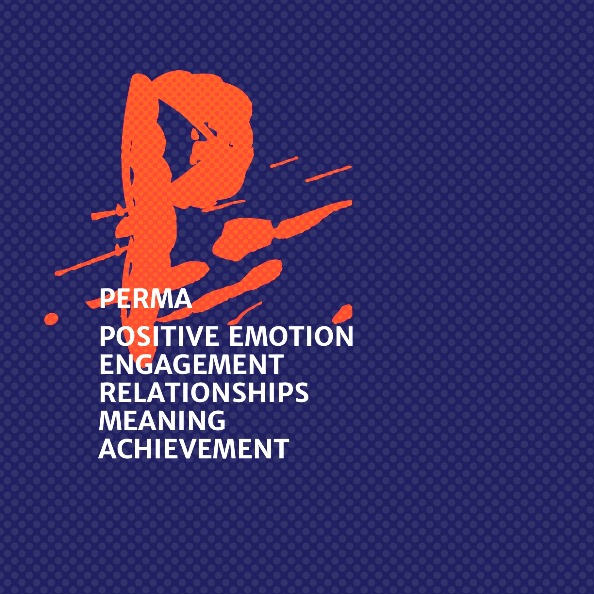
P.E.R.M.A.Positive Psychology is not Happyology

Ok. So there´s some truth in this. Positive psychology indeed tries to understand the role of positive emotions in the good life. But they are only one of the five key elements in Martin Seligman´s PERMA concept. I guess most positive psychologists would agree that – at the end of the day – concepts like meaning in life and positive relationships are more important for a life well-lived. Additionally, it is important to acknowledge that positivity is not (only) and end in itself. It may be a powerful way to attain other important things in life (e.g., success at work).

Positive Psychology is not Kitchen Sink Psychology

While there´s nothing wrong with kitchen sink psychology per se, it has to be noted that laypersons get things wrong a lot of times. Even though we should be all experts at living (because that´s what we do all day long…), many people bear serious misconceptions on what makes for a good and happy life. This is where positive psychology as a data-driven science steps in – and often comes up with counterintuitive findings. For instance, if you´re into social media, you´ll know all this TGIF (Thank God it´s Friday) stuff people put on Facebook and Twitter on Friday afternoon. But scientific inquiry time and again is able to show that most people are happier while at work compared to their leisure time.

Positive Psychology is not Self-Help/Positive Thinking

Now this one is so important that I may have to write it down three times. Here we go…

For sure, there are similarities in the subject matters of positive psychology and positive thinking. By way of example, both are concerned with cultivating optimism in individuals, since being optimistic (most of the time) is associated with an array of beneficial outcome variables. The difference is: positive psychology is a science. It´s grounded in thorough academic research. Of course it´s possible to arrive at correct conclusions without conducting large-scale studies – but personally, I feel a lot better when what I recommend to my clients is based on coherent theories and scientific evidence.

Positive Psychology is not headed by some dubious Guru Elite

This point is closely connected to the aforementioned one. Positive psychology is spear-headed by some of the most widely acclaimed psychologists of our time. Among them are Martin Seligman, former president of the American Psychological Association, Mihaly Csíkszentmihályi, and Barbara Fredrickson. And: Daniel Kahneman, Nobel Laureate of 2002, also is among the major contributors to the literature on psychological well-being. Among other things, he´s a co-editor of the seminal book Well-Being: The Foundations of Hedonic Psychology. Yet, the crucial difference between these people and the common self-help guru is not the length of their Wikipedia articles – it´s something else that can be found in this post.

Positive Psychology is not about ignoring negative Emotions

Once again: positive psychology is not about being happy-smiley all day long. It is not trying to eradicate “the Negative”. It´s just that psychology as an academic discipline has very much focused on negative phenomena (such as fear and depression) for the first hundred years. Positive psychology wants to point the spotlight to the positive side of our emotional and behavioral continuum in order to create a more balanced view of human functioning. Actually, negative events and emotions play a crucial role in studying so-called post-traumatic growth which basically is concerned with the question: How can we profit in the long run from going through really hard times in our lives?

Positive Psychology is not only for rich white People

This concern was issued in a recent article by James (Jim) Coyne, PhD, a Clinical Psychologist and Professor in the Department of Psychiatry, University of Pennsylvania – the same university that Martin Seligman is teaching at. Again, there´s a grain of truth here. Positive psychology was coined at several high-end private universities in the U.S. As with virtually all psychological theories, they are first tested empirically using samples of undergraduate students at those universities the researchers teach at. And since these tend to be predominantly affluent white people, there´s is some truth to that criticism. But once again: that´s true for almost any piece of research in any branch of psychology out there. Positive psychologists do acknowledge this caveat and continually try to broaden their (research) perspective, reaching out to international samples and other diverse target groups.

Positive Psychology is not ignoring its Roots, e.g. Humanistic Psychology

Positive psychologists readily do acknowledge the theories and findings that came out of Humanistic Psychology, thereby standing (partly) on the shoulder of giants like Abraham Maslow and Carl Rogers. Additionally, positive psychology draws heavily on the ancient wisdom of some of the great philosophers. A lot of positive psychologists seem to be very fond of William James, and especially Aristotle and his conception of Eudaimonia. The crucial difference once again is positive psychology´s strong foundation in (experimental) research.

P.S.
I´d really like to have your feedback on this one. Do you agree? Do you disagree? What did I forget?