22 Positive Psychology-infused Articles every (HR) Leader should know

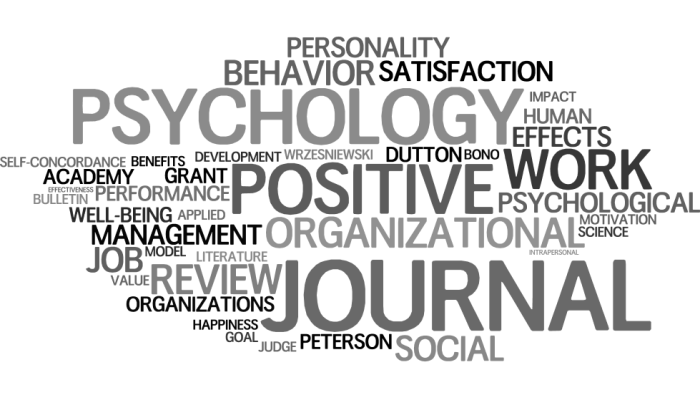
Positive Organizational ScholarshipPositive Psychology has a lot to offer for leaders, especially those people taking on a leadership role in human resources and people management. In this post, I´ve gathered 22 research articles infused by Positive Psychology (more specifically: Positive Organizational Scholarship) that, in my opinion, have tremendous value for aspiring as well as established managers and entrepreneurs.

The topics comprise desirable attributes and personality variables such as grit, character strengths, and core self-evaluations, how to create positive relationships at work, how employee motivation is created and sustained, how to find meaning and purpose in work, and several review articles, e.g., on the connection of positive emotions and job performance. Enjoy!

P.S.
This is my 300. post since I’ve started Mappalicious about two years ago. Giving myself a slight pat on the back right now…
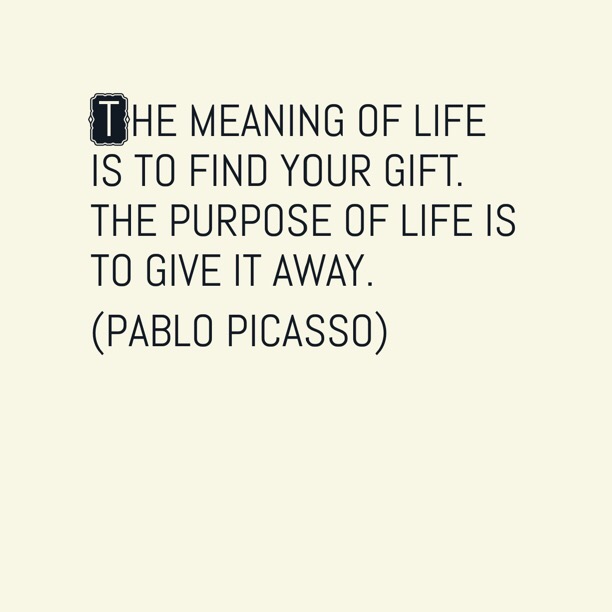
The Meaning of Life is to find your Gift. The Purpose of Life is to give it away

I sometimes struggle with the difference of the terms “meaning” and “purpose” – especially, as the German language doesn’t really provide distinct translations. The definition of Picasso really helped me to get a grasp on the distinction. 


5 essential brand-new & upcoming Books on Positive Psychology

Are you eager to get some fresh perspectives on Positive Psychology? Here you go…

Recently published books on Positive Psychology

Michelle Gielan: Broadcasting Happiness: The Science of Igniting and Sustaining Positive Change. Michelle is a former CBS News anchor and is a Penn MAPP alum. About the book:

“In Broadcasting Happiness, Gielan shows us how our words can move people from fearbased mindsets, where they see obstacles as insurmountable, to positive mindsets, where they see that change is possible and take action. Using scientifically proven communication strategies, we have the ability to increase others’ happiness and success at work, as well as our own, instantly making us more effective leaders.”

Shannon Polly & Kathryn Britton (Eds.): Character Strengths Matter: How to Live a Full Life. Shannon and Kathryn are also Penn MAPP graduates working at the intersection of research and consulting. About the book:

The book brings Peterson´s and Seligman´s character strengths “to life with stories involving children, teenagers, adults, and elders and occurring in family life and business settings, in the present and in the distant past, in locations from China to the United States to the Middle East. Research shows that using character strengths in new ways for a week makes people happier up to six months later. This book includes many ideas for using your character strengths in new ways.”

J. Harold Ellens, Theo D. McCall & David Bryce Yaden (Eds.): Being Called: Scientific, Secular, and Sacred Perspectives. David was an assistant instructor in during my stay in the Penn MAPP program and has his own Mappsterview. About the book:

“This unique book is an essential resource for interdisciplinary research and scholarship on the phenomenon of feeling called to a life path or vocation at the interface of science and religion.”

Positive Psychology Books coming up in 2016

Emma Seppälä: The Happiness Track: How to Apply the Science of Happiness to Accelerate Your Success. Emma is the Science Director of Stanford’s Center for Compassion and Altruism Research and Education and founder of Fulfillment Daily. About the book:

“Drawing on the latest findings from the fields of cognitive psychology and neuroscience—research on happiness, resilience, willpower, compassion, positive stress, creativity, mindfulness—Seppälä shows that finding happiness and fulfillment may, in fact, be the most productive thing we can do to thrive professionally.”

Angela Duckworth: Grit: The Power of Passion and Perseverance. If you are remotely interested in Positive Psychology, it is not necessary to introduce Angela, but for the sake of consistency in this article, she´s a professor at Penn´s Positive Psychology Center and a close colleague of Martin Seligman. About the book:

“Why do some people succeed and others fail? Sharing new insights from her landmark research on grit, MacArthur “genius” Angela Duckworth explains why talent is hardly a guarantor of success. Rather, other factors can be even more crucial such as identifying our passions and following through on our commitments.”

New Positive Psychology Books

No Pain, no Gain? Think again! We are able to experience Post-Ecstatic Growth, Science says

Post Ex GrowthOriginally coined by German philosopher Nietzsche, the following quote has become a piece of common knowledge: “That which does not kill us makes us stronger”. Most people have – at one point or another – made the experience that going through really tough times may render us stronger than before, and not shattered as one would initially expect. In psychology, this mechanism is labeled Post-Traumatic Growth (PTG; here´s an overview of the idea).

Some people might even claim that there is no gain without pain. Turns out, that this view may be wrong, or at least incomplete. In a 2013 article published in the Journal of Positive Psychology titled Gains without pains? Growth after positive events, Ann Marie Roepke, Ph.D. student at Penn´s Positive Psychology Center, presents evidence for what she calls Post-Ecstatic Growth, based on a survey among some 600 people. Basically, Roepke had people name the one experience in peoples lives that they remember as the most positive (e.g., the birth of a child). Then, she asked people to specify which category best characterized their positive event, based on Seligman´s PERMA framework and which positive emotions had been evoked by the event (e.g., in awe, inspired, uplifted, joyful, content, fascinated etc.). Additionally, she assessed the outcome of that event, for instance, feelings of personal growth or “doors opening up” for new possibilities in life.

In short, Roepke found clear evidence for the existence of Post-Ecstatic Growth. Here are some excerpts from the discussion section of her article:

Positive events can, in fact, catalyze growth. Although hedonic happiness levels tend to return to baseline after positive events, important changes in eudaimonic well-being and in worldview may remain. Four domains of growth are particularly important after positive events:

  • new meaning and purpose in life;
  • higher self-esteem;
  • spiritual development;
  • and better relationships.

Some positive experiences are more likely to lead to (self-perceived) growth than others. […] Events that evoke stronger positive emotions are more closely linked to growth. This is consistent with Fredrickson’s broaden-and-build theory: positive events can provide opportunities to expand one’s thought-action repertoire, and this expansion can be perceived as growth. Indeed, participants who reported that a positive experience opened their eyes to new opportunities, goals, roles, and values also felt they had grown more. […] Inspiration, awe, and elevation are especially important positive emotions for growth. […] In contrast, more hedonic positive emotion (e.g. feeling joyful and content) predicts less growth.

Inspiration is related to meaning, a sense of connection to something greater than the self. Meaning, like inspiration, is closely tied to growth: meaningful experiences are associated with more growth than experiences of accomplishment, engagement, relationship, and hedonic positive emotion.

Roepke´s conclusion:

Our best moments can inspire us, connect us to something greater than ourselves, and open our eyes to new possibilities, ultimately giving rise to growth.

Hence, there is gain without pain. If we seek out the right positive experiences, we are able to experience gain from previous gains, possibly entering into an upward-spiral of growth.

Do you want to find more Meaning in your Work? Here´s where you should look for it – according to Science

Feeling that your work has a deeper meaning or purpose has many positive consequences, for yourself as well as your organization: For instance, higher levels of engagement, job satisfaction, and (individual) performance. Therefore, researchers as well as practitioners have tried to find the antecedents of meaning in work for quite some time. Yet, it turns out that it´s a pretty complicated issue. A job that yields a lot of meaning for one person might feel totally meaningless for another individual.

Where should we look for the source of meaning in work? Is it something that can be found within ourselves? Does it depend on the type of job? Or is it determined by some characteristics of the organization? The answer is: very likely, all of those factors do play their role – and in part, meaning depends on the interaction between the characteristics of the person and those of the job.

In an empirical study published in the Journal of Positive Psychology, Tatjana Schnell and her colleagues surveyed some 200 people from different occupational backgrounds. In short, here´s what they´ve found:

When looking at all factors in a single model…

  • the strongest predictor of meaning in work is job significance (= the perceived implications one’s deeds have on an organizational, societal or even global level);
  • the runner-up is the organization´s socio-moral climate (= a culture that fosters a) open confrontation with social conflicts and problems; b) reliable appreciation, care, and support; and  c) participative collaboration);
  • third place goes to the organizations´s self-transcendent orientation (= commitment to a higher purpose, combined with a concern for ethics and integrity);
  • and the last (but not least) impact comes in the form of work-role fit (= a perceived match between personal identity and actual job activities).

All in all, those attributes are able to predict almost 50% of the variance pertaining to participants´ level of perceived in meaning in work (that´s quite a lot in the context of psychological research). To put in everyday language:

We find meaning in our work when we frequently have the opportunity to perceive the (positive) outcome of our individual contribution, when our organization promotes a culture of fairness, trust, support – and authentically commits to some “greater good”, and when we feel that our job provides us with lots of opportunities to use our unique talents and matches our personal values.

In another fascinating article, Brent D. Rosso et al. try to provide an integrative model that compasses (more or less) all known factors that influence perceived meaning in work. Personally, I think it´s a very insightful (and: beautiful…) piece of research – and I will reread it frequently. I think, it is pretty self-explanatory, so I´ll leave it up to you to make the most of it.


Study: To Belong is to Matter: Sense of Belonging Enhances Meaning in Life

Nico Rose - Meaning in LifeOne of the central tenets in Positive Psychology goes as follows: Other People Matter. It was coined by the late Christopher Peterson as the shortest possible summary of research on human wellbeing. Peterson wanted to make the point that having healthy relationships with family, friends, and coworkers turns out to be the strongest predictor of happiness (and oftentimes: health) in most studies on human wellbeing.

A recent study by Nathaniel Lambert et. al titled To Belong is to Matter: Sense of Belonging Enhances Meaning in Life sheds additional light on this relationship. Here´s a shortened version of the article´s abstract:

We found correlational, longitudinal, and experimental evidence that a sense of belonging predicts how meaningful life is perceived to be. Additionally, we found a strong positive correlation between sense of belonging and meaningfulness. Furthermore, we found that initial levels of sense of belonging predicted perceived meaningfulness of life, obtained 3 weeks later. Furthermore, initial sense of belonging predicted independent evaluations of participants essays on meaning in life.

In short, what they are saying is:

Belonging = Meaning

Or, more precisely: If I matter to other people, my life matters.

The ROI of Happiness: Spreading the News across Germany

Dr. Nico Rose - Handelsblatt CFO KongressI am super-happy today. Just came back from back-to-back talks on Positive Psychology / Positive Organizational Scholarship in Frankfurt and Munich. On Tuesday evening in Frankfurt, I spoke to a group of about 50 CFOs at a convention hosted by Handelsblatt, one of Germany´s premier financial news outlets. I was a bit nervous since, a) it was a dinner speech and I am not that experienced in giving speeches without a PowerPoint presentation; and b)  I am obviously not a CFO myself – all participants were much older and more advanced in their careers than I am right now. Nevertheless, people were listening attentively and I received a lot of positive feedback. These were my ten main points to convince the financial leaders that investing in their employees´ happiness will bring them a solid financial return:

  1. Compensation: Happy employees are more intrinsically motivated and therefore need less extrinsic motivation. In turn, a happy workforce helps to keep personnel costs at a reasonable level over time.
  2. Health: Happy employees are sick less often, and if they are, return to work after fewer days. This helps to keep healthcare costs in check.
  3. Retention: Happy employees stay with companies for a longer time and create positive word-of-mouth. This helps to keep save costs concerning the functions of employer branding, recruiting, and training.
  4. Cooperation: Happy employees typically display more positive self-regard and therefore are better at handling conflict and situations that entail negotiation.Dr. Nico Rose - Handelsblatt CFO Forum
  5. Engagement: Happy employees display more organizational citizenship behavior (OCB) and therefore are willing to take on responsibility over and beyond their role descriptions and department boundaries.
  6. Innovation: Happy employees are more creative on average. This may foster innovation processes.
  7. Problem-solving: Additionally, they will find solutions to existing problems faster and more frequently.
  8. Meaning: Happy employees experience more meaning at work – which is one of the strongest drivers of motivation and engagement.
  9. Contagion: Happy employees will make other employees happy (at least: happier) by way of emotional contagion, potentially creating an upward-spiral of emotional well-being in the workplace.
  10. Customer Satisfaction: Happy employees will make your customers happy – via their motivation, exceptional engagement, and emotional contagion as well.

Since I was talking to CFOs, I closed my speech by referring to an article from the Journal of Financial Economics. In a paper titled “Does the stock market fully value intangibles? Employee satisfaction and equity prices”, Wharton´s Alex Edmans was able to show that a fictional stock portfolio build out of the “100 Best Companies to Work For in America’’ (as a proxy for companies whose employees are highly satisfied) has significantly outperformed carefully selected benchmarks on a yearly basis between 1984 and 2009. Ain´t that nice? They day after in Munich in a very stylish old movie theater, I spoke about Positive Psychology in general to 160 people working for the German branch of the Bonnier Group, a Scandinavian publishing house. Hopefully, this gave them tons of ideas for new books on Positive Psychology here in Germany. 🙂 Since this was my wife´s birthday and I couldn´t be home that day until dinner, I asked my audience to sing “Happy Birthday” for her – and they did. Thank you, kind people at Bonnier…

Foto credits: Euroforum / Handelsblatt

Crying for Joy on Father´s Day (Little Guru series)

Nico - Little GuruI have to admit: I weep easily. But then, I mostly cry for joy. Very frequently, my heart just overflows with love or gratitude – and my eyes seem to be the only outlet.

Today is a bank holiday in Germany, so unlike most workdays, I sat down to have an unhurried breakfast with my wife and the Little Guru. Towards the end, they played my wife´s favorite song on the radio, so she got up, went from the dining room into the living room and started to dance playfully. Of course, the Little Guru wanted to join in.

Ten seconds later, they were holding hands and jumping around in circles, laughing and shouting boisterously. All of that time, the bright morning sun entered the room through our large garden windows, lighting up their faces, giving them an almost angelic complexion.

I watched them for a minute or so – and that´s when I cried again. I am lucky.

Happy Father´s Day to all of you!

Positive Technology: Controlling the Vacuum Cleaner…with your Mind

This week, I had the chance to do something remarkable (at least in my book): I controlled a computer with my mind. I attended a talk given by Sven Gabor Janszky who is one of Germany´s eminent futurologists. During his presentation, I volunteered for an experiment: he put a device (a kind of headset) on my head (see photo below) that serves to detect my brainwaves (electroencephalography; EEG). The data is then fed into a laptop that is able to identify individual patterns of brain activity. Basically, an algorithm learns what your brain does when you think a specific thought.

Nico_EEG_Janszky

First, the algorithm needs a baseline. For about 20 seconds, it registers what you do when you don´t think of anything at all (what neuroscientists now call the default network). Then, you´re given a task. For example, you see a cube on the screen and the goal is to move that shape from the center to the left of the screen. So, there are two trials of just 8 seconds. In that time, the algorithm learns what your brain does when you think/imagine “Cube, please move to the left!”. After that, you´re able to move the cube just with mind – as long as you are pretty consistent with regard to your mode of thinking while trying to move the shape.

In a second experiment, my goal was to make the cube disappear – which is harder because basically our brain is not made to think about things that are not there. But I also managed to that after just two trial runs. It was really easy. You can have a look at the exact same procedure via this TED talk by Tan Le:

There are a couple of really good news in this story: First, I do have a brain. I could watch it on the screen and see it do its magic. Hey, I mean you can never be sure until you see it. Second, making that cube move around was really easy. The whole procedure only took about three minutes. And finally, the technology behind it all isn’t that expensive any more.

So for me, the question is: will this be a piece of positive technology in the near future? We´ll see. I´m very sure the military are all over it already, trying to fly jets or tanks that way. I mean, if you can move an image on a screen, you can also move a vehicle. Which brings us back to the post´s title. Maybe, in the near future, we will be able to operate the vacuum cleaner sitting in an armchair watching reruns of the X Files.

But then, there might be use cases that are far more beneficial. If there´s a distinct brain pattern for “Cube, please move left!” – then there could also be a distinct brain pattern for, e.g., “I feel like my life has a meaning”, or “I feel grateful and at peace with myself and others”. And if that were the case (and the technique became so cheap as to make it a mass-market product) then it could become a powerful tool to prevent people from slipping into depression or other psychological disorders.

I´ll stay tuned…

#NotJustSad: Why we desperately need Positive Reinforcement and Flow to be Happy

Over the last couple of days, the hashtag #NotJustSad has been a trending topic on the German Twitter feed. It was created by a journalist in order to raise awareness for depression and was quickly picked up by mainstream media. The goal was to counter the popular notion that people with depression just need to “get their act together” in order to be “normal” again.

Quite obviously, there are different types of depression – or rather, different ways for depression to “arise”. Some types are clearly endogenous, a sickness of the body, e.g., as a by-product of a strong and continuous imbalance with regard to certain neurotransmitters, such as serotonin.

Yet, over the last days, I was also strikingly reminded of how our everyday behavior may either promote or act as a buffer against bouts of (minor) depressive episodes. Today, I was in a very bad mood all day long. I suffered from what typically is called cabin fever. For the last seven days, I had to stay at home because of “hand, foot and mouth disease”, a pretty harmless but highly contagious and annoying children´s malady I acquired from the Little Guru. When it hits you hard, you´re basically unable to walk for a couple of days, and in addition, you´re mostly incapable of using your hands thanks to painful blisters. As a consequence, I ended up watching TV for most of the time, I managed to get through three seasons of “The Walking Dead” and some other enthralling stuff.

So you could say I was pretty amused most of the time. But still my mood declined from day to day, culminating in today´s bout of huffishness. So I finally went out for a coffee and thought about my situation. Seen through the lens of Positive Psychology, I guess this is what happened: over the last days, I suffered from…

For me, this is a strong reminder of how “intentional activity” is crucially important for our (psychological) well-being. Watching TV can generate a feeling of flow, but it is a fake kind of flow. Yes, I was excited and had fun. Yes, I (sort of) met new people (and a lot of zombies…). I might have learned a bit, and I even accomplished something (getting to the end of season three…). But beware – none of that is the real deal.

As I´ve also mentioned in my recent TEDx talk, we have to go out and meet other people. We need to get stuff done in the real world, and the real world has to provide us with feedback. This is not to say that all of us can fight off any kind of depressive episode at all times. But we should all be aware that a stitch in time saves nine…


Nico Rose - Flow