 Emily Esfahani Smith is a writer and fellow Penn MAPP alum. She writes about culture, relationships, and psychology. Her writing has appeared in the Wall Street Journal, New York Times, The Atlantic, and other publications. A few days ago her first book, The Power of Meaning: Crafting a Life That Matters, was published. Today, she took some time to talk about her work on Mappalicious.
Emily, in your book, you propose there are four pillars of a meaningful life: belonging, purpose, transcendence, and storytelling. I´ve already come across the first three while studying Positive Psychology, the last one seems to be a very unique angle. So what´s the story with storytelling?
When people say their lives are meaningful, it’s because three conditions have been satisfied, according to psychologists—they feel their lives matter and have worth; they feel their lives are driven by a sense of purpose; and they believe their lives are coherent or comprehensible. Storytelling relates to that third prong of meaning, coherence. Storytelling is the act of taking our disparate experiences and weaving them into a whole. Rather than seeing their experiences as random or disconnected, people who feel their lives are meaningful see their experiences as part of a narrative that explains who they are and how they got to be that way. Another word for storytelling is sense-making—when we tell stories, we’re really trying to make sense of our experiences.
One of the people I interviewed for my book, for example, told me that experiencing adversity as a child ultimately made him a more compassionate person—that’s the story he tells about his adversity; that’s how he makes sense of it. But storytelling isn’t just about understanding ourselves more deeply, it’s also about understanding others. When we watch movies or read novels or listen to a friend’s story, we’re ultimately gaining more wisdom and perspective about what it means to be human.
 In my day job, I´m heading a department in a multinational corporation. Therefore, I take special interest in the application of Positive Psychology in organizations. Do those four pillars you describe also apply to meaning in work – or are there additional aspects leaders should consider when thinking about their employees´ experience?
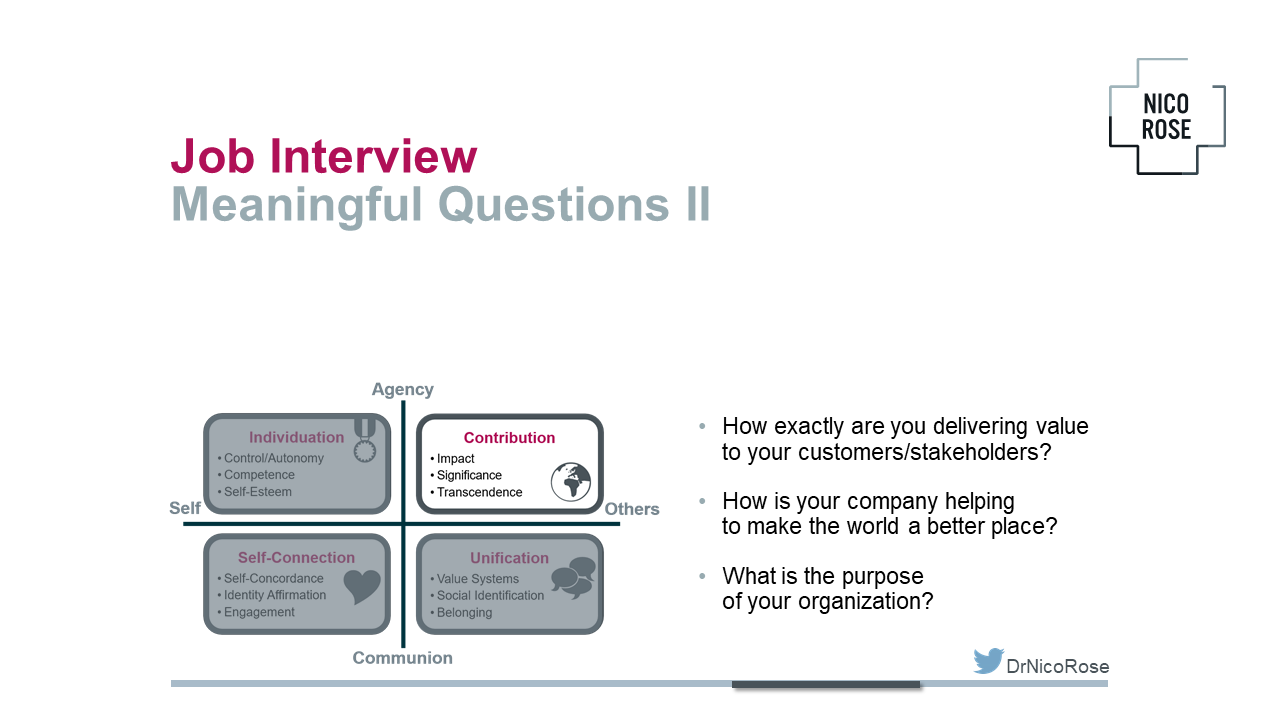
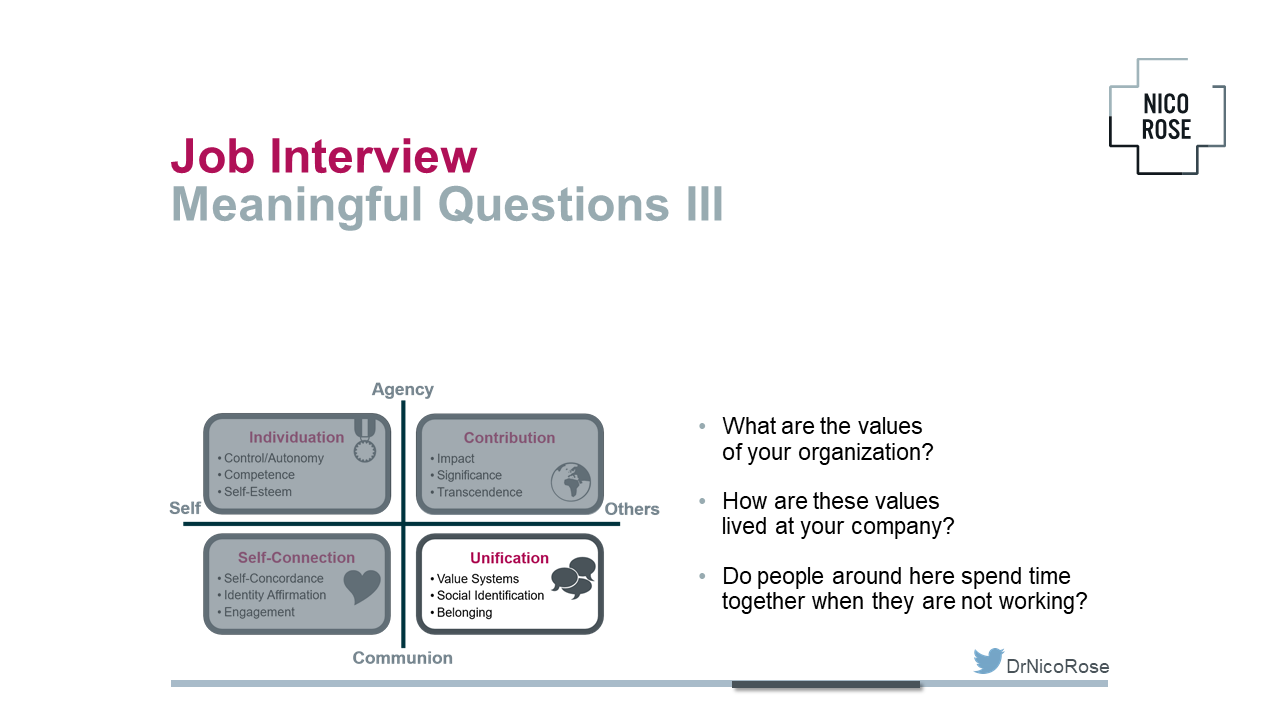
One of the most exciting trends of the last few decades has been the emergence of what I call “cultures of meaning” in institutions like corporations. Many companies are actively building cultures of meaning for their consumers and employees by relying on the four pillars of meaning.
A great example is the apparel brand Life Is Good, which sees its purpose as spreading hope and optimism around the world. It does this with its apparel, which has the words Life Is Good emblazoned on it. Many consumers have written to the company saying that its elevating message has helped them get through adversities and tragedies like cancer and losing loved ones. The leaders at Life Is Good have shared those stories with their employees, to show them that their work is making a positive impact on others. Life Is Good also has a non-profit arm that helps children facing adversities. When I spoke to several of the employees at the company—from a receptionist to a designer—they all told me that they are driven by the good that their company is doing in the world. So here, I see Life Is Good relying on the pillars of purpose and storytelling to create cultures of meaning.
It’s important for leaders to be aware of whether employees are experiencing their work as meaningful. Nothing engages or motivates employees quite like meaningful work—and research by Adam Grant suggests that doing meaningful work makes employees more productive, too (Adam´s interview on Mappalicious can be found here).
I feel my life is already pretty meaningful. I´m happily married and have two beautiful kids. Additionally, I can spend a lot of my time working on things I deeply care about and help other people. But I´m not so sure about the storytelling part. What are some steps I could take to enhance my experience of meaning in life via this pillar?
Storytelling requires reflection. I would recommend setting aside some time—maybe 15 minutes a day a few times a week—to either think or write about your life story. That may sound daunting or vague, but here are some specific things you can reflect on during that time.
1. Try dividing your life into chapters. How many chapters are there? What is the title or theme of each chapter? What makes each chapter unique? What chapters are yet to come? How many future chapters are there? What do you want the final chapter to say?
2. When you look back on your life, what were the turning points? What were the high points and the low points? How did those experiences change you? What did you learn from them? Are you still working to process them?
3. Reflect on the places in your life that played a formative role in your development—like where you grew up, perhaps, or where you went to college, or where you first met your husband or wife. While you’re thinking about these places, ask yourself: why were your experiences there so meaningful? How did they change you? What would your life have been life if you had grown up somewhere else or gone to a different school? What does it feel like being back in those places?
I’d like to add that storytelling is a pillar that takes work—sometimes we have to go over and over an experience hundreds of time before we can begin to make sense of it and understand how it fits into the broader arc of our lives. But it’s ultimately worth it, because that sense-making process brings us wisdom, resolution, and even a measure of peace.
Thank you, Emily, and best of luck with your book!
***********
For more info on Emily and her work, please check out her The Psychology Podcast, or recent features on The Psychology Podcast, Heleo and Virgin.


 Dear reader! I´ve decided to discontinue writing on Mappalicious for the time being. I´m currently going through a transition in my professional life, as well as writing on a
 Out of the letters of the



 My favorite news and blog articles covering Positive Psychology and adjacent topics from (roughly) the last seven days.
 Mappalicious