Richard Branson: “I am successful, wealthy and connected BECAUSE I am happy.”

Book - Dear StrangerSir Richard Branson seems to be an endless source of formidable quotes (I´ve used one in my TEDx Talk). Today I stumbled upon another one that I find particularly striking – as it promotes one of the central tenets in Positive Psychology: Namely, that (financial) success in life may be a consequence of positive emotions, and not so much a prerequisite. This quote s art of a longer “letter to a stranger”, where Branson shares his core ideas on how to live a life that is worthwhile living.

I know I’m fortunate to live an extraordinary life, and that most people would assume my business success, and the wealth that comes with it, have brought me happiness. But they haven’t; in fact it’s the reverse. I am successful, wealthy and connected because I am happy.

This letter, in turn, is part of a new book that consists of more “letters to strangers” on the same subject, among them Lord Richard Layard and Arianna Huffington. I´m pretty sure this will be on my reading list soon.

Branson - Happiness

Please like my new Facebook Page

Dear Mappalicious Visitor!

In the past, I ran a Mappalicious Facebook page where I basically re-posted all the articles that I’ve published on this blog.

Recently, I’ve decided to abandon this site. The reason is that I also publish regularly on other outlets, sometimes on topics that are not directly related to Positive Psychology.

In order to have “everything in one place” in the future, I’ve created a new Facebook page that is directly associated with my name: Dr. Nico Rose on Facebook Therefore, if would like to be notified about new Positive Psychology content via Facebook regularly, I kindly ask you to “like” this new page.

You can find it here.

Thank you!

Dr. Nico Rose

Your Brain is not designed to make you happy. That´s YOUR Job.

I have to admit I have never been a big fan of Tony Robbins. Being German, I think it´s a little harder to relate to his “special” style of presentation. Nevertheless, this quote is spot-on. It reminds me of the way our brains work (please see Bad is Stronger than Good) and that happiness is the result of intentional activity – rather than a state of being.

Robbins - Brain - Happy

22 Positive Psychology-infused Articles every (HR) Leader should know

Positive Organizational ScholarshipPositive Psychology has a lot to offer for leaders, especially those people taking on a leadership role in human resources and people management. In this post, I´ve gathered 22 research articles infused by Positive Psychology (more specifically: Positive Organizational Scholarship) that, in my opinion, have tremendous value for aspiring as well as established managers and entrepreneurs.

The topics comprise desirable attributes and personality variables such as grit, character strengths, and core self-evaluations, how to create positive relationships at work, how employee motivation is created and sustained, how to find meaning and purpose in work, and several review articles, e.g., on the connection of positive emotions and job performance. Enjoy!

P.S.
This is my 300. post since I’ve started Mappalicious about two years ago. Giving myself a slight pat on the back right now…

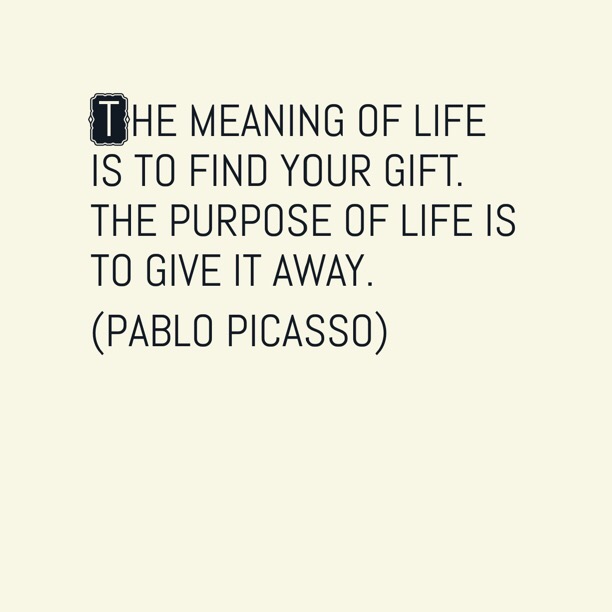
The Meaning of Life is to find your Gift. The Purpose of Life is to give it away

I sometimes struggle with the difference of the terms “meaning” and “purpose” – especially, as the German language doesn’t really provide distinct translations. The definition of Picasso really helped me to get a grasp on the distinction. 


Another 3 Positive Psychology-infused Books I´m really looking forward to

This is the magic of books: One can never have enough of them. After publishing two lists of recent and upcoming books that are infused by Positive Psychology over the last days (list one, list two) people kept pointing my attention towards more exciting stuff. So here´s another list of three books that you should definitely put on your reading list.

Scott Barry Kaufman & Carolyn Gregoire: Wired to Create: Unraveling the Mysteries of the Creative Mind. Scott Barry Kaufman is the scientific director of the Imagination Institute in the Positive Psychology Center and author of “Ungifted: Intelligence Redefined”. About the book:

“Based on psychologist Kaufman’s groundbreaking research and Gregoire’s popular article in the Huffington Post, Wired to Create offers a glimpse inside the “messy minds” of highly creative people. Revealing the latest findings in neuroscience and psychology, along with engaging examples of artists and innovators throughout history, the book shines a light on the practices and habits of mind that promote creative thinking.”

Jane McGonigal: SuperBetter: A Revolutionary Approach to Getting Stronger, Happier, Braver and More Resilient–Powered by the Science of Games. Jane McGonigal is a senior researcher at the Institute for the Future and the author of The New York Times bestseller “Reality Is Broken: Why Games Make Us Better and How They Can Change the World.” About the book:

“McGonigal reveals a decade’s worth of scientific research into the ways all games—including videogames, sports, and puzzles—change how we respond to stress, challenge, and pain. She explains how we can cultivate new powers of recovery and resilience in everyday life simply by adopting a more “gameful” mind-set.”

D. J. Moores, James O. Pawelski & others (Eds.): On Human Flourishing: A Poetry Anthology. James Pawelski is the Director of Education and Senior Scholar in the Positive Psychology Center at the University of Pennsylvania, where he serves as the founding director of the Master of Applied Positive Psychology (MAPP) program. About the book:

This collection of verse brings together poems of felicity, capturing what it means to be well in the fullest sense. Presented in 14 thematic sections, these works offer inspiring readings on wisdom, self-love, ecstasy, growth, righteousness, love and lust, inspiration, oneness with nature, hope, irreverence, awe, the delights of the senses, gratitude and compassion, relation to the sacred, justice, and unity.

Positive Psychology Books - 3

7 more essential Books on Positive Psychology for 2015/16

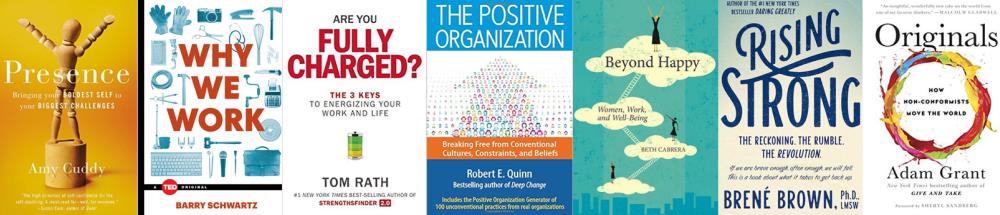
After publishing a list of 5 essential upcoming books on Positive Psychology a couple of days ago, several friendly people approached me (Thank you!) to point me towards further noteworthy books that have just been published or are already appearing on the publishing horizon (a.k.a. on Amazon for pre-order). So, if you´re looking for further entertainment, enlightenment, or just plain Positive Psychology science, here you go. There´s books on women´s careers, rising strong after setbacks, good work and great organizations, world-changing individuals, and much more (click to enlarge the image). Enjoy – and share the good news!

Positive Psychology Books 2015 & 2016

Positive Psychology books that have already been published

Brené Brown: Rising Strong. Brené Brown is a professor at the University of Houston Graduate College of Social Work and author of the No. 1 New York Times bestseller “The Gifts of Imperfection”. About the book:

“It is the rise from falling that Brown takes as her subject in Rising Strong. As a grounded theory researcher, Brown has listened as a range of people — from leaders in Fortune 500 companies and the military to artists, couples in long-term relationships, teachers, and parents — shared their stories of being brave, falling, and getting back up. She asked herself, What do these people with strong and loving relationships, leaders nurturing creativity, artists pushing innovation, and clergy walking with people through faith and mystery have in common? The answer was clear: They recognize the power of emotion and they’re not afraid to lean in to discomfort.” 

Beth Cabrera: Beyond happy: Women, Work, and Well-Being. Beth Cabrera is a senior scholar at the Center for the Advancement of Well-Being at George Mason University and works with companies to help them create positive work environments. About the book:

“Over the course of a decade, Beth Cabrera has surveyed and interviewed more than a thousand women to gather insight into how to effectively balance career and family responsibilities. Beyond Happy: Women, Work, and Well-Being gathers essential findings and offers women proven strategies for living more authentic, meaningful lives. Through the lens of shared experience, Cabrera thoughtfully examines the challenges women face and presents a simple yet powerful model for enhancing well-being that can both improve and transform lives.”

Tom Rath: Are you fully charged? Tom Rath is a Penn MAPP alum, now a regular guest lecturer in that program, and otherwise, regularly to be found at No. 1 spots on the New York Times bestseller lists with his heavily Positive Psychology-infused masterpieces. About the book:

The book “reveals the three keys that matter most for our daily well-being, as well as our engagement in our work. Drawing on the latest and most practical research from business, psychology, and economics, this book focuses on changes we can make to create better days for ourselves and others. Are You Fully Charged? will challenge you to stop pursuing happiness and start creating meaning instead, lead you to rethink your daily interactions with the people who matter most, and show you how to put your own health first in order to be your best every day.”

Barry Schwartz: Why we work. Barry Schwartz is a professor at Swarthmore College, author of the highly-acclaimed The Paradox of Choice and a regular New York Times contributor, and a regular guest lecturer in the Penn MAPP program. About the book:

“We’ve long been taught that the reason we work is primarily for a paycheck. In fact, we’ve shaped much of the infrastructure of our society to accommodate this belief. Then why are so many people dissatisfied with their work, despite healthy compensation? And why do so many people find immense fulfillment and satisfaction through “menial” jobs? Schwartz explores why so many believe that the goal for working should be to earn money, how we arrived to believe that paying workers more leads to better work, and why this has made our society confused, unhappy, and has established a dangerously misguided system.”

Robert E. Quinn: The Positive Organization: Breaking Free from Conventional Cultures, Constraints, and Beliefs. Robert E. Quinn is a professor at University of Michigan´s School of Business and author of “Deep Change”. About the book:

“Beholden to accepted assumptions about people and organizations, too many enterprises waste human potential. Robert Quinn shows how to defy convention and create organizations where people feel fully engaged and continually rewarded, where both individually and collectively they flourish and exceed expectations.”

Upcoming books on Positive Psychology

Amy CuddyPresence: Bringing Your Boldest Self to Your Biggest Challenges. Amy Cuddy is a professor at Harvard and best known for her research on body language and “power-posing” (watch her TED Talk here). About the book:

The book “shows us we need to stop worrying about the impression we’re making on others, and instead change the impression we’re making on ourselves. Cutting-edge science reveals that if we adopt behaviors reflecting power and strength, we liberate ourselves from the fears and doubts that obstruct us. By redirecting our thoughts, actions, and even physiology, we free ourselves to be our best.”

Adam M. Grant: Originals: How Non-Conformists Move the World. Adam Grant is a professor at Wharton Business School, author of the immensely successful book Give and Take, and regular guest lecturer in the Penn MAPP program. About the book:

“Using surprising studies and stories spanning business, politics, sports, and entertainment, Grant explores how to recognize a good idea, speak up without getting silenced, build a coalition of allies, choose the right time to act, and manage fear and doubt; how parents and teachers can nurture originality in children; and how leaders can fight groupthink to build cultures that welcome dissent.”

A mappalicious THANK YOU to all my Readers worldwide

Mappalicious PageviewsToday, I´d just like to say THANK YOU! to all those people who have visited Mappalicious in the past (and hopefully, will continue to do so…). Why?

Because yesterday has been the most successful day ever for my little blog project, and also August 2015 has been the month with the most visitors and page views – by far. All in all, more some 11,000 visitors created 16,000 page views during that period. Now, 11.000 visitors in a month is literally nothing compared to the numbers of big news outlets or super-successful blogs like Brainpickings – but Mappalicious is just my little fun project that I run on the side, while being a corporate manager, part-time coach/speaker, and of course husband and dad.

To me, it just feels incredible to be able to put my brilliant thoughts the brilliant thoughts of other people on this page so they can be found and read by friends and total strangers all over the world. I´m from this tiny town in Germany, and thanks to my participation in the Penn MAPP program, suddenly people from literally all over the world read my stuff. Isn’t that absolutely fantastic? Via the graph (click to enlarge) you can see where most of my page view came from this month. I find it absolutely staggering that, for instance, somebody in Jakarta will be able to read these lines once I´ve clicked on “submit” in a couple of minutes from now.

This is the true power and upside of the internet: giving those people a voice who otherwise would not be heard.

5 essential brand-new & upcoming Books on Positive Psychology

Are you eager to get some fresh perspectives on Positive Psychology? Here you go…

Recently published books on Positive Psychology

Michelle Gielan: Broadcasting Happiness: The Science of Igniting and Sustaining Positive Change. Michelle is a former CBS News anchor and is a Penn MAPP alum. About the book:

“In Broadcasting Happiness, Gielan shows us how our words can move people from fearbased mindsets, where they see obstacles as insurmountable, to positive mindsets, where they see that change is possible and take action. Using scientifically proven communication strategies, we have the ability to increase others’ happiness and success at work, as well as our own, instantly making us more effective leaders.”

Shannon Polly & Kathryn Britton (Eds.): Character Strengths Matter: How to Live a Full Life. Shannon and Kathryn are also Penn MAPP graduates working at the intersection of research and consulting. About the book:

The book brings Peterson´s and Seligman´s character strengths “to life with stories involving children, teenagers, adults, and elders and occurring in family life and business settings, in the present and in the distant past, in locations from China to the United States to the Middle East. Research shows that using character strengths in new ways for a week makes people happier up to six months later. This book includes many ideas for using your character strengths in new ways.”

J. Harold Ellens, Theo D. McCall & David Bryce Yaden (Eds.): Being Called: Scientific, Secular, and Sacred Perspectives. David was an assistant instructor in during my stay in the Penn MAPP program and has his own Mappsterview. About the book:

“This unique book is an essential resource for interdisciplinary research and scholarship on the phenomenon of feeling called to a life path or vocation at the interface of science and religion.”

Positive Psychology Books coming up in 2016

Emma Seppälä: The Happiness Track: How to Apply the Science of Happiness to Accelerate Your Success. Emma is the Science Director of Stanford’s Center for Compassion and Altruism Research and Education and founder of Fulfillment Daily. About the book:

“Drawing on the latest findings from the fields of cognitive psychology and neuroscience—research on happiness, resilience, willpower, compassion, positive stress, creativity, mindfulness—Seppälä shows that finding happiness and fulfillment may, in fact, be the most productive thing we can do to thrive professionally.”

Angela Duckworth: Grit: The Power of Passion and Perseverance. If you are remotely interested in Positive Psychology, it is not necessary to introduce Angela, but for the sake of consistency in this article, she´s a professor at Penn´s Positive Psychology Center and a close colleague of Martin Seligman. About the book:

“Why do some people succeed and others fail? Sharing new insights from her landmark research on grit, MacArthur “genius” Angela Duckworth explains why talent is hardly a guarantor of success. Rather, other factors can be even more crucial such as identifying our passions and following through on our commitments.”

New Positive Psychology Books