Where can I get a University Degree in Positive Psychology?

Nico Rose - Martin SeligmanIf you have been following Mappalicious in the past, you´ll know that I was part of the 9th cohort of the Master of Applied Positive Psychology Program (MAPP) at University of Pennsylvania. To my knowledge, this program has been the first to offer a full-blown master´s degree in this specific area of psychology. And I guess it is save to say that – to this date – it is also the most renowned one, being (in part) taught by Marty Seligman himself, together with some of his closest co-workers.

Ever since running this blog, people have approached me to get info on alternative educational opportunities in the field of Positive Psychology. Accordingly, below you´ll find a list of university-based programs that offer an “official” degree (such as a Master´s) in or closely related to Positive Psychology.

If you are interested in obtaining additional information on alternative learning opportunities, I highly encourage you to visit Seph Fontane Pennock´s site. There, you´ll find a multitude of other programs, such as summer schools, graduate courses, certificates offered by private institutions, and online courses.

Positive Psychology Programs

Master of Positive Psychology at Aarhus University, Denmark: The information given is available in Danish only.

MSc in Applied Positive Psychology at Anglia Ruskin University: You’ll be introduced to research and interventions around topics like positive and negative emotions, character strengths, motivation, resilience, creativity, wisdom and other conditions shown to make a difference to the lives of individuals, groups and organisations. You’ll constantly test your skills and apply them to real-life situations, coming to understand which tools and strategies to use in delivering meaningful, high-impact interventions. The course is taught in Cambridge and Paris. The program is offered as a full-time program (12-15 months); or part-time (28-33 months).

MSc in Applied Positive Psychology at Bucks New University, Buckinghamshire (UK): The course will be of interest to individuals in a range of professions and occupational roles that include (but not limited to): teachers, human resources, organizational development, coaches in different disciplines (such as management or sports), psychologists, psychotherapists, counselors, and medical professionals. It´s a full MSc and can completed part-time over two years, though you may choose to study over three years and devote your final year to your dissertation.

M.A. Positive Developmental Psychology/M.A. Positive Organizational Psychology at Claremont Graduate University, California: Claremont offers several concentrations focusing on Positive Psychology as part of their M.A. program in psychology. For more info, please follow the link.

MSc in Applied Positive Psychology & Coaching Psychology at University of East London: The program fully integrates positive psychology and coaching psychology to create an innovative training programme for those promoting wellbeing. From the point of view of positive psychology, the course will have a strong foundation in cutting-edge theory and research relating to wellbeing. The coaching element will feature advanced training in working with clients and groups in professional capacities. The program is offered as a full-time program in one year; or part-time in two years.

Executive Master in Positive Leadership and Strategy at Instituto de Empresa (IE), Madrid: This program is designed for experienced executives interested in achieving outstanding business results via the proven, hands-on methods of positive leadership. By gaining a deep understanding of the hard science of positive psychology and human behavior, participants learn how to optimize overall strategy and business functions, architect new work processes, and design organizational structures to achieve optimal performance in themselves and the people they lead. The program is offered part-time over 13 months.

Executive Master in Applied Positive Psychology at University of Lisbon: The information given is available in Portuguese only.

Master of Applied Positive Psychology at University of Melbourne: The program will equip you to apply positive psychology principles in your professional and personal life, with a special focus on creating and evaluating positive and meaningful change, and promoting optimal leadership within organizations. Learning and assessment will take place through a range of tasks, including debates, case studies, role plays, videos, journal entries and research activities. In addition, you will be encouraged to apply positive psychology principles to your own life and to critically reflect on these experiences. The program is offered as a full-time program (12 months); part-time options are available.

Master of Arts in Positive Psychology (MAPP) at North-West University, Potchefstroom, South Africa: I´m not sure if the program is still offered as the link seems to be broken.

Master of Applied Positive Psychology at University of Pennsylvania, Philadelphia: The original, so to speak. The program was the first in the world to offer a degree in this rigorous field of study. Dr. Martin Seligman, founder of the discipline of positive psychology, created the program to educate and train students at the cutting edge of the field. The program’s hybrid model allows you to explore the theory and practice of positive psychology without relocating to Philadelphia, so you can continue working full-time. The program consists of nine courses, completed during one year of full-time study.

Specialization in Positive Psychology & Technology as part of the MsC program in psychology at University of Twente (Netherlands): The information given is available in Dutch only.

Certificate of Advanced Studies in Positive Psychology at University of Zurich, Switzerland: The information given is available in German only.

Job, Career, or Calling? It´s the Attitude, Stupid!

The other day, for a German news outlet I regularly blog for, I wrote something on Amy Wrzesniewski´s research on our orientations towards work – so why not do it here as well.

Conventional wisdom tells us that there are more meaningful (e.g., nurse) and less meaningful (e.g., cleaner) jobs out there. Yet, Wrzesniewski and her colleagues found that the level of meaning (or purpose) we can derive from our work is only partly dependent on the type of job per se. The way we think (or feel) about what we do seems to have more importance in this matter. The researchers describe three separate (but not mutually exclusive) orientations that people can take on vis-à-vis their occupation: a) job; b) career; c) work.

Work Orientation: Job

People in this category tend to perceive their work as a means to an end. They work for the paycheck/benefits to support their life outside of work. Accordingly, they prefer jobs which do not interfere with their personal lives and typically do not have a strong connection to the workplace or their job duties.

Work Orientation: Career

Individuals displaying a “career” orientation are more likely to focus on job attributes related to prestige and success. They will be foremost interested in opportunites for upward movement, e.g., receiving raises and titles, and the social standing that come along with that.

Work Orientation: Calling

Employees with a “calling” orientation typically describe their work as an integral part of their lives and their identities. Accordingly, they feel that their careers are a form of self-expression and fulfillment.

The crucial point is: Wrzesniewski and her colleagues found that individuals displaying a “calling” orientation are more likely to be highly engaged – and satisfied with their work and their lives in general. And while there are types of jobs that indeed yield a higher percentage of employees displaying this attitude, the researchers were able to show that each orientation frequently appears within all walks of life.

Typically, this involves being able to “see the big picture” (and thus, leadership comes into play). E.g., a cleaner in a hospital setting might say that she helps to “save lives” (instead of, e.g., cleaning the beds) because she knows that she helps to kill off bacteria that otherwise might infect and kill the patients.

Now, I don’t know how the people displayed in the following video view their work – but they´ve surely turned it into something extraordinary – even though most of them seem to work in rather ordinary jobs. Enjoy!

Positive Psychology Blogs around the Globe

World_FlagRecently, I´ve posted an article listing my ten favorite Positive Psychology blogs – and afterwards, I realized that all of them are US-based. And while most researchers and practitioners certainly live/work there, there´s lots of good stuff to be discovered in other parts of the world (and of course, on other languages than English). Even, if you don´t speak French, Spanish or the like, by using sites like Google Translate, you´ll be able to understand it all.
Here are some suggestions:

Share and enjoy!

P.S.

If you know Positive Psychology blogs from around the world that post regularly and displaying high quality content, please leave a comment…

10 must-read Blogs on Positive Psychology and adjacent

IMG_2317Truth be told: it was pretty hard to limit my selection of Positive Psychology blogs to only ten because there´s so much good stuff out there. But if I look to those that I read most frequently, it probably the following list. Share and enjoy!

Positive Prescription by Samantha Boardman is a blog that shares helpful practical advice for different aspects of life based on Positive Psychology; oftentimes also very funny.

Dan Bowling, a former SVP of HR at Coke, writes a witty and Positive Psychology-infused blog about Talent Management.

Todd Kashdan is a professor at George Mason University and co-author of “The Upside of Your Darkside” (among other books). He regularly writes about Positive Psychology via Psychology Today.

High Existence created by Jordan Lejuwaan is a multi-author blog on personal development and life hacks – some of the authors seem to be influenced by Positive Psychology. I frequently read their articles which are crafted exceptionally well (if you ask me…).

Mark Manson blogs about a wide array of personal development topics. He’s seems not to be directly influenced by Positive Psychology – but I love his no-bulls..t attitude towards this oftentimes rather shallow topic.

Ryan Niemiec, Education Director of the VIA Institute on Character, regularly blogs via Psychology Today, mostly on the science and application of character strengths.

Seph Fontane Pennock runs the site PositivePsychologyProgram.com, a great resource when you are looking for courses and study programs on that topic. But the site also contains a blog where he writes articles, interviews researchers, or hosts pieces written by a variety of guest authors.

Robert Quinn, co-founder of the Center for Positive Organizations at the Ross School (University of Michigan) writes about Positive Organizational Scholarship via The Positive Organization.

Emma Seppälä is Science Director of the Center for Compassion and Altruism Research and Education (CCARE) at Stanford University. She blogs via Psychology Today, oftentimes on mindfulness, meditation, and compassion.

Brett Steenbarger writes on Success via Forbes, especially in the field of stock trading – yet he often peppers his entertaining pieces with research on Positive Psychology.

———-

Honorable mention: Fulfillment Daily, a multi-author site run by Emma Seppälä. I write for them occasionally, so it would have been cheesy to put it in the actual list.

Will you help me to reach 100.000 Positive Psychology page views for 2015?

Mappalicious 100.000OK, so I know this a kind of cheesy request, but here I go anyway… 🙂

I´m putting a lot of time and effort in this blog, bringing together valuable information, inspirational things, and sometimes fun stuff on Positive Psychology and related topics. I´m doing this for free – and to be honest: for fun, because I just love writing. I´m not selling anything and I even pay 80$ (or so…) a year to WordPress so Mappalicious stays free of ads.

Nevertheless, I do have goals: I try to broaden the audience of Mappalicious year by year, because I want as many people as possible to learn about research and practice in the field of Positive Psychology. At the beginning of this year, I set a goal of reaching 80.000 page views for 2015 (after managing close to 60.000 in 2014). Due to some exceptional outreach in early summer, I extended that goal to 100.000 page views – but in the fall, I was too busy working in my main job, so I couldn’t write as much as I would have liked to do. Therefore, the audience dropped for some months. Still, right now the count is at 90.400.

In really, really good months I have +10.000 page views. So, if December will be a really, really good month for Mappalicious, I will be able to reach the goal I´ve set for myself in summer. And this is where you come in to play: Only you, my cherished readers, can help me to turn December into a really, really good month for my blog. So here´s my plea:

If you have found something useful/joyful on Mappalicious in 2015, I kindly ask you to share this (again) with your friends on Facebook, Twitter etc. pp.

To make life a little easier for you, here you´ll find a list of the 10 most-read articles on Mappalicious for 2015. But of course, you can share anything that you particularly liked.

  1. Positive Psychology People and Institutions to follow on Twitter
  2. Positive Psychology Articles – a topical Collection
  3. 5 essential brand-new & upcoming Books on Positive Psychology
  4. 7 wonderful TED Talks related to Positive Psychology (Self-Motivation, Body Language, Positive Stress… and more)
  5. Do you know “Action for Happiness”? Well, you should!
  6. 7 Methods to find almost any (Positive Psychology) Research Paper on the Internet
  7. 22 Positive Psychology-infused Articles every (HR) Leader should know
  8. Positive Psychology Constructs
  9. Study: Some Languages are Happier than others. Hint: German didn´t make No. 1
  10. Positive Psychology – a topical Collection of 45 TED Talks

Thanks a lot in advance!

Want to learn about Positive Education? Here are some Opportunities

Pos_EdFirst, I’d like to point your attention to an upcoming conference: The International Positive Education Network (IPEN) will be hosting the first Festival of Positive Education in Dallas from July 18 to 20 next year. Among the speakers will be Martin Seligman, Angela Duckworth, and Anthony Seldon. For info and booking (please note there are some early-bird options) please visit this site.

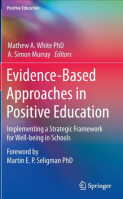
Second, a couple of weeks ago a parcel reached me all the way from Australia. It contained a copy of the book Evidence-Based Approaches in Positive Education: Implementing a Strategic Framework for Well-being in Schools edited by Mathew White and Simon Murray (foreword by Martin Seligman). I haven’t had a chance to read it yet but I’m sure it’s worth every penny.

Positive Psychologie in der SchuleAnd third, just in case your German: We don’t have to look to the other end of the globe for good stuff on Positive Education. Recently, Michaela Brohm and Wolfgang Endres published a book by the name of Positive Psychologie in der Schule: Die Glücksrevolution im Schulalltag. Mit 5 × 8 Übungen für die Unterrichtspraxis (Positive Psychologie at School).

Finally, I’d like to point your attention to the list of Positive Psychology papers on this site – it also contains a section on Positive Education.

Share and enjoy!

Almost everything will work again if you unplug it for a few minutes…

I’m sitting in my favorite café in the beautiful city of Wiesbaden where I lived from 2005 to 2010. They make the best cappuccino in the whole wide world. 

Appropriately enough, I’ve just stumbled upon this witty quote by Anne Lamott:

Almost everything will work again if you unplug it for a few minutes, including you.


10 brilliant Quotes, Adages, and short Poems related to Positive Psychology

Over the last years, I´ve collected countless quotes, sayings, short poems and similar inspirational stuff that (to my mind) is related to Positive Psychology. Here are my top-10 for the time being. Enjoy!

It is easier to build strong children than to repair broken men.
(Frederick Douglass)

Be yourself. No one can say you´re doing it wrong.
(Charles M. Schulz)

Discipline is choosing between what you want now and what you want most.
(Abraham Lincoln, among others)

Your brain is not designed to make you happy. That´s your job.
(Tony Robbins)

People were created to be loved. Things were created to be used. The reason why the world is in chaos is because things are being loved and people are being used.
(Unknown)

Be you! The world will adjust.
(Unknown)

We either make ourselves miserable, or we make ourselves strong. The amount of work is the same.
(Carlos Castaneda)

A positive attitude may not solve all your problems, but it will annoy enough people to make it worth the effort.
(Herm Albright)

To laugh often and much: To win the respect of intelligent people and the affection of children, to earn the appreciation of honest critics and endure the betrayal of false friends; to appreciate beauty, to find the best in others, to leave the world a bit better whether by a healthy child, a garden patch, or a redeemed social condition; to know even one life has breathed easier because you lived. This is to have succeeded.
(Ralph Waldo Emerson)

I will not die an unlived life. I will not live in fear of falling or catching fire. I choose to inhabit my days, to allow my living to open me, to make me less afraid, more accessible, to loosen my heart until it becomes a wing, a torch, a promise. I choose to risk my significance; to live so that which came to me as seed goes to the next as blossom and that which came to me as blossom, goes on as fruit.
(Dawna Markova)

Be Yourself - Schulz

More awesome TED Talks on Positive Psychology

For those of you that can’t get enough of Positive Psychology-related TED talks – I’ve found some (more or less) new stuff for you. This list comprises Lea Waters, who focuses on the application of Positive Psychology in the field of education, James Doty, founder of Stanford’s Center for Compassion and Altruism Research and Education (CCARE), Rick Hanson, one of the world’s foremost authorities on meditation and compassion, and Shane Lopez, who specializes in research on hope.

As a bonus, here’s an introductory talk on Positive Psychology in German I gave at a BarCamp in Hamburg three weeks ago. It was first streamed via the app Periscope so it’s a vertical video. Enjoy!