Feedback? You´re doing fine! Just keep on going…

A good friend of mine, Vivian Wagner, has founded a non-profit organization called 1World Social Capital Program (1WSCP). 1WSCP offers mentoring to aspiring female professionals and students, helping them to grow their social capital with 12 highly regarded and successful mentors who are doing amazing work to break the glass ceiling for women all around the world.

1WSCP regularly posts short videos of leaders who share important learning experiences from the careers. For my video, Vivian asked me to specifically think about how we can elevate and uplift the people around us.

I share a story that took place while still studying Positive Psychology at Penn. The video contains a shout-out to Professor Jane Dutton from the Center for Positive Organizations who facilitated our learning experience that day. An older written account of that experience can be found here.

Share and enjoy!

Welcome to the Center for Positive Organizations

CPO_LogoSo, I’m sharing a commercial video here. Yes, that’s not the usual content on Mappalicious.

It’s just that so many of my academic heroes are gathered in this video (and thus, at the CPO, e.g. Robert Quinn, Jane Dutton, and Kim Cameron) that I’m actually eager to share it. The CPO is a fabulous place to learn. I know this ever since taking part in their Positive Business Conference in May.

Please also check out their fabulous website. They host a wide array of Positive Psychology resources, e.g., this extensive list of research papers on Positive Organizational Science.

10 Books on Purpose and Meaning in Life and Work

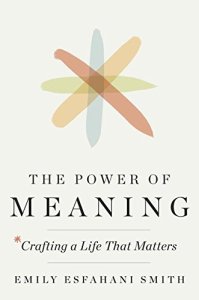
Esfahani_MeaningI don´t know if it´s my age (…the 40s are clearly in sight…), or the fact that I will become a father for the second time over the upcoming weeks (Yeah…!), or if it´s just in the air anyway (I believe so…) – but my mind is preoccupied with the topic of meaning and purpose at work and in life in general most of the time.

If you also would like to dig deeper into that subject-matter: Here´s a neat book list for you. Some books are brand-new (e.g., Dan Pontefract´s) or haven’t even been published yet (as in the case of Emily Esfahani Smith´s, a fellow Penn Mappster), some have been published over the last two years (e.g., Aaron Hurst´s book), some are a bit older (e.g., Rick Warren´s bestseller), and with Mihály Csíkszentmihályi and Viktor Frankl I´ve also included some classics. Some books are based on solid science through and through (e.g., Vic Strecher), some are more self-help style (e.g. Marsha Beck), some are scholarly books (Dik et al.), most are clearly written for the layman.

Share and enjoy!

Positive Psychology: What would you like to read about?

SONY DSC

I´m not sure if this has happened before – but I feel I´m in a kind of “creative slump” these days. I want to write but all the exciting ideas are evading my mind.

So, I thought I´d reach out to you, cherished reader, to provide me with some input. You know that Mappalicious is mostly about translating original Positive Psychology research into a layman´s format. So here´s my question to you:

What should I write about over the next weeks? Are there any (special) topics in Positive Psychology and adjacent that would like to know more about? Anything, that has not been covered enough over the past three years?

I´d love to see your input. Please leave your suggestions in the comment section.

Thank you!


Top 10 Positive Psychology Articles for the first Half of 2016

 Top 10 Positive Psychology ArticlesCherished reader, as it has become a tradition, I’m sharing with you those articles that your fellow readers liked the most over the first half of the year. Maybe, there’s something that you’ve missed and want to read again?

Looking at the selection, it becomes clear that readers were strongly interested (and willing to share) blog posts that contain infographics. I’ll try to keep that in mind when thinking about future directions for Mappalicious.

  1. Great Infographic on Self-Compassion: How not to be Hard on Yourself
  2. Fabulous Infographic: Why People become Unhappy
  3. The Meaning of Life according to different Philosophers [Infographic)
  4. Do you want to find more Meaning in your Work? Here´s where you should look for it – according to Science
  5. Strengths gone astray: The real mental Illnesses?
  6. Explaining Character Strengths to Children: Meet the Dynamos
  7. Surprising Finding | Mental Illness vs. Mental Health: Continuum or Matrix?
  8. Infographic: How to be Wise – as an Entrepreneur (and in Life)
  9. The 3 Layers of Meaningful Work
  10. Meaninglessness at Work: The 7 Deadly Sins [Infographic]

Honorable mentions

These two articles are not blog posts, they are permanent pages on my site. But as people like them so much, they typically show up in the top 10 list every year. For that reason, I’ve taken them out of the regular top 10 but still present them here:

3 Questions for Angela Duckworth, Author of “Grit”

Angela_DuckworthA few weeks ago, Penn professor Angela Duckworth has published her first book Grit: The Power of Passion and Perseverance. And while she´s typically busy shipping exceptional research, giving TED presentations, or talking to the New York Times, it says a lot about her character that she also takes the time to answer some questions for my little blog thingy. So, thank you, Angela!

What are you up to these days? Just kidding… What does it feel like to have published a bestseller? And what part did grit play in the process of writing up “Grit”

I’m devoting myself to Character Lab, a nonprofit I founded with educators Dave Levin and Dominic Randolph three years ago. The mission of Character Lab is to advance the science and practice of character development. This includes helping children develop intrapersonal strengths like grit and self-control but also interpersonal strengths like gratitude and pro-social purpose and, finally, intellectual strengths like curiosity and open-minded thinking.

While I’m thrilled with the success of the book, I can also tell you that my attention is entirely on the future and new challenges. And, as for grit while writing Grit? Writing this book is the hardest thing I’ve ever done. I almost quit many times. So, yes, I used my grit to do it, and I learned a lot about grit in the process!

You´re incredibly successful as a researcher, but also as an educator, first via your TED talk, and now with the book. Clearly, a lot people are intrigued by the concept of grit. Still, I’ve read a couple of articles that give pushback to the concept for allegedly ignoring the socio-economic factors that lead to success in school and life in general. What’s your take on this?

At a recent conference, I sat down next to a sociologist. She knew my work, and it didn’t take long for her to express extreme disdain—even anger—for what she called the grit message. “What’s that,” I asked? “Well, put it this way,” she said. “I happen to think that poverty and inequality matter a heck of a lot more than grit.” I thought for a moment. Then I said, “I see your point.”

If you pit grit against structural barriers to achievement, you may well decide that grit is less worthy of our attention. But I think that’s the right answer to the wrong question.

Caring about how to grow grit in our young people—no matter their socio-economic background—doesn’t preclude concern for things other than grit. For example, I’ve spent a lot of my life in urban classrooms, both as a teacher and as a researcher. I know how much the expertise and care of the adult at the front of the room matter. And I know that a child who comes to school hungry, or scared, or without glasses to see the chalkboard, is not ready to learn. Grit alone is not going to save anyone.

But the importance of the environment is two-fold. It’s not just that you need opportunity in order to benefit from grit. It’s also that the environments our children grow up in profoundly influence their grit and every other aspect of their character. This is the grit message in my words:

Grit may not be sufficient for success, but it sure is necessary.

If we want our children to have a shot at a productive and satisfying life, we adults should make it our concern to provide them with the two things all children deserve: challenges to exceed what they were able to do yesterday and the support that makes that growth possible.

So, the question is not whether we should concern ourselves with grit or structural barriers to achievement. In the most profound sense, both are important, and more than that, they are intertwined.

I’ve pursued and completed a Ph.D. but the truth is: I entirely lost interest in the topic after the first year. Still, I hung in there for another 3.5 years for reasons that the founders of Self-Determination Theory, Ryan and Deci, would probably call “externally regulated”. And while I suffered emotionally during that time, I now do enjoy the upsides that having a Ph.D. entails at times. Was that grit? Or “stupid grit”? Or just stupid?

Good question. I might have asked myself, “Why am I pursuing this Ph.D.?” And in response, what would you have said? The answer gives you a higher-order goal—the “why” that gives meaning to the Ph.D. Was there a way to pivot in terms of your topic or research to achieve that higher-order goal?

And, in terms of pure interest, is there an adjacent topic to the one your pursued that you would have enjoyed more?* Interest and purpose are the drivers of passion, and I think if there is really no interest and no sense of purpose, you need not feel the compulsion to finish what you started.

Thank you, Angela – and best of luck with your book and the Character Lab!


Grit_DuckworthDr. Angela Duckworth is a professor of psychology at the University of Pennsylvania. She studies non-IQ competencies, including self-control and grit, which predict success both academically and professionally.

Prior to pursuing a career in academia, Angela was a McKinsey consultant and, for five years, a math teacher in several public schools. In 2013, she was selected as a MacArthur Fellow. Very recently, Angela has published her first book Grit: The Power of Passion and Perseverance with Scribner. It was an instant New York Times best seller and remains on the best seller list today.


* The truth is: When you don´t want to work on your Ph.D., you start to put a lot of time and energy in other things, just to have your calendar really, really stuffed as an excuse. For me, this led to discovering Positive Psychology in the first place, which then led to studying at Penn, which led to meeting Angela.

This is one of my learnings: Whether something is truly good or bad for us should probably not be judged in the moment. It often takes a couple of years to connect the dots and see the real value of our life´s episodes.
Return On Flourishing (ROFL): A Keynote given at the Fifteen Seconds Festival in Graz/Austria

For my German-speaking readers:

About two weeks ago, I gave a keynote on Positive Psychology at the Fifteen Seconds Festival in Graz/Austria. It covers a short introduction to Positive Psychology, some scientific facts on the relationship between treating your employees exceptionally well and the financial returns of a company (based among other things, on the research of Prof. Alex Edmans), and a model of exceptional leadership based on ideas of Prof. Michael F. Steger.

Share and enjoy!

Nico_Rose_Fifteen_Seconds

Compassion and Business: How does that go together?

The word compassion sounds “soft”. It invokes images of praying Buddhist monks, nurses taking care of the feeble, or a priest administering the last rites to a dying person. What surely doesn´t come to mind is the picture of a corporate boardroom, right? But why?

When we walk into to the office in the morning and someone asks us “How are you?” we´re supposed to say something along the lines of: “Fine! How about you?” It´s part of the language game in the corporate world. We know this. At the same time, we all know that quite often, people are presenting a white lie at this point. We know this very well precisely because we do the same every once in a while. We say “I´m fine” even when things clearly aren´t fine at all.

Life can be a bitch. Our loved ones become sick or pass away. We fight with our spouses, our children, our parents, our neighbors. There are bills to pay and sometimes the end of the month is still too far away. Hell, the Warriors lose to the Cavs after a 3:1 lead in the NBA finals. It´s tough.

This emotional load – we bring it into the office, no matter if we admit it or if we decide to cover up. Most people indeed choose to cover up – as somehow, someone decided a hundred years ago that businesses ought to be rational places, spaces where emotions don´t belong or even disrupt normal functioning (whatever that is…).

The problem is: It´s just not possible. People cannot shut down their emotions at discretion. At least not for longer periods of time – and certainly not without paying a price.

There is always pain in the room.

This sentence was coined by the late management professor Peter Frost, one of the pioneers studying and advocating compassion in business settings. It´s a quite powerful proposition, even though (Or maybe: because?) it states something very obvious. Shit happens to the best of us. We suffer – and sometimes, it takes us a long time to cope. We feel pain and sorrow and those feelings don’t bother to ask us if we are currently at work or at home.

So, how should managers and co-workers react? The common rules of business tell us to ignore or downplay the issue but in most cases, that´s not what really helps.

Not showing our suffering or downplaying the suffering of our colleagues is a perfect example of what Finnish philosopher Esa Saarinen calls a system of holding back in return and advance. We don’t openly display our suffering because we expect from prior interactions that it will not be acted upon appropriately. Meanwhile, the others see no need to act compassionately as everything seems to be OK. Ad infinitum. And the longer this “non-reciprocity circle” is in place, the harder it becomes for an individual to make a first move in order to interrupt the chain of neglect.

Another way would be to act compassionately: To notice the negative feelings of our co-workers, to feel empathetic concern, and to act accordingly. Compassion does not equal to fully experiencing the same feelings as the person we´re compassionate to.

Put in a straight-forward way…

…being compassionate means to be willing to imagine how it would feel like to walk some miles in another person´s shoes – and then, upon recognizing this would probably be hurtful, trying to appropriately mitigate that pain or suffering.

That´s it. It´s not a mystic thing – and we don´t have to mediate in a cave for 20 years before we´re able to pull off that stunt.

We know how to be compassionate even before we can ride a bike. Small children act compassionately by nature. When they see another child crying, they instinctively show signs of distress – and then they try to help with their restricted means, e.g., by caressing their counterpart or sharing a toy.

But somehow, this get´s lost as we get our high school diplomas, university degrees – and then move on to become business people. Which is a pity, because businesses create a lot of pain themselves – it´s not all from our private lives. People suffer because they don’t get that promotion, because their buddies get laid off, or just because co-workers, or even worse, bosses behave in outright toxic ways. Again, we all know this to some degree.

Here´s the point: Science shows over and over again that by carelessly ignoring these emotional dynamics, businesses are hurting the bottom line. If you want to know how, I´d like to point you towards this superb review article written by science rock star Jane Dutton of University of Michigan´s Center for Positive Organizations and some colleagues (that´s also where I “stole” the graphic from):

Dutton, J. E., Workman, K. M., & Hardin, A. E. (2014). Compassion at Work. Annual Reviews of Organizational Psychology and Organizational Behavior, 1(1), 277-304.

annurev-orgpsych-031413-091221_f1

Study Alert: “Positive Art: Artistic Expression and Appreciation as an exemplary Vehicle for Flourishing”

Rousseau: Unpleasant SurpriseThis one´s hot of the press, written by Tim Lomas.

The article in the Review of General Psychology proposes the creation of “positive art” as a field encompassing theory and research concerning the well-being value of art. It identifies 5 main positive outcomes that are consistently found in the literature across all these forms:

  • sense-making;
  • enriching experience;
  • aesthetic appreciation;
  • entertainment;
  • and bonding.

The article aims to encourage a greater focus on the arts in fields such as positive psychology, enabling science to more fully understand and appreciate the positive power of the arts.

Lomas, T. (2016). Positive art: Artistic expression and appreciation as an exemplary vehicle for flourishing. Review of General Psychology, 20(2), 171-182.

Now, I´m not much of an art lover, but even I have experienced and written about the power of taking a “deep-dive” into a painting: Using Art to Cultivate Mindfulness – or: A pleasant Surprise with Rousseau´s Unpleasant Surprise.

And I certainly know about the positive power of music, no matter what kind: Finding Happiness in angry Music.

Share and enjoy!