#NotJustSad: Why we desperately need Positive Reinforcement and Flow to be Happy

Over the last couple of days, the hashtag #NotJustSad has been a trending topic on the German Twitter feed. It was created by a journalist in order to raise awareness for depression and was quickly picked up by mainstream media. The goal was to counter the popular notion that people with depression just need to “get their act together” in order to be “normal” again.

Quite obviously, there are different types of depression – or rather, different ways for depression to “arise”. Some types are clearly endogenous, a sickness of the body, e.g., as a by-product of a strong and continuous imbalance with regard to certain neurotransmitters, such as serotonin.

Yet, over the last days, I was also strikingly reminded of how our everyday behavior may either promote or act as a buffer against bouts of (minor) depressive episodes. Today, I was in a very bad mood all day long. I suffered from what typically is called cabin fever. For the last seven days, I had to stay at home because of “hand, foot and mouth disease”, a pretty harmless but highly contagious and annoying children´s malady I acquired from the Little Guru. When it hits you hard, you´re basically unable to walk for a couple of days, and in addition, you´re mostly incapable of using your hands thanks to painful blisters. As a consequence, I ended up watching TV for most of the time, I managed to get through three seasons of “The Walking Dead” and some other enthralling stuff.

So you could say I was pretty amused most of the time. But still my mood declined from day to day, culminating in today´s bout of huffishness. So I finally went out for a coffee and thought about my situation. Seen through the lens of Positive Psychology, I guess this is what happened: over the last days, I suffered from…

For me, this is a strong reminder of how “intentional activity” is crucially important for our (psychological) well-being. Watching TV can generate a feeling of flow, but it is a fake kind of flow. Yes, I was excited and had fun. Yes, I (sort of) met new people (and a lot of zombies…). I might have learned a bit, and I even accomplished something (getting to the end of season three…). But beware – none of that is the real deal.

As I´ve also mentioned in my recent TEDx talk, we have to go out and meet other people. We need to get stuff done in the real world, and the real world has to provide us with feedback. This is not to say that all of us can fight off any kind of depressive episode at all times. But we should all be aware that a stitch in time saves nine…


Nico Rose - Flow

What keeps Marriages healthy? [Presentation]

Mainly for German speakers…

Yesterday, I a gave a talk on the science of healthy (and failing…) marriages at a local business club. I drew upon the outstanding work on marriages of John Gottman, tied in some of Marty Seligman´s classics (e.g., his theory on attributional styles), and finished with some hints from Transactional Anaylsis along the lines of Eric Berne. If you are interested – here are the Charts (in German):


If you´d like to know more on the work of John Gottman – he´s got tons of stuff on Youtube, e.g. this:

The Meaning of Meaning (in Life) [Video]

Michael Steger is one of the world’s foremost experts on the subject of meaning in life. Its antecedents, its consequences, and how to find it. In this 30-minute talk, he shares his (scientific) wisdom. Share and enjoy!

Other People Matter: 2 Videos featuring the late Christopher Peterson

Unfortunately, I never had a chance to meet Prof. Christopher Peterson, who died before I really discovered the field of Positive Psychology and applied for the MAPP program at Penn. But all the people (I know) that had the privilege to be taught be by him speak most highly of “Chris”.

Therefore, I was glad to discover these two short video yesterday where he elaborates on his personal take on Positive Psychology. Enjoy!

If you like what you´ve seen, you might also enjoy The Good Life, a Positive Psychology blog that Chris used to write for Psychology Today.

The James Bond Philosophy of Life – in 007 Chapters

007 LogoIf you´ve visited Mappalicious before, by now you will probably know who Esa Saarinen is – as I´ve written about his work several times. During his MAPP lecture in December 2013, he also initiated us to a slightly more informal area of his teachings: the 007 philosophy of life. Unfortunately, that day Wharton´s recording equipment didn´t work that well – so there´s no account of that lecture (and I´m a lazy note-taker…). Hence, I´ll give you my own – heavily Positive Psychology influenced – interpretation of his “theory”, mixed with the bits and pieces I do remember. As a philosopher, I think Esa would approve of this method. You can see the overview in the following picture:

Esa Saarinen - 007

Don’t get irritated

James Bond is always “cool” – at least that´s the impression he makes on other people. He focuses on the situation at hand and the overarching goal of his mission and never gets sidetracked, except for the occasional tête-à-tête – but even those often serve a purpose, e.g., irritating one of the evil guys. At the end of the day, this is a lesson about mindfulness.

Take immediate Action

Bond is not much of a planner. He makes up his mind and improvises a lot of his moves on the spot, relying on his wits and physical abilities. He knows that the life as a super agent is full of surprises and events that one cannot really prepare for. Therefore, he sticks to a few big goals and decides on the next-best move “then and there”.

Self Respect

James Bond never questions his abilities, he never falters or hesitates. While a real-life person cannot (and maybe shouldn’t…) be equipped with an equal level of self-confidence, this is probably a lesson about self-efficacy, the “power of believing you can”. Self-efficacy is the scientific version of Henry Ford´s aphorism: “Whether you think that you can, or that you can’t, you are usually right.”

Always carry a Secret Weapon

When in desperate straits, Bond always has one more trick up his sleeve, usually a tiny gadget given to him by the armorer “Q”. Seen through the lens of Positive Psychology, I think this part refers to the very unique set of signature strengths that we all have – and that we should rely on when to going gets tough. Additionally, it shows that other people matter. Even a lone wolf like Bond needs other people´s support at times.

Act with Style

James Bond understands that style is mostly about simplicity. Similar to the real-life George Clooney, he´s always dressed and groomed extremely well – which means they stick to time-tested essentials. The suit, the hairdo, the car, the handgun, the drink – they all seem to say: Don´t get carried away by fashion, don´t get lost in unnecessary details – no frills. This is also a lesson on efficiency: Bond knows that sticking to certain defaults is the most intelligent way of avoiding unnecessary decision-making – thereby saving up mental capacity for more precarious moments in life than choosing what to wear for dinner.

The true significance of the current mission will become clear later in the Bahamas

I think this point has a lot to do with the “connecting the dots”-part of Steve Job´s Stanford Commencement speech. Life can only be lived forward, but the sense-making happens looking backward. Hence, we have to embark on the journey without necessarily knowing where it will end – or what it all means. We have to get moving. Anyway. Otherwise, we won´t even make it to the Bahamas.

In Her Majesty’s Secret Service

Now, this may be the most important part – even though it doesn´t seem that straightforward. I guess that´s why Esa saved it for last. Even though James Bond seems like a cynical, ruthless, and at times even nihilistic person – he´s definitely not. He´s an agent in Her Majesty´s Secret Service: he fights for the safety of his country and “the free world” in general; he´s not in it for himself. That is his true higher purpose. In his lectures, Esa often refers to this part of our lives as “finding the Queen”: We all have to find a queen we can and want to serve. We´re not on this world only for ourselves. Until we´ve understood this crucial point, we´re only living half a life.

Esa has more in common with 007 than he probably wished for

There´s is a pretty incredible twist to the aforementioned deliberations: About three months after his lecture in Philadelphia, Esa was stabbed with a knive by a presumably mentally deranged young man when being on his way to a lecture in Helsinki. He sustained a wound on his hand when trying to fight off the assailant and another, more severe, to his abdomen before the attacker could be overpowered. By now, Esa has fully recovered and the young man is on trial for his deeds. Esa has lived through this ordeal with admirable equanimity and does not even demand a punishment for the aggressor.

Below, you´ll find the full recording of his glorious return to the lectern in Helsinki. The lecture is in Finnish but has English subtitles.

Unfortunately, our Brains do not look like this. But wouldn´t it be nice?

Your Brain on Greater Good

This beautiful image was created by the beautiful people at Berkeley’s Greater Good Science Center. And no, our brain doesn´t look like that. But we all have the capacity to develop more of the qualities and entities depicted above. If you´d like to have more input, please watch Emma Seppälä´s (Stanford CCARE) TED talk on the “Science of Social Connection”:

Does having a Child make us Happier or Unhappier? Or is that the wrong Question?

I´m pretty sure that all the parents among my readers will join into a roaring “HAPPIER!” when answering the first question in this post´s headline. Yet, it turns out that an unanimous scientific answer to that question is rather hard to find – as there´s a lot conflicting data out there.

There are papers that show well-being drops for both men and women when a first child comes into the house – and it typically does not rise that much until the children leave for college. Other researchers found that a first child markedly increases happiness, especially with the fathers, and the more so when it´s a boy. Then, there are papers that give the classic answer for lawyers (and psychologists as well): It depends. Or rather, there are upsides and downsides. E.g., mother are more stressed – but less depressed.

When there´s a lot conflicting research on a certain topic, it´s always a good thing to carry out a meta-analysis, which is a weighted integration of many studies on one area of inquiry. Such a meta-analysis has been done in 2004. Here´s the summary:

This meta-analysis finds that parents report lower marital satisfaction compared with nonparents (d=−.19, r=−.10). There is also a significant negative correlation between marital satisfaction and number of children (d=−.13, r=−.06). The difference in marital satisfaction is most pronounced among mothers of infants (38% of mothers of infants have high marital satisfaction, compared with 62% of childless women). For men, the effect remains similar across ages of children. The effect of parenthood on marital satisfaction is more negative among high socioeconomic groups, younger birth cohorts, and in more recent years. The data suggest that marital satisfaction decreases after the birth of a child due to role conflicts and restriction of freedom.

What they say is: On average, marital satisfaction drops slightly when a first child is born. The effect is stronger for women than for men, and the younger and richer the parents are. Parents struggle with stress due to role conflicts and a decrease in self-determination.

Are Children supposed to make us Happier?

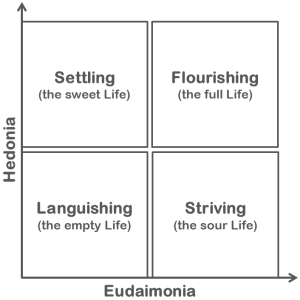
Eudaimonia - HedoniaBut maybe, asking about satisfaction and happiness is not the right question after all. Is it really the “job” of our children to make us happier and more satisfied as a parent? I don´t think so. When a child comes into your life, you lose tons of money, you lose tons of sleep (and that´s due to dirty diapers, not dirty sex…), and you have to carry out planning and preparations on a regular basis that in their complexity can be likened to the Normandy landing – just for going to the movies on a Friday night.
Having children does not make us happy all the time. Period.

Yet, we get something else, research suggests: Purpose. Meaning. Unconditional love (especially when you have some sort of food, that is…). Asking for satisfaction is looking at the wrong axis of the Eudaimonia-Hedonia-Grid depicted above.

Being a parent is not a “fun” job at times – especially for the mothers (given a more traditional role-taking). Remember that viral video about the toughest job in the world?

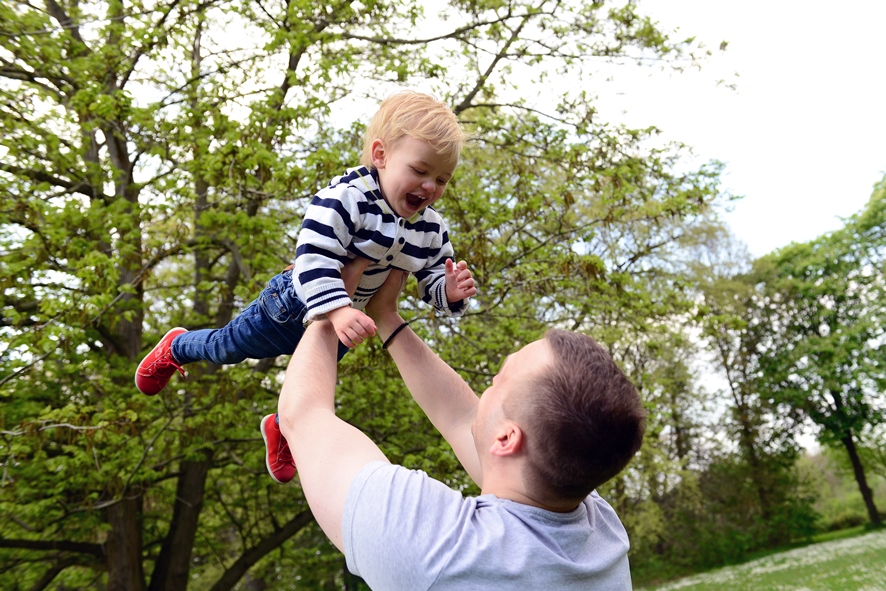
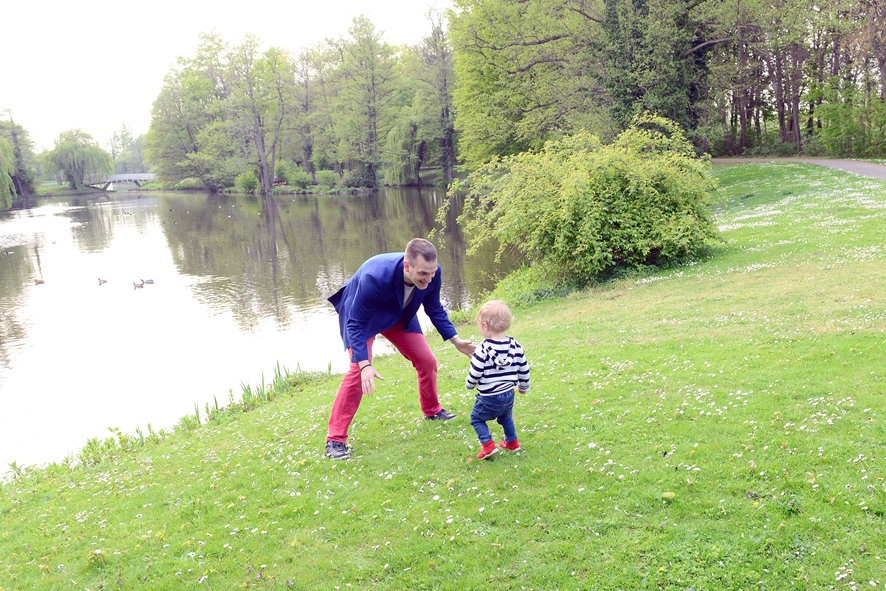
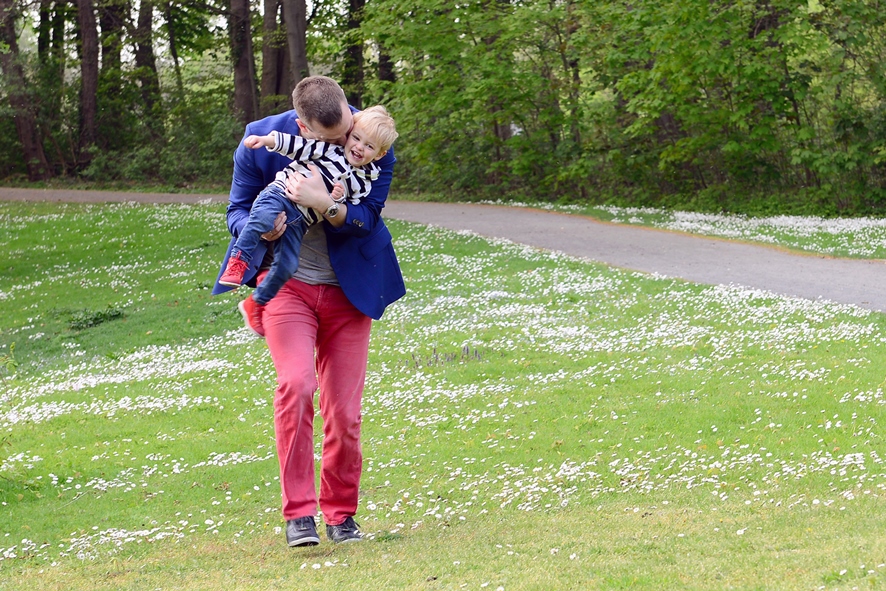
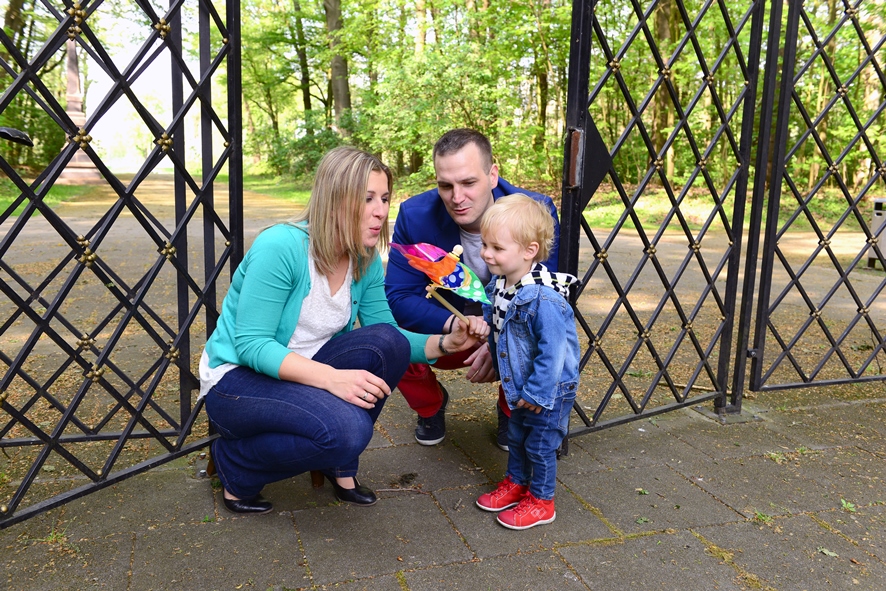
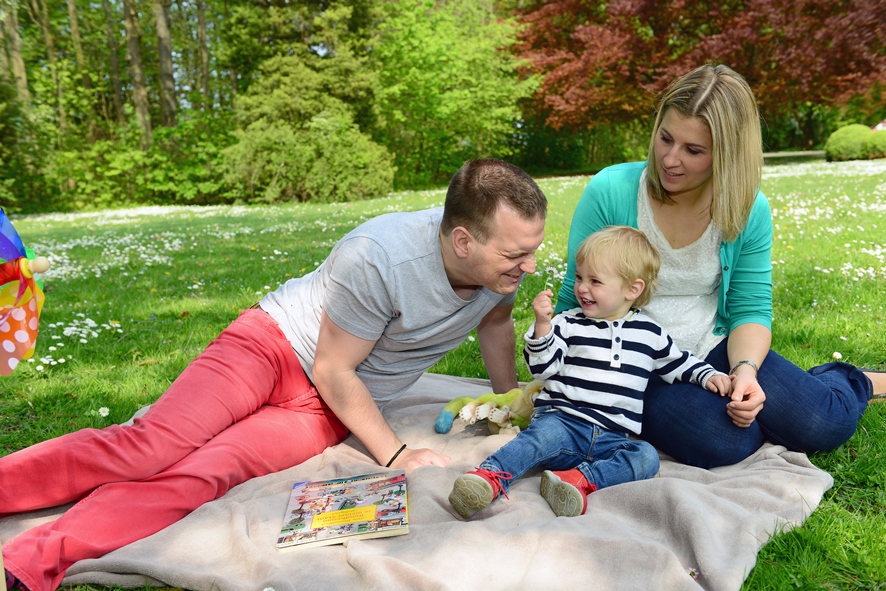
But then: it definitely can be a blast. When researchers see a lot of conflicting data, they sometimes turn to what in science lingo is called “anecdotal evidence”. They tell a story. Here´s a story about my family having fun in the park (Photos taken by Tina Halfmann).

Enjoy!

Family Rose

Rose Family

Rose Family

Rose Family

Rose Family

Rose Family

Rose Family

Rose Family

Rose Family

Family Rose

Happy Thoughts: Here are the Things proven to make you Happier

I´m a little bit lazy with writing these days – or rather, I´m busy busy busy with other pleasurable issues. So instead of writing something myself, I´d like to point your attention to a nice overview article on Positive Psychology on Time Magazine. It´s contains lots of links for further exploration…

Enjoy!

Happy_Thoughts