12 + 1 Articles on Positive Education (including links to PDFs)

Positive EducationI´m very happy to announce that recently, I have become an IPEN Global Representative. IPEN (International Positive Education Network) is an initiative to “bring together teachers, parents, academics, students, schools, colleges, universities, charities, companies and governments to promote positive education.” The group of Global Representatives volunteers to help IPEN to “spread the word” on Positive Education (in their respective countries of origin).

To start, I´ve compiled a list of 12 eminent research articles on Positive Education, the links will lead to the respective PDFs. Enjoy!

Bonus:

German Workforce is especially stressed out. One more reason to bring Positive Psychology to Deutschland

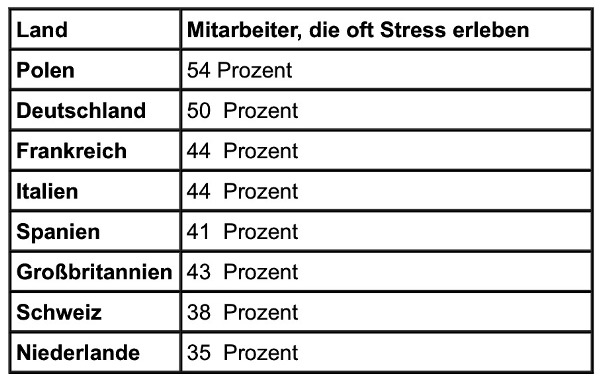
Stress - Germans - ADPThe European branch of HR consulting firm ADP has surveyed some 11,000 employees across eight countries of the continent (link to press release). One of the striking results:

Despite (Or maybe: Due to?) a distinctly flourishing economy which displays an unemployment level at its lowest since the time before the reunification, Germany’s workforce seems to be utterly stressed out. 50% of workers report they are “frequently stressed” at work. That puts us in second place behind the Polish. On the other end of the continuum, stress levels are the lowest in the Netherlands*. Now what is happening here? Are my fellow countrymen really all that stressed? Or is just more accepted, or even en vogue, to report that one is stressed out?

Because the funny thing is: Several other studies show that Germans work considerably less hours per year compared to almost any other nation. Most of us can take between 24 and 30 days of vacation, there’s countless bank holidays – and working hours are pretty acceptable on average (see some more details here). So, by any means, this should be a workers’ paradise. Still, 50% heavily complain about the status quo.

My guess: it’s a question of mindsets, of attention, and focus. I’ve already written several posts on how German culture has an inclination towards “loving the negative”, and how we are overly anxious on average (e.g., how German lacks some positive words; or how studying Positive Psychology to me seemed like a course in being Un-German). Feeling overly stressed at work when we really live in a sort of land of milk and honey seems like a relative of “German Angst” or “Weltschmerz”.

But beware, my fellow countrymen: Positive Psychology will definitely come to a place somewhere near you. Even if I have to do it all by myself…


*According to the cliché, that must be because of all that dope they smoke over there…

Do you want to become a UPenn Master of Applied Positive Psychology (MAPP)? This way, please…

Right now, the 11. cohort of Penn´s MAPP program is well on its way. I was in cohort No. 9 (here you can find a summary of my experiences over the two semesters in 2013/14). Our alumni association asked us to pass on this information to potential students:

1) There will be a live information session in Penn´s Huntsman Hall on November 5. For more info and registration:

https://www.applyweb.com/fixie/form/s/T8413mk

2) There will be a virtual information session on December 3. For more info and registration:

https://www.applyweb.com/fixie/form/s/T8513ml

3) You can now apply! Deadline is March 1, 2016. Info on the application requirements can be found here:

http://www.sas.upenn.edu/lps/graduate/mapp/admissions/application

Nico Rose - Penn Commencement

A Stitch in Time saves Nine! What Psychologists could say about #DieselGate…

Let me start by saying that I don’t want to point any fingers here. I´m pretty sure cheating (as well as being altruistic!) is part of human nature. Each and everyone of us lies and cheats once in a while…

Mostly, it´s the larger-than-life cases that grab our attention. We have our Lance Armstrongs in sports, the Diederik Stapels in (psychological) sciences, the Milli Vanillis in music, and of course a long list of fraudulences and scandals in business, starting with the 15th century Medici Bank, all the way up to the Enrons of our time – and now VW´s DieselGate.

As usual, when looking at a phenomenon such as this, I´m trying to take on the perspective of an (organizational) psychologist. While searching for Positive Psychology studies to write about, I stumbled upon this article – I think it has something to say on what happened at Germany´s largest car manufacturer:

Welsh, D. T., Ordóñez, L. D., Snyder, D. G., & Christian, M. S. (2015). The slippery slope: How small ethical transgressions pave the way for larger future transgressions. Journal of Applied Psychology, 100(1), 114-127.

All people are “good” – but beware of the “slippery slope”…

The authors argue that larger frauds typically start out as minor transgressions – which exacerbate over time when not properly prevented early on.

In this article, we argue that committing small indiscretions over time may gradually lead people to commit larger unethical acts that they otherwise would have judged to be impermissible. We refer to this phenomenon as the slippery slope of unethical behavior.

While this idea per se can be considered common sense, the researchers provide compelling empirical evidence for the existence of this phenomenon.

Although there are many anecdotes about the slippery slope in the business world, our results provide the first empirical evidence that we are aware of regarding susceptibility to increased unethical behavior over time […]. Exposure to slippery-slope conditions more than doubled the rates of unethical behavior in our studies.

Via a series of laboratory and online experiments, they are able to demonstrate that

the slippery-slope effect increases unethical behavior through the mediating mechanism of moral disengagement and that this effect can be attenuated by inducing a prevention focus.

When talking about the managerial implications of their research, Welsh et al. conclude:

Managers may want to consider whether their organization possesses a strong ethical culture in which misconduct is clearly defined and even small deviations are quickly addressed. Those who notice and address questionable employee conduct may be able to reduce the likelihood that minor indiscretions will escalate over time. Addressing minor instances of unethical behavior by a particular employee may also help curb the unethical behaviors of other employees.

Furthermore…

managers may want to frame ethics-related tasks so as to encourage a prevention focus when employees are completing them. For example, more ethical behavior may result over time when employees are encouraged to be vigilant in identifying financial mistakes rather than creative in attempting to find new financial loopholes. Setting and maintaining an ethical status quo represent an important way in which employees may be prevented from starting down the slippery slope even in situations in which they might feel justified in doing so.

The tl;dr version of this article:

A stitch in time saves nine!

Positive Psychotherapy: A Collection of 5 Research Articles

Positive PsychotherapyPositive Psychology was founded on the belief that there is (or at least has been) an imbalance with regard to the amount of attention researchers and practitioners in the field of psychology give to the positive versus negative phenomena in (human) life (for some insights on this, click here). For the first 100 years, psychological science has give much more attention to the negative continuum of experiences (e.g., how to get rid of depression) than to the positive side (e.g., how to lead and sustain a happy and fulfilled life).
Nevertheless, just some years after Positive Psychology’s “inception”, some researchers and practitioners took the newly developed theories, tools, and interventions from the subclinical arena – and tried to apply them in a clinical context, e.g., to help people who suffer from depressive disorders. Thus, Positive Psychotherapy was born.*

Here, you’ll find four of the most important articles charting this territory (links lead to PDFs). The fifth article is a very recent one, there’s no free PDF available as of yet. But if you’re interested: I’ve made very pleasant experiences by just e-mailing authors and asking for a copy. Enjoy!

*Even though Positive Psychology’s official year of birth is 1998 (when Marty Seligman was elected president of the APA), the term Positive Psychotherapy has been in use long before that time. If you’d like to learn more, please click here.

Boosting Meaning in Life by visiting Golden Gate Bridge

I’m writing this while sitting in a whirlpool in Stanford Park Hotel, Palo Alto. I’m on an extended business trip to the U.S. which has taken me from Philadelphia (where I got to attend the 10 year anniversary of the MAPP program at Penn) to Boston, then New York, and now the San Francisco area.

Today is a day off and I took the time to do some classic SF sightseeing – since this is my first time ever on the West Coast: I visited the Twin Peaks, Fishermen’s Wharf, and Lombard Street. But first and foremost, I was eager to see the Golden Gate Bridge.

Nico Rose - Golden Gate

Ever since doing that, I have a warm feeling in my heart and my guts – and after looking at some research, I’m pretty sure I know why this is the case.

Growing up in Germany in the early 80s, I used to watch all those classic TV series like “Hart to Hart”, “The Fall Guy”, or “The A-Team”. Ever since, just being in the U.S., walking around and looking at the skyscrapers, yellow cabs, and the ambulances just is a cool thing to do for me (as it probably is for most Germans).

But at the end of the day, I guess there is no other sight that is able to carry the same quality of “longing to be in the USA” as Golden Gate – probably, because it is also the longest way to go from my home. For me, it’s a classic case of reveling in nostalgia, it conveys a sense of excitement, insouciance, and spending time with my beloved grandparents (who all have passed away long ago).

As stated before, I found a piece of research that is able to show reveling in nostalgia may be a viable pathway for boosting the presence of meaning in life. Here is what the researchers have to say:

The present research tested the proposition that nostalgia serves an existential function by bolstering a sense of meaning in life. Study 1 found that nostalgia was positively associated with a sense of meaning in life. Study 2 experimentally demonstrated that nostalgia increases a sense of meaning in life. In both studies, the link between nostalgia and increased meaning in life was mediated by feelings of social connectedness.

So thank you Empire State Building, thank you yellow cabs, thank you Golden Gate Bridge, for bringing back colt Colt Seavers, Hannibal Smith – and first and foremost, grandma and grandpa! Love you…

Positive Psychology and Me: Confessions of a Science Fanboy

So on most other days, I´m trying to write super-smart and meaningful stuff here, educating people about the science of Positive Psychology. This is not one these posts. The purpose of this one really is to show off. There, I said it…

I´m just beyond grateful for having had the chance to attend this year´s MAPP Summit which, at the same time, was a 10 years anniversary celebration for this special program at University of Pennsylvania. As usual, the rooms were packed with beautiful people from all walks of life who share the passion for all things Positive Psychology – and top-notch researchers in the field of Positive Psychology and adjacent.

For some folks, it´s a big thing to get a selfie with, let´s say, Beyoncé. But I´m a professing “Science Fanboy” – so the rest of the article is just a bunch of photos along the lines of “me with some super-smart/super-important person”. It´s the visual equivalent of a blog post I wrote last year when I graduated from the program: Positive Psychology and MAPP at Penn: Doing that Namedropping Thing. So if you are crazy about Positive Psychology and you feel a bit jealous after seeing this, it´s because you probably should be… 😉

Nico Rose - Martin Seligman

Seligman Selfie No. 1

Nico_Rose_Barry_Schwartz

Prof. Barry Schwartz of Swarthmore, author of “The Paradox of Choice” (among many other books)

Edward Deci and Nico Rose

Prof. Edward Deci of Rocester, Co-Founder of Self-Determination Theory

Nico Rose - MAPPsters

Sharing a laugh with past and future MAPPsters

Nico Rose - Martin Seligman

Seligman Selfie No. 2

Nico Rose - Angela Duckworth - Adam Grant

Two very brilliant and kind people: Angela Duckworth (who´s most notable for her research on Grit, and Adam Grant, author of “Give & Take”. By the way, both will have new books out in 2016.

I had to leave a bit early, therefore I didn´t get the chance to take a photo with Kelly McGonigal who also presented at the MAPP Summit – but I guess there will be a time for that in the future…

Learning about Self-Determination Theory from its Co-Founder, Edward Deci

Edward Deci and Nico RoseIf you´ve visited Mappalicious in the past, you´ll have noticed that I´m a big fan of Self-Determination Theory that was developed by Edward Deci and Richard Ryan. It shares a lot of common ground with several areas of Positive Psychology but has developed as a stand-alone body of research since the early 1980s.

Being so enthusiastic about the topic, I was absolutely thrilled to learn that Edward Deci would be a presenter at this year´s Penn MAPP Summit. Dr. Deci was so kind to take a photo with me. I´ve twittered all throughout his lecture – so here´s a sort of best-of Self-Determination Theory in Deci´s own words and charts. Enjoy!

https://twitter.com/drnicorose/status/655375718805803008

https://twitter.com/drnicorose/status/655377268135624704

https://twitter.com/drnicorose/status/655378923681914880

https://twitter.com/drnicorose/status/655382124216852480

https://twitter.com/drnicorose/status/655384880008810501

https://twitter.com/drnicorose/status/655387390505304064

https://twitter.com/drnicorose/status/655410342907002880