The 3 Layers of Meaningful Work

A while ago, I shared a summary of a fantastic article on the sources of meaning in work co-authored by Amy Wrzesniewski. This year, while trying to understand how to create infographics, I wrote an article about Michael Steger’s (University of Colorado) CARMA framework on how leaders can help their employees to perceive meaning in their work.

Today, I’d like to share more of Michael’s insightful work. With several co-workers, he created a new scale that aims at measuring how much meaning somebody perceives in his or her current working role. It’s called Work and Meaning Inventory (WAMI, here’s the original article).

Steger et al. find that it might be useful to conceptualize meaningful work as having three different layers (please also see the infographic at the bottom): The meaning of the work itself, the meaning it helps to generate in the wider context of the person’s life, and the meaning that is generated when a job helps to achieve some greater good. In their own words:

Positive meaning in work. This facet is a straightforward reflection of the idea of psychological meaningfulness that has been part of work psychology since the job characteristics model. […] Meaningful work is often a subjective experience that what one is doing has personal significance. 

Meaning making through work. Empirical research has shown that work frequently is an important source of meaning in life as a whole. There seems to be a common overlap between one’s work and one’s life work. Indeed, the idea that work could be meaningful without also leading people to build meaning in their lives as a whole makes little sense.

Greater good (GG) motivations. The desire to make a positive impact on the greater good is consistently related to the experience of meaningful work as well as the related construct of calling. […] This facet reflects commonly held ideas that work is most meaningful if it has a broader impact on others. 

As the saying goes:

All good comes in threes.

Three_Level_Meaning_Steger

Finally, it´s here: Adam Grant´s TED talk on Creativity and Innovation

How do creative people come up with great ideas? Organizational psychologist Adam Grant (here´s an interview he recently gave for Mappalicious…) studies “originals”: thinkers who dream up new ideas and take action to put them into the world. In this talk, learn three unexpected habits of originals — including embracing failure. “The greatest originals are the ones who fail the most, because they’re the ones who try the most,” Grant says. “You need a lot of bad ideas in order to get a few good ones.”

While this is Adam´s first TED talk, he´s given two TEDx talks in the past:

Share and enjoy!

A Surprising Feature of the Human Condition: Do you suffer from “Fear of Happiness”?

I guess that most people would be willing to agree to a statement such as: “All humans strive to be happy.” But it turns out that might be wrong.

While most people certainly try to experience happiness (in all its different facets) most of the time, there are some individuals out there that consciously and unconsciously try to avoid being happy – at least when it happens too often and/or too long. Here´s the story…

A lot of scientists in the field of psychology readily admit that their research started out as me-search – that´s investigating a topic which is highly relevant to one´s own life. Now, I´m not a scientist (by profession), but that doesn´t keep me from conducting my own (quick and dirty) research projects on the side. And more often than not, those projects certainly qualify as me-search.

General Consent

Late in 2012, I published a book here in Germany (Lizenz zur Zufriedenheit = License for Satisfaction) that is based on a coaching study I conducted in 2009/10. Back then, I tried to measure certain “meta-themes” that frequently seemed to be perceivable with my coaching clients. I created and validated a questionnaire to assess the occurrence of these themes and then correlated those numbers (among other things) with Ed Diener´s Satisfaction with Life Scale (SWLS).

There was one theme that displayed a rather strong correlation with life satisfaction (.49) and it also turned out to be the strongest predictor in a step-wise regression model. Back then, I called this factor general consent. Here are two of the items I used (roughly translated from German):

  • At times I believe that somehow, I am not allowed to reach my life goals.
  • At times I believe that somehow, I am not granted to reach my life goals.

Satisfaction with life of those people who scored high on these questions was severely diminished on average – and they also earned significantly less money. That´s why – in the end – I chose “License for Satisfaction” to be the book´s title. Some people seem to have an internal permission to reach their life goals, to be happy, and satisfied. Basically, they are free to do whatever they want. With other folks, unfortunately that´s not the case.

Introducing Self-Permission

I took up the subject once again when it was time to pick a topic for my capstone thesis (Introducing Self-Permission: Theoretical Framework and Proposed Assessment) while being enrolled in the Master of Applied Positive Psychology program at Penn. I decided to explore the idea of general consent in more detail, and to ground it in extant research. I tried to explain how it is similar and/or different from well-established psychological constructs such as self-efficacy, self-determination, optimism, self-esteem, self-acceptance, mal-adaptive schemata, and self-handicapping (among other concepts) – renaming it self-permission throughout the process. This in an overview of the nomological net I set out to explore in the paper:

Self_Permission.jpg

To finish, I proposed a scale to measure a person´s level of self-permission – but I did not have the time to carry out an actual empirical study.* Here are a few sample items (some of them are framed in positive way, some point towards the other end of the continuum):

I do not have the permission to reach my life goals.

I have full approval to live a life full of purpose.

I am not granted to live up to my full potential.

I deserve to be everything that I can possibly be.

I do not have full endorsement to reach my life goals.

I have full consent to make the best out of my life.

Fear of Happiness

Sad_Dog_smallFor some reason, while doing literature research back then, I did not stumble upon a very much related strand of research: In 2012, Paul Gilbert (Kingsway Hospital, Derby, UK) and colleagues published a paper where they explore a concept by the name of fear of happiness. Consistent with my own ideas, they conjecture that some individuals experience a kind of aversive conditioning with regards to positive emotional states such as contentment and happiness during childhood – where, e.g., a child is punished for being (overly) happy, or, in a milder version, where positive states are treated with indifference, e.g., because one or both parents are severely depressed (…and this is the point where research turns into me-search…).

Gilbert et al. proposed and validated a scale in order to measure fear of happiness. Here are some of their items:

Good feelings never last.

I feel I don’t deserve to be happy.

I don’t let myself get too excited about positive things or achievements.

When you are happy you can never be sure that something is not going to hit you out of the blue.

Now, here is the surprising and, to me, rather shocking news: When the researchers gave that questionnaire to a sample of about 200 people and calculated the correlation between their fear of happiness scale and an established measure of depressive symptoms, that number turned out to be .70. That´s a huge association. Here´s part of their conclusion:

[…] We were surprised by the size of the correlation at r = .70, this indicates that clinicians probably need to explore fears of happiness in detail and in terms of enhancing well-being. We should not assume that ‘challenging negative thoughts’ or increasing positive behaviours necessarily are experienced positively. […] Some depressed people really do struggle with allowing themselves to experience positive emotions in general and can have a ‘taboo on pleasure’.

I´m excited to see how, in the future, Positive Psychology might assist in helping people with this special “condition”. I sense that this will be about creating a learning process.

Learning to allow oneself to be happy, maybe even to “bear the pain” of being happy – until it hurts no more and becomes something completely normal, just the way it was meant to be.


*If you are a psychology researcher in search of an interesting research topic: I would still love to see an empirical study on self-permission come to life. In my current life as a manager, I do not have the capacity to carry out a full-blown research study – but I´d be glad to provide all of my theoretical spadework, and I could even provide funding to generate a sample via, e.g., mechanical turk. Please reach out if you´re interested…

How to Find and Live Your Calling (TEDx)

Bryan J. Dik, Ph.D., is Associate Professor of Psychology at Colorado State University. He has published widely on topics related to work as a calling; meaning and purpose in career development; measurement of vocational interests; and career counseling interventions. Bryan is co-author of Make Your Job a Calling: How the Psychology of Vocation Can Change Your Life at Work, and co-editor of two other books: Psychology of Religion and Workplace Spirituality and Purpose and Meaning in the Workplace.

He´s a colleague of Prof. Michael F. Steger who´s  work I´ve covered before here.

3 “Original” Questions for Wharton´s Adam Grant

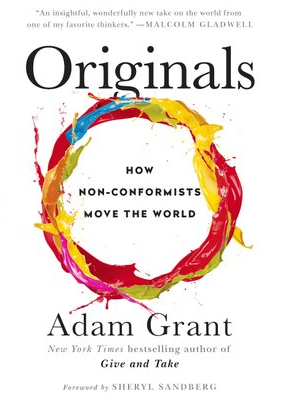
Adam Grant is a professor at Wharton Business School and also teaches in the Master of Positive Psychology program at Penn. His new book Originals: How Non-Conformists Move the World has recently been published. It´s about creativity and how we all can bring daring ideas to life.


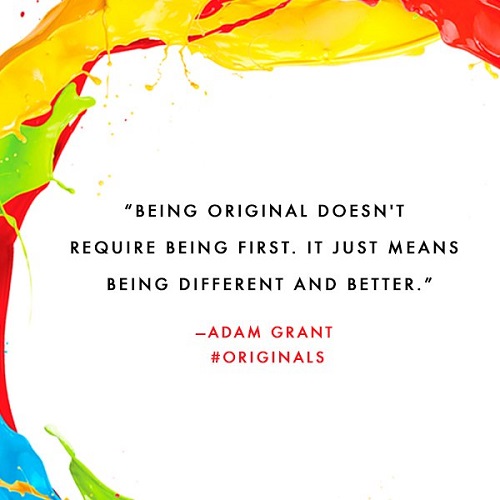
Adam_Grant_Quote_1Adam, you’re a scientist. According to philosopher Thomas Kuhn’s theory of paradigm shifts it’s particularly tough to be original in this domain because your own community might be incentivized to hold bold ideas down. What’s your (give and) take on this?

When I first read Kuhn as a freshman in college, I was stunned by his argument that major scientific advances don’t take hold until a generation of old scientists clinging to old theories literally dies out. At the time, I believed him, but now I think he was only partially right. In many scientific fields, it’s extremely difficult to publish work that doesn’t challenge the status quo. We want to discover new knowledge, not replicate existing knowledge. There may be a small group of gatekeepers who are invested in their pet theories, but the larger scientific community favors fresh insights. Why, then, do so many scientists face opposition to their oppositional ideas? Building on what I wrote in chapter 2 of Originals, my bet is that it’s less about incentives and more about cognitive entrenchment: scientists become so convinced of prevailing theories that they literally have a hard time seeing alternative possibilities. Look at Einstein: after ushering in his revolutionary ideas about relativity, he resisted the quantum revolution in physics. “To punish me for my contempt for authority,” Einstein reflected, “fate made me an authority myself.”

Adam Grant - OriginalsCultures may vary significantly as to the extent they value non-conformism and standing out. I´m German – we´re a decidedly Western society but still, I feel, the general public adheres to “being sensible and staying with the flock”. What´s your advice here for the “dreamers and the doers”?

The more a culture values conformity, the more important it becomes to master the art of tempered radicalism.

First, make your unfamiliar ideas more familiar by connecting them to things that people already understand – like pitching The Lion King as “Hamlet with lions” or Warby Parker as “We’re going to do for glasses what Zappos did for shoes.”
Second, instead of trying to convince other people to change their values, show them how your idea appeals to values they already hold.
Third, reframe following you as an act of conformity by leveraging the power of social proof: show them that other people like them are already on board with your idea.
And fourth, don’t forget that there’s often more variance within cultures as between them. Find the bright spots, as Chip and Dan Heath say in Switch.  Then, to borrow a term from Jane Dutton, build a micro-community of people who embrace originality.

Adam Grant - QuoteFrom the author´s perspective: What´s the most original chapter in “Originals” – and why?

In form, I think chapter 3 is the most original. I had great fun building in a surprise that I will not spoil here. In content, I’d say the most contrarian ideas are in chapter 5, where I argue that common goals drive groups apart instead of binding them together (this helps to explain why vegans hate vegetarians even more than they dislike meat eaters) and revealing your purpose can make you less persuasive (this is why Elon Musk didn’t start SpaceX by telling people he wanted to go to Mars).


Thanks a lot, Adam – and best of luck with your new book!

If they could put Nature in a Pill…

There is one really, really potent antidepressant out there: it’s called sports (please see: Effects of physical exercise on anxiety, depression, and sensitivity to stress).

I’m not an expert on this – but here’s my take on the issue: Our prehistoric ancestors used to walk and run a double-digit number of miles almost every day while searching and hunting for food. It’s what our bodies were made for.

Sitting around and not moving much may convey a simple message: Something’s wrong, you’re sick.

And we all know how it feels like to be sick: It’s not only on the body, typically our mood tends to deteriorate as well.


The picture is attributed to this Twitter account: FindingNature.

The other remedy that is available basically for free is spending time in nature. The so-called biophilia hypothesis proposes that humans (as being part of nature itself) will profit physiologically and psychologically from spending time in green spots especially parks and forests. Here’s an excerpt from an article that was recently published on Nature.com

The authors found that green spaces have a direct mental-health impact. People with better access to green space had slightly fewer depressive symptoms than those in less green areas. Independent of any potentially confounding factors, such as childhood environment and genetics, “there is something about green space itself that benefits people’s mental health.”

The causal relationship is still somewhat unclear, but my guess is that it’s the same mechanism as with phycisal exercise. Not being outside (enough) may just feel “unnatural” to our bodies, thereby signaling that something is wrong – with all the emotional consequences.

So, stop reading right now, go outside – and move your ass… 🙂

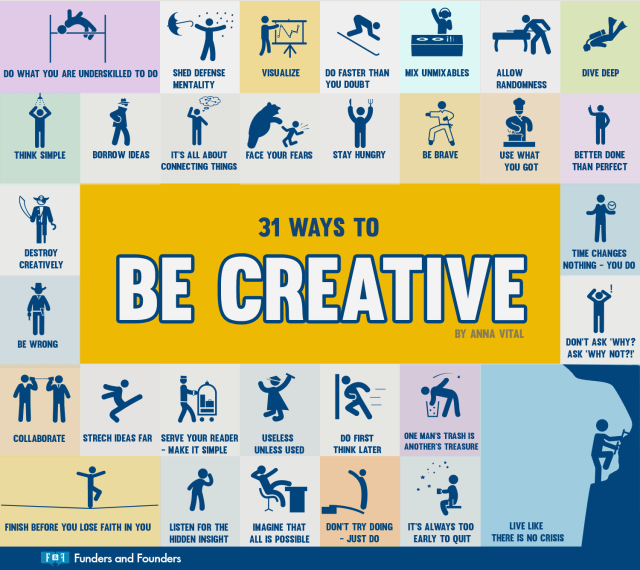
Infographic: 31 Ways to be Creative

Here´s another fantastic infographic by Anna Vital of Funders and Founders. If you´re not sure about the meaning of each individual way, please check out the original post.

Please also check out here other works related to Positive Psychology here, here, and here.

31-ways-how-to-be-creative-infographic

Article about Positive Organizational Scholarship on Zeit Online

For my German readers (or those that like to use Google Translator):

I´m really proud and happy right now. I´ve published an article on ZON, the online presence of Die Zeit, Germany´s most-read weekly newspaper (and one of the most prestigious in general). It covers a short overview of Positive Psychology and then takes a deep-dive into Alex Edmans´ research on the relationship of employer centricity and capital markets performance.

Nico_Rose_Zeit_Feelgood


3 Questions for Emma Seppälä, Author of “The Happiness Track”

Emma_SeppäläEmma Seppälä, Ph.D is Science Director of Stanford University’s Center for Compassion and Altruism Research and Education and author of the recently published book The Happiness Track. She is a frequent contributor to Harvard Business ReviewPsychology TodayHuffington Post, and Scientific American Mind.
Emma, if you had to describe your book in a short analogy (“We’re the Uber for x…” or something like that): What would it be?

The hack for success without stress.

I’m a manager and reaaaaally busy. If I had time to read only one chapter: Which one would you recommend – and why?

Read the second chapter on how to build your resilience. We believe we need high levels of adrenaline to get things done – so we over-caffeinate, over-schedule ourselves, and wait until the last minute to get things done. The result is not productivity, it’s burnout which is why we’re seeing 50% burnout across industries, 80% of doctor’s visits due to stress, and 75% of the American workforce disengaged. You can’t talk yourself out of stress but there is something you can do at the physiological way that will help you manage your energy, be more productive and emotionally intelligent, and be resilient in the face of the pressure and demands coming your way – cultivating physiological resilience. 

In all these years of studying Positive Psychology: What is the one scientific finding that intrigued you the most?

The finding that has intrigued – and inspired – me the most is that the best kept secret to happiness is to give it away. By uplifting others, supporting them, helping them and living a more compassionate life, not only will you be making everyone else happier, you will be happier, healthier and live a longer life too. It’s win-win!

Thank you very much and best of luck with The Happiness Track!

New Book: 10 Keys to Happier Living (by Action for Happiness)

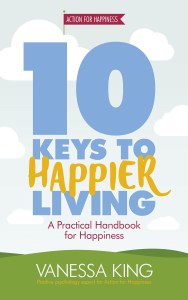
IMG_8218Last year, I shared with you information on UK-based non-for-profit organization Action for Happiness. Now fellow MAPP alum and AFH board member Vanessa King has authored a book which draws on AFH’s GREAT DREAM acronym: 10 Keys to Happier Living. Congrats, Vanessa!

From the book cover:

In this book, Vanessa King of Action for Happiness has drawn on the latest scientific studies to create a set of evidence-based practical actions that have been shown to increase happiness and wellbeing – at home, at work and in the world around you.

It will help you connect with people, nurture your relationships and find purpose. You’ll get ideas for taking care of your body, making the most of what’s good and finding new ways to stimulate your mind.