In general, I hate this sentence – but: time flies.
Right now, I´m in Philly, precisely: in room 340 of Wharton´s Huntsman Hall, for attending the final onsite period of the 2013/14 MAPP program at University of Pennsylvania. Seems like yesterday that I wrote that blog post on being admitted to my deep–dive into Positive Psychology at UPenn. Maybe it´s still a little bit early for reminiscence, since there´s still a lot of work ahead (final papers, capstone projects) – but lately, I´ve been musing on a truly intriguing question:
Is MAPP a Course in being Un-German?
 That question only makes sense when you´re German, of course – which I happen to be. My MAPP classmates surely know I´ve been using this definition a lot over the year: un-German. What do I want to say here?
Despite that disreputable first half of the twentieth century, I kind of like being German. According to most socio-economic (and also ecologic) indicators, it´s a very good place to live. Hey, according to BBC we might even the most popular country in the world. Go figure!*
But what do other countries like or maybe even admire about Germans? Let´s look at some of the (pretty thoroughly verified…) stereotypes:** People definitely love our cars (and the fact that there´s no speed-limit on most areas of the Autobahn), they indulge in our Bier, Schnaps, and Riesling-Wein (especially around the time of the Oktoberfest – which I´ve never visited by the way…), our ten trillion varieties of Wurst and the Schnitzels (although the original Wiener Schnitzel is from Austria, of course). So generally speaking, people like our products. They love things “Made in Germany”.
Because that´s what we´re good at. Germany has an “engineering culture”. We´re good at planning things and following through with it, that´s our Prussian heritage. We´re builders and craftsmen, planners and executors, not so much “poets and thinkers” any more. We´re industrious, punctual, orderly, dependable, and basically good at “being good at things”.
 Rather not on top of the list is “the German” as a person(ality). Most other countrymen consider us to be blunt to the point of outright rudeness – if we´re talking at all, that is. We´re not the epitome of warm-heartedness, either (that may be a result of our language). And while Germany typically is considered to be the “export world champion”, our humor definitely is not one of our hit products.
Additionally, we´re just not a very optimistic people. I mean, compared to most other countries, we´re really really rich and really really healthy and long-living. We´re well-off – period. Still, collectively we´ve managed to have a special kind of fear being named after us: “German Angst” (roughly: being overly cautious and pessimistic). Oh, and we´re also good at feeling Weltschmerz – which can be described as the state of “being pissed off with existence in general and also in particular”.
So on the face of it, trying to be a good German and studying Positive Psychology (here´s a short definition) does not add up. At the end of the day, Positive Psychology is just too … ahem … positive. Rather, a German in a Positive Psychology course seems like a prototypal case of “opposites attract”.
Yet, in spite of it all, I did it. And here´s what I´ve learned…
Lesson 1: Greeting Somebody
In Germany, most people opt for a solid handshake when greeting somebody they do not know that well. Among younger people and goods friends, you’ll also see the occasional hug or that “kiss-kiss embrasser thing” we copied from our French neighbors.
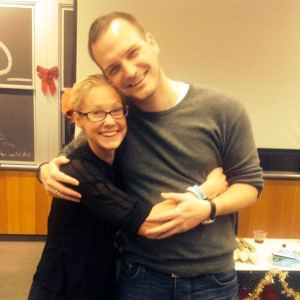
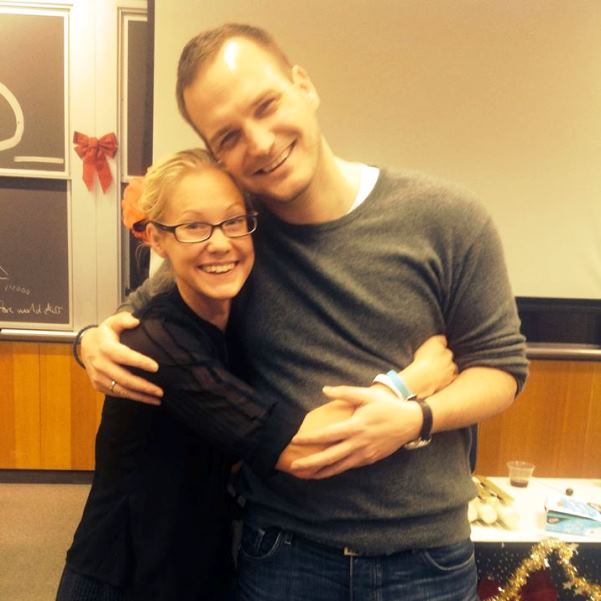
In MAPP, people hug each other at all times. Basically, our bodies are completely entangled while being on campus. Was a little strange at first – but then I´ve found this piece of research that shows how important hugs are for our health.
 Lesson 2: Engaging in Small-Talk
In Germany, when meeting somebody again after several weeks, of course you´ll engage in some microscopic dose of small-talk. E.g., when somebody asks you “How was you flight?”, you´re supposed to reply something like this: “Oh, it was the worst thing ever. There was a delay of at least five minutes. And they didn’t have Becks beer on board. I did not get the window seat I wanted and the food servings were tiny. The guy next to me smelled like a dead rodent and I had already seen all of the HIMYM episodes they showed on board.” The other person will then reply: “Oh, I know exactly what you´re saying. It´s been even worse for me…………..”
In MAPP, when people ask how your flight was, you´re supposed to say “Awesome!” That´s it. And the other person will respond: “That´s awesome. Let me give you a hug…”
Was a little strange at first – but then I´ve found this piece of research that shows how mostly looking on the bright side of life is really beneficial for your psychological and physiological well-being.
Lesson 3: Taking a Break
 In Germany, when you take a break (which we don´t do that often), you basically stop doings things. Maybe, you have a piece of Streusel-Kuchen, maybe you check your mobile phone for messages. And if you meet a German who is one of those rare positive outliers on extraversion, you might be able to get him engaged in a little small-talk – but don´t count on that.
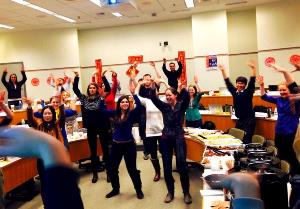
In MAPP, when you take a break, you´re not allowed to sit down and just do nothing. Because breaks are supposed to be “energy breaks”. So basically, somebody will walk up front, put on some music that is not Rammstein, and then coerce all the other people in the room into frenetic singing and shouting, and moving their bodies in distinctly inappropriate ways. Afterwards, you return to your seat. But before that, you hug.
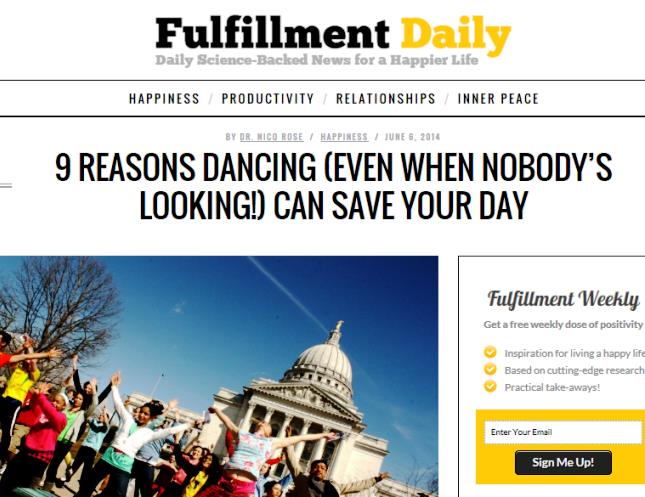
Was a little strange at first – but then I´ve found this piece of research that shows how taking short breaks from work for dancing is really good for your health and gets so creative juices flowing
Lesson 4: Answering “complicated” Questions
In Germany, when somebody asks you a (“complicated”) question, you answer. That´s it. If you don´t want to do something or disagree, you just say “Nein!” or “That´s not a good idea.” Works out fine.
In MAPP, when somebody asks you a (“complicated”) question, you´re supposed to say something like this: “Oh, that is a truly brilliant question (break into huge smile while speaking…). I really appreciate it. It´s just so thoughtful and deep. I could have never come up with that in a million years. By the way, I just love your hair today. So, about your question…”
When you want to say “No” to somebody, or “I think that´s a bad idea” things get a little more complicated. Because: You can´t. It´s sort of “not allowed”. So instead, you might want to start with something along the lines of the above-mentioned phrases. Now, proceed by putting on a (just slightly) less smiling face and say, e.g.: “Let me give you a little bit of context on that.”*** Then, in excruciating length and detail, you recount each and every item of information that may or may not be relevant to the current affair, starting roughly at Lincoln´s “Better Angels of our Nature” address. And basically, you keep on going until the other person has forgotten what she wanted in the first place. Afterwards, you hug.
Was a little strange at first – but then I´ve found this piece of research that shows how important it is to really be empathetic towards other people, and to engage in (what Positive Psychologists call) active-constructive responding.
 Lesson 5: Finishing something
In Germany, when you´ve finished something, you start doing something else immediately (except for when we want to practice the art of Gemütlichkeit – but hey: drinking beer is also doing something…). That´s what we´re here for. We do stuff. We finish it. We do something else. I mean, one of the largest chains of building centers in Germany advertises the slogan “Es gibt immer was zu tun…” (“There´s always something to do…”).
In MAPP, when you´ve finished something, you cannot do something else immediately. Nohoo! Somebody will walk up to you and ask you to savor what you´ve just did. So you might have been to the rest room, reenter the classroom – and somebody will approach you and ask: “Nico, did you take enough time to savor that experience?” Not.
But savoring really is a big issue in MAPP. Now, that is really really un-German. I´ve understood that it´s close to the concept of being “gemütlich”, just (mostly…) without beer. Basically, it´s the opposite of feeling Weltschmerz. It´s about back-pedaling, admiring your recent accomplishments, and giving yourself (and the world in general…) a mental pat on the back – and a hug.
Was a little strange at first – but then I´ve found this piece of research that shows how taking your time to savor life and the beautiful things (and maybe even some of the not so beautiful things…) it entails is really important for our well-being and finding meaning in life.
So, that´s what I´ve learned. Here´s the management summary:
Wherever you are, it is your friends who make your world.
(William James)
Alternatively, in the words of Henry David Thoreau:
Nothing makes the earth seem so spacious as to have friends at a distance; they make the latitudes and longitudes.
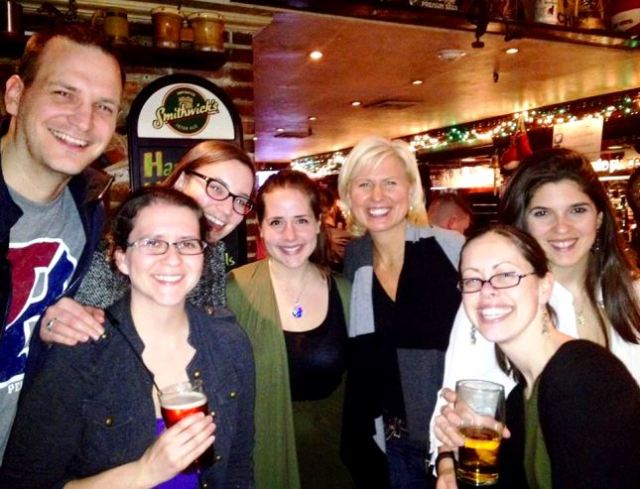
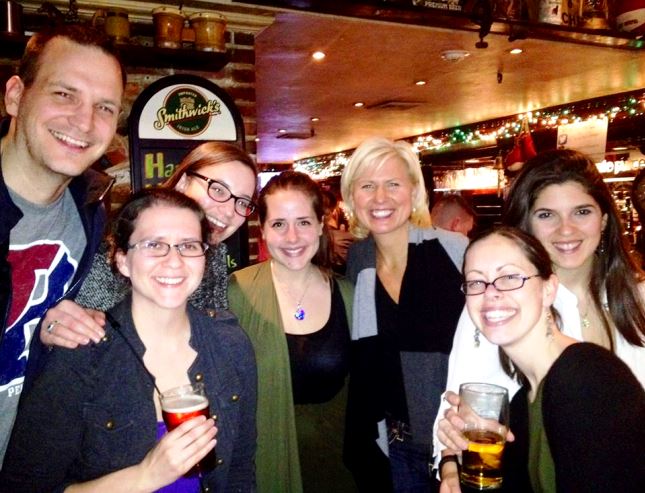
MAPP 9 & Co.: Thanks a million! Love you guys. Lots of hugs…
Nico
* But to be honest: that survey is from 2013, a year without any major soccer tournaments. That doesn´t really count…
**You will find 151 of those in Liv Hambrett´s hilarious and at the same time truly insightful piece What I Know About Germans.
*** Thank you for that one, James!
 For my German-speaking readers…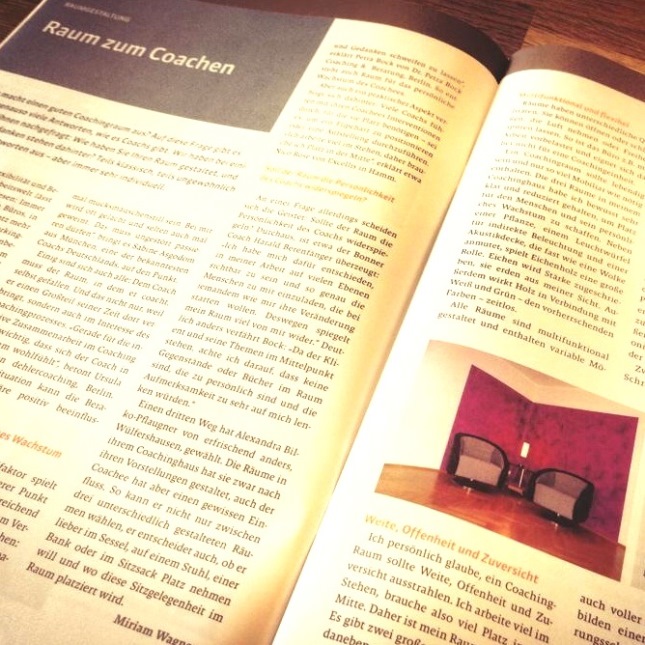










 Mappalicious