The Eudaimonic Wellbeing and Happiness of Undertakers

UndertakerYesterday, I gave a one-hour introductory talk on Positive Psychology. Yet, the listeners weren´t your usual business crowd. The talk was embedded in a convention of about 100 undertakers (more formally: morticians); precisely, they were a youth organization (in this case meaning: under 40) of the “German Association of Morticians”. The convention was held in a larger hotel complex and there even was an exhibition for hearses, caskets, urns, and other…well…undertaker supplies. Actually, some of the regular hotel guests looked a bit scared.

While introducing Marty Seligman´s PERMA model of flourishing and talking about meaning in life, and interesting question came to my mind: Are undertakers happier or unhappier than the average person? And: are they experiencing higher levels of eudaimonic well-being in their lives?

Obviously, undertakers are confronted with death and mortality all the time – but not necessarily their own mortality. Yet, this could be the case, of course. And this, in turn, should lead to specific consequences. Making people think about their own death (inducing a “limited time perspective”) has been shown to increase prosocial behavior and diminish one´s “extrinsic value orientation”. And this is associated with higher eudaimonic well-being.

I did some straw polls with their participants. Most confirmed that they are leading fulfilled lives. But they also admitted there seems to be a high prevalence of burnout in that profession – probably as a consequence of the “emotional work” it entails.

Anyway, that should be an interesting study from many different angles: comparing undertakers with the general population. Anyone wants to do it?
 

Picture source

The Meaning of Meaning (in Life) [Video]

Michael Steger is one of the world’s foremost experts on the subject of meaning in life. Its antecedents, its consequences, and how to find it. In this 30-minute talk, he shares his (scientific) wisdom. Share and enjoy!

Other People Matter: 2 Videos featuring the late Christopher Peterson

Unfortunately, I never had a chance to meet Prof. Christopher Peterson, who died before I really discovered the field of Positive Psychology and applied for the MAPP program at Penn. But all the people (I know) that had the privilege to be taught be by him speak most highly of “Chris”.

Therefore, I was glad to discover these two short video yesterday where he elaborates on his personal take on Positive Psychology. Enjoy!

If you like what you´ve seen, you might also enjoy The Good Life, a Positive Psychology blog that Chris used to write for Psychology Today.

On “Liebe und Arbeit” (Love and Work)

Two days ago, I stumbled upon this (anonymous…?) quote on the net:

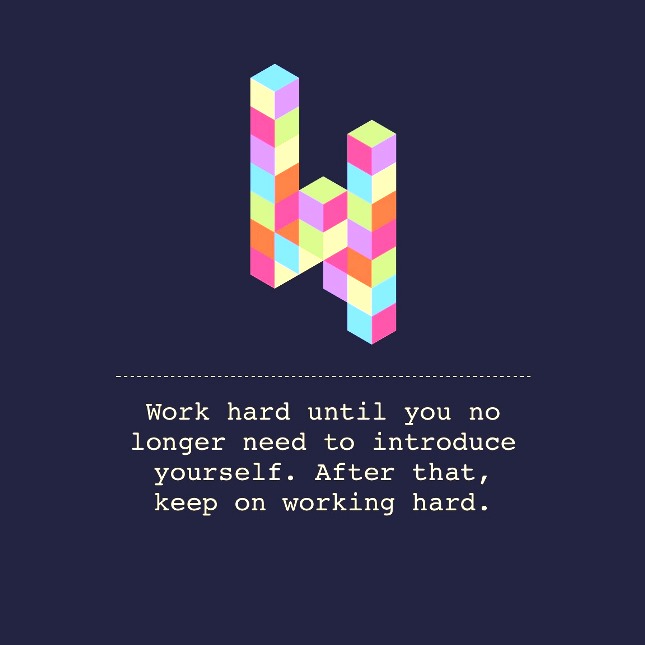
Work until you no longer nedd to introduce yourself

Or rather, the quote consisted only of the first sentence – and I found it necessary to add the second. Sigmund Freud once wrote that “Love and work are the cornerstones of our humanness.” Freud has written a lot of nonsense in his lifetime – but I think here, he´s right on the spot. Obviously, this is not to say that other aspects of life are not important (such as play and recreation). But a lot of people these days spend a least half of their waking hours at work, which also means that we spend most of our time (because that includes our free time) in the presence of other people. That´s why the late Christopher Peterson used to say Other People Matter when asked for a short definition of Positive Psychology. It´s pretty straightforward. I guess most people would agree that our loved ones and friends are one of the most important sources of happiness in our lives – we don´t need Positive Psychology for this insight (even though they can also be an important source of grieve).

But what about work? Isn´t work a constant source of stress and discomfort for most of us? After all, surveys such as the Gallup Engagement Index regularly show that the greater part of the workforce are not really engaged in their current job. While this finding most likely is based on different causations, I propose that a very important one is a lack of fit between the person and the attributes of a job. That´s why I felt a need to add a second sentence to the above-mentioned quote. While I like the general idea, “becoming (more or less) famous” is a prime example of an extrinsic goal – and pursuing these has been shown to be detrimental to our well-being.

We all need to find something that we like to do irrespective of the (external) consequences. This is the most important learning from Self-Determination Theory and adjacent theories like the Self-Concordance Model. We have to find work that we would do even without being paid. I know that this a “moonshot goal” for most people as things are today – but it´ll be the key to lasting productivity and (workplace) happiness in the future.

Unfortunately, our Brains do not look like this. But wouldn´t it be nice?

Your Brain on Greater Good

This beautiful image was created by the beautiful people at Berkeley’s Greater Good Science Center. And no, our brain doesn´t look like that. But we all have the capacity to develop more of the qualities and entities depicted above. If you´d like to have more input, please watch Emma Seppälä´s (Stanford CCARE) TED talk on the “Science of Social Connection”:

Happy Thoughts: Here are the Things proven to make you Happier

I´m a little bit lazy with writing these days – or rather, I´m busy busy busy with other pleasurable issues. So instead of writing something myself, I´d like to point your attention to a nice overview article on Positive Psychology on Time Magazine. It´s contains lots of links for further exploration…

Enjoy!

Happy_Thoughts


A little Kindness goes a long Way: heart-warming Short Film about the Power of being a Giver

No time for writing today. But I´d like to share a video with you that powerfully transports the upsides (and to a much lesser extent: the downsides…) of being a “Giver” in the spirit of Adam Grant.

It´s a commercial, alright. But it´s still beautiful…

Enjoy!


On Friendship, Love, and the Benefits of Aging

Aging WellFor whatever reason, I am confronted with the issues of aging (and death…) a lot over the recent weeks. My mom had to go to the hospital, and in my circle of friends, parents got sick as well – or even died. And while that is distressing and painful emotionally, I know rationally that getting old(er) is nothing to be afraid of. Because getting older (for most of us) means getting happier. We get less anxious, more satisfied, and get to a deeper understanding of the meaning of (our) life.

While being on the plane that brought me to Philly for the MAPP onsite, I watched the movie Last Vegas starring Robert De Niro, Michael Douglas, Morgan Freeman, and Kevin Kline. It´s a fun-loving, pleasantly over-the-top “geriatric” version of Hangover. Most of all, it´s a story of aging well – and the power of (life-long) friendship.

Triumphs of ExperienceCoincidently, one of the guest lecturers of this month´s MAPP onsite has been (some 80 years old) George Vaillant, who´s been the director of the world-famous (Harvard) Grant Study – which for 75 years followed the lives of 268 physically and mentally healthy Harvard college sophomores from the classes of 1939-1944, and a second cohort of 456 disadvantaged non-delinquent inner-city youths who grew up in Boston neighborhoods between 1940 and 1945. Vaillant writes about the results of this study in his books Aging Well (2003) and Triumphs of Experience (2012). There´s lots of interviews available with Vaillant – here, I´ll point you to one for the Huffington Post. Two main points that came out of the study:

Love is really all that matters.

Connection is crucial.

There you have it. The Beatles were right: All you need is love. My parents will both turn 70 next year. And by March 2014, they will be married for 46 years. I hope that my wife and I one day will achieve the same…

If you´d like to have more input, please watch this TED talk on the benefits of aging by Laura Carstensen who is Director of Stanford´s Center on Longevity.

Positive Psychology Researcher Todd Kashdan´s 5 Tips to becoming a “killer” Scientist

Todd Kashdan is Associate Professor of Psychology at George Mason University. He conducts research on anxiety, positive emotions, purpose in life, mindfulness, gratitude, how personal strengths operate in everyday life, social relationships, self-regulation, and how to foster and sustain happiness and meaning in life.

Via Psychology Today, he published his recipe for becoming a “killer scientist”. It´s a great piece to read. Here, you´ll find the short version:

Let passions and curiosity be your compass

Don’t look at public opinion polls about what people are studying. Focus on activities that ignite your passion. Don’t study areas because they are hot and sexy. Ask questions that ignite your passion.

Impact is Everything

It is more impactful to get your work featured in an article in Parade magazine than the top journal in your field. Hang around scientists who understand this principle.

Be James Bond (impact part II)

Show your stuff in a way that can be understood by teenagers. Think like a human. Be an exceptional presenter. How? Concrete. Sticky. Stories.

Create Strong Partnerships

Retain people that ensure you stay humble. Be generous by always giving more than you take. Complementarity is righteous.

Create Meaningful Time

Think of work in 15-minute intervals. It´s not complicated. Discipline slowly accumulates into major accomplishments.

Also, you might want to watch his TEDx talk on “Becoming a mad scientist with your life”: