On “Liebe und Arbeit” (Love and Work)

Two days ago, I stumbled upon this (anonymous…?) quote on the net:
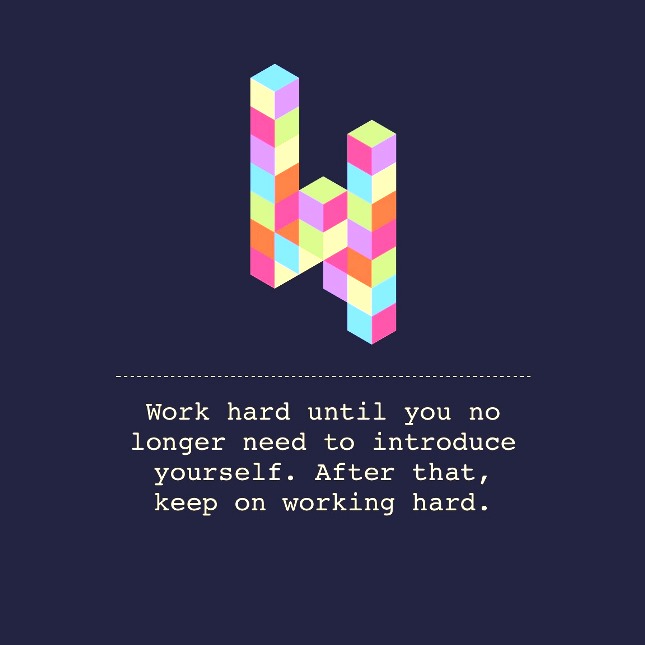
Work until you no longer nedd to introduce yourself

Or rather, the quote consisted only of the first sentence – and I found it necessary to add the second. Sigmund Freud once wrote that “Love and work are the cornerstones of our humanness.” Freud has written a lot of nonsense in his lifetime – but I think here, he´s right on the spot. Obviously, this is not to say that other aspects of life are not important (such as play and recreation). But a lot of people these days spend a least half of their waking hours at work, which also means that we spend most of our time (because that includes our free time) in the presence of other people. That´s why the late Christopher Peterson used to say Other People Matter when asked for a short definition of Positive Psychology. It´s pretty straightforward. I guess most people would agree that our loved ones and friends are one of the most important sources of happiness in our lives – we don´t need Positive Psychology for this insight (even though they can also be an important source of grieve).

But what about work? Isn´t work a constant source of stress and discomfort for most of us? After all, surveys such as the Gallup Engagement Index regularly show that the greater part of the workforce are not really engaged in their current job. While this finding most likely is based on different causations, I propose that a very important one is a lack of fit between the person and the attributes of a job. That´s why I felt a need to add a second sentence to the above-mentioned quote. While I like the general idea, “becoming (more or less) famous” is a prime example of an extrinsic goal – and pursuing these has been shown to be detrimental to our well-being.

We all need to find something that we like to do irrespective of the (external) consequences. This is the most important learning from Self-Determination Theory and adjacent theories like the Self-Concordance Model. We have to find work that we would do even without being paid. I know that this a “moonshot goal” for most people as things are today – but it´ll be the key to lasting productivity and (workplace) happiness in the future.
The “Happy at Work Manifesto”: Do you have enough Arbejdsglaede?

Yesterday, I stumbled upon a guy named Alexander Kjerulf from Denmark (Germany´s northernmost neighboring country – just in case you were wondering…) who is leading a company by the wonderful name of Woohoo Inc. who are in the business of (what academics would call) Positive Organizational Scholarship – the science of happy and at the same time productive workplaces.

They have created a wonderful Happy at Work Manifesto which I´d like to share with you here:

HappyAtWorkManifestoEN-RGB

And if like this, you might also like Alexander´s TEDx talk:

That´s all for today. Enjoy!

P.S.

Remember, he´s Danish. Those guys know something about happiness. Denmark regularly pops up at the top of lists displaying the world´s happiest nations

Adam Grant on the “#1 Feature of a Meaningless Job”

Yesterday I wrote a blog post about Yale professor Amy Wrzesniewski who is a highly decorated researcher in the area of meaning and purpose on the job. I was delighted to see that Adam Grant, the youngest tenured professor at Wharton Business School (and who´ll teach in MAPP in April) and author of Give and Take has recently written a blog post on a similar subject on LinkedIn. Enjoy!

TEDx: The happy Secret to better Work

This is a great and immensely funny TEDx Talk bei Shawn Achor. It has got close to 6 million views on the TED homepage. Good job. I didn´t know Shawn before – until yesterday, where he retweeted my blog post on the 7 most common Misconceptions about Positive Psychology. Good job, too. 😉

Everybody wants more Work-Life-Balance – but should we want to want more free time?

If you look at all the surveys out there, it seems most people want to spent less time at work. Especially Millennials put a lot of emphasis on having a great work-life-balance – which, at the end of the day, means putting in less hours at the office. Sounds nice, huh? But is this really advisable? From the Positive Psychology point of view, I´d have my doubts.

One very important concept in Positive Psychology is Flow – which is a state of being deeply immersed in an ongoing activity, forgetting about the time and surroundings, completely being at one with what we do. Experiencing flow on a regular basis is a sure sign of being on the path of mental health and personal growth. Now here´s the nub of the matter:

Mihály Csíkszentmihályi, the ‘discoverer’ of Flow, used a method called Experience Sampling when first studying this phenomenon. Basically, this means giving a beeper to people and contacting them a couple of times per day over a certain period of time. When being contacted, participants are to write down in a journal what they just did, and how they felt while doing it. What Csíkszentmihályi found: people reported being ‘in the Flow’ about four times as often while at work compared to their free time. How can that be?

Let´s look at the elements of Flow:

  • Focus: Concentration on a limited Field
  • Clarity: Explicit Goals and immediate Feedback
  • Balance: Match between Skills and Challenge
  • No Problemo: Feeling of (potential) Control
  • No Sweat: Ease and Effortlessness
  • Time Warp: Altered Perception of Being
  • Self-Forgetfulness: Merging of Action and Consciousness
  • Autotelic Quality: The Journey is the Destination

The problem with leisure time is: a lot of the things we like to do lack some of the critical elements for generating Flow. Except for being asleep, watching TV is the one activity that the average person spends most time on. Watching TV does not require any skills, yet putting one´s skills to work is crucial for experiencing Flow. What´s more, you don´t have any goals while watching TV, and you don´t get any feedback (besides from: now it´s over). Csíkszentmihályi actually found that when watching TV (even a sitcom) we´re in a state that can be likened to a minor depression. Of course there are leisure activities that can generate flow, e.g., most sports, dancing, reading, and painting – among others.

But how much time do we actually spend on these activities (percental)? The moral of the story is: We should be careful what we wish for. I don´t mean to say that work is inherently good.* There´s an ever-increasing prevalence of burnout in western societies. But that´s another story. Burnout is typically not a consequence of working too many hours. It´s a consequence of working too many hours on the wrong things. Now we shouldn´t make the same mistakes in our spare time…

Elements of Flow

* If you´re interested in what Positive Psychology has to say about ‘good work’, you might want to check out the thesis of Dan Bowling, on of my antecessors in the MAPP program.