To my dear American Friends: Do the right Thing today…

nico_top_rockThis is not a political blog and I´m not a political person. And some may even say, the U.S. election is none of my business, being a German citizen. But then, in this hyper-connected, globalized world, who gets to be POTUS is everybody´s business to some extent. Also, I´ve lived in your country for a year. I´ve studied there and some of the people I hold most dear live on your side of the pond. That´s more than enough reasons to care.

On the morning of this election day, I remembered part of the lyrics from the song “American Babylon” by Christian Metal Band Saviour Machine that I listened to a lot in the 90s:

A thousand bloody hand prints stain the walls of liberty.
A stranger hides in dreams denied, awaiting his release.
I’ve seen this picture before.
I never thought that we would end up here.
When fascism comes as an angel of light,
its license parading as tyranny drives forth its son.

Dear American friends: A lot of your (great-)grandparents helped to liberate Germany and the whole world from the tyranny of fascism. Please don’t make the same mistake my ancestors committed in 1932/33. Hitler being appointed to the office of “Reichskanzler” in 1933 was most likely an undemocratic act – but historians agree this was enabled by the fact that 37.2% of the German people voted for his party (NSDAP) in a free election prior to that.

When you go voting today, please remember the most famous passage from your Declaration of Independence:

We hold these truths to be self-evident, that all men are created equal, that they are endowed by their Creator with certain unalienable Rights, that among these are Life, Liberty and the pursuit of Happiness.

And then do the right thing…

A Bridge over Troubled Water: On Compassion in Organizations

Exactly two years and one day after giving my first TEDx talk in Bergen/Norway, today I’ve been given the chance to speak at another amazing event: The first ever edition of TEDxEBS. Now, EBS stands for European Business School (in Oestrich-Winkel/Germany) and it’s actually the university where I completed my Ph.D. from 2005-2010. So, six years after defending my thesis on management accounting and performance management, I was excited to return today in order to speak about a slightly more inspiring topic in a more relaxed environment.

I’d like to thank the TEDxEBS team for their awesome work. They have created a beautiful event, perfectly organized, with a warm and welcoming atmosphere.

It typically takes a couple of weeks until the TEDx videos are edited and then approved by the TED organization. But as I’m eager to share my thoughts and feelings with you, below, you’ll find the script of today’s talk. Once the video is online it’ll be fun to watch what I’ve actually said on stage compared to what I had written down earlier on.

Enjoy – and please help me to spread the news…

A Bridge over Troubled Water: On Compassion in Organizations
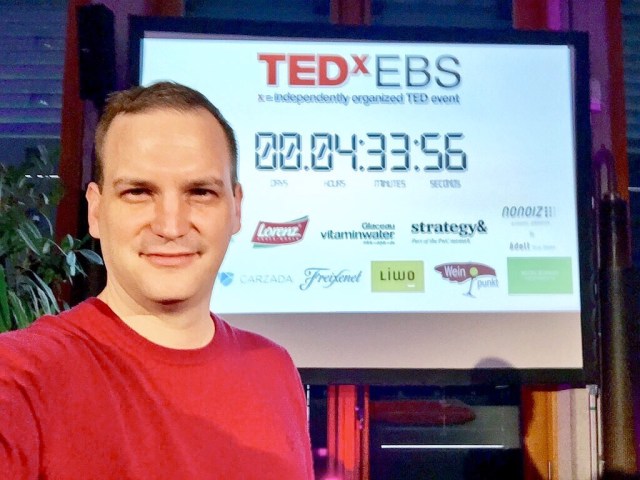
Nico Rose - TEDxEBS 2016

The most common sentence at work

What’s the most common sentence you hear at work? Most likely, it’s “How are you?” Each time you start an interaction, that’s the way to kick off the conversation, right? So, what do we reply when a colleague asks us: “How are you?” Typically, we´d say: “Thanks, everything’s fine.” And then we´d probably ask in return: “How are you?” And the other person will say “Great! Thanks for asking…” That’s what we do in business, that’s the flow. Here in Germany, it’s all the small talk you need. After that, you can get right to business.

The elephant in the room

Now, what if one of the two individuals in this “game of how are you” actually said something like: “I don´t feel good at all. You know, my child is really sick and I probably shouldn’t be here today.” Or, even more severe: “My father is likely going to die over the next days and…” Suddenly, there´d be this huge emotional elephant in the room, right?

And then, there´d be this awkward moment of prolonged silence. Finally, the other person would say: “Oh, that’s terrible. Is there anything I can do?” And the first person, noticing the awkwardness, would very likely reply: “No, no, it´s fine. But thanks for asking. Let´s go to work.” And then, they would go to work. Maybe they would talk about the budget for next year. Meanwhile, that elephant would make itself very comfortable in the room, making sure the whole meeting takes on a markedly uncomfortable vibe. Why is that the case?

Ever since Fredrick Taylor´s concept of “Scientific Management”, companies are supposed to be places informed by stern rationality. It´s all about numbers, calculations, and efficiency. Humans, with all of our emotional complexity, we´re oftentimes seen as a disturbing factor. Many of the most influential theories in economics actually dismiss human emotions altogether. Their homo oeconomicus is a selfish calculating machine.

And yet, each and every one of us knows that moment when the elephant steps into the room, right? Apart from positive feelings such as pride and joy, inevitably, we also experience emotions such as anger, fear, and sorrow while at work. There’s certainly a lot of fear in organizations. The truth is: Part of human life consists of suffering. And that’s why part of organizational life also consists of suffering. It´s a no-brainer.

That´s why the late Peter Frost, a management professor at the University of British Columbia, coined the following sentence:
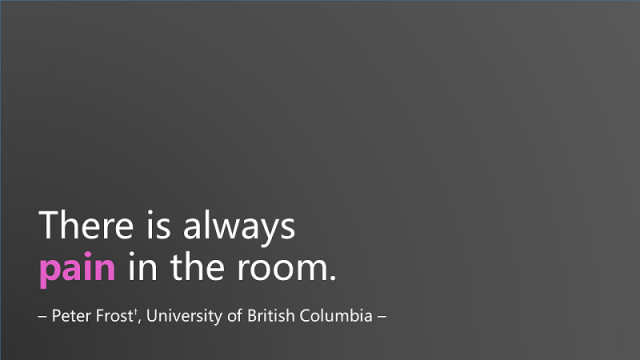
Pain - Compassion  - Peter Frost

There´s always pain in the room!

There´s always pain in the room. Such a strong statement. Because it’s true. I mean, there’s pain in this room right now. 100 people. In the beginning, I asked “How are you?” – and you said you feel alright. But I´m sure there is suffering in this room right now. For some, it’ll be some physical pain, for some, it’ll be emotional pain, for whatever reason. There’s always pain in the room. That’s human. That’s life.

And basically, this means there´s always a lot of suffering in organizations. I work for a company of 120.000 people. That’s a lot of potential for suffering, each and every day. It’s not always about life and death, but it’s certainly always there. Where does this suffering in organizations come from?

Some of that suffering is caused outside of work, but people bring that into the office. There´s relationship problems, financial worries, sickness, there´s death – and taxes, for sure. We’re kind of expected to shake things off, to leave our negative emotions at the front door. Guess what: We can’t. We can put our sorrows on hold for a while, but we cannot get rid of them altogether. It’s impossible.

Additionally, work itself can be a source of suffering: Think about choleric bosses, harsh working hours, conflicts between departments, getting worn out in these power games, or the fear of being laid off. As leaders, we often talk about change. We talk about the future, and how to get there. What we tend to forget: Wherever there’s change, people lose something. When something new comes to life, something old has to die. Grief is, or at least, should be a natural companion of change.

Here’s a simple truth – yet one that is often overlooked: As leaders, we create suffering. We create suffering. It’s unavoidable. If we don’t create suffering, we’re probably not leading. Leading people sometimes means making decisions about things, budgets – and sometimes, making decisions about people. Who gets to work on that new cool project – and who doesn’t? Who gets to go on vacation for Christmas, who has stay in the office? Who gets promoted, and who will lose their job? Some people will suffer. You create suffering as a leader. That’s OK. But you have to be aware of that fact and you’ve got to take care of that.

The nature of compassion

So, what can we do when were confronted with the suffering of a person we work with? One option could be to downplay or outright ignore it. We sometimes advise other people to stay strong, or to get their shit together, right? But recent research from the Leadership Quarterly suggests that, especially as a leader, it’s about the worst thing you can do. In the long run, it will drive down engagement, motivation, and satisfaction of your people.

img_2794

A different way to respond to suffering is: Compassion. Showing compassion. Now, that´s a word that somehow doesn’t seem to fit in the world of business. It seems too soft, too esoteric. In fact, the word compassion is most often associated with spiritual traditions, first and foremost with Buddhism. Now, what exactly does it mean to show compassion? How do we get there?

First, some good news: You don´t have to go to Tibet for several years to meditate in a cave. Actually, compassion is something we´re born with. Even small babies will spontaneously display compassion when confronted with the suffering of someone they care about.

At the heart of compassion there´s a very simple and beautiful idea: The wish that other individuals may be free from suffering. While people here in the West would probably think of their family and friends first, the goal of practicing Buddhists is to extend this wish to all sentient beings. That´s the Champions League of compassion, so to speak. For now, let´s say the gist of the matter is wholeheartedly wishing for the best for other people.

Compassion as taking action

Now, here´s a crucial thing: Compassion is about taking action. It is more than just being empathetic. Compassion is about mitigating another person´s pain. Let´s suppose you see somebody hitting their thumb with a hammer. You could say something like “Oh, I know how that hurts, I´ve been there.” Technically speaking, you´re empathetic. You´re able to feel what´s going on with the other person. But then, if you don´t care, it´s not compassion.

Compassion - Realize - Relate - Relieve

In scientific terms, compassion consists of a three-step: 1) Noticing another person´s suffering; 2) feeling empathetic concern; and 3) taking some kind of action to mitigate that suffering. Or, as I like to call it: Realize. Relate. Relieve. Now, what is the concept of compassion in organizations?

Compassion in organizations

In organizations, compassion can be displayed spontaneously, or it can be planned into the system. What does it take to be personally compassionate? Not much, actually. Taking some time to just listen to somebody, offering them undivided attention. Giving somebody a hug, or buying them a coffee. When you´re able to hold a space where others can show their full selves, where they can be vulnerable – that´s compassion. Especially as a leader, not doing or saying things or postponing certain actions can ask be a sign of compassion. You should try not make things worse, right?

On the organizational level, there´s a possibility for magnifying individual compassion. Think about offers for counseling. Think about monetary support or temporarily cutting working hours. Especially, with severe strokes of fate, having time to cope and sort things out is a crucial resource. When companies offer swift and non-bureaucratic support at this point, it´s a true sign of organizational compassion.

Another element of compassion in organizations is coordinating rituals. I´ve already spoken about how change always activates grief. When long-time employees retire, or worse, pass away, typically, we hold farewell rituals. But what about the pain an organization creates itself? When there are layoffs and restructuring, people will suffer. I´m talking about relationships that are torn apart, about people being stripped of their pride, or a part of their life´s meaning. This is not only burdening for those colleagues who have to go, but also for the ones who get to stay. Handling transitions such as these in a personal and appreciative fashion, not resorting to press releases and empty phrases, is a true sign of compassion.

The upsides of compassion in organizations

So, what´s the “so what” of organizational compassion? What are the upsides? There is an excellent review article by Jane Dutton (and colleagues) from the University of Michigan’s Center for Positive Organizations. She proposes compassion unfolds its positive effects on several layers of the organization: It is beneficial for the person on the receiving end, it’s beneficial for the one who displays compassion, it can be beneficial  for potential bystanders – and potentially it creates ripple effects throughout the whole organizational system. Acts of compassion are a source of shared emotions, gratitude, and companionship. Additionally, while going through the motions, people engage in joint sense-making.

As a consequence, employees experience elevated levels of gratitude, pride, and meaning. Yes, compassion can be a powerful driver of meaning in organizations. Some studies propose there is a measurable impact on the bottom line. Think about less absenteeism, less burn-out, certainly less turnover intentions. On the positive side, think about heightened levels of trust, cooperation, and satisfaction. These seem like soft words, but they will show up in a company´s bottom line, eventually.

What undermines compassion in organizations?

Before I start wrapping things up, I´d like to say something about what undermines compassion in organizations. At this point, I could talk about how certain values and norms suffocate and literally kill compassion, for example rigid hierarchical leadership, overly competitive standards, and a macho-style “boys don´t cry” culture. But for the sake of brevity, I´m going to talk about something else: About you!
Compassion Killers - Adam Galinsky

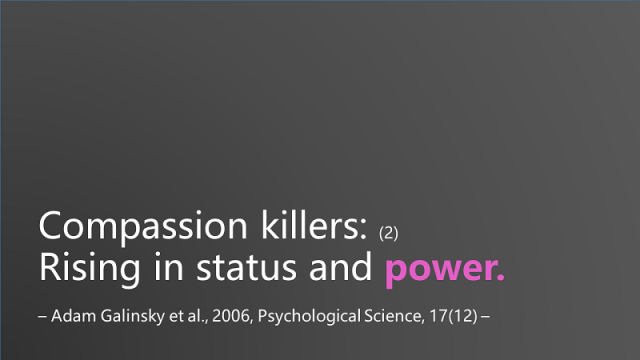
I´m speaking here at a distinguished business school. Most, if not all of you, are going to be future business leaders. That´s great news, but therein lies a risk: Several studies, for example by Adam Galinsky (and colleagues) from Columbia Business School, propose that we tend to become less empathetic the more powerful we are. When we rise up the corporate ranks, we tend to lose – at least to some extent – our innate impulse to feel what others feel. When we rise in power, we typically care less about the suffering of others. At the same time, research by Jennifer Berdahl (and colleagues) from the University of British Columbia suggests leaders are less willing to express negative emotions. They tend to keep them to themselves. As a consequence, it´s very unlikely they´ll be at the receiving end of compassion – even if they might desperately need it. Accordingly, there´s a kind of compassion gap at the top of most org charts.

Now, keep in mind: As a leader, especially when you´re part of a top management team, you serve as a role model, whether you like it or not. People are going to look up to you, you´ll set the tone of the organization. As a consequence, there seems to be kind of vicious circle. Leaders tend to become less compassionate as they rise in power, and at the same time they shape the norms of the organization. Taking this into account, it seems that hierarchical systems have an inclination to become less compassionate over time – unless the leaders purposefully counteract this emotional decline.

It starts with you

And so, it starts with you! Most of you here in this room are just about to embark on your professional journey. Some of you will join existing corporations and you will eventually rise up the ranks. Some of you will join a non-for-profit or build a career in public service. A lot of you will hopefully build your own companies or take on responsibility in the family business. It’s all good. You can all find happiness.

Just remember: You’re not a different human being when you´re doing business. You take on a role and a responsibility – but there is no other version of yourself that you can send off to work. It’s always you and it’s always all of you. As a leader, you will suffer, and even more so, you will be the cause of suffering. You´ve got to take care of that.

So, when you go work: Dare to bring your whole self to work. When you lead people: Dare to encourage them to bring their whole selves to work. When you build a company: Dare to grow an organization where people can be their best, their whole selves. Dare to be a compassionate leader. Dare to lead from he heart. Thank you!


I wholeheartedly would like to thank the following researchers for being a source of inspiration, knowledge, and wisdom – even though most of them do not appear directly in the talk or in the charts, and even though some of them don’t even know about their contribution:

Wayne Baker, Sigal Barsade, Jennifer Berdahl, Kim Cameron, David Cooperrider, Edward Deci, Jane Dutton, Alex Edmans, Barbara Fredrickson, Peter Frost, Adam Galinsky, Adam Grant, Dacher Keltner, Laura Little, Kristin Neff, James Pawelski, Christopher Peterson, Robert Quinn, Richard Ryan, Esa Saarinen, Martin Seligman, Emma Seppälä, Kennon Sheldon, Tanja Singer, Michael Steger, Chris White, Monica Worline, and Amy Wrzesniewski.

A special thank you goes out to Jane Dutton and Robert Quinn from University of Michigan’s Center for Positive Organizations. Somehow, they have helped me to understand that it’s OK to put my ass up on that stage with this “esoteric” topic.

Last not least, I’d like to thank my two beautiful children – who hopefully will grow up to work in a (business) world that’s as close as possible to the one I bring to life in my words.


Mappalicious - Children

The Loneliness of the Long Distance Speaker…

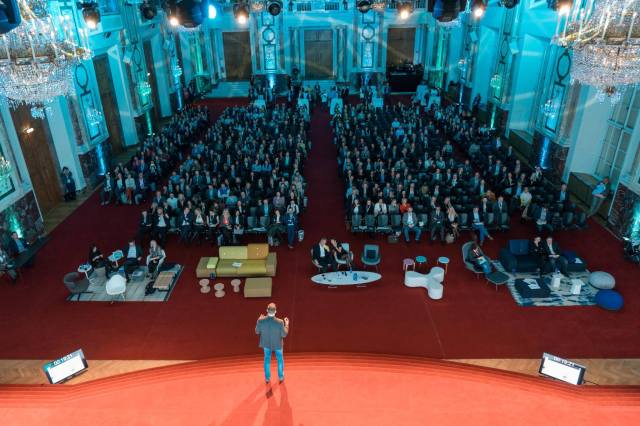
Truth be told: The (almost…) sole purpose of this post is to share this really awesome photo with you.

Rose_HR_Inside_Summit.jpg

It was taken by photographer Benedikt Weiss during my opening keynote on Positive Psychology at the HR Inside Summit 2016 in Vienna three weeks ago. The keynote took place in the beautiful and most stunning Hofburg Palace and was, at the same time, one of the largest crowds I´ve spoken to so far.

The setting was somewhat of a challenge. As you can see, the lights on stage were really bright, whereas the audience was pretty dark. Additionally, there was this gap of at least 25 feet between the first row of people and me – which basically meant I couldn’t discern a single face in the crowd. This was somewhat discomforting since – as most speakers do – I tend to frequently scan the crowd for friendly-looking faces, people who nod, or smile at me. Not a chance in this case – but I guess I did a good job anyway.

Still, if you´re presenting to larger crowds, I´d love to hear your speaking hacks on how to get ongoing feedback from the audience when you basically cannot see anyone…

Positive Psychology News Digest on Mappalicious | No. 43/2016

My favorite pieces covering Positive Psychology and adjacent from (roughly) the last seven days.

New York Magazine: 3 Ways to Get Over ‘Status Quo Bias’ at Work by Drake Baer


Forbes: The Psychology Of Professional Purpose: How To Follow Your Calling by Caroline Beaton


Psychology Today: The Happiness Myth: Why the pursuit of Happiness will make you miserable by Atalanta Beaumont


Atlantic: How to Build a Happier Brain by Julie Beck


Guardian: Want to ‘train your brain’? Forget apps, learn a musical Instrument by Mo Costandi


New York Magazine: By the Way, You Don’t Have to Stop Power Posing by Melissa Dahl


Psychology Today: 3 Fascinating Discoveries About Laughter by Todd Kashdan


Quartz: Scientists explain how happiness makes us less creative by Ephrat Livni


Quartz: Google’s former happiness guru developed a three-second brain exercise for finding joy by Lila MacLellan


The Positive Organization: The Choice to be Transformational by Robert Quinn


New York Magazine: Want to Make Better Decisions? Try ‘Temptation Bundling’ by Jesse Singal


Pursuit (University of Melbourne): Positive Psychology much more than Happyology by Katerine Smith (Interview with my MAPP Capstone advisor Peggy Kern)

IMG_7977-3

Want to study Positive Psychology at Penn? This way please…

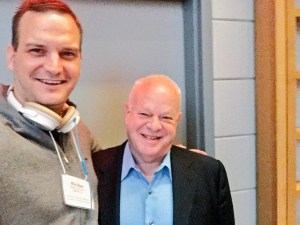
Martin Seligman & Nico RoseI spent the last weekend in Philadelphia at the Penn MAPP Alumni Meeting 2016 and the annual MAPP Summit. It´s always a great pleasure to meet my former classmates, or to get to know the current cohort of Mappsters, or some my of my predecessors.

If you are thinking about studying Positive Psychology at Penn, I urge you to visit this website: www.pennpositivepsych.org. It contains all the information on the program, e.g., the prerequisites, the schedule, and how to apply. You will also find some alumni stories (including mine).

If you´d like to know more about the study program: There´s an information session on campus on Nov. 10 and a virtual information session on Dec. 8.

Otherwise, the entries in this blog from day one all the way up to August 2014 serve as a documentation of my year in the MAPP 9 cohort (2013/2014). You can basically follow me an look over my shoulder while working towards that photo you see on the right (graduation day with Martin Seligman).

Enjoy – and maybe, we´ll meet one day at some future MAPP summit…

Positive Psychology News Digest on Mappalicious | No. 42/2016 (Philly Edition)

martin_seligman_nico_roseMy favorite pieces covering Positive Psychology and adjacent from (roughly) the last seven days.
This edition of the Positive Psychology News Digest is brought to you directly from the University of Pennsylvania. I´m attending the annual Penn MAPP Summit, listening to Martin Seligman right now as I´m typing this. Good times…

Quartz: The Japanese practice of ‘forest bathing’ is scientifically proven to improve your health by Ephrat Livni


Quartz: Positive psychology is rooted in the radical idea that you are not a problem to fix by Tim Lomas


Guardian: Our children are paying a high price for society’s vision of success by Tim Lott


Forbes: Five Behaviors Of People Who Are Happy At Work by Rebecca Newton


GQ: The World’s Happiest Man Wishes You Wouldn’t Call Him That by Michael Paterniti


Psychology Today: The Secret to Achieving Your Dreams No One Tells You About by Emma Seppälä


Mindful.org: How to Free Yourself from Your Personal Stories by Bob Stahl & Steve Flowers


Greater Good Science Center: People Who Trust Technology Are Happier by Deborah Yip


Heleo: Nir Eyal and Monica Worline on Why Cultivating Compassion is Crucial for Success in Business, no author


Science Daily: In the workplace, incivility begets incivility, new study shows, no author

Positive Psychology News Digest

Positive Psychology News Digest | July-September 2016 (+ 130 Articles)

Time: 4 Rituals That Will Make You Happy, According to Neuroscience by Eric Barker


Positive Prescription: Session with Angela Duckworth by Samantha Boardman


Vice: America’s Search for Happiness Is Driving Us Crazy by Peter Moskowitz


Atlantic: Awe Isn’t Necessarily Good for You by Michelle Nijhuis


Washington Post: A Harvard psychologist explains why forcing positive thinking won’t make you happy by Neda Semnani


New York Magazine: ’Power Posing’ Co-author: ‘I Do Not Believe That ‘Power Pose’ Effects Are Real’ by Jesse Singal


New York Magazine: Here is Amy Cuddy’s Response to Critiques of Her Power-Posing Research by Jesse Singal & Melissa Dahl


Phys.org: Game theory research reveals fragility of common resources by Emil Venere


Economist: Against happiness, no author


Heleo: Adam Grant and Barry Schwartz on Incentives, Motivation, and Chance, no author


NPR: Here’s How Schools Can Support Students’ Mental Health by Meg Anderson


Harvard Business Review: Why Leadership Training Fails—and What to Do About It by Michael Beer, Magnus Finnström & Derek Schrader


Psychology Today: Strengths at Work by Dan Collinson


Guardian: Do our brains have extraordinary untapped powers? by Mo Costandi


NPR: Are We Reaching The End Of The Trend For Longer, Healthier Lives? by Richard Harris


Guardian: Why being a fake is bad for you by Stephen Joseph


Good News Network: Positive Psychology Students Learn by Giving Free Hugs on Campus by McKinley Korbley


New York Times: Want to Find Fulfillment at Last? Think Like a Designer by Steven Kurutz


Huffington Post: For Business Schools, Being Good is No Longer Good Enough by Dan LeClair


Psychology Today: What Does It Take to Be Happy? by David Ludden


Strategy+Business: How Well Do You Know the Story of You? by Eric McNulty


Fulfillment Daily: Why you shouldn’t set goals for success by Ray Williams


Harvard Business Review: The More You Energize Your Coworkers, the Better Everyone Performs by Wayne Baker


Fast Company: 7 Science-Backed Steps To Take Before Quitting A Job That’s Burning You Out by Rachel Grumman Bender


Wall Street Journal: The More Cash People Have, the Happier They Are by Andrew Blackman


ERE Media: The Business Benefits Of Happy Employees by Karlyn Borysenko


Wall Street Journal: Get Your Children Good and Dirty by Brett Finlay & Marie-Claire Arrieta


New York Times: The Difference Between Rationality and Intelligence by David Hambrick & Alexander Burgoyne


Greater Good Science Center: Who Is Attracted to Inspiring Media? by Sophie Janicke


New York Times: Can You Have a Good Life if You Don’t Have a Good Job? by Michael Lind


Guardian: Could bad buildings damage your mental health? by Emily Reynolds


New York Times: Can Teenage Defiance Be Manipulated for Good? by Amanda Ripley


Fast Company: 7 Surprising Facts About Creativity, According To Science by John Paul Titlow


Huffington Post: Three ways to work better together by Chris White


Heleo: Mastering the Art of Pre-suasion with Robert Cialdini, no author


CNN: Fall in love with a job you don’t even like, in three steps by David Allan


New York Magazine: You Can Write Your Way Out of an Emotional Funk. Here’s How by Susan David


Wall Sreet Journal: Design Your Way to a Happier Life by Dave Evans & Bill Burnett


New York Times: Researchers Confront an Epidemic of Loneliness by Katie Hafner


BPS Research Digest: It’s possible to learn to be more optimistic by Christian Jarrett


Harvard Business Review: Don’t Let Power Corrupt You by Dacher Keltner


Psychology Today: Using Gratitude to Change Your Happiness Set Point by Laura Markham


The National: Can social media reveal happiness? by Christopher Pike


The Positive Organization: Purpose and Appreciation by Robert Quinn


New York Magazine: You Should Visualize Positive and Negative Outcomes More by Jesse Singal


Quartz: One Swedish town is conducting a giant social experiment to make its workers happier by Cassie Werber


Stanford GSB: Which Will Get You Further: Fitting In or Standing Out? by Eleine Zimmerman


New York Times: Making Modern Toughness by David Brooks


New York Magazine: How to Motivate Your Employees: Give Them Compliments and Pizza by Melissa Dahl


Slate: Sad Face: Another classic finding in psychology—that you can smile your way to happiness—just blew up by Daniel Engber


Washington Post: Life got better for pretty much everyone under Obama by Christopher Ingraham


Psychology Today: Is Positive Psychology Burning You Out by Michelle McQuaid


New York Times: Do You Believe in God, or Is That a Software Glitch? by Kate Murphy


Guardian: Hunting for hygge, a new ingredient in Denmark’s recipe for happiness by Richard Orange


Guardian: If you want to practise mindfulness, the garden is the place to be by Tom Smart


Psychology Today: How to Spot Authenticity by Stephen Joseph


ABC Australia: Gut health, mental wellbeing and immunity linked to outdoor play by Layla Tucak


Fast Company: What Happened When I Pretended To Be Outgoing For A Week by Stephanie Vozza


New York Times: Growing Older, Getting Happier by Nicholas Bakalar


Wall Street Journal: Why You Need Negative Feelings by Elizabeth Bernstein


Washington Post: Your Instagram feed can tell us if you’re depressed, study suggest by Ariana Eunjung Cha


New York Magazine: You’re Not Supposed to Be Happy All the Time by Melissa Dahl


New York Magazine: This Study Got People to Make Huge Life Decisions by Flipping a Coin by Flipping a Coin by Melissa Dahl


Psychology Today: Crazy Busy? What Would You Pay for an Hour of Calm? by Paula Davis-Laack


Greater Good Science Center: The Power of Forgiveness at Work by Brooke Deterline


Telegraph: Say hello to hygge: The Danish secret to happiness by Maria Lally


Inc: These 5 Powerful Daily Habits Will Make You a More Positive Person by Jessica Stillman


Fast Company: The Surprising Scientific Link Between Happiness And Decision Making by Laura Vanderkam


Economist: Believing is seeing: New technologies will make society richer by cultivating trust, no author


NPR: Which Countries Are Best At Converting National Wealth Into Well-Being? by Nurith Aizenman


Forbes: 5 Strategies To Close The Confidence Gap by Paula Davis-Laack


Psychology Today: A Simple Exercise to Boost Optimism (And Improve Health) by Utpal Dholakia


Stanford Medicine: Well now: What humans need to flourish by Jennie Dusheck


Consequence of Sound: Going to concerts regularly leads to a happier life, according to a new study by Alex Galbraith


BBC: There’s no such thing as flexible work by Georgina Kenyon


New York Times: Hesitant to Make That Big Life Change? Permission Granted by Carl Richards


New York Mag: The Best Time to Do Stuff You Hate Is When You’re at Your Happiest by Cari Romm


New York Mag: To Be Happier at Work, Get a Hobby by Cari Romm


Forbes: Forget Positive Thinking: This Is How To Actually Change Negative Thoughts For Success by Melody Wilding


The Conversation: Negative reports of positive psychology show ignorance isn’t bliss by Adam Barsky & Michael Zyphur


Atlantic: Story of My Life: How Narrative Creates Personality by Julie Beck


Quartz: Psychology has identified three mindsets shared by people who actually follow through on their goals by Amanda Crowell


Wired UK: Not enjoying your job? Let the spark of passion come first by Angela Duckworth


Psychology Today: 10 discoveries about well-being that everyone must know by Todd Kashdan


Guardian: The Danish Way of Parenting review – how to raise the world’s happiest Kids by Alice O´Keeffe


Washington Post: Clinton is more optimistic than Trump. But optimism doesn’t predict winners anymore by Martin Seligman


Fulfillment Daily: Get an Edge on Your Work & Happiness with Self-Compassion by Emma Seppälä


Wall Street Journal: What do teens need most from parents for intellectual, social and emotional development? by Sue Shellenbarger


Time: Why the American Dream Is Making You Unhappy by Ruth Whippman


Huffington Post: How to motivate people? Don’t do it yourself by Chris White


New York Magazine: ‘Take a Deep Breath’ Is Advice That Works Physiologically and Psychologically by Drake Baer


Psychology Today: The Neuroprotective Powers of Exercise Should Motivate You by Christopher Bergland


Harvard Business Review: Can You Really Power an Organization with Love? by Duncan Coombe


Psychology Today: The Playful Life by Bernard De Koven


Forbes: The Joy Of Work: Menlo Innovations by Steve Denning


Psychology Today: 4 Reasons Why an Optimistic Outlook Is Good for Your Health by Utpal Dholakia


Guardian: The Happiness Industry by William Davies review – why capitalism has turned us into narcissists by Terry Eagleton


Greater Good Science Center: Is Artistic Inspiration Contagious? by Scott Barry Kaufman


Atlantic: Would you be happier with a different personality? by Scott Barry Kaufman


Fast Company: 4 Ways To Bounce Back When You’re Treated Unfairly At Work by David Mayer


Finnish News: Perceptions of Finnish Sisu – in California by Göte Nyman


New York Magazine: Why Declaring ‘I’m an Introvert!’ Limits Your Life by Drake Baer


Time: The fun way to easily improve your life, backed by research by Eric Barker


Forbes: 10 Troubling Habits Of Chronically Unhappy People by Travis Bradberry


New York Times: The Structure of Gratitude by David Brooks


Atlantic: How to change your personality by Scott Barry Kaufman


New Yorker: What Makes People Feel Upbeat at Work by Maria Konnikova


Business Insider: The same trait that can make you popular in middle school also helps you succeed at work by Shana Lebowitz


Tech Insider: Science says happier people have these 9 things in common by Kevin Loria


Psychology Today: What Happens When Hope Is Lost? by Michelle McQuaid


Washington Post: The downside of being happy by Ana Swanson


Psychology Today: How Stress Makes Us Healthier and Happier by Nick Tasler


Huffington Post: Lessons learned about positive psychology and positive education by Susie Wolbe


Scientific American: Kindness Contagion by Jamil Zaki


New York Times: The Incalculable Value of Finding a Job You Love by Robert Frank


Psychology Today: Why Limit Yourself? by Seth Gillihan


Heleo: Of the Two Kinds of Happiness, This One Will Help You Be More Resilient by Mandy Godwin


Independent: Altruism has more of an evolutionary advantage than selfishness, mathematicians say by Ian Johnston


Aeon: Don’t think too positive by Gabriele Oettingen & Pam Weintraub


Fast Company: This Is The Most Likely Reason Why You Feel Successful But Still Aren’t Happy by Neil Pasricha


The Positive Organization: An Elusive Leadership Skill by Robert Quinn


Weekly Times Now: Mindfulness is becoming more of a priority in Schools by Camille Smith


International Business Times: Reading books and watching films makes you kinder in real life by Léa Surugue


Greater Good Science Center: Why Your Office Needs More Nature by Jill Suttie


Atlantic: Can this app make me happier? by Julie Beck


Positive Psychology News Daily: Are There Items on Today’s To-Do List that Bring You Joy? by Kathryn Britton


Esquire: 6 Surprising Things Science Says Will Make You Happy by Olivia Ovenden


Telegraph: Should happiness be part of the school curriculum? by Olivia Parker


Huffington Post: Can Your Building Make You Healthier? by Dan Probst


The Positive Organization: Denial and Reality by Robert Quinn


ABC: Connecting the dots between happiness and a sense of meaning by Sophie Scott


USA Today: Educators see gold in Pokémon Go by Greg Toppo


Time: Practice doesn’t make perfect, actually by Zachary Hambrick & Fredrik Ullén


Heleo: Scott Barry Kaufman and Sarah Lewis on the Art and Science of Creativity, no author


Wall Street Journal: Why good storytellers are happier in life and in love by Elizabeth Bernstein


Psychology Today: The Perils of Pursuing Pleasure by Michael Bishop


Guardian: How to stay happy when the sky is falling in by Oliver Burkeman


CityLab: The Price of Happiness in Cities by Richard Florida


Atlantic: 7 Ways to Find Meaning at Work by Uri Friedman


Harvard Business Review: Everyone Suffers from Imposter Syndrome — Here’s How to Handle it by Andy Molinsky


Psychology Today: Why Is There Hardly Any Purpose, Trust or Joy at Work? by Dan Pontefract


Fast Company: Scientific Proof That Buying Things Can Actually Lead To Happiness (Sometimes) by Dinsa Sachan


New York Mag: Can Attachment Theory Explain All Our Relationships? by Bethany Saltman


New Yorker: A Better Kind of Happiness by Will Storr


CNBC: A psychologist says this is the formula for success by Marguerite Ward

Mappalicious - Positive Psychology news Digest