Relational Energy: Is your Organization fully charged? 

SONY DSCAre you fully charged right now? Do you feel energized? Full of zest? Or do you feel de-energized? Depleted? Run-down? Or maybe something in-between?

No matter what it is that you´re currently experiencing – it´s clear that humans tend to describe their condition in terms of energetic states. What is this energy? It is clear that we’re not talking about energy in a (strictly) physical sense. Yes, we may feel drained energetically because of a lack of food (especially carbohydrates), and definitely a lack of sleep – and we do feel recharged after eating or taking a nap. But with the kind of energy we´re talking about here, there´s more to it.

By way of example, taking a brisk walk after lunch can restore our energy and help us being more productive in the afternoon, even though a lot of physical energy is actually spent while moving.

Moreover, human energy feeds on interesting ideas, on passion, on having a goals, especially shared goals. Research shows the same activity can be energizing or de-energizing, depending on the question if that activity plays to our strengths – or if it autonomously regulated (by and large: intrinsically motivated) or externally regulated (forced upon us). A great of overview of different frameworks of human energy is given in: Quinn, R. W., Spreitzer, G. M., & Lam, C. F. (2012). Building a sustainable model of human energy in organizations: Exploring the critical role of resources. Academy of Management Annals, 6(1), 337-396.

But most importantly, our energy feeds on interaction with other human beings – yet, it can be drained during that process as well.

Relational Energy

For a moment, think about a typical interaction with a colleague at work. Depending on the quality of that interaction, afterwards you might feel:

  • (a little) elevated/uplifted (= energized);
  • (a little) depleted/exhausted (= de-energized);
  • just as before (= unchanged).

In reality, depending on the quality of past experiences, this process might start well before the actual interaction, precisely when a person starts to think about having to meet with another person. I mean, honestly, how often do we say something along the lines of: “Oh gosh, I have a meeting with X tomorrow – I wish I could send someone else…”

This is the reason why a lot of companies start to adopt a “no-asshole-policy”: They adjust their hiring/firing processes in order to minimize the occurrence of “emotional black holes” among their employees, those people that suck up the energy of their colleagues, even when they are high-performers within their respective domain of work. The damage they cause to the organizational network by far outweighs their productivity in the long run (please check out: Cross, R., Baker, W., & Parker, A. (2003). What creates energy in organizations? MIT Sloan Management Review, 44(4), 51-57).

Now, imagine how many encounters you have on an average day at work, be they short and fleeting (e.g., small talk at the water cooler) or extended and intensive (e.g., a day-long workshop). And now go on to imagine all the people in your company, and their encounters over a day, or a week, or a year.

With a large company, e.g., the one I work for (120.000 employees), we’re easily talking about more than a billion of those interactions per year. That’s more than one billion occasions to either charge or discharge the energy of that organization. Each energetic transaction may be minuscule, but together they form the most important asset of that organization (besides such aspects as the properties, machines, trademarks). Because here’s the thing (and you know this very well from your own life): The energetic state of each employee is connected to a lot of outcomes, such as work engagement, creativity, and satisfaction – and taken together, alles those interactions form a larger part of the organizational culture.

When we´re talking about “change”, usually we´re referring to big fluffy concepts: “change the culture”, or “change leadership”. But can we really work with those entities in real life? Isn’t it more advantageous to start with the little things, the day-to-day behavior? In order to do that, we´d have to be able to measure the nature of those interactions with regard to their “energetic quality”.

Such an attempt has now been made by a team of US-based researchers (Owens, B. P., Baker, W. E., Sumpter, D. M., & Cameron, K. S. (2016). Relational energy at work: Implications for job engagement and job performance. Journal of Applied Psychology, 101(1), 35-49). They define (positive) relational energy as

a heightened level of psychological resourcefulness generated from interpersonal interactions that enhances one’s capacity to do work.

The researchers propose a new scale for the measurement of this kind of energy from the vantage point of the recipient; these are two of the items they propose:

  • I feel invigorated when I interact with this person.
  • After interacting with this person I feel more energy to do my work.

Large companies usually go to great lengths in order to measure employee engagement, satisfaction, and related psychological states. Now imagine having each employee in an organization fill out a short questionnaire on the relational energy they’re getting out of interacting with their closest co-workers, managers, and subordinates. This, in turn, could be used to create a detailed “energetic map” of that organization, thereby identifying the energizers and the “black holes” along the way.

I imagine this could lead to a complete new, data-based paradigms in leadership development.
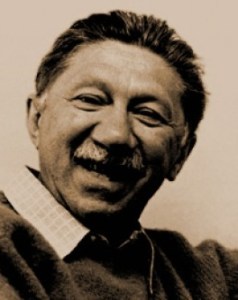
Honoring the Forefathers: Abraham Maslow and the Quest for Self-Actualization

Abraham_MaslowA couple of days ago, I shared some memorable quotes coined by Viktor Frankl whom most people consider to be the biggest influence on research related to meaning in life (and work).

Today, I´d like to honor another luminary, the person who actually coined the term Positive Psychology in the 1950s: Abraham Maslow, probably best-known for his hierarchy of needs framework (mostly depicted as the “pyramid of needs” you´ll find in a lot self-help and management books).

Here are some of his most intriguing thoughts:

Abraham Maslow on Self-Actualization

It looks as if there were a single ultimate goal for mankind, a far goal toward which all persons strive. This is called variously by different authors self-actualization, self-realization, integration, psychological health, individuation, autonomy, creativity, productivity, but they all agree that this amounts to realizing the potentialities of the person, that is to say, becoming fully human, everything that person can be.

—–

We fear our highest possibilities. We are generally afraid to become that which we can glimpse in our most perfect moments, under conditions of great courage. We enjoy and even thrill to godlike possibilities we see in ourselves in such peak moments. And yet we simultaneously shiver with weakness, awe, and fear before these very same possibilities.

Abraham Maslow on Purpose in Life

A musician must make music, an artist must paint, a poet must write, if he is to be ultimately at peace with himself. What a man can be, he must be.

Abraham Maslow on Other-Orientation

The needs for safety, belonging, love relations and for respect can be satisfied only by other people, i.e., only from outside the person. This means considerable dependence on the environment. A person in this dependent position cannot really be said to be governing himself, or in control of his own fate. He must be beholden to the sources of supply of needed gratifications. […] He must be, to an extent, “other-directed,” and must be sensitive to other people’s approval, affection and good will.

—–

The great lesson is that the sacred is in the ordinary, that it is to be found in one’s daily life, in one’s neighbors, friends, and family, in one’s backyard.

Abraham Maslow on Perseverance and Post-Traumatic Growth

Not allowing people to go through their pain, and protecting them from it, may turn out to be a kind of over-protection, which in turn implies a certain lack of respect for the integrity and the intrinsic nature and the future development of the individual.

—–

One can choose to go back toward safety or forward toward growth. Growth must be chosen again and again; fear must be overcome again and again.

Abraham Maslow on Appreciation, Awe, and Gratitude

The most fortunate are those who have a wonderful capacity to appreciate again and again, freshly and naively, the basic goods of life, with awe, pleasure, wonder and even ecstasy.

Abraham Maslow on Mindfulness

I can feel guilty about the past, apprehensive about the future, but only in the present can I act. The ability to be in the present moment is a major component of mental wellness.

Honoring the Forefathers: Viktor Frankl and Men’s Quest for Meaning

Sometimes, I read or hear about criticism stating that Positive Psychology tends to ignore its forefathers (and mothers), all those, e.g., philosophers, sociologists, and psychologists from other traditions that have generated valuable insights on “the good life”. I’m tend not to agree here. If at all, I sense a bit of Americentrism – but that’s in the nature of the beast, I reckon.
Viktor FranklSo, today I like to honor Austrian psychiatrist Viktor Frankl, who founded Logotherapy (“meaning therapy”) and certainly is one of the biggest influences around the letter M (for Meaning) in Martin Seligman’s PERMA outline of Positive Psychology. Here are some of his most memorable quotes:

Viktor Frankl on Freedom and Dignity

Everything can be taken from a man but one thing: the last of the human freedoms—to choose one’s attitude in any given set of circumstances, to choose one’s own way.

Viktor Frankl on Success

Don’t aim at success. The more you aim at it and make it a target, the more you are going to miss it. For success, like happiness, cannot be pursued; it must ensue, and it only does so as the unintended side effect of one’s personal dedication to a cause greater than oneself or as the by-product of one’s surrender to a person other than oneself.

Viktor Frankl on Choice and Growth

Between stimulus and response, there is a space. In that space is our power to choose our response. In our response lies our growth and our freedom.

Viktor Frankl on Meaning and Responsibility

Ultimately, man should not ask what the meaning of his life is, but rather must recognize that it is he who is asked. In a word, each man is questioned by life; and he can only answer to life by answering for his own life; to life he can only respond by being responsible.

Viktor Frankl on Meaning and being Other-Focused

By declaring that man is responsible and must actualize the potential meaning of his life, I wish to stress that the true meaning of life is to be discovered in the world rather than within man or his own psyche, as though it were a closed system. I have termed this constitutive characteristic “the self-transcendence of human existence.” It denotes the fact that being human always points, and is directed, to something or someone, other than oneself–be it a meaning to fulfill or another human being to encounter. The more one forgets himself–by giving himself to a cause to serve or another person to love–the more human he is and the more he actualizes himself.

Viktor Frankl on Purpose in Life

Everyone has his own specific vocation or mission in life; everyone must carry out a concrete assignment that demands fulfillment. Therein he cannot be replaced, nor can his life be repeated. Thus, everyone’s task is unique as is his specific opportunity to implement it.

I am possessed by a fever for knowledge, experience, and creation

Anais_NinI stumbled upon this quote by Anaïs Nin today and instantly experienced at feeling of being strangely “at home”.

If what Proust says is true, that happiness is the absence of fever, then I will never know happiness. For I am possessed by a fever for knowledge, experience, and creation.

On second thought, I remembered what my signature strengths are according to the Peterson/Seligman typology:

  • Curiosity
  • Love of Learning
  • Zest/Energy
  • Humor/Playfulness

I guess this is one of the reasons why we all react differently to the varying definitions of happiness: Some are congruent with our innate strengths, others not so much.

If you´d like to find out what your top strengths are, I encourage you to visit the homepage of the VIA Institute on Character. There, you can take a test and get your results for free.


Picture Source

Your Craving for Money may be an Attachment Disorder

Roter_Teddy_smallThis certainly is a strong proposition. It was coined by Prof. Dr. Eva Walther from the University of Trier as part of lecture on “Money & Love” during the first Conference of the German Association for Research in Positive Psychology. Yet, it may grounded in solid research. Here´s the story:
First, there´s some research that both social support and money can act as a buffer for pain – or the anticipation of pain. So, when people expect to experience painful life events, they will draw on social support (= their friends and loved ones) to guard themselves against or alleviate this unpleasant emotion. Yet, while social capital is the more natural (primary) defense mechanism, money is seen as a secondary one that mainly comes into play when the primary one doesn’t work. Here´s a quote from the Zhou/Gao article listed below:

First, anticipation of pain heightens the desire for social support as well as the desire for money. Second, both social support and money reminders alleviate pain, whereas social exclusion and monetary loss result in an upsurge of pain awareness. In our view, social support is the primary defense against pain and the reliance on money may result from the failure of social support to accomplish its pain-buffering goal.

In short, and a bit overgeneralized: When people cannot lean on social support to fulfill their emotional needs, they will turn to money to do the job.

Second, research finds that money-seeking may be linked to having an avoidant attachment orientation (using the Bowlby typology). This finding lends some credibility to the idea that money acts as a substitute for human bonding – as people with an avoidant attachment style may find it harder to attain all the emotional comfort they need in stressful situations.

So, just in case you´re striving for that first million $: It could very well be you´re just looking for a friend…


Power = (Work x Wellbeing) / Time

I’ve spent the last two days at the University of Trier in Southern Germany. The university hosted the very first conference of the “German Association for Research in Positive Psychology” (DGPPF in German). I’m so excited about the fact the Positive Psychology is finally picking up momentum in my country.

Unfortunately, I was not able to attend all the workshops and lectures as I had a lot of work to do on the side. As I’m not a researcher myself, I contributed by hosting a workshop on marketing research(ers) to the press and via blogging.

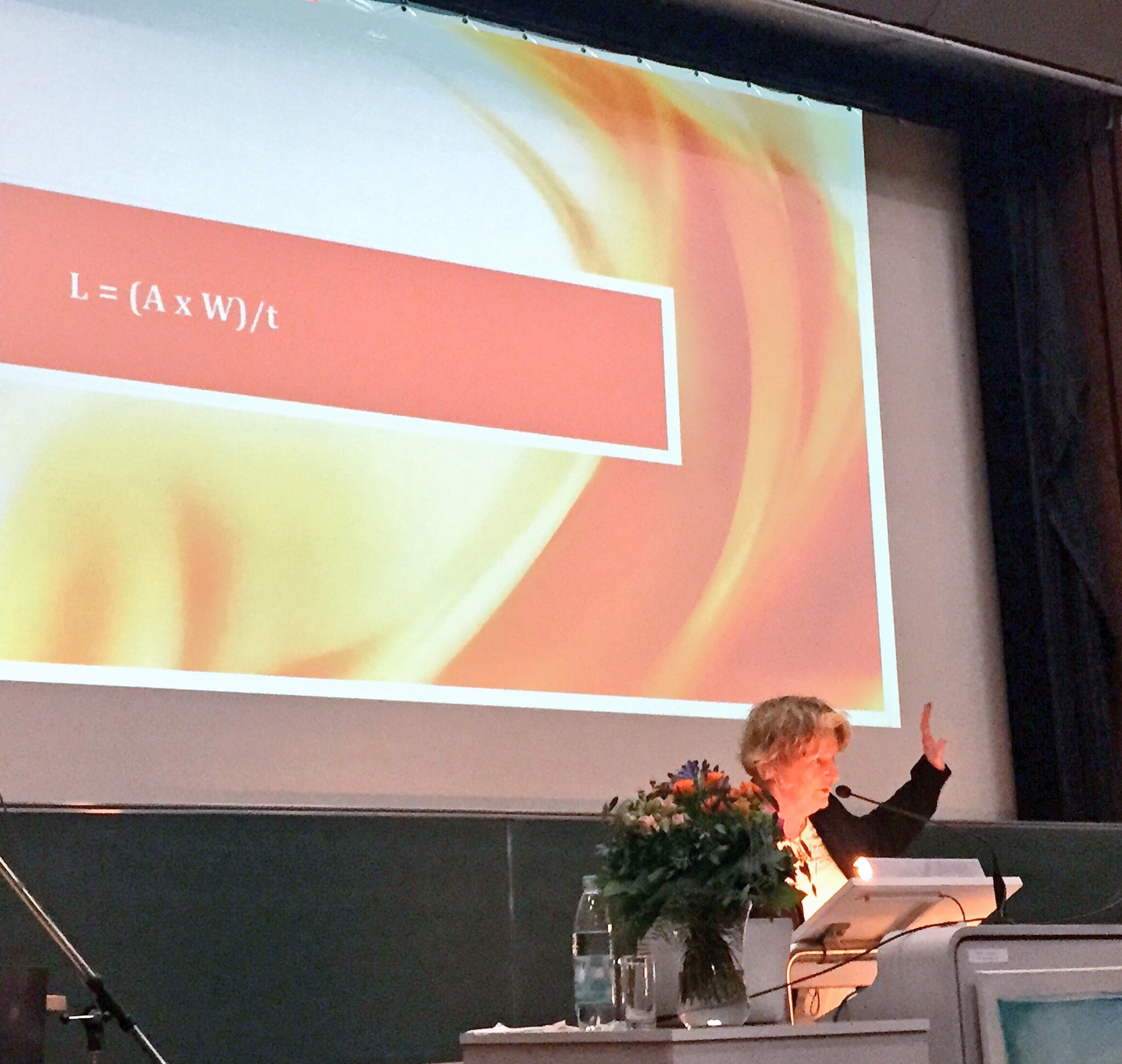
The one takeaway that inspired me the most was the closing slide of a lecture given by Prof. Dr. Michaela Brohm who also happens to be the founding president of the newborn Positive Psychology association. She proposed we need a new formulation for “good work” by drawing upon a well-known formula from physics – where power (or output) is defined as the amount of work / time. Brohm referred to this as “cold work”.

She proposed to add another variable to the equation: Wellbeing. While work that is detrimental to psychological health might still lead to results in the common sense, it’s just not “good work”. Accordingly, the new formula goes as follows:

Power = (Work x Wellbeing) / Time

Prof. Dr. Michaela Brohm - DGPPFI love the notion that work and wellbeing are linked via a multiplicative function – because this implies that work which does not foster the (psychological) wellbeing of the worker potentially devalues the whole outcome of the process – whereas work that also builds wellbeing drastically increases the value of the investment. Brohm called this “warm work”.

I firmly believe we need this kind of catchy simplification because a prompt like that helps us to remember the core messages long after a talk or lecture.

Well done!

I’m still Up-Lifted…

I’m still so much “in love” with Lift, a leadership book by Ryan & Robert Quinn that I’ve already written about a couple of days ago. It’s just brilliant. Actually, I want to take a marker and then just underline the whole book – but I guess that would be kind of stupid. So, for today, I’d just like to share with you passage on being other-focused:

“[M]ost people find that when they become other-focused they do not lose themselves; instead, they become their best selves. They like who they become when they care about others. This makes sense when we realize that our identities are inseparable from our relationships with others. We are social creatures, biologically wired to empathize with each other. Becoming other-focused does not eliminate our unique characteristics, it draws on our unique characteristics to help us make more or our relationships.”

Lift - Mappalicious 

Positive Education: An Introduction in 6 short Videos

The International Positive Education Network (IPEN) has just issued a series of very instructive on the role of Positive Psychology in Education. Share and enjoy!

To learn more, please visit IPEN´s website and consider going to the Festival of Positive Education in Dallas from July 18-20.

IPEN

The Scientific Benefits of Compassion [Infographic]

This fabulous infographic on the scientific benefits of compassion was originally created by Emma Seppälä, Science Director of Stanford University’s Center for Compassion and Altruism Research and Education (CCARE) and author of The Happiness Track. For more of her awesome work, please visit her homepage.

scientific-benefits-of-compassion

Lift! On Leading with Purpose

Most managers behave as if they were still in high school. The primary goal is not being laughed at.

This sentence resonates with/in me ever since I’ve heard it three days ago. Professor Robert Quinn, co-founder of the Center for Positive Organizations at the Ross School of Business (Michigan) coined it during a workshop on building positive cultures which was part of the Positive Business Conference 2016.

This is, of course, not the first time someone explained to me that most organizations create an atmosphere of (more or less) constant fear. But I have learned over the years that, in order to really grasp a “thing”, somebody has to present it to you at the right time in just the right words.

LiftI was so impressed after the workshop that I instantly bought his book Lift: The Fundamental State of Leadership (co-authored with his son Ryan) at the book table and devoured it on the plane back home from Detroit to Frankfurt, Germany. And what can I say? It´s one of the best books on leadership I´ve ever read.
Truth be told: I read a lot of management and psychology books (broadly speaking) and most authors on interpersonal leadership leave me rather unimpressed. I´m a senior human resources manager working in the headquarter of a multinational organization of 120,000 people, leading a team across two continents, additionally being responsible for groups of people that are part of our international trainee programs, and coordinating the efforts of multiple agencies that support us in recruiting and employer branding.

Against this backdrop, I can honestly say: Leadership is not easy. It doesn´t come down to checklists and simple recipes. Instead, it can be immensely taxing and challenging: It´s hard work. That´s why I enjoy leadership books that acknowledge and appreciate this basic condition.

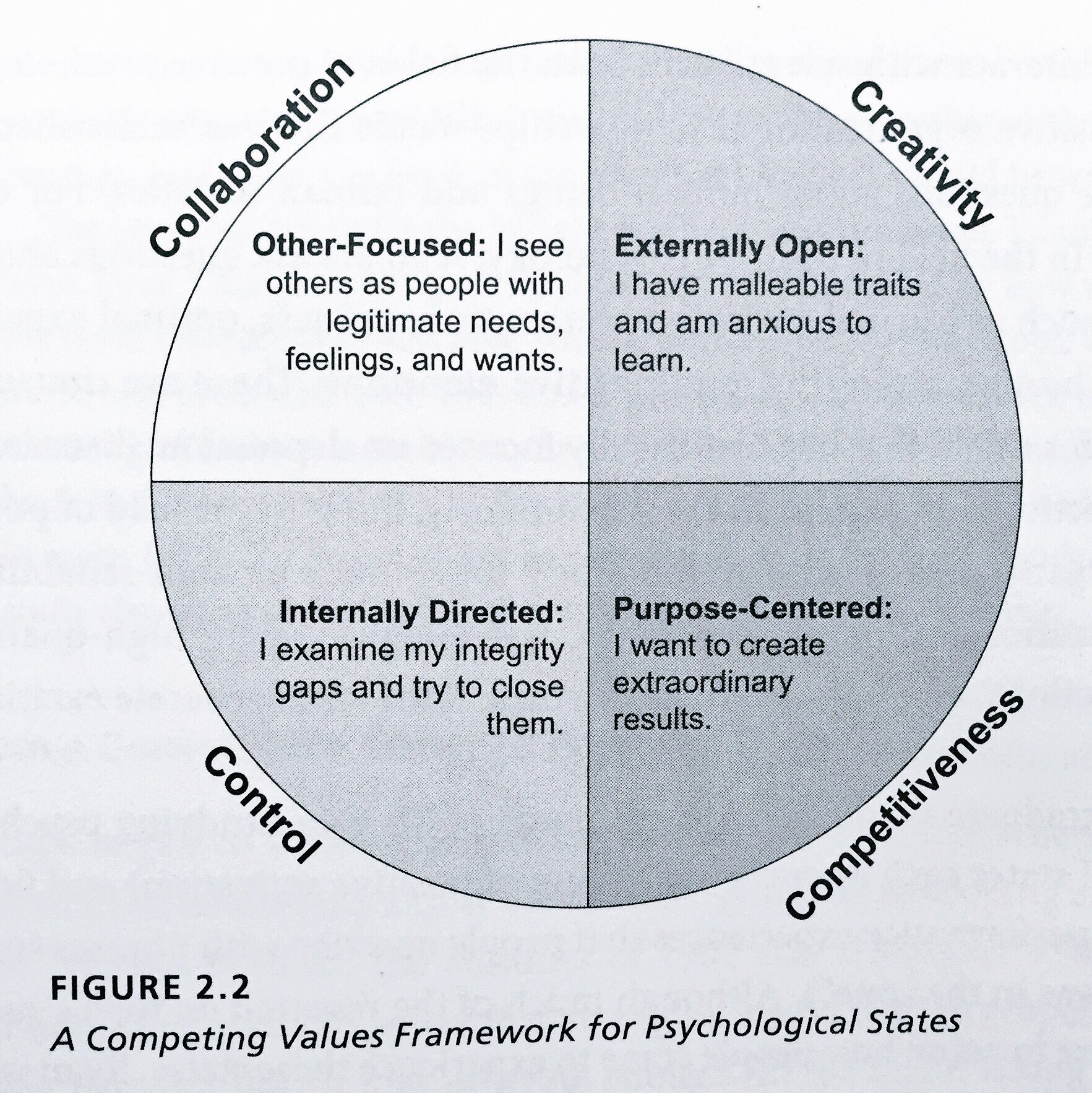
Lift - Psychological States - QuinnRobert Quinn´s “Lift” is such a book. It draws on a useful metaphor from aerodynamics (the dynamic that makes objects fly even though they are heavier than air) but more importantly, is grounded in decades of top-tier research. The framework that serves as the outline of the book is based on an influential article in the journal Management Science from 1983, A Spatial Model of Effectiveness Criteria: Towards a Competing Values Approach to Organizational Analysis that aims at describing the basic dimensions of organizational effectiveness.

Quinn takes this framework and uses it to outline four corresponding psychological states of leadership: Purpose-centered, internally directed, other-focused, and externally open. This is the crucial point that differentiates “Lift” from most other leaderships books: It doesn´t tell (aspiring) leaders what to do on a concrete level. Instead, it serves to cultivate a certain mindset, a stance, a leadership conduct – what the author terms the fundamental state of leadership.

The author proposes we can enter this special mindset when we (implicitly or explicitly) apply a set of questions to given leadership situations, especially those that bear potential for resistance and conflict. These questions correspond to the four quadrants of the effectiveness/psychological states model.

  1. What results do I want to create? (objective: becoming less comfort-centered and more purpose-centered).
  2. What would my story be if I were living the values I expect of others? (objective: becoming less externally directed and more internally directed).
  3. How do others feel about this situation? (objective: becoming less self-focused and more other-focused).
  4. What are three or more strategies I could try in learning how to accomplish my purpose? (objective: becoming less internally closed and more externally open).

If you want to hear a short summary in Quinn´s own word, here you go:

For me, an added value of the book is that it provides a very clear definition of an individual purpose. I´ve been struggling with that concept for quite a while now. I know I will have to sharpen mine in order to live up to my full potential – but most of what I´ve read so far has left me irresolute. Here´s what Quinn proposes:

When people are purposed-centered,

  1. they envision and pursue extraordinarily results that are not constrained by previous expectations or by expectations that they receive from others;
  2. the results they pursue are energizing because they are self-chosen, challenging, and constructive;
  3. they provide a clear definition of the situation, focusing people´s attention.

Most management books I read – whether I enjoyed them or not – don’t nudge me to do anything differently afterwards. I put them in a shelf and hope, at best, to remember one or two good ideas.

With “Lift”, it´s a different story. I have already printed out the four questions and I will stick them to the computer screen in my office next Monday. And I will use the aforementioned definition to further mold my individual purpose.

Share and enjoy!

P.S.
To learn more, you might want to watch Quinn´s 2013 TEDX talk.