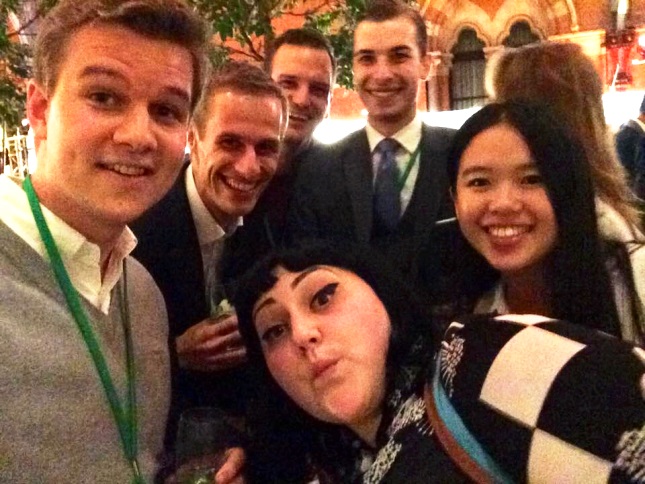
From last week’s Wednesday to Friday I stayed at London’s beautiful St. Pancras Renaissance Hotel (where the Spice Girls’ “Wannabe” video was shot) to attend a conference that my employer Bertelsmann held for about 200 top executives. The overarching motto for the conference was creativity – since, as a media company, our biggest asset is creative output in all of its forms. Among the many guest speakers were people such as Ed Catmull, CEO of Pixar, Simon Cowell, Arianna Huffington, E.L. James (author of “50 Shades”), will.i.am, and Beth Ditto.
Here, I´d like to share three things (or rather: people) that impressed me the most – and whose topics also have a distinct connection to Positive Psychology.
First in line is Arianna Huffington who said a lot of smart things about mindfulness, meditation, getting enough sleep etc. – while gracefully marketing her book “Thrive”. Here´s the one sentence that really lingered in my mind:
Your eulogy will not be resumé.
Second, I was deeply impressed by poet David Whyte – who taught me about the power of words, allowing for repetition, long pauses – and speaking without PowerPoint. It is really hard to recount his talk without sounding corny – so instead you might want to watch his TED talk:
And finally, I tremendously enjoyed the talk of conductor Itay Talgam, who illustrated different leadership styles by showing video footage of some of the greatest conductors of the past and present. He also has a TED talk out there. So enjoy!
If you´ve visited Mappalicious before, by now you will probably know who Esa Saarinen is – as I´ve written about his work several times. During his MAPP lecture in December 2013, he also initiated us to a slightly more informal area of his teachings: the 007 philosophy of life. Unfortunately, that day Wharton´s recording equipment didn´t work that well – so there´s no account of that lecture (and I´m a lazy note-taker…). Hence, I´ll give you my own – heavily Positive Psychology influenced – interpretation of his “theory”, mixed with the bits and pieces I do remember. As a philosopher, I think Esa would approve of this method. You can see the overview in the following picture:
Don’t get irritated
James Bond is always “cool” – at least that´s the impression he makes on other people. He focuses on the situation at hand and the overarching goal of his mission and never gets sidetracked, except for the occasional tête-à-tête – but even those often serve a purpose, e.g., irritating one of the evil guys. At the end of the day, this is a lesson about mindfulness.
Take immediate Action
Bond is not much of a planner. He makes up his mind and improvises a lot of his moves on the spot, relying on his wits and physical abilities. He knows that the life as a super agent is full of surprises and events that one cannot really prepare for. Therefore, he sticks to a few big goals and decides on the next-best move “then and there”.
Self Respect
James Bond never questions his abilities, he never falters or hesitates. While a real-life person cannot (and maybe shouldn’t…) be equipped with an equal level of self-confidence, this is probably a lesson about self-efficacy, the “power of believing you can”. Self-efficacy is the scientific version of Henry Ford´s aphorism: “Whether you think that you can, or that you can’t, you are usually right.”
Always carry a Secret Weapon
When in desperate straits, Bond always has one more trick up his sleeve, usually a tiny gadget given to him by the armorer “Q”. Seen through the lens of Positive Psychology, I think this part refers to the very unique set of signature strengths that we all have – and that we should rely on when to going gets tough. Additionally, it shows that other people matter. Even a lone wolf like Bond needs other people´s support at times.
Act with Style
James Bond understands that style is mostly about simplicity. Similar to the real-life George Clooney, he´s always dressed and groomed extremely well – which means they stick to time-tested essentials. The suit, the hairdo, the car, the handgun, the drink – they all seem to say: Don´t get carried away by fashion, don´t get lost in unnecessary details – no frills. This is also a lesson on efficiency: Bond knows that sticking to certain defaults is the most intelligent way of avoiding unnecessary decision-making – thereby saving up mental capacity for more precarious moments in life than choosing what to wear for dinner.
The true significance of the current mission will become clear later in the Bahamas
I think this point has a lot to do with the “connecting the dots”-part of Steve Job´s Stanford Commencement speech. Life can only be lived forward, but the sense-making happens looking backward. Hence, we have to embark on the journey without necessarily knowing where it will end – or what it all means. We have to get moving. Anyway. Otherwise, we won´t even make it to the Bahamas.
In Her Majesty’s Secret Service
Now, this may be the most important part – even though it doesn´t seem that straightforward. I guess that´s why Esa saved it for last. Even though James Bond seems like a cynical, ruthless, and at times even nihilistic person – he´s definitely not. He´s an agent in Her Majesty´s Secret Service: he fights for the safety of his country and “the free world” in general; he´s not in it for himself. That is his true higher purpose. In his lectures, Esa often refers to this part of our lives as “finding the Queen”: We all have to find a queen we can and want to serve. We´re not on this world only for ourselves. Until we´ve understood this crucial point, we´re only living half a life.
Esa has more in common with 007 than he probably wished for
There´s is a pretty incredible twist to the aforementioned deliberations: About three months after his lecture in Philadelphia, Esa was stabbed with a knive by a presumably mentally deranged young man when being on his way to a lecture in Helsinki. He sustained a wound on his hand when trying to fight off the assailant and another, more severe, to his abdomen before the attacker could be overpowered. By now, Esa has fully recovered and the young man is on trial for his deeds. Esa has lived through this ordeal with admirable equanimity and does not even demand a punishment for the aggressor.
Below, you´ll find the full recording of his glorious return to the lectern in Helsinki. The lecture is in Finnish but has English subtitles.
This beautiful image was created by the beautiful people at Berkeley’s Greater Good Science Center. And no, our brain doesn´t look like that. But we all have the capacity to develop more of the qualities and entities depicted above. If you´d like to have more input, please watch Emma Seppälä´s (Stanford CCARE) TED talk on the “Science of Social Connection”:
In order to learn more about the meaning of the word/concept “positive” in “Positive Psychology” (which the following post is all about), I highly encourage you to visit the website of James Pawelski, where he provides an in-depth analysis.
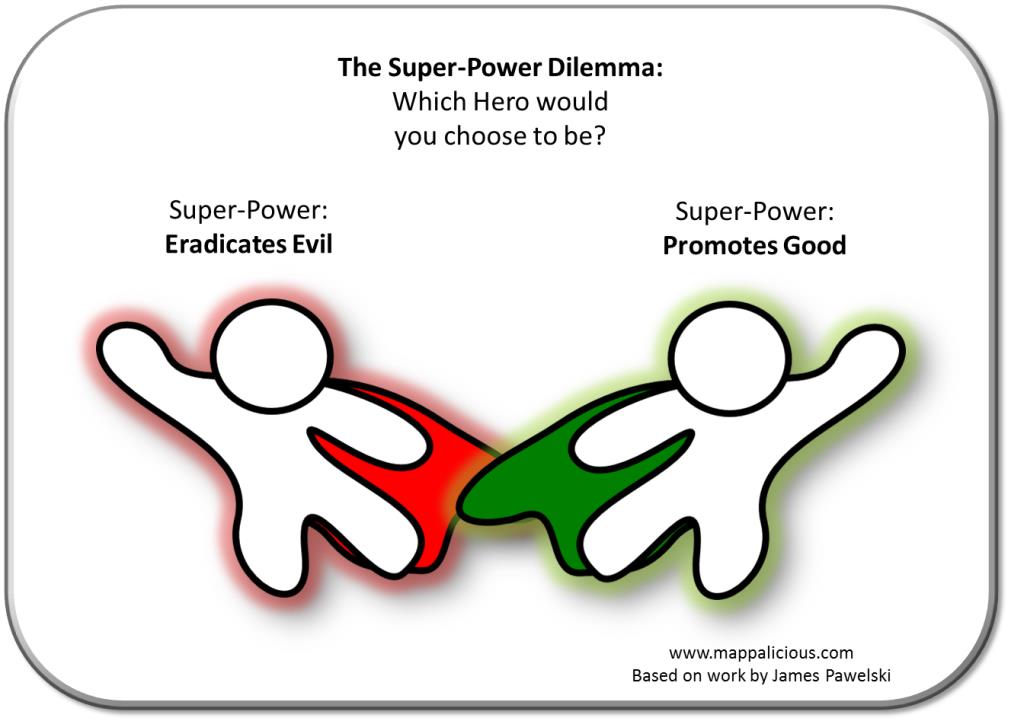
OK. So here´s a question for you: Some higher being has chosen to endow you with super-powers. You get to choose between two different profiles:
Let me elaborate a bit more on this:
So, you could either be Mr. Red Cape. He´s your typical super-hero. He fights “the Bad”: Kicks the shit out of the bad guys, saves people from collapsing skyscrapers, and might even have the power to fight epidemics and end the occasional war. But: he cannot create “the Good”.
Or, you could be Mr. Green Cape. He´s a different kind of super-hero. He has the ability to spread trust and love, and give meaning to individuals and whole communities etc. . But: he cannot eradicate “the Bad” – he definitely cannot end poverty and other calamities for good.
Mind you, this is an either-or story. You have 100% of one side – and 0% of the other. Who would you want to be – and why?
I won´t give you an answer here – because there is no single “right” solution.* But maybe, you´d like to think (or rather: feel) it through – and then share your thoughts in the comment section…?
*Although James Pawelski, MAPP´s academic director and Chief Philosophy Officer, is not too fond of simple and easy answers, he probably would have one for you here. But I´m not going to write it down – so as not to be the spoilsport for future Mappsters and listeners of his beautiful lectures in general…
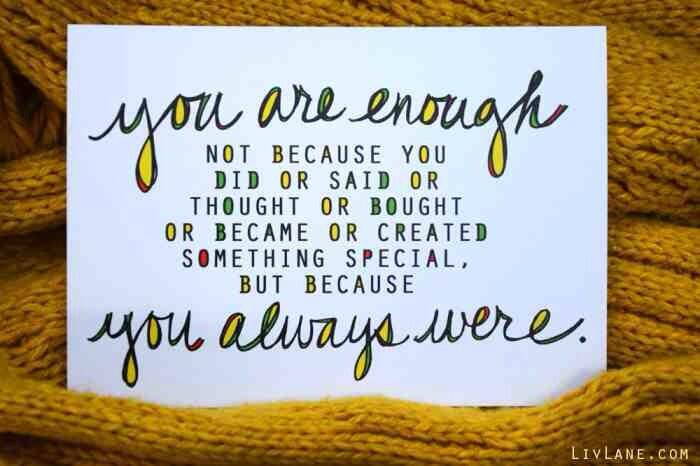
So I found this yesterday on one of my friend´s Facebook page. I copied the pictured and forgot to write down who it was. Please notify me if you see this to get proper credit.
But anyway, the original source for this postcard is the artist and motivational speaker Liv Lane. I´ve never heard of her before (living in Germany might be a good excuse for that…) – but below, you can see one of the very fundamental truths about our nature as human beings. It took me about 30 years to reach that insight – and sadly, a lot of people never get to that point of intuitive wisdom.
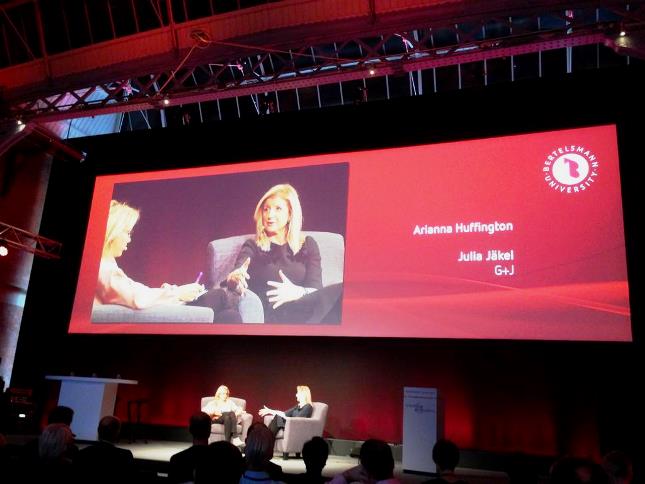 From last week’s Wednesday to Friday I stayed at London’s beautiful St. Pancras Renaissance Hotel (where the Spice Girls’ “Wannabe” video was shot) to attend a conference that my employer Bertelsmann held for about 200 top executives. The overarching motto for the conference was creativity – since, as a media company, our biggest asset is creative output in all of its forms. Among the many guest speakers were people such as Ed Catmull, CEO of Pixar, Simon Cowell, Arianna Huffington, E.L. James (author of “50 Shades”), will.i.am, and Beth Ditto.
 Here, I´d like to share three things (or rather: people) that impressed me the most – and whose topics also have a distinct connection to Positive Psychology.