Unfortunately, our Brains do not look like this. But wouldn´t it be nice?

Your Brain on Greater Good

This beautiful image was created by the beautiful people at Berkeley’s Greater Good Science Center. And no, our brain doesn´t look like that. But we all have the capacity to develop more of the qualities and entities depicted above. If you´d like to have more input, please watch Emma Seppälä´s (Stanford CCARE) TED talk on the “Science of Social Connection”:

The “Happy at Work Manifesto”: Do you have enough Arbejdsglaede?

Yesterday, I stumbled upon a guy named Alexander Kjerulf from Denmark (Germany´s northernmost neighboring country – just in case you were wondering…) who is leading a company by the wonderful name of Woohoo Inc. who are in the business of (what academics would call) Positive Organizational Scholarship – the science of happy and at the same time productive workplaces.

They have created a wonderful Happy at Work Manifesto which I´d like to share with you here:

HappyAtWorkManifestoEN-RGB

And if like this, you might also like Alexander´s TEDx talk:

That´s all for today. Enjoy!

P.S.

Remember, he´s Danish. Those guys know something about happiness. Denmark regularly pops up at the top of lists displaying the world´s happiest nations

Grapes of Wrath: On Morality and Fairness in the Monkey House

One of the guest speakers at the recent MAPP onsite has been Isaac Prilleltensky, who is the Dean of Education at the University of Miami. His research focus is on community well-being and its antecedents. In his lecture, he elaborated on the notion of well-being as a consequence (or at least: side-effect) of perceived fairness and justice in our lives. There is now considerable scientific evidence that these issues can have a major influence on our satisfaction with life and other important measures of psychological functioning. E.g., there´s a substantial statistical connection between a nations´ overall well-being and those countries´ Gini coefficient which, roughly speaking, measures the level of inequality in the wealth distribution of a country. I do not want to take a deep-dive into this here. If you want to know more, I would like to direct you to one of Prilleltensky´s recent papers by the name of Wellness as Fairness.

What really caught my attention is just how deeply the notion of fairness is rooted in our mammalian, tribal nature. I´ve already written a post on Paul Bloom´s research on the intuitive moral judgments of babies. But that´s by far not the end of the (moral) story. In the following video clip, you´ll see a snippet from a TED talk given by Frans de Waal, a Dutch primatologist a Emory University. He shows footage of an experiment involving capuchin monkeys. Bascially, two of them are “paid” for repeatedly carrying out a certain task by receiving cucumbers. Everything is OK. But then, the researcher starts to give one of the animals grapes instead – which (very obviously…) is considered to be a higher paycheck in the capuchin society. Watch what happens…

Can you feel that little monkey´s rage? And just for a moment: Transfer this to the realm of human emotion, multiply it by 10,000,000 (or so) – and try to understand what´s going on in countries like Egypt, Syria, and the Ukraine over the last years?


P.S.

If you´d like to learn even more on Prilleltensky´s work on community well-being, you might want to watch his TED talk on that subject…

On Friendship, Love, and the Benefits of Aging

Aging WellFor whatever reason, I am confronted with the issues of aging (and death…) a lot over the recent weeks. My mom had to go to the hospital, and in my circle of friends, parents got sick as well – or even died. And while that is distressing and painful emotionally, I know rationally that getting old(er) is nothing to be afraid of. Because getting older (for most of us) means getting happier. We get less anxious, more satisfied, and get to a deeper understanding of the meaning of (our) life.

While being on the plane that brought me to Philly for the MAPP onsite, I watched the movie Last Vegas starring Robert De Niro, Michael Douglas, Morgan Freeman, and Kevin Kline. It´s a fun-loving, pleasantly over-the-top “geriatric” version of Hangover. Most of all, it´s a story of aging well – and the power of (life-long) friendship.

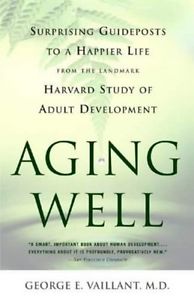
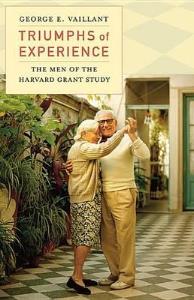
Triumphs of ExperienceCoincidently, one of the guest lecturers of this month´s MAPP onsite has been (some 80 years old) George Vaillant, who´s been the director of the world-famous (Harvard) Grant Study – which for 75 years followed the lives of 268 physically and mentally healthy Harvard college sophomores from the classes of 1939-1944, and a second cohort of 456 disadvantaged non-delinquent inner-city youths who grew up in Boston neighborhoods between 1940 and 1945. Vaillant writes about the results of this study in his books Aging Well (2003) and Triumphs of Experience (2012). There´s lots of interviews available with Vaillant – here, I´ll point you to one for the Huffington Post. Two main points that came out of the study:

Love is really all that matters.

Connection is crucial.

There you have it. The Beatles were right: All you need is love. My parents will both turn 70 next year. And by March 2014, they will be married for 46 years. I hope that my wife and I one day will achieve the same…

If you´d like to have more input, please watch this TED talk on the benefits of aging by Laura Carstensen who is Director of Stanford´s Center on Longevity.

Positive Psychology Researcher Todd Kashdan´s 5 Tips to becoming a “killer” Scientist

Todd Kashdan is Associate Professor of Psychology at George Mason University. He conducts research on anxiety, positive emotions, purpose in life, mindfulness, gratitude, how personal strengths operate in everyday life, social relationships, self-regulation, and how to foster and sustain happiness and meaning in life.

Via Psychology Today, he published his recipe for becoming a “killer scientist”. It´s a great piece to read. Here, you´ll find the short version:

Let passions and curiosity be your compass

Don’t look at public opinion polls about what people are studying. Focus on activities that ignite your passion. Don’t study areas because they are hot and sexy. Ask questions that ignite your passion.

Impact is Everything

It is more impactful to get your work featured in an article in Parade magazine than the top journal in your field. Hang around scientists who understand this principle.

Be James Bond (impact part II)

Show your stuff in a way that can be understood by teenagers. Think like a human. Be an exceptional presenter. How? Concrete. Sticky. Stories.

Create Strong Partnerships

Retain people that ensure you stay humble. Be generous by always giving more than you take. Complementarity is righteous.

Create Meaningful Time

Think of work in 15-minute intervals. It´s not complicated. Discipline slowly accumulates into major accomplishments.

Also, you might want to watch his TEDx talk on “Becoming a mad scientist with your life”:

What makes Life meaningful? 3 Answers for You…

My Direction

One of the letters in Martin Seligman´s PERMA outline of Positive Psychology is M for Meaning (in life). In this post, I would like to point you to three outstanding resources on that topic:

First, check out Maria Popova´s fabulous Brain Pickings site – in this case her essay on Viktor Frankl´s Logotherapy and his conception of meaning in life.

Ultimately, man should not ask what the meaning of his life is, but rather he must recognize that it is he who is asked. In a word, each man is questioned by life; and he can only answer to life by answering for his own life; to life he can only respond by being responsible.

Second, you might want to have a look at Michael Steger´s TEDx talk – where he explains why and how meaning in life can be a matter of life an death; and what role relationships play in that piece.

And third, here´s a link to a website I discovered recently which contains a psychological test that can help you to find your personal “purpose pattern” (at work). It was created by a team around Aaron Hurst, author of The Purpose Economy. I found that some familiar MAPP faces are also associated with that project, namely “Chief Giving Officer” Adam Grant, and Job Crafting Authority Amy Wrzesniewski.

Enjoy!

2051: Positive Psychology, Optimism, and the Florentine Moment in Time…

Tempus fugit. The first half of the MAPP program 2013/14 is over. Actually, the second and final semester is well on its way already. New subjects, new lecturers, lots of new homework…

I guess this is a good time engage in a little retrospection – and to have a look at the future as well.

I still remember sitting in the classroom at Penn on the first day, listening to Martin Seligman´s deep and sonorous voice, where he lectured on the history of positive psychology. At some point, one of my MAPP classmates asked him about his vision for positive psychology. What should be its contribution to mankind in the future?

Without much hesitation, Marty told us about his moonshot goal for positive psychology. “By 2051, I want 51% of the world´s population to be flourishing (according to the PERMA outline)”. Now in 2051, Marty will be 109 years old. So there´s good chance he´s talking about his legacy here. Could this be possible? After all, we still seem to be very far away from that number. War, poverty, and hunger are still raging in many parts of the world. But the truth is:

Things are getting better day by day, year by year.

Now I am a die-hard optimist. So if you feel I am not to be trusted, you may trust some experts (and their stats…).

  • Over the last 40 years, people have managed to rise above hunger and poverty by the billions. And this trend is very likely to continue. If you would like to know more, please watch this fabulous TED talk by Hans Rosling.
  • The likelihood of dying via homicide has decreased dramatically over the last century. Yes, there still are wars – and there still is murder. But the truth is: on a global scale, life on earth has never been safer. And once again, the trend is likely to continue. If you would like to take a deep dive, please watch Steven Pinker´s TED talk on the decline of violence.
  • Overall, we have very good reasons to be (fundamentally) optimistic about the future of mankind. Again, if you´d like to know more, please watch this TED talk by Robert Wright on zero-sum-games, optimism, and human progress.

Positive Psychology wants to play its part in this overall development by teaching people the art and science of flourishing – how to lead a meaningful, positive, and accomplished life while being actively engaged in our closer and larger social networks.

Positive Psychology has first been embraced by coaches, psychotherapists, and physicians. It is now entering the workplace more and more. And the next important step will be:

How can we bring Positive Psychology into education, community management, and policy-making? How can we bring it to China and India – those countries that account for almost 40% of the global population?

Marty Seligman believes that we (at least the western/developed world) now are at a Florentine moment in time. During what came to be known as the Renaissance, the Italian city of Florence became very rich via trading, and therefore at the same time developed into a flourishing center for all kinds of arts and culture because of all that affluence. So where are we – today? In Marty´s words (taken from his book “Flourishing”):

The wealthy nations of the world – North-America, the European Union, Japan, and Australia – are at a Florentine moment: rich, at peace, enough food, health, and harmony. How will we invest our wealth? What will our renaissance be?

Time will tell. I´ve decided for myself that I want to be a part of that movement and upward trajectory. Not only does it feel better to be optimistic – it´s also rational. The alternative, being a (fundamental) pessimist, doesn’t make any sense to me (and I´ve got the data on my side…). What´s the use of being pessimistic? I am a young father – and I would love to have more children. How could I want to want this without believing there´s a good (or at least: better) future ahead, without believing this world fundamentally is a good place to live in?

Once again, time will tell. The picture beneath these lines was taken at a party at Marty Seligman´s house when he generously invited the 2013/14 MAPP students and faculty to have a Christmas celebration at his house on December 7, 2013.
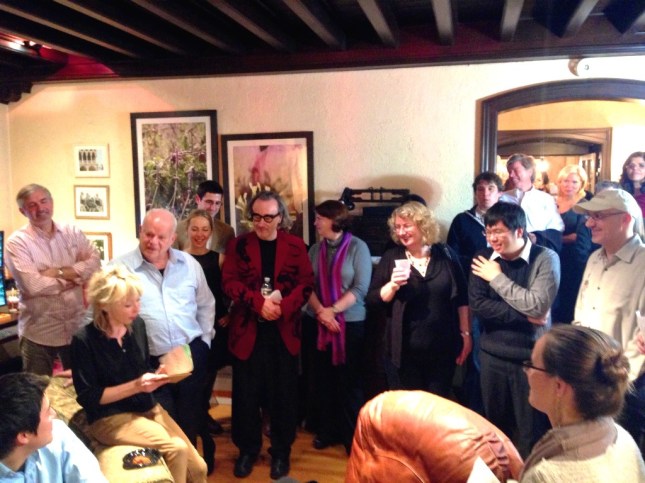
MAPP 9 - Christmas Celebration

The next day, final day of the first MAPP semester, it was also Marty´s part to speak the closing words. Quite obviously very moved, he cited a passage from Kim Stanley Robinson´s book The Years of Rice and Salt:

“We will go out into the world and plant gardens and orchards to the horizons, we will build roads through the mountains and across the deserts, and terrace the mountains and irrigate the deserts until there will be garden everywhere, and plenty for all, and there will be no more empires or kingdoms, no more caliphs, sultans, emirs, khans, or zamindars, no more kings or queens or princes, no more quadis or mullahs or ulema, no more slavery and no more usury, no more property and no more taxes, no more rich and no more poor, no killing or maiming or torture or execution, no more jailers and no more prisoners, no more generals, soldiers, armies or navies, no more patriarchy, no more caste, no more hunger, no more suffering than what life brings us for being born and having to die, and then we will see for the first time what kind of creatures we really are.”

Time will tell, Marty. But I´m with you…

Barry Schwartz on Good Decision-Making and Practical Wisdom

Paradox of ChoicePractical WisdomI really don´t have time to write to today – but I want to want to write something. So instead of composing a longer text, I´d just like to point you to two great TED talks by Barry Schwartz, Professor at Swarthmore and guest lecturer in the MAPP program. The first one is about decision-making and how having too many choices can make us miserable. The second one is about Barry´s conception of practical wisdom. He has also written books on both topics.

xxx

xxx

Awe without Shock: The Nature of Awesome!

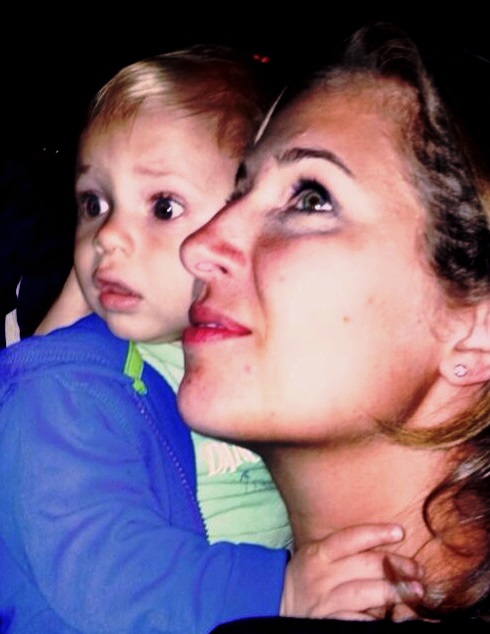
Little Guru - AweWhile psychology for the first hundred years of its existence as an academic discipline has very much focused on the negative spectrum of human emotions (fear, guilt, anger etc.), positive psychology looks mostly to the favorable end of that range. On the very far side of the positive sphere lies an emotion which hasn´t really gotten a lot of attention – until one of our MAPP lecturers, Jonathan Haidt, came along. This is emotion is awe. You can see what awe looks like on the face of the Little Guru. It´s a picture I took while he was watching his first display of fireworks ever. You can sense the unique blend of joy, fascination – and fear.

The element of fear marks the crucial difference compared to my wife´s facial expression: she´s seen a lot of fireworks in her life, so she´s just delighted; the angst is missing. Here´s what Haidt has to say on awe in an academic paper on that subject:

Two appraisals are present in all clear cases of awe: perceived vastness and a need for accommodation, defined as an inability to assimilate an experience into current mental structures.

Furthermore: “Awe is felt about diverse events and objects, from waterfalls to childbirth to scenes of devastation. Awe is central to the experience of religion, politics, nature, and art. Fleeting and rare, experiences of awe can change the course of a life in profound and permanent ways”. In addition, Haidt lists five appraisals that account for the “hedonic tone” of the awe experience:

  • threat
  • beauty
  • exceptional ability
  • virtue
  • supernatural

So obviously we can experience awe e.g., via beholding forces of nature, a beautiful piece of artRoger Federer playing tennis, by experiences such as might have happened to Paul (a.k.a. Saul), and also by witnessing acts of great virtue – as in this video of Team Hoyt (get a Kleenex first if you´ve never seen this before…).

If you´d like to learn more: Jonathan was featured on Oprah a while ago – and he also gave a TED talk touching these issues by the name of “Religion, evolution, and the ecstasy of self-transcendence”: