When feeling good feels better than good: the Benefits of Emotional Contrasting

The MAPP program is a fulltime program – but combines onsite classes with long-distance learning periods. Part of the distance learning comprises a lot of reading (Who would have thought of that…) and writing essays about a wide array of positive psychology topics. I´ve decided to post some of those essays here on Mappalicious. Surely, they´re not the be-all and end-all of academic writing. But then again, it would also be a pity to bury them in the depths of my laptop…

But what if pleasure and displeasure were so tied together that whoever wanted to have as much as possible of one must also have as much as possible of the other — that whoever wanted to learn to “jubilate up to the heavens” would also have to be prepared for “depression unto death”?” And that is how things may well be.

(Nietzsche)

Mental ContrastingOne of my most important teachers while training to become a coach regularly used a metaphor in order to convey the idea that, while there are a lot of people out there that feel good about their lives, there may be separate groups of individuals that may feel equally good, but still radiate a disparate ‘energetic signature’. Using the concept of rebirth (without necessarily believing in it), he told us that, because of their karma, some people are entitled to what could be described as a ‘recreational incarnation’. After a lot of suffering in former incarnations, they now get to live a pleasant and happy life without too much pain, loss, and other turbulences – resulting in an affable, joyful, but (potentially) also slightly shallow character. On the other hand, there are people that know the ‘Dark Night of the Soul’ from their own experience earlier in the current life. While they can be just as happy and agreeable as the aforementioned group, they tend to be somewhat graver or deeper.*

In this paper, I want to take a look at this distinction. At a less arcane level, the question could be: When two people display the same value on a measure that is supposed to quantify happiness – do they really feel the same when one person has been at that level for (more or less) her whole life, while the other has experienced longer periods of considerably unhappier emotional states?

Positive emotions play a central role in positive psychology (Fredrickson, 2001; Fredrickson, 2009). Because of the particular emphasis on positive affect especially during the early period of the field, some scholars criticized positive psychologists for excluding the negative side of human emotions from their inquiries (e.g., Tennen & Affleck, 2003). It is important to say that this is, in fact, not the case (Seligman & Pawelski, 2003; Peterson, 2006). Rather, positive psychology asserts that negative emotions do exist and are just as ‘natural’ as positive emotions. It´s just that the focus of researchers and practitioners, for the first 100 years of psychology as a science, has been firmly on the negative dimension of human experience, which now warrants a shift towards the opposite direction (Seligman & Csikszentmihalyi, 2000).

For example, one branch of research in (positive) psychology focuses on bouncing back from negative experiences (Tugade & Fredrickson, 2004), coping with unfortunate events (Folkman & Moskowitz, 2000), psychological resilience in the face of adversity (Masten, 2001), and, particularly, post-traumatic growth (Tedeschi & Calhoun, 1996; Linley & Joseph, 2004; Tedeschi & Calhoun, 2004). By way of example, there is considerable evidence that a person cannot only recover and get back to normal after a severely stressful event such as a potential life-threatening illness, but can actually attain a higher level of well-being and satisfaction, e.g., via finding a deeper meaning or a more profound sense of purpose in life (Helgeson, Reynolds, & Tomich, 2006; Lyubomirsky, 2008). So while, by and large, it seems difficult to sustainably alter a person´s general level of happiness (Lykken & Tellegen, 1996), there is reason to believe that overcoming extremely stressful events may result in such a shift.

But there may be other mechanisms that can explain how we can benefit psychologically from having gone through troubled times. Even if a person may not be happier than a fellow human being with regard to objective measurement, the aforementioned may still perceive his or her state as being more favorable than the latter person. For a thought experiment, let´s consider two people of similar age and other characteristics that both display scores around the 80th percentile on a measure that captures happiness or a similar variable of psychological well-being. The difference is: the first person has by and large been on that level for his previous life, while the other person has suffered from recurring episodes of depression – but has now recovered for good. Will being equally happy actually feel the same for both? I argue that this is not the case. Rather, I contend the second person will be happier on the subjective level (qualia). She will feel happier about being happy because she can still remember how it felt to be severely unhappy. Why should that be the case?

One of the earliest objects of investigation in psychological science has been human perception, e.g., our ability to discern contrasts (Heidelberger, 2004). While scholars mostly focused on contrasts as perceived on the sensory level (light intensity, loudness, weight etc.), some scientists early on investigated contrasts pertaining to the emotional sphere (Bacon, Rood, & Washburn, 1914). For instance, Manstead, Wagner, and MacDonald (1983) have shown that we tend to find humorous film content to be funnier when we were previously exposed to a horror movie (and vice versa). Obviously, the fear that is elicited by the horror movie makes the enjoyment of the comedy more intense.

While the aforementioned emotional contrast is perceived when the stimuli are presented in close temporal connection, it seems likely that this process also works for stimuli that are being felt at different points in time. It is perfectly possible to contrast a current emotional state to that of past events via voluntarily accessing episodic memory. When we compare feeling good in the present to feeling considerably worse in the past, the current emotional condition can subjectively be enhanced by a kind of meta-emotion (“It really feels good feeling so much better than how I felt back in the days…”).

So while it is common sense that ‘feeling good just feels good’, we should not forget about having felt worse in the past. It just might give us that little extra kick.

* Often, he also used to contrast this ‘species’ with the mythological character of Chiron, the ‘wounded healer’.

References

Bacon, M. M., Rood, E. A., & Washburn, M. F. (1914). A study of affective contrast. The American Journal of Psychology. 25(2), 290-293.
Folkman, S., & Moskowitz, J. T. (2000). Positive affect and the other side of coping. American Psychologist, 55(6), 647-654.
Fredrickson, B. L. (2001). The role of positive emotions in positive psychology: The broaden-and-build theory of positive emotions. American Psychologist, 56(3), 218-226.
Fredrickson, B. L. (2009). Positivity: Top-notch research reveals the 3 to 1 ratio that will change your life. New York: Crown Publishing.
Heidelberger, M. (2004). Nature from within: Gustav Theodor Fechner and his psychophysical worldview. Pittsburgh: University of Pittsburgh Press.
Helgeson, V. S., Reynolds, K. A., & Tomich, P. L. (2006). A meta-analytic review of benefit finding and growth. Journal of Consulting and Clinical Psychology, 74(5), 797-816.
Linley, P. A., & Joseph, S. (2004). Positive change following trauma and adversity: A review. Journal of Traumatic Stress, 17(1), 11-21.
Lykken, D., & Tellegen, A. (1996). Happiness is a stochastic phenomenon. Psychological Science, 7(3), 186-189.
Lyubomirsky, S. (2008). The how of happiness. New York: Penguin.
Manstead, A. S. R., Wagner, H. L., & MacDonald, C. J. (1983). A contrast effect in judgments of own emotional state. Motivation and Emotion, 7(3), 279-290.
Masten, A. S. (2001). Ordinary magic: Resilience processes in development. American Psychologist, 56(3), 227-238.
Peterson, C. (2006). A primer in positive psychology. New York: Oxford University Press.
Seligman, M. E., & Csikszentmihalyi, M. (2000). Positive psychology: an introduction. American Psychologist, 55(1), 5-14.
Seligman, M. E., & Pawelski, J. O. (2003). Positive psychology: FAQS. Psychological Inquiry, 14(2), 159-163.
Tedeschi, R. G., & Calhoun, L. G. (1996). The posttraumatic growth inventory: Measuring the positive legacy of trauma. Journal of Traumatic Stress, 9(3), 455-471.
Tedeschi, R. G., & Calhoun, L. G. (2004). Posttraumatic growth: Conceptual foundations and empirical evidence. Psychological Inquiry, 15(1), 1-18.
Tennen, H., & Affleck, G. (2003). While accentuating the positive, don’t eliminate the negative or Mr. In-Between. Psychological Inquiry, 14(2), 163-169.
Tugade, M. M., & Fredrickson, B. L. (2004). Resilient individuals use positive emotions to bounce back from negative emotional experiences. Journal of Personality and Social Psychology, 86(2), 320-333.

TEDx: The happy Secret to better Work

This is a great and immensely funny TEDx Talk bei Shawn Achor. It has got close to 6 million views on the TED homepage. Good job. I didn´t know Shawn before – until yesterday, where he retweeted my blog post on the 7 most common Misconceptions about Positive Psychology. Good job, too. 😉

7 common Misconceptions about Positive Psychology

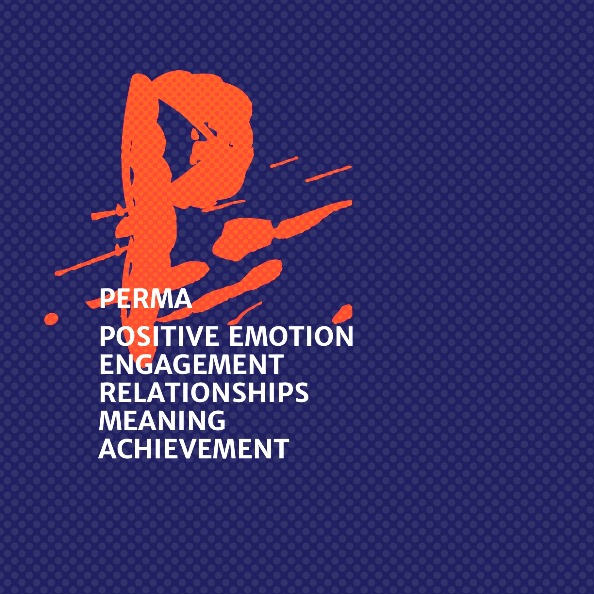
P.E.R.M.A.Positive Psychology is not Happyology

Ok. So there´s some truth in this. Positive psychology indeed tries to understand the role of positive emotions in the good life. But they are only one of the five key elements in Martin Seligman´s PERMA concept. I guess most positive psychologists would agree that – at the end of the day – concepts like meaning in life and positive relationships are more important for a life well-lived. Additionally, it is important to acknowledge that positivity is not (only) and end in itself. It may be a powerful way to attain other important things in life (e.g., success at work).

Positive Psychology is not Kitchen Sink Psychology

While there´s nothing wrong with kitchen sink psychology per se, it has to be noted that laypersons get things wrong a lot of times. Even though we should be all experts at living (because that´s what we do all day long…), many people bear serious misconceptions on what makes for a good and happy life. This is where positive psychology as a data-driven science steps in – and often comes up with counterintuitive findings. For instance, if you´re into social media, you´ll know all this TGIF (Thank God it´s Friday) stuff people put on Facebook and Twitter on Friday afternoon. But scientific inquiry time and again is able to show that most people are happier while at work compared to their leisure time.

Positive Psychology is not Self-Help/Positive Thinking

Now this one is so important that I may have to write it down three times. Here we go…

For sure, there are similarities in the subject matters of positive psychology and positive thinking. By way of example, both are concerned with cultivating optimism in individuals, since being optimistic (most of the time) is associated with an array of beneficial outcome variables. The difference is: positive psychology is a science. It´s grounded in thorough academic research. Of course it´s possible to arrive at correct conclusions without conducting large-scale studies – but personally, I feel a lot better when what I recommend to my clients is based on coherent theories and scientific evidence.

Positive Psychology is not headed by some dubious Guru Elite

This point is closely connected to the aforementioned one. Positive psychology is spear-headed by some of the most widely acclaimed psychologists of our time. Among them are Martin Seligman, former president of the American Psychological Association, Mihaly Csíkszentmihályi, and Barbara Fredrickson. And: Daniel Kahneman, Nobel Laureate of 2002, also is among the major contributors to the literature on psychological well-being. Among other things, he´s a co-editor of the seminal book Well-Being: The Foundations of Hedonic Psychology. Yet, the crucial difference between these people and the common self-help guru is not the length of their Wikipedia articles – it´s something else that can be found in this post.

Positive Psychology is not about ignoring negative Emotions

Once again: positive psychology is not about being happy-smiley all day long. It is not trying to eradicate “the Negative”. It´s just that psychology as an academic discipline has very much focused on negative phenomena (such as fear and depression) for the first hundred years. Positive psychology wants to point the spotlight to the positive side of our emotional and behavioral continuum in order to create a more balanced view of human functioning. Actually, negative events and emotions play a crucial role in studying so-called post-traumatic growth which basically is concerned with the question: How can we profit in the long run from going through really hard times in our lives?

Positive Psychology is not only for rich white People

This concern was issued in a recent article by James (Jim) Coyne, PhD, a Clinical Psychologist and Professor in the Department of Psychiatry, University of Pennsylvania – the same university that Martin Seligman is teaching at. Again, there´s a grain of truth here. Positive psychology was coined at several high-end private universities in the U.S. As with virtually all psychological theories, they are first tested empirically using samples of undergraduate students at those universities the researchers teach at. And since these tend to be predominantly affluent white people, there´s is some truth to that criticism. But once again: that´s true for almost any piece of research in any branch of psychology out there. Positive psychologists do acknowledge this caveat and continually try to broaden their (research) perspective, reaching out to international samples and other diverse target groups.

Positive Psychology is not ignoring its Roots, e.g. Humanistic Psychology

Positive psychologists readily do acknowledge the theories and findings that came out of Humanistic Psychology, thereby standing (partly) on the shoulder of giants like Abraham Maslow and Carl Rogers. Additionally, positive psychology draws heavily on the ancient wisdom of some of the great philosophers. A lot of positive psychologists seem to be very fond of William James, and especially Aristotle and his conception of Eudaimonia. The crucial difference once again is positive psychology´s strong foundation in (experimental) research.

P.S.
I´d really like to have your feedback on this one. Do you agree? Do you disagree? What did I forget?

Mappalicious: The first 100 Days

100 DaysWhen a new CEO or political leader assumes an office, typically there is this special 100 day time window to deliver some first results. Today, Mappalicious is 100 days old. So I thought: why not create a first retrospective. So here´s what happened so far:

A big thank you to all my readers!

Clip art source

The crucial Difference between ‘Positive Psychology’ and ‘Positive Thinking’

Here´s a dialogue I´ve gone through a lot of times lately – it goes a long the lines of this:

  • Friend: “Hey Nico, I´ve seen (on Facebook…) that you´re a student again. You´re at Penn, right?”
  • Nico: “Yep.”
  • Friend: “So what are doing?”
  • Nico: “I study positive psychology.”
  • Friend: “Oh yes, positive thinking. I really like that. You know, I´ve read … (substitute all kinds of self-help books by Joseph Murphy, Dale Carnegie, Napoleon Hill, Rhonda Byrne, … , Tony Robbins).
  • Nico: “Duh…”

So, I´m not going to deny that there are a lot of similarities in the subject matters of positive psychology and positive thinking. By way of example, both are concerned with cultivating optimism in individuals, since being optimistic (most of the time) is associated with an array of beneficial outcome variables. So where´s the difference, then?

Here I am, sitting in Jon Huntsman Hall at University of Pennsylvania, listening to some of the most widely-acclaimed psychologists of our time. And there are some sentences which I really hear a lot of the time. Here there are:

  • I was wrong.
  • I changed my mind.
  • I made a mistake.
  • I don´t know.
  • I´m not sure about…
  • We don´t know enough about…
  • We should really be careful to say…

I rest my case.

History in the making: Epic Harvard Study on what keeps Men healthy and happy

Triumphs of ExperienceIn 1938 Harvard University began following 268 male undergraduate students and kicked off the longest-running longitudinal studies of human development in history. The study’s goal was to determine as best as possible what factors contribute most strongly to human flourishing. For the 30 years, George Vaillant, who also teaches in MAPP, has taken care of this study. A little while ago, he published a fascinating book on this: Triumphs of Experience: The Men of the Harvard Grant Study. It´s a fascinating into the principles of positive psychology.

If you don´t have time to read the whole book, you might want to read this article on Feelguide instead.

What is normal?

Now, I know this is a little off-topic, but as you may know, research methods and statistics is a really important part of the MAPP program. If you´ve ever had classes in statistics, you´ll surely have heard of the Normal/Gaussian distribution. It was named after German mathematician Carl-Friedrich Gauss. You can see the guy and the distribution on the ’10 Deutsche Mark Schein’ – which unfortunately is not in use any more since the advent of the EURO.

The nice thing about the normal distribution is: it displays what´s normal. That´s how it has gotten its name. Basically, it shows that most things and people are ‘somewhere in the middle’ pertaining to most properties. That´s why the cusp of the curve in the middle. So most people are of average height, intelligence, beauty… you name it. The Brad Pitts and Stephen Hawkings of this world are the outliers. They do exist, but they are much scarcer than the John and Jane Does. Isn´t that reassuring? 🙂

10_Mark

If you would like to see the Gaussian function (and the underlying probability theory) in action, just have a look at this amazing Youtube video:


Edit:

Maybe this post isn´t that off-topic after all. Below, you can see a chart taken from a presentation by Charlie Scudamore. It explains the overarching goal of Positive Psychology in terms of the Gaussian distribution. Basically, we´d like to give the whole human population a little nudge. We´d like everybody to be move a little bit into the direction of flourishing, shifting the mean of the distribution just a little to the right. Now who says statistics is just a waste of time…?!

The Goal of Positive Psychology

Do more of what makes you happy!

I came home to Germany from the third MAPP onsite this morning. In the afternoon, I went for a walk with my wife and the Little Guru. This is what I found in a local shop window. Wonder, for how long it has been there…

20131028-223511.jpg

Not the same! On being (un-)happy in the Past, Present, and Future

Are you happy? That´s a rather easy question to answer, don´t you think? Well, turns out it´s not that easy. Because it really makes a difference what you are thinking about while trying to answer this question. What are the standards you use while evaluating your ‘human condition’?

????????????????????????????????

In Positive Psychology, there are (at least) three different perspectives on this issue and they center on the timeframe that is used for evaluating one´s happiness. It is literally possible to be (un-)happy in the past, present, and future – and there´s considerable evidence that these perspectives are separate from each other (albeit closely related).

When talking about ‘happiness in the past’, we usually refer to the construct of satisfaction with life which is a global cognitive evaluation of one´s life (so far). To date, it is the most widely used measure of psychological well-being.*

When talking about ‘happiness in the present’, we usually refer to what you do when actually ask somebody “How do you feel (right now)?” How much positive or negative affect do you feel in this moment? In terms of measurement, the most widely used instrument is the so-called PANAS (Positive and Negative Affect Schedule).

And finally, there´s ‘happiness in the future’ which is concerned with our optimism. How happy do you expect to be at time X in the future?

Now the interesting thing is: all three aspects will to a certain extent determine how happy you are today. And they can be tackled and improved separately (but that´s not today´s story…)

For today: if you would like to find out how you´re doing in the past, present, and future, you can take tests at Martin Seligman´s homepage. They can be found (among others) in the menu questionnaires.


*I´ve also used that one in the study that my book is based on.

Foto credit: Pamela Moore – www.istockfoto.com

The bright Side of Globalization

Those of you that have followed Mappalicious so far might have realized already that MAPP is a fulltime program – yet it consists of a mixture of onsite learning periods at Penn (3 days per month on average) and distance learning periods in between. That way, people from different walks of life and otherwise busy schedules can participate in the program without having to interrupt their careers.

Just now, I feel so grateful for having this opportunity. I´m sitting in the ‘least worst’ café of my sleepy hometown in Germany listening to word-class researchers via an online learning platform. Right now, it´s statistics which clearly is not my favorite subject – but that secondary.

Isn’t this awesome?! There´s a lot of ranting about globalization and the dark sides of internet use – but once again: Isn’t this awesome?!

Globalization