Here´s my Top 20 for the time being. Any suggestions what to add?
Edit
I guess since I´ve given my first TEDx talk now, it´s fair enough to put it on the list. 🙂
Here´s my Top 20 for the time being. Any suggestions what to add?
Edit
I guess since I´ve given my first TEDx talk now, it´s fair enough to put it on the list. 🙂
 If you´ve visited Mappalicious before, by now you will probably know who Esa Saarinen is – as I´ve written about his work several times. During his MAPP lecture in December 2013, he also initiated us to a slightly more informal area of his teachings: the 007 philosophy of life. Unfortunately, that day Wharton´s recording equipment didn´t work that well – so there´s no account of that lecture (and I´m a lazy note-taker…). Hence, I´ll give you my own – heavily Positive Psychology influenced – interpretation of his “theory”, mixed with the bits and pieces I do remember. As a philosopher, I think Esa would approve of this method. You can see the overview in the following picture:

James Bond is always “cool” – at least that´s the impression he makes on other people. He focuses on the situation at hand and the overarching goal of his mission and never gets sidetracked, except for the occasional tête-à-tête – but even those often serve a purpose, e.g., irritating one of the evil guys. At the end of the day, this is a lesson about mindfulness.
Bond is not much of a planner. He makes up his mind and improvises a lot of his moves on the spot, relying on his wits and physical abilities. He knows that the life as a super agent is full of surprises and events that one cannot really prepare for. Therefore, he sticks to a few big goals and decides on the next-best move “then and there”.
James Bond never questions his abilities, he never falters or hesitates. While a real-life person cannot (and maybe shouldn’t…) be equipped with an equal level of self-confidence, this is probably a lesson about self-efficacy, the “power of believing you can”. Self-efficacy is the scientific version of Henry Ford´s aphorism: “Whether you think that you can, or that you can’t, you are usually right.”
When in desperate straits, Bond always has one more trick up his sleeve, usually a tiny gadget given to him by the armorer “Q”. Seen through the lens of Positive Psychology, I think this part refers to the very unique set of signature strengths that we all have – and that we should rely on when to going gets tough. Additionally, it shows that other people matter. Even a lone wolf like Bond needs other people´s support at times.
James Bond understands that style is mostly about simplicity. Similar to the real-life George Clooney, he´s always dressed and groomed extremely well – which means they stick to time-tested essentials. The suit, the hairdo, the car, the handgun, the drink – they all seem to say: Don´t get carried away by fashion, don´t get lost in unnecessary details – no frills. This is also a lesson on efficiency: Bond knows that sticking to certain defaults is the most intelligent way of avoiding unnecessary decision-making – thereby saving up mental capacity for more precarious moments in life than choosing what to wear for dinner.
I think this point has a lot to do with the “connecting the dots”-part of Steve Job´s Stanford Commencement speech. Life can only be lived forward, but the sense-making happens looking backward. Hence, we have to embark on the journey without necessarily knowing where it will end – or what it all means. We have to get moving. Anyway. Otherwise, we won´t even make it to the Bahamas.
Now, this may be the most important part – even though it doesn´t seem that straightforward. I guess that´s why Esa saved it for last. Even though James Bond seems like a cynical, ruthless, and at times even nihilistic person – he´s definitely not. He´s an agent in Her Majesty´s Secret Service: he fights for the safety of his country and “the free world” in general; he´s not in it for himself. That is his true higher purpose. In his lectures, Esa often refers to this part of our lives as “finding the Queen”: We all have to find a queen we can and want to serve. We´re not on this world only for ourselves. Until we´ve understood this crucial point, we´re only living half a life.
There´s is a pretty incredible twist to the aforementioned deliberations: About three months after his lecture in Philadelphia, Esa was stabbed with a knive by a presumably mentally deranged young man when being on his way to a lecture in Helsinki. He sustained a wound on his hand when trying to fight off the assailant and another, more severe, to his abdomen before the attacker could be overpowered. By now, Esa has fully recovered and the young man is on trial for his deeds. Esa has lived through this ordeal with admirable equanimity and does not even demand a punishment for the aggressor.
Below, you´ll find the full recording of his glorious return to the lectern in Helsinki. The lecture is in Finnish but has English subtitles.
MAPP is a fulltime program – but combines onsite classes with long-distance learning periods. Part of the distance learning comprises a lot of reading (…who would have thought of that…) and writing essays about a wide array of positive psychology topics. I´ve decided to post some of those essays here on Mappalicious. Surely, they´re not the be-all and end-all of academic writing. But then again, it would also be a pity to bury them in the depths of my laptop…
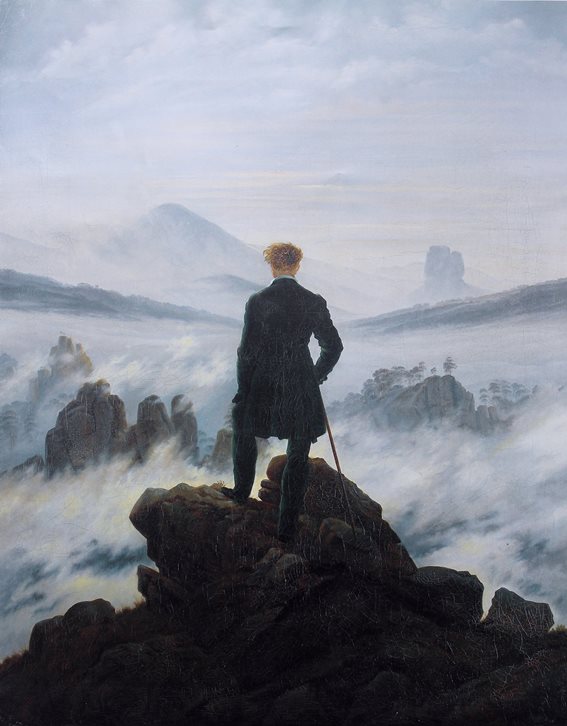
For the sake of forthrightness, let me first say that I feel anything but self-confident and adept to write this essay. I have sort of bumbled through art classes in high-school, and I´ve avoided going to museums as effectively as possible all my life. I´ve liked art – if at all – based on its aesthetic-appealing quality (my favorite painting probably is Caspar David Friedrich´s “Wanderer above the Sea of Fog”) which most likely makes me a cretin in the eyes of every true lover of art.
This being the case, I have to say I enjoyed reading de Botton and Armstrong´s (2013) oeuvre “Art as Therapy” due to the fact that it helped me to “get a grip” on that somewhat impalpable subject. It provided me with a functional set of tools to approach a painting, something which I clearly lacked so far. So, drawing on de Botton and Armstrong´s insights (which will be described in the following section) I would like to argue that exposing ourselves to works of art can enhance our well-being, and additionally help to understand the underlying nature of well-being by providing opportunities to exercise our capacity for mindfulness.
Creating art has been used as a mode of psychotherapy (or at least: part of a set of different interventions) for quite a while now, especially aiming at relieving the suffering from trauma and anxiety disorders. While it remains somewhat unclear how making art is helping people to cope with difficult experiences in their lives (Kapitan, 2012), meta-analyses show that art therapy seems to be able to help people with several different psychological disorders – even if effect sizes remain rather small (Reynolds, Nabors, & Quinlan, 2000; Slayton, D’Archer, & Kaplan, 2010). Therefore, de Botton and Armstrong´s book is by far not the only book by the name of “Art as Therapy”. Yet, when taking a closer look, it becomes clear that the authors do not aim at describing “art therapy” as a means to helping a clinical population. Rather, they want to provide tools for our personal development, for finding a “medicine” for our everyday human frailties.
Specifically, de Botton and Armstrong (2013) list seven human frailties – and additionally describe how exposing ourselves to art can serve to remedy maladies. I will briefly define them here. In the absence of supporting scientific literature for this specific take on art, I´ve looked up matching quotes* from a wide array of artists and writers that point towards the same set of insights.
Forgetting. The human mind is prone to forgetting – be it everyday things or really important lessons of life. As such, art can be a way of remembering and keeping memories alive.
(Painting is just another way of keeping a diary. – Pablo Picasso)
Pessimism. We often underestimate the amount of goodness in our lives and, conversely, overestimate the prevalence of bad events. The beauty of (some) art can help us to remember and appreciate what is right with human existence – it can act as a source of hope.
(The beauty one can find in art is one of the pitifully few real and lasting products of human endeavor. – Paul Getty)
Despair. We sometimes tend to feel separated from all other human beings, believing that our joys, but particularly our suffering, is agonizingly unique. Art connects us to the rest of mankind by displaying that (and how) a certain amount of suffering is a normal (and maybe even: necessary) element of the human condition.
(Without art, the crudeness of reality would make the world unbearable. – George Bernard Shaw)
Disintegration. Oftentimes, we think of ourselves as monadic entities, forgetting about the fragmentation of the human mind and soul, and that we are a process rather than a steady state. Art can help us to reacquaint with that fractal and ever-changing character of our existence.
(There is nothing worse than a sharp image of a fuzzy concept. – Ansel Adams)
Personal Blind Spots. We do not know many things about ourselves. And quite naturally, we do not know what we don´t know. Art can help us to raise our self-awareness by serving as a mirror that reflects more that can be seen when solely looking at the person that stands in front of that mirror.
(Art enables us to find ourselves and lose ourselves at the same time. – Thomas Merton)
Comfort Zone. We like to stay in our comfort zone, exposing ourselves to things that we already know, and people that are similar to us – thereby avoiding the risk of being taken by surprise. Exposing ourselves to art can lead us off the beaten track, guide us to find uncharted territory, thereby providing opportunities for personal growth and individuation.
(Art hurts. Art urges voyages – and it is easier to stay at home. – Gwendolyn Brooks)
Ennui. We tend to take the things (and people) in our lives for granted. Even awe-inspiring wonders of nature or magnificent works of architecture and technology can lose their magic when we fail to appreciate them in a condignly fashion. Works of art can revive that process of due appreciation, awe, and wonder.
(The purpose of art is washing the dust of daily life off our souls. – Pablo Picasso)
When trying to view exposure to art through the lens of positive psychology (Seligman & Csikszentmihalyi, 2000) extracting the active ingredient, the “least common denominator” in de Botton and Armstrong´s (2013) cure for the seven human frailties, I feel they can be boiled down to the notion that exposing ourselves to art (and of course creating it) can be likened to a an exercise in (the art of) being mindful** – insofar as all the frailties have a common ground in a lack of this special state of mind (and heart):
By now I´ve realized that art can be a powerful teacher. Visiting the Barnes Foundation in Philadelphia and spending more than an hour with just one painting (in my case: “Unpleasant Surprise” by Henri Rousseau; see below) has strikingly shown me how I can use art to cultivate my capacity for mindfulness. But maybe it takes a really good to teacher in the first place to appreciate art as a teacher.
Brown, K. W., & Ryan, R. M. (2003). The benefits of being present: mindfulness and its role in psychological well-being. Journal of Personality and Social Psychology, 84(4), 822-848.
de Botton, A., & Armstrong, J. (2013). Art as Therapy. London: Phaidon Press.
Grossman, P., Niemann, L., Schmidt, S., & Walach, H. (2004). Mindfulness-based stress reduction and health benefits: A meta-analysis. Journal of Psychosomatic Research, 57(1), 35-43.
Kapitan, L. (2012). Does art therapy work? Identifying the active ingredients of art therapy efficacy. Art Therapy, 29(2), 48-49.
Reynolds, M. W., Nabors, L., & Quinlan, A. (2000). The effectiveness of art therapy: Does it work? Art Therapy, 17(3), 207-213.
Seligman, M. E. P., & Csikszentmihalyi, M. (2000). Positive psychology: An introduction. American Psychologist, 55(1), 5-14.
Slayton, S. C., D’Archer, J., & Kaplan, F. (2010). Outcome studies on the efficacy of art therapy: A review of findings. Art Therapy, 27(3), 108-118.
*All quotes found via http://www.brainyquotes.com.
**Mindfulness is “commonly defined as the state of being attentive to and aware of what is taking place in the present” (Brown & Ryan, 2003, p. 822) and is associated with a wide array of desirable psychological outcomes (Grossman, Niemann, Schmidt, & Walach, 2004).
As I´ve told you before, part of the second MAPP semester is focused on exposing ourselves to different forms of the humanities and art. To this effect, we went on a field trip to the Barnes Foundation in Philly last Friday. It´s an educational institution that is centered around a collection of (mostly) modern art (displaying more that 2,500 objects, among them +800 paintings estimated at $25 billion; lots of paintings by Renoir, Cézanne, Matisse, Picasso, Monet, and many others).
The founder, Albert C. Barnes, had a very special take on art. Instead of displaying each work of art on its own (or in it´s own right), he commanded they be displayed in what he called ensembles, arrangements of several paintings, oftentimes covering the entire wall of a room. Additionally, he mixes paintings with pieces of African art, or masterfully crafted everyday objects, such as door handles, large keys, and candlesticks. What is more, there are pieces of classical furniture (mostly chairs) beneath a lot the paintings, giving the whole exhibition the intimate touch of being in someone´s living room(s).
Another important difference compared to traditional museums is a distinct “lack of explanation”. You´ll find the painter´s name on a little metal plate on each picture, but otherwise, there are no displays and no booklets helping the visitor to interpret or understand the paintings. Barnes wanted the visitor to find his/her own approach to the paintings.
I’m not a “museum guy” at all, having rarely visited one after those inevitable 8th grade field trips. As such, I wasn’t particularly looking forward to this part of the class. And at first, my precautions were confirmed: the Barnes collection can really be overpowering. There are so many pictures in so little space that it’s hard to focus. I also felt that all this outstanding works of art would somehow be “wasted on me” because of my lack of education in these matters.
Fortunately, our professor, James Pawelski, had us complete a special task: we were to pick one piece of art that we felt particularly drawn to – and stay with and behold that painting for at least half an hour.
So I ended up spending almost 90 minutes with the painting you’ll see below:

Its name is “Unpleasant Surprise” (Mauvaise surprise) and was painted in 1901 by Frenchman Henri Rousseau (whom, quite frankly speaking, I had never heard before…). Now, when you look up interpretations on that painting, most will tell you that the guy on the left is shooting the bear to rescue the naked woman on the right. Additionally, it is inferred that the woman does not really feel threatened by the bear; and that therefore, the man really is the “unpleasant surprise”, depicting man’s growing estrangement from nature as a downside of the increasing use of technology (as signified by the gun).
While I agree to some extent with that interpretation, here I´d like to share with you my own take on that painting – what came out of “wrestling” with it (that´s what it felt like…).
The first thing that struck me upon investigating the scene: to me, it does not really look like the man is shooting the bear at all. It may be hard to see from the picture on the screen – but when you´re standing right in front of the actual painting, it has a more three-dimensional quality. And that gave me the impression the man is really shooting past the bear, right into the ground in front of the women´s feet – as kind of warning shot to keep her from coming closer.
Looking at the overall composition, there´s a clear bisection between the earthly colored left/lower part of the painting including the man and the lower part of the bear, and the colorful right/upper part including the woman, the upper part of the bear, and the lake scenery in the background. The shape of the woman is larger than that of the bear and especially that of the man. While the bear displays long claws and jaws, he does not seem to be particularly dangerous. He rather appears to be an oversized teddy bear that is craving to petted. And even though the man carries a large rifle, he is almost dwarfed by the sheer size of the woman.
Looking specifically at the woman, she may activate a Venus or Eve archetype (the end of the right strand of hair even resembles a snake´s head), being naked and sporting the long hair. Obviously, she has just emerged from the paradisiac lake in the background. She´s staring heavenwards, raising her hands in a kind of “hand´s up” gesture. But it could very well also be alluding to the way priests hold up their hands when blessing the congregation. Putting all these clues together (size, pureness, connection to paradise and the heavenly sphere) I figured she symbolizes the divine and numinous part of human nature. What´s notable in addition: despite the beauty of her body, the distinctly female shape of her contour, her face clearly a masculine touch. Her facial expression could be anything from being sad, disappointed, or maybe unnerved – but she is definitely not scared.
Looking specifically at the man, the most striking feature is that he´s really eyeing the woman when firing the rifle, not the bear. To me, that´s another strong indication for the notion that he´s not shooting at the bear at all. Otherwise, he´s barely visible, blending in with the earthly background. He´s small, earth-bound, and appears to be somewhat frail, thereby signifying the fleshly part of human nature.
Now, the bear seems to be the connecting piece between those two realms. In his rising motion, he tries to escape from the earthly sphere, lifting his upper part into the heavenly domain, eying the woman with (what to me seems to be) an admiring gaze. In mythology, the bear is often depicted as a protector, teacher, and also as a powerful agent of healing. Additionally, he is metaphor for the reconnection with (one´s?) nature.
Overall, the painting is a composition of (more or less) obvious opposites. The “goddess” has a female body but a masculine face. The man is a weak figure but carries a tremendously dangerous rifle. The bear is supposed to be fierce but looks like a plaything at the end of the day. And finally, there´s the divide in the landscape.
But the bear holds the key to overcoming and reuniting was is separated…
————–
I´m going to stop at this point. I feel I´m 80% there. But then, it feels like something constantly escapes my attention and that prevents me from grasping the picture to the fullest. Very interesting. I´m going to come back here once in a while over the next days to look at the picture. Very likely it still has got something (more) to tell me – otherwise, it wouldn´t have picked me (that´s what it felt like…) to stay with it.
Now, has exposing myself to art enhanced my well-being? I´m not sure yet. And I fear I´m still not a museum guy. But for what it´s worth: it has been a powerful lesson on the effect of mindfulness. Without the explicit instruction to stay with one picture I clearly would have missed all the nuanced perceptions I tried to convey in this text.
I was there.
P.S.
I´d really like to hear your take on the painting…
The MAPP program is a fulltime program – but combines onsite classes with long-distance learning periods. Part of the distance learning comprises a lot of reading (Who would have thought of that…) and writing essays about a wide array of positive psychology topics. I´ve decided to post some of those essays here on Mappalicious. Surely, they´re not the be-all and end-all of academic writing. But then again, it would also be a pity to bury them in the depths of my laptop…

A common goal of positive interventions is to affect at least one element of PERMA or adjacent constructs of wellbeing in a desired direction. As positive interventions require consciously carrying out certain goal-directed behaviors (occasionally, over longer periods of time), it is reasonable to argue that the capacity to consciously direct one´s attention (as practiced e.g., in mindfulness exercises) is a meta-competence that will help to strengthen our capacity for self-regulation and thereby to successfully carry out most, if not all, positive interventions.
This notion is in line with self-determination theory. It asserts that human motivation is based upon of two different categories: intrinsic motivation and extrinsic motivation. People carry out intrinsically motivated actions because of their inherent gratification. In that case, only a minimum of self-regulatory effort is needed in order to sustain these behaviors. On the other hand, extrinsically motivated behaviors require a certain amount of self-regulatory effort in order to be sustained, where the level of regulation needed varies according to the extent of perceived autonomy. Perceived autonomy in turn varies from complete external regulation, via introjected and identified regulation, to integrated regulation, which in its psychological properties comes as close a possible to intrinsic motivation (Brown, & Ryan, 2004). The authors conjecture that, with the exception of early childhood, most of our behaviors are externally motivated at least to some extent so that increasing our capacity for self-regulation is crucial for living a productive life. In addition, they reason that in order to experience intrinsic motivation, a person needs to MBSR) is one way of working towards that goal.
Salovey, Caruso, and Mayer (2004) propose that emotional intelligence (EI) is a key element in leading a successful life. On closer inspection, it is reasonable to argue that there is a distinct overlap between the concept of mindfulness and the conceptualization of emotional intelligence. The aforementioned authors define EI as the capability to reflect on emotions and at the same time to utilize emotions to facilitate thinking. They contend that EI can be grouped into four sets of related skills: (a) perceiving emotions in others and oneself; (b) capitalizing on emotions to facilitate reasoning, e.g., by evoking certain emotional states to foster problem-solving or creativity; (c) understanding emotions, e.g., the antecedents and implications of certain feelings; and (d) dealing with emotions so that that personal development is enhanced. I argue that, while not all elements of emotional intelligence can be narrowed down to mindfulness, at the least engaging in conscious perception and reflection of one´s emotions is a crucial element of mindfulness.
Interestingly, Baumeister, Gailliot, DeWall, and Oaten (2006) argue that self-regulation can be conceptualized as a limited resource similar to a form of energy. When this ‘psychological capital’ has been spent, a person temporarily experiences a condition of ego depletion, a state where additional exertion of self-regulation is considerably less effective than usual. It seems that the same resource is employed for a variety of activities that have little in common other than that the self is modifying its primary response in a given situation. In addition, there is considerable evidence that we are able to increase our ‘self-regulatory muscle’ by means of regular exercise. These improvements typically are not restricted to the specific task domain of the exercise, thereby supporting the notion that improving self-regulation functions by strengthening a universal capability rather than a specific competence. The authors introduce several exercises that help to strengthen our capacity for self-regulation, e.g., physical exercise or correcting one´s posture to an upright position whenever it comes into consciousness. I maintain that practicing mindfulness can be another way of strengthening our self-regulatory muscle. In turn, this should help to sustain the required effort when carrying out a positive intervention, especially over a longer period of time.
Finally, if practicing mindfulness indeed promotes the successful execution of positive interventions, this outcome should be reinforced by additionally cultivating our self-efficacy in this domain of life. Self-efficacy can be described as a specific kind of belief about our capability to organize abilities to achieve a chosen objective in a particular setting. Therefore, the concept plays a crucial role in goal-directed self-regulation for several reasons: First, the level of self-efficacy influences the goals we set for ourselves. Typically, the higher our self-efficacy in a specific domain, the more challenging the goals we choose. Second, it influences the psychological reactions we experience in the process of working on a goal. E.g., under a condition of high self-efficacy, we tend to deploy more effort in the face of challenges. Third, self-efficacy directly influences specific areas of our performance, in that people who display a high level of self-efficacy tend to use their mental resources more effectively when trying to solve a given problem (Maddux, 2009). Taking all this into account, it can be assumed that cultivating mindfulness will help to develop self-efficacy through enabling successful execution of positive interventions.
To summarize: I argue that cultivating mindfulness as a technique for controlling our conscious attention can function as a valuable resource when trying to perform positive interventions. Being able to concentrate is beneficial to self-regulation which in turn is an important prerequisite for the successful application of positive interventions. This experience of success in turn strengthens self-efficacy which in turn helps to sustain the required energy for staying on the worthwhile path of personal development.
Baumeister, R. F., Gailliot, M., DeWall, C. N., & Oaten, M. (2006). Self-regulation and personality: How interventions increase regulatory success, and how depletion moderates the effects of traits on behavior. Journal of Personality, 74(6), 1773-1802.
Brown, K. W., & Ryan, R. M. (2004). Fostering healthy self-regulation from within and without: A self-determination theory perspective. In P. A. Linley & S. Joseph (Eds.), Positive Psychology in Practice (pp. 105-124). Hoboken: Wiley.
Maddux, J. E. (2009). Self-efficacy: The power of believing you can. In S. J. Lopez & C. R. Snyder (Eds.), Oxford Handbook of Positive Psychology, 2. edition (pp. 335-343). New York: Oxford University Press.
Salovey, P., Caruso, D., & Mayer, J. D. (2004). Emotional intelligence in practice. In P. A. Linley & S. Joseph (Eds.), Positive Psychology in Practice (pp. 447-463). Hoboken: Wiley.
 There´s a rumor in the forest: The bear has written a death list. Buzz spreads like a wildfire. Some of the animals who hear about it decide to go ask the bear about the list to soothe their uncertainty.
So, the fox goes to the bear and asks him about the list: ‘Hey bear, is it true that you have a death list?’
`Yeah.’ says the bear.
`Well… is my name on it?’
`Yeah, you’re on the list.’
The fox runs off terrified. A week later, he´s found dead next to a tree.
A few days pass. Finally, the stag plucks up some courage, comes by and asks the bear about the list.
`Hey bear, is it true that you wrote a death list?’ asks the stag.
`Yeah.’ says the bear.
‘And was the fox on that list?’
`Yes, he was.’
`Okay… so is my name on it?’
`Let me check… yeah, afraid so.’
And so the stag takes to his heels in horror. A few days later, he´s found dead by a river.
Another couple of days pass and the rabbit comes by and asks the bear about the list.
`Hey bear, is it true that you have a death list?’ asks the rabbit.
`Yeah.’ says the bear.
And was the fox on that list?’
`Yep.’
And was the stag on that list, too?’
‘Indeed, he was.’
`OK… so is my name on it?’
`Yeah, afraid so, you’re on there, too.’
So the rabbit ask:
`OK… couldn’t you… …you know… like… erase my name or something?’
And the bear says: `Sure, why not?’
 I am almost a little bit jealous. The likes of us have to read hundreds of books, visit seminar after seminar, or torment ourselves with seemingly infinite meditation sessions in order to find enlightenment – and in the end, all I experience is something like the equivalent of a stained 20-watt light bulb shortly before kicking the bucket. And Junior? Seems he´s already blessed with all the gifts.
Take, e.g., the fine art of mindfulness: I have spent hour after hour observing my breath (and besides, “embracing” the increasing pain in my knees), but for me it is still perplexingly difficult to restrain my monkey mind – up to the point where I consider basically not being born for experiencing silence of the mind.
In contrast, the Little Buddha easily manages to observe his own feet for more than 30 minutes in a row – and is so absorbed that you would not be surprised if he started to levitate a couple of inches above the floor. It must be so incredibly exciting to experience everything for the very first time. It´s a pity he will not be able to remember all these first times in a couple of years from now…
 Mappalicious