Please have a look at this great blog post from a 2012/2013 Mappster:
Latest Blog Posts
Of Cookies, free Will and George Clooney´s Sweat(er)
The fourth day of MAPP immersion week was again crammed with extraordinary lectures by extraordinary lecturers. The morning belonged to Roy Baumeister, one of the most highly acclaimed social psychologist in the world. He has conducted studies on a multitude of phenomena over the years, but may be known best for his research on willpower and self-control, carrying out experiments something along the line of this: He will put people in a room and have them sit at a table. On the table, there´s a plate full of tasty chocolate cookies; and another one with something to eat that is not attractive at all. People are told to wait for a couple of minutes. In addition, half of them are told not to touch the cookies – while it is totally o.k. to eat the other stuff.
Afterwards, the participants are lead into another room where they get a specific task, e.g. solving unsolvable anagrams. It is then measured how long the they will try to solve the anagrams before giving up. It turns out that people who were not allowed to touch the cookies on average quit a lot earlier. Baumeister calls this phenomenon ego depletion. He argues that willpower is a limited resource that is bound to fatigue similar to a muscle. This may be relevant especially to all those people trying to run multiple “personal change efforts” at a time. It seems more advisable to take if easy, one step at a time.*
Baumeister also gave a lecture on why humans as rational human beings have basically no other choice but to believe in free will; and another very provocative and mind-boggling one the evolutionary difference between men and women – and the consequences of those differences on our current society. I´m not going to elaborate on these topics here.
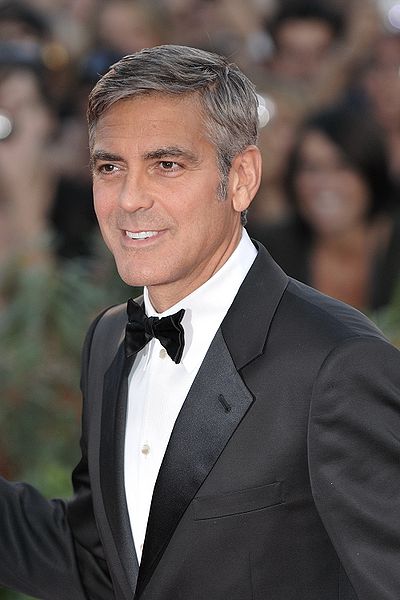
By Nicolas Genin (CC-BY-SA-2.0) via Wikimedia Commons
In the afternoon, Paul Bloom from Yale University took the stage. Among Paul´s manifold interest is the notion of human pleasure and basically, why we like things – and which attributes of an object increase or decrease our perceived utility. E.g., he will ask you what you would pay for a sweater that has been worn by George Clooney.
Turns out that the average American is willing to pay about 130-140$ for a sweater that has been worn by Gorgeous George and still contains his gorgeous sweat (meaning: it hasn´t been washed afterwards). When the thought experiment is extended to the notion that the sweater has been washed, the perceived price level drops considerably. Bloom argues that act of washing alters (in this case: spoils) the sweater´s perceived essence. Here, essence means the sum of the many intangible features of an object: the way it was produced, it´s history before getting to us etc. This also explains how a standard urinal suddenly can become a piece of very expensive art.
Probably doesn’t work with your sweat though – just in case…
* It seems especially unwise to undertake a change effort while dieting at the same time. Baumeister and colleagues also show that willpower may depend on a sufficient level of blood sugar – where low levels lead to ego depletion.
Another Day in Positive Psychology Paradise…
Today has been the third day of MAPP immersion week – another day packed with truly extraordinary experiences. Today´s lectures took place at Wharton Business School. For the morning, Martin Seligman invited a guest lecturer, Chandra Sripada, who introduced us to concept of the Default Mode Network of our brain – which basically represents the specific and recurring pattern of activation in the brain that can be seen in fMRI studies when the brain is supposed to be doing “nothing at all” (which obviously isn´t the case). Being in the default mode seems to be connected to the mental task of prospection which involves future-oriented problem-solving, creating mental simulations of the world and the minds of other people, and daydreaming (among other things). I´m pretty sure that I´ll write more about prospection in the near future (no pun intended) – but I am still “digesting” all of that input – so this will have to do for today,
Over lunchtime, we were invited over to the Positive Psychology Center at Penn to meet, greet and eat with Seligman´s research team.

For the afternoon, Marty invited Barbara Fredrickson, the world´s foremost researcher on positive emotions and their role in human flourishing. She developed the Broaden-and-Build theory of positive emotion which basically posits that the reason why we experience positive emotions is fundamentally different from the reason for the existence of negative emotions. While negative emotions such as anxiety provoke narrow(ing), immediate survival-oriented behaviors, positive emotions are supposed to broaden our awareness and inspire novel, exploratory, and creative thoughts and/or actions. In turn, this expanded behavioral repertoire builds our skills, resources, and resilience. All of that needs some further mental digestion as well. You can find one of Barbara´s books on the reference list.
The high point of the day was an invitation from Martin Seligman and his wife Mandy for food and drinks at their house in the outskirts of Philadelphia. I feel very honored since usually, he´s more likely to associate with top-tier researchers, political and military leaders – or the Dalai Lama. Thanks for that one, Marty…
Why talking about the weather may make you unhappy – even on beautiful days
Today has been the second day of the MAPP´s so-called immersion week. Angela Duckworth is teaching research methods and statistics, which frankly speaking will never be my favorite subject – but that´s o.k. To learn more about the methodology of psychological research and to get an idea of how research papers are crafted, we skimmed through some articles in the classroom. I´d like to share one of those with you; it was published by Matthias Mehl and some colleagues.
Now the thing is: I am German and there is this stereotype of Germans as being rather uptight, not exactly unfriendly, but – you know – a little stiff, just not that easy to talk to. We´re the so-called “nation of poets and thinkers”, but just not very good at small-talk. Which…
…tadahhh – might explain why we´re also a rather happy nation on average!
What Matthias Mehl does as a researcher: he hooks up people with tiny recording devices that switch on automatically at certain intervals over the day. As a result, he gets these little samples of our everyday behavior, especially what we say to other people and what they say to us, respectively. Here´s what he´s found out: People that spend a lot of time in the company of other people are considerably happier on average than folks who mostly like to spend time on their own. There´s nothing new here. But: it also matters to a great extent what you talk about.
There is a considerable negative correlation between life satisfaction and small talk; and a considerable positive correlation between meaningful (“deep”) conversations and life satisfaction. Talking about shallow topics too often may be not all that beneficial to our psychological well-being. This, in turn, reminded me of that little story which is commonly attributed to Socrates – but presumably is a universal parable.
The three sieves of Socrates
Once upon a time, one of the acquaintances of Socrates came running and said: “Socrates, do you know what I just heard about one of your students?”
“Wait a minute”, Socrates stopped him, “Before you tell me, I would like to conduct the three sieves test.”
“Three sieves test?”
“Yes. Before you tell me anything, take a moment to consider carefully what you are going to say and pour your words through these sieves.”
“The first one is the sieve of truth. Are you absolutely sure that what you are about to tell me is true?”
“Well… no. Actually I heard it recently and…”
“Alright”, interrupted Socrates, “So you don’t really know if it is true or not!”
“Now, let us try the second one, it is the sieve of goodness. Are you about to tell me something good about my student?”
“Well…no. On the contrary…”
“So, you want to tell me something bad about him” roared Socrates, “even though you are not certain if it is true or not?”
The acquaintance shrugged, already feeling uncomfortable.
“You may still pass the test though” said the Socrates, “because there is a third sieve – the sieve of usefulness.”
“Is what you were to tell me about my student going to be useful?”
“No, not really…” said the man resignedly.
Socrates continued his lesson, “Well, if what you want to tell me is neither true nor good nor useful, why tell me at all?”
Why you shouldn´t hire A-holes – a scientific perspective
So this it. I´m in Philly, Pennsylvania, the City of Brotherly Love, and today was the first day of the MAPP program 2013/14. Obviously, I had planned to blog about this – but I´m still overwhelmed by all these new impressions, locations, and most of all, outstanding people. It actually is kind of weird (at least for me…) to all of sudden talk to or being taught by luminaries that you´ve previously known only from TED Talks and the like.
So instead, I´m going to share something with you that I read about yesterday on the plane in the German issue of the Harvard Business Review. They interviewed Robert Cialdini, the world´s foremost expert on persuasive communication. And he had something interesting to say on the issue portrayed in the headline of this article. In this case, someone qualifies for being an A-hole e.g. by lying and cheating on customers and/or colleagues.
There are some very obvious reasons why you don´t want to hire people that display these kinds of behavior. E.g., it may hurt your companies reputation, which then results in the decline of (repeat) business – which is harmful to the bottom line. That´s a no-brainer. But then, there are also some consequences that might not be that apparent:
A stitch in time saves nine
The problem with hiring an A-hole is that – in the long run – it might lead to having a company full of A-holes (which may not only cheat on customers and colleagues, but on the company as a whole, too). Here´s the deal: hiring an A-hole will lead to higher levels of stress and discomfort among the non-A-hole employees in your company. This is a consequence of the perceived mismatch between their own values and those values the company is obviously displaying by hiring the A-hole and letting him/her get away with whatever he or she is doing. It leads to higher levels of illness and absenteeism.
And: it will also lead to higher levels of turnover, meaning the non-A-holes will slowly but surely leave your company. This, as a consequence of person-organization-fit, will lead to the hiring of more A-holes as a replacement for the honest people that have left the company. You see where this is heading….
You can read more about this topic in one of Cialdini´s articles.
Monkey (Porn) Business keeps up with the Kardashians
The content of this post may not be a central tenet of Positive Psychology, but I find the following fact immensely interesting – so I will share it with you anyway. And by the way, I read about it the book How Pleasure Works by Paul Bloom – who will also teach in the MAPP program.
Have you ever wondered why people (…and it is not sexist to say: mostly women…) like to read or watch those preposterous celebrity gossip magazines? The answer: for the same reason that people (…and it is not sexist to say: mostly men…) like to watch those preposterous porn flics: It is (or at least can be) fun. And why it is fun? Because we may be evolutionary hard-wired to like it.

By Thomas Schoch (GFDL or CC-BY-SA-3.0) via Wikimedia Commons.
In a study which goes by the beautiful name of Monkeys pay per view: adaptive valuation of social images by rhesus macaques, researchers found that our animal relatives are willing to trade tasty food for the opportunity to look at pictures displaying tasty backsides of their fellows. Nothing new here – it´s monkey porn. But: they were also willing to pay for pictures showing the faces of high-ranking members of their pack. Which is kind of the same thing as humans looking at pictures of Kate Middleton or Kim Kardashian, depending on personal preferences.
So, dear fellow Man: if She ever complains about your porn consumption, this study might be your trump card: You´ll stop if she shreds her Cosmopolitans… 🙂
I have a new Guru!
 He is approximately 73 cm tall and weighs roughly 8 kg. His superhuman abilities: breathing, sleeping, crying, farting – and most of all: smiling…
I am talking about our son Mika of course. I´m sure I will have to teach him a lot over the next twenty years (or so). But in return, he has already taught me something which I had heard of a lot of times over the last ten years, during an estimated 2,500 hours of courses in coaching and therapy, from secular and spiritual teachers; and read about in innumerable books. But I have never felt it fully until now: Unconditional Love.
During the workweek, I typically only have half an hour with him in the evening to read a bedtime story and put him to bed. When he falls asleep in my arms eventually, his head halfway hidden under my chest, one hand on my side, the other one straight on my heart, with infinite trust, a feeling of profound peace and stillness comes over me.*
I always knew I wanted to have kids. Not wanting to have children somehow appears “unnatural” to me. In this spirit, to all the people out there who (willingly) do not want to have offspring: I´m positively sure you´ll be missing out on all the best…
*I hope that I will be able to preserve this attitude, even if he – just like his father – will flunk his first math test in 8th grade; or if he – in spite of my deep love for Heavy Metal – perhaps will dig ridiculous German Ghetto Rap (Yes, that does exist!) instead…
Validation – the Power of seeing the Good in Men
In know this has been around for quite a while – and the film already has +7,000,000 views on Youtube – but I feel it has to be shared time and again.
So if you ever feel down, take 15 minutes and watch this video (Validation). It´ll lift your spirits for sure…
Grit: the Key for long-term Success?
When scientist look for the difference between (largely) successful versus not so successful people (across a multitude of different situations), the most important predictor so far has been overall intelligence. But there are – potentially – more important things than being the brightest kid in the room.

In 2007, Angela Duckworth and her colleagues first described a non-cognitive character trait by the name of “Grit”. Grit is described as perseverance and passion for long-term goals. It is supposed to have an orthogonal relationship to general intelligence – meaning they are by and large independent aspects of our personality. One can be intelligent but not gritty, gritty but not intelligent, both at the same time – or neither intelligent nor gritty.
What makes gritty people successful?
Grit is hypothesized as a stable characteristic. A person high in Grit does not seek immediate (positive) feedback. He/she is able to maintain his/her enthusiasm for a specific goal over very long periods of time despite experiencing adversity. In this context, long-term typically means “many years”, e.g. the time it takes to finish a doctoral thesis, become a grandmaster of chess or the like. The person´s commitment towards long-term objectives is the principal element that provides the determination essential to overcome challenges and set-backs.
Abraham Lincoln may be a good example of a gritty personality. He lost his first job at the age of 23 as well as his first election campaign. At 27, he lost his second election campaign and had a nervous breakdown. Two of his sons died while still in their infancy. He lost at a race for Congress at 34, and once more in his 39th year. At 47, he failed to become the Vice President of the USA. Then, at the age of 52, he finally managed to become one of the most popular Presidents of all time.
If you want to find out how gritty you are – you´ll find short test here.
Strong. Stronger. Signature Strengths. What are yours?
Since the onset of psychology as an academic discipline at the end of the 19th century, it has been functioning on the premise of a disease model: most psychologists were mainly interested in what´s “wrong with people” – and then finding cures for all those wrongs. Which is fine, but … just not the only way looking at humankind. It took psychology about a hundred years to take on the opposite perspective: trying to find out what´s right with people. Together with a colleague, the late Christopher Peterson, Martin Seligman published the book Character Strengths and Virtues: A Handbook and Classification about ten years ago, which scientifically classifies and describes 24 human strengths based on six broad virtues.
In order to make their list, a character strength had to satisfy most of the following criteria. Character strengths should be:
- fulfilling;
- intrinsically valuable;
- non-rivalrous;
- not the opposite of a desirable trait;
- trait-like (stable over time);
- not a combination of the other character strengths;
- personified by people made famous through story, song, etc.;
- observable in child prodigies;
- absent in some individuals;
- and nurtured by societal norms and institutions.
The six virtues and 24 character strengths are:
Wisdom and Knowledge
(strengths that involve the acquisition and use of knowledge)
- creativity
- curiosity
- open-mindedness
- love of learning
- perspective and wisdom
Courage
(strengths that allow one to accomplish goals in the face of opposition)
- bravery
- persistence
- integrity
- vitality
Humanity
(strengths of tending and befriending others)
- love
- kindness
- social intelligence
Justice
(strengths that build healthy community)
- active citizenship
- fairness
- leadership
Temperance
(strengths that protect against excess)
- forgiveness
- humility
- prudence
- self-regulation
Transcendence
(strengths that forge connections to the larger universe and provide meaning)
- appreciation of beauty
- gratitude
- hope
- humor and playfulness
- spirituality
What are my signature strengths?
Why should anybody be interested in his/her strengths? The rationale for finding out what our real strengths are is rather simple: Using our so-called signature strengths in daily life and work makes us happy – and most likely: successful. It makes us feel good about ourselves. It invigorates and energizes us. It´s the real deal…
You can find out what your signature strength are by taking a comprehensive scientific test on Martin Seligman´s website: the Signature Strengths Questionnaire. I´ve taken the test about a year ago – my main character strengths are:
Curiosity and interest in the world
You are curious about everything. You are always asking questions, and you find all subjects and topics fascinating. You like exploration and discovery.
Love of learning
You love learning new things, whether in a class or on your own. You have always loved school, reading, and museums-anywhere and everywhere there is an opportunity to learn.
Zest, enthusiasm, and energy
Regardless of what you do, you approach it with excitement and energy. You never do anything halfway or halfheartedly. For you, life is an adventure.
Humor and playfulness
You like to laugh and tease. Bringing smiles to other people is important to you. You try to see the light side of all situations.
Capacity to love and be loved
You value close relations with others, in particular those in which sharing and caring are reciprocated. The people to whom you feel most close are the same people who feel most close to you.
 Mappalicious