Just a filler for today – but a truly beautiful one. It´s a video that´s just going viral right. What you´ll see: 10 couples that have just met and are asked to kiss. It´s a beautiful thing just in itself – but perceived through Esa Saarinen´s Positive Psychology lens it´s also a great story about micro-change and not holding back. Enjoy!
Edit
By now it is clear that those first meetings may have been not be that spontaneous. A lot of the protagonists seem to be models, actors, or musicians – so they are used to performing in front of a camera. But still: it´s a beautiful thing to behold…
I´m in the ninth cohort of the Master of Applied Positive Program at Penn. Consequently, there are tons of brilliant MAPP Alumni out there that have very fascinating stories to tell: about their experience with the program, about Positive Psychology in general – and about themselves of course. I really want to hear those stories. That´s why I started to do Mappsterviews* with my predecessors.
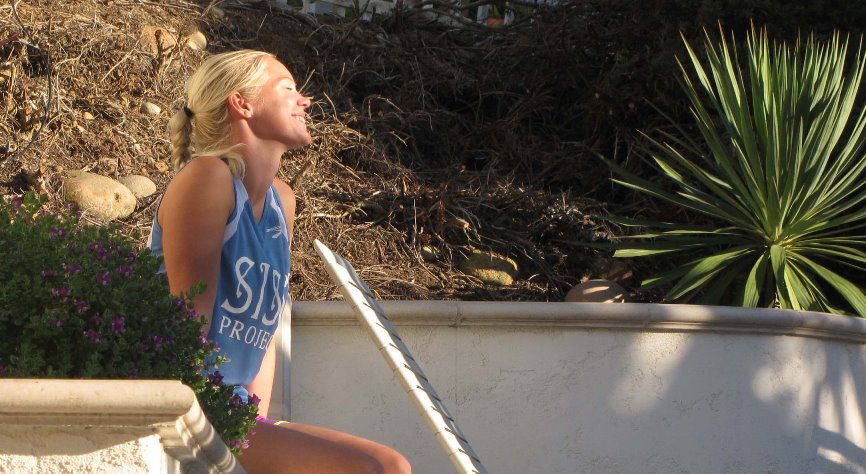
The honor (ahem…) of being No. 1 goes to Emilia Lahti from Finland. She was in MAPP 8 and does research on Sisu, which is a Finnish term for a special and very strong kind of determination. Supposedly, one has to be Finnish to really grasp the concept – but Emilia is here to change that…
Please introduce yourself briefly
My name is Emilia and I am utterly intrigued by (A) how on earth you manage to keep blogging so intensely during MAPP!, (B) what enables people to persevere through extreme hardship, (C) my amazing and utterly badass husband, and (D) caterpillars (no really, I’ll get back to this later).
What is Sisu?
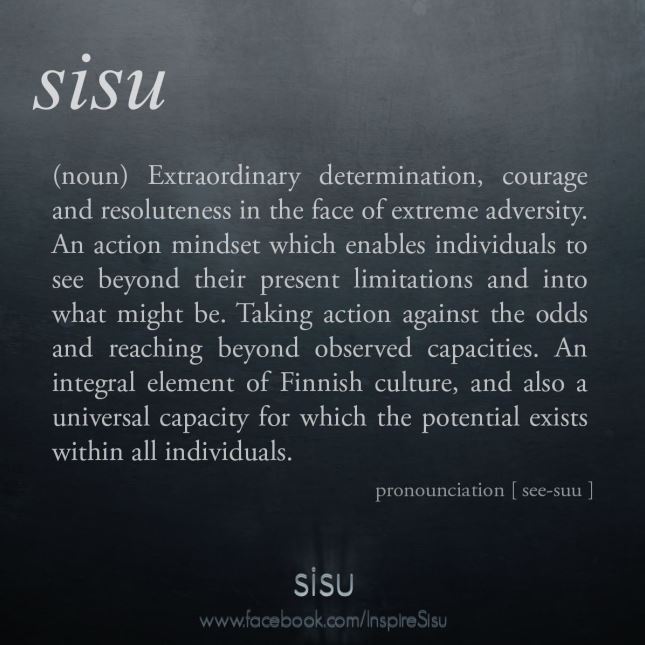
Sisu is a Finnish word denoting determination, courage and resoluteness in the face of extreme adversity. This means highly difficult life situations or events and is not to be confused with the angst we often bring upon ourselves by getting worked up by all kinds of trivial nuisances of our privileged lives (i.e. being pissed off because we didn’t find a parking spot near the grocery store or when it happened to rain during the run –unless it is raining something utterly crazy, like wasps or cactuses!). One could say sisu begins where your perseverance ends and you feel you have reached the end of your mental or physical capacities. One intellectual hero of mine, late philosopher and physician William James, wrote that we have hidden energy within us which we may not have access to until we really need it, and that crises often offer an unparalleled opportunity to tap into this deeper strength. He called it the ‘second wind’, and continued that most of us never run far enough to discover we have such strength. I love the expression because in some ways it describes pretty well what sisu is about.
Sisu is especially useful in creating impetus for getting started with an impossible task or taking action against the odds. I call this the action mindset. Furthermore, sisu is about honesty and integrity, and about not complaining too much during hardships. You’ll address the difficulty, yes, perhaps curse and rant a bit, but then you get to action. Sisu is about equanimity, rationality and this kind of stoically silent, relentless action in the face of a significant challenge. Furthermore, for example within the context of sports, having sisu does not have to mean you place first or annihilate all of your opponents. Sisu is more about immersing yourself in the experience with every fiber of your being and not giving up. Ultimately, it is not so much about achievement as it is about facing your challenges with valor and determination..
How did your interest in Sisu arise?
Well, I had a tough childhood. Hah, no. I’m just kidding. However, my parents indeed played a significant role in this process. They are tenacious, mentally strong people who don’t take bs from anyone. Yet, they have softness and are able to apologize when they are wrong. My parents have always told me to finish what I start, stay relentless and also reminded me to imagine myself in someone else’s shoes. Justice and fairness are elementary to integrity, and integrity is in the core of the more socially directed dimension of sisu.
However, my interest toward sisu as a research subject kind of emerged as a result of my own experiences and randomly crashing Dr. Angela Duckworth’s undergrad class where she was teaching about Grit. Other people whom I absolutely have to mention are my sweet husband, who himself is an incredible epitome of grit and sisu, and Drs. Esa Saarinen, Lauri Järvilehto and Frank Martela from Finland, who have each played a crucial role in encouraging me to dive deeper into this unexplored domain. Sometimes it’s hard to believe in yourself until someone else believes in you first, and these five people have really been a powerful enabling factor for me. For the most part, my overall sisu journey (and life in general) seems to be a mix of serendipitous encounters and random ideas powered by my never ending curiosity toward life, and the incessant need make some kind of sense of it. But isn’t that really what most of our lives are like?
Can Sisu be developed – and if yes: how?
Intuitively, I would rush to give you an excited ‘yes’! Mainly because what we know from social psychology is that words and narratives (and the meanings we draw from them) can be a hugely empowering factor in our lives. However, since I am slowly adopting this ‘wannabe-researcher’ mindset I’ll just take it easy and say perhaps, but we don’t know since no research has been conducted yet. When saying this, I am following the example of my guru and mentor, Angela. I remember struggling with my ‘budding researcher’ identity (you know, worrying whether what you contribute is useful and meaningful enough, or if you are just utterly wasting everyone’s time). Angela, who advised my master’s thesis, gave me an advice which will stick with me forever. She said, “Emilia, you don’t have to be right. You just have to be honest.” I think this is the golden rule of any research, and it applies to life in general in many ways, too.
Only after the (tediously) thrilling construct validation work, which I am involved with right now, we can begin looking at cultivating this capacity. A majority of 83% of the over 1,000 respondents to the sisu survey last spring, said that they believe sisu is a quality which can be developed through conscious effort (as opposed to being a fixed capacity). Now this is explosive! What we know from Dr. Carol Dweck’s work is that our beliefs are one of the biggest indicators of our future actions. If we believe a character trait is fixed, we are less likely to engage in activities which might modify it and are therefore less likely to change. Therefore, our beliefs in a way set the boundaries within which we operate in our daily lives. Anyway, you can expect some epic results in the years to come. If not, I will just transform into the lone ultra-runner I always felt I was destined to become and disappear somewhere in Lapland with a sack of Vibrams! On that high note, physical activity may indeed be one of the many potential ways to develop one’s sisu…
What was the most Sisu´ish moment of your life?
Wow, I really like the term sisu’ish! If ‘words make our worlds’, you have just expanded mine by the width of a polar bear’s paw! I think one of my first sisu’ish moments was when I was maybe four and stood up against a scary girl who was bullying some other girl at a hospital where I was waiting to have a kidney operation. On a more epic, transformative note, probably when I overcame a broken spirit caused by a violent ex-partner, and had to pretty much rebuild myself from scratch after this calamitous period in my life ended.
However, the peculiar thing about post-traumatic growth is that you don’t merely return to your previous state. Sometimes, a remarkable thing happens as a result of a life changing event or profound experience of pain: we transform. The strenuous moments which force us to reflect on the inner depths of our character, and to even ponder the very meaning of life itself, change us irreversibly and cultivate our sense of empathy for others, for the world, and for ourselves.
For me, hardly anything remained the same. I transformed during my dark cocoon period and suddenly could not look at myself, my life or even my work the same way. This explains my infatuation with caterpillars too. Did you know that the body of a caterpillar quite literally melts into this mess of tiny organs, limbs and tissue, and inside the chrysalis the little insect completely restructures itself into something unimaginably different. Well, I was that caterpillar a few years ago. (Note from the editor: Yes, I did, Emilia… 🙂 )
Nowadays I am an outspoken anti-domestic violence advocate and my purpose is to enable cultural change in the way how we speak about this atrocity. According to WHO (2013) one woman three experiences domestic violence or sexual abuse during their lifetime (and often it is in the hands of those who were supposed to protect and cherish them). These women and also men (one in eight) are often silenced by the stigma that comes with it – stigma that should always be only on the perpetrator. My life is a living example of how things can turn around when own our story, tap into our inner sisu and reach out for caring connections in our lives. It’s been a long journey but I am now where I belong. Now it’s my time to help others.
How is Sisu tied to the Finnish culture?
Sisu is tightly woven onto the fibers of Finnish culture, and it has even been said that one needs to understand the meaning of sisu in order to truly understand Finns. Why sisu became a concept in Finland in particular relates to the country’s history which includes a lot foreign occupation, hard weather conditions and invasions. Finns learned that having sisu was the way to sustain life when things got really bad. The construct is still deeply embedded within the Finnish mainstream dialogue and I am incredibly excited to examine how its full brilliance can be unfolded and possibly leveraged to bring about systems wide positive change. Language is the foundation of how we communicate, and up to this point Sisu as a construct has remained understudied and rather elusive. Reframing something from “untranslatable” and “unfathomable” (like has often been described) to a word or description which carries meaning can be a potent game-changer. It opens up a whole new world around the construct and brings it within people´s reach.
Can I profit from Sisu – even though I´m German?
As a former employee of the Finnish Embassy, I know I have to try and give some kind of a diplomatic answer! Just kidding. Ja, yes, kyllä! Even though Finland may have the first take on sisu as a cultural construct, it is a universal power capacity for which the potential exists within all individuals. There are numerous examples of sisu in different cultures and I would love to have someone research this, since I know it is beyond the scope of my upcoming PhD. Somewhat similar constructs (though not exactly) are the Yiddish term chutzpah and the Japanese word ganbaru. It would be great to put together a repository of all these constructs as well as the narratives that relate to them. You Germans as a nation have your own powerful sisu stories, too. Hey! You even dance with Sauerkraut in deine Lederhosen! Even I don’t think I could pull off that stunt! ❤
Kiitos Emilia, for being my interview partner for the very first Mappsterview. I can confirm there´s a German notion of Sisu as well – but I´ll leave those words to Oliver Kahn, (in)famous former soccer goalie of Bayern Munich and the German National Team:
For those of you who can´t understand German – he says: “Balls. We need balls!”. You know, as in: Cojones…
* If you are a MAPP alumnus and would like to have your story featured here – please go ahead and shoot me an e-mail!
One of the guest lecturers at MAPP 13/14 onsite No. 8 was Jane Dutton, who is best-known for her research on what she calls High-Quality Connections (in the workplace).
As part of her lecture, she showed us this video by the Cleveland Clinic. I´ll let it speak for itself…
Does a heart surgeon need to have suffered from a heart attack in order to be a top-notch heart surgeon? Probably not. Does a psychotherapist need to have suffered from depression in order to be a top-notch psychotherapist? Probably not. But in the latter case, it might still help a lot. The difference: whereas in the first case, the patient lies in the operating room, in the second case, a hell of a lot of empathy is needed.
In Greek mythology, there´s the character of the centaur Chiron. Among other attributes, Chiron is the epitome of the Wounded Healer. He is frequently depicted as one of the greatest healers of his time – but was accidently hit by Hercules with a poisoned arrow, resulting in the only wound that he could not heal. And that might have turned him an even better healer.
By now, there´s a lot of evidence that prior personal experience with psychological distress (broadly speaking) is a strong driver for people to seek a career in coaching, counseling, and psychotherapy. Very recently, a study was published that additionally suggests that such a personal wound might also make them better a what they do compared to their unharmed colleagues.
In a paper by the name of Survivor mission: Do those who survive have a drive to thrive at work? the researchers (including Penn´s Angela Duckworth) investigate this issue using samples of police detectives (with and without a history of violent victimization) and mental health workers (with and without a history of mental illness). Their results indicate that police detectives who have experienced violent victimization and mental health professionals who have experienced the same mental illness as their clients do indeed exhibit greater work engagement than their colleagues who lack these parallel life experiences. The link between firsthand experience of client’s hardships and work engagement appears to be explained by higher levels of grit among police detectives and by a greater sense of life-narrative continuity among mental health professionals. In a nutshell:
Wounded Healers seem to try harder and experience a stronger sense of meaning in what they do.
These findings strongly resonate with a broader strand of research (in Positive Psychology) that investigates the phenomenon of Posttraumatic Growth (PTG). It is true that suffering a psychological trauma leaves a lot of people shattered. But that is by far not the only possible trajectory. Many people manage to reach a markedly higher level of psychological functioning some time after the trauma then they were at before. Specifically, successfully coping with a trauma can lead to:
While being on the plane that brought me to Philly for the MAPP onsite, I watched the movie Last Vegas starring Robert De Niro, Michael Douglas, Morgan Freeman, and Kevin Kline. It´s a fun-loving, pleasantly over-the-top “geriatric” version of Hangover. Most of all, it´s a story of aging well – and the power of (life-long) friendship.
Coincidently, one of the guest lecturers of this month´s MAPP onsite has been (some 80 years old) George Vaillant, who´s been the director of the world-famous (Harvard) Grant Study – which for 75 years followed the lives of 268 physically and mentally healthy Harvard college sophomores from the classes of 1939-1944, and a second cohort of 456 disadvantaged non-delinquent inner-city youths who grew up in Boston neighborhoods between 1940 and 1945. Vaillant writes about the results of this study in his books Aging Well (2003) and Triumphs of Experience (2012). There´s lots of interviews available with Vaillant – here, I´ll point you to one for the Huffington Post. Two main points that came out of the study:
Love is really all that matters.
Connection is crucial.
There you have it. The Beatles were right: All you need is love. My parents will both turn 70 next year. And by March 2014, they will be married for 46 years. I hope that my wife and I one day will achieve the same…
If you´d like to have more input, please watch this TED talk on the benefits of aging by Laura Carstensen who is Director of Stanford´s Center on Longevity.
But then, breaking or making habits is one of the most important tasks when trying to succeed at a personal change project. So lo and behold! There´s help on the way. In earlier days, people would tie a knot in their handkerchiefs to help them remember things. These days, people don´t use handkerchiefs that much – but most of us do have a smartphone (or two…). And of course, there´s lots of apps around that strive on the fact that our spirit is willing but the flesh is weak.
Here, I´d like to introduce you to three app that I´ve started using at the onset of the year:
On New Year´s Eve, I´ve decided I´d like to become a “nicer” person this year. It´s not that I´m an asshole right now – I just thought I could put a little extra effort in it. Probably a “side effect” of being in the MAPP program…
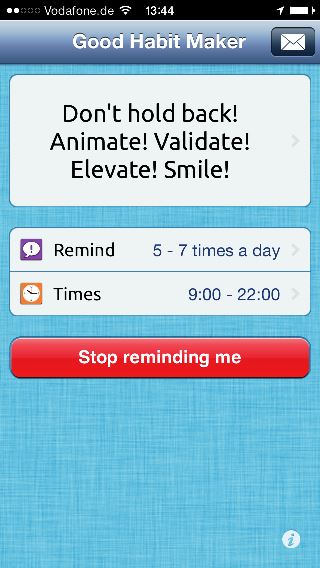
OK. The Good Habit Maker is a nice little (free) app that does only one thing: at pre-selected intervals over the day, it’ll push one sentence to your smartphone´s screen, e.g. your personal change mantra. Helps a lot to bring your mind back to what you want to achieve during busy schedules.
The app Balanced is a little more refined, it´s a sort of task manager. You can enter specific tasks that you want to accomplish, and the quantities/intervals you intend to fulfill (e.g., “watch a TED talk once a week”). The app will then continuously remind you to complete those tasks until they are done. It also keeps track of you levels of completion and timeliness. There´s a demo version that is limited to a small number of tasks – the full version comes at $ 2.99.
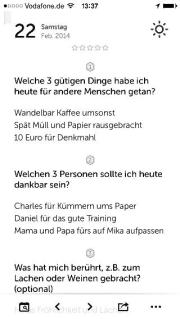
And finally, the Grid Diary: as the name suggests, it´s a nice and clean diary app. The useful twist: you can pre-select (or enter your own…) specific questions. So instead of having to think about what to write each and every evening, the app will make you respond to the prompts that you specifically chose to be given. By way of example, I use it as a gratitude journal, which is one of the pre-eminent interventions in Positive Psychology. It´s free but offers some in-app purchases.
Enjoy! Keep it going! And for some extra energy, power up your Sisu!
I just wanted to share this beautiful photo with you. While I write these words, I´m sitting in front of my favorite café in my German hometown, I have a day off – and was asked to write an article on Positive Psychology for the premier HR and Coaching practitioner magazine. It´s the first day of 2014 that really feels like spring – no need to wear a jacket in the early afternoon sun. And, very appropriately, iPod shuffle mode chose to play me the song you´ll find below the picture…




 The app Balanced is a little more refined, it´s a sort of task manager. You can enter specific tasks that you want to accomplish, and the quantities/intervals you intend to fulfill (e.g., “watch a TED talk once a week”). The app will then continuously remind you to complete those tasks until they are done. It also keeps track of you levels of completion and timeliness. There´s a demo version that is limited to a small number of tasks – the full version comes at $ 2.99.

 Mappalicious