Godspeed to MAPP 9! I Love Myself so Much More Because of You…

The Master of Applied Positive Psychology program 2013/2104 at University of Pennsylvania (MAPP 9) is history. While the graduation festivities are still up and coming in May, it´s been the last time for us to come together as a full group since not all of us will come to graduation. It´s been a very emotional weekend with lots of special treats – but I promised not to divulge any details. I don´t want to be the spoiler for the future Mappsters. Let´s just say that some wise person brought a pack of Kleenex for each person in the room…

I´ll just share one thing with you, and that is a sentence that my classmate Guang Zeng said to our group at one point (and which may well be the most beautiful thing I´ve ever heard…)

I love myself so much more because of you!

Before coming into class on Sunday morning, I took this photo of Penn´s Locust Walk that runs across the core campus. It perfectly captures the mood of that weekend as we were frequently reminded of the fact that the end of MAPP 9 is the beginning of our journey in/with Positive Psychology – and not the end.

The Road goes ever on

As Bilbo Baggins sings:
The Road goes ever on and on
Down from the door where it began.
Now far ahead the Road has gone,
And I must follow, if I can,
Pursuing it with eager feet,
Until it joins some larger way,…
Where many paths and errands meet.
And whither then? I cannot say.
Is this the end of Mappalicious?

Is this the end of Mappalicious?

Certainly not. I´m going to continue blogging on Positive Psychology topics. Maybe not with the same regularity (as other exciting projects are waiting…) – but I will…

Got Grit? How “Youth Mentoring Partnership” helps Kids to Strive

Part of the requirements for the 2. semester of the MAPP program has been a 4-month service-learning project. To this effect, my beautiful “cohort” members Patricia De La Torre, Charles Cycon, Harold Hanul Lee, Guang Zeng, and my humble self had the great pleasure to work with Philly-based NFP Youth Mentoring Partnership (YMP) and their truly inspiring Director Chris Major.

YMP is committed to “helping kids overcome formidable challenges to be successful today and in the future”.  YMP programs have five main components: mentoring, intense physical fitness, focused goal-setting and achievement, earned recognition, and positive feedback. The organization’s signature intervention is the Friend Fitness Program (FFP). Offered year-round in select locations, the FFP is free of charge to students in grades 6 – 12.

Got_GritThe FFP aims to instill beneficial traits in its students by designing a challenging mix of intense strengths-training workouts, super-slow manual resistance routines, and cardio exercises. Upon entering the program, students are matched with a personal mentor that gives them undivided attention, guides them through strength training exercises, monitors their progress, helps set and track their goals, celebrates their achievements, acts as a positive role model, and becomes a supportive caring friend. Over the course of a year, students learn to take care of their bodies, set goals and achieve them, take responsibility for their actions, develop resiliency in the face of adversity, value effort and perseverance, and to ultimately develop Grit – which is defined “perseverance and passion for long-term goals” and has been shown to be associated with a variety of desirable outcomes such as a high GPA in college (beyond the explanatory power of general intelligence).

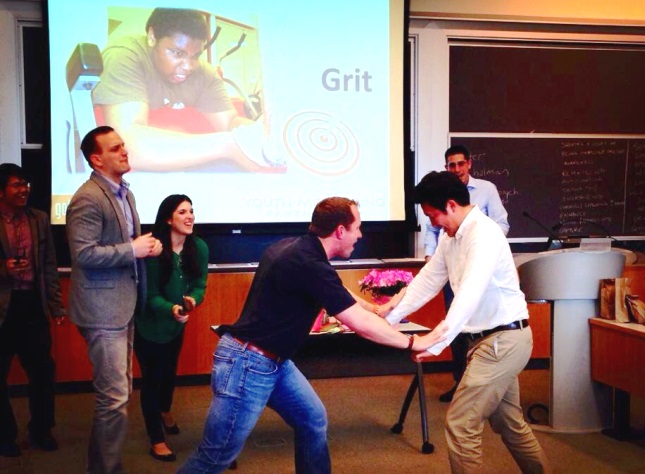
The “secret sauce” of FFP is creating regular “moments of choice” which basically means giving the kids a (physical) adversity to overcome and thereby the opportunity to grow by choosing to persevere in the face of that challenge – aided by the support from the personal mentor. The general idea is that those experiences of success via being gritty will then spill over to other domains of life, such as school work. Below, you’ll see a photo displaying Chris leading Harold through one of the super-slow resistance routines (and the rest cheering for them) as part of our final project presentation.

Moment of Choice

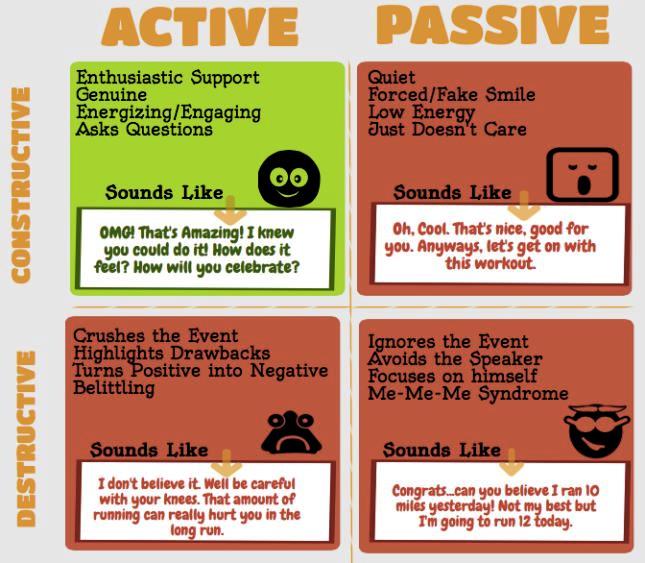
In short, we helped YMP by enhancing their onboarding process for new mentors. Among others things, we´ve created the outline and a demo for an online course and several infographics on relevant Positive Psychology concepts such as active-constructive responding.

Active-Constructive Responding

And this is also where you, gentle reader, may come into play:

If you love kids, sports, and fun (plus: doing “good”), YMP might be the place for you (even outside of Philly – they´d really like to expand…). If your are thinking about volunteering, donating, or helping YMP in any way you see fit, please go to their website and contact Chris.

P.S.

Chris – you´re an awesome individual!

My Year in MAPP: A 5-Step Course in the fine Art of Being Un-German

In general, I hate this sentence – but: time flies.

Right now, I´m in Philly, precisely: in room 340 of Wharton´s Huntsman Hall, for attending the final onsite period of the 2013/14 MAPP program at University of Pennsylvania. Seems like yesterday that I wrote that blog post on being admitted to my deepdive into Positive Psychology at UPenn. Maybe it´s still a little bit early for reminiscence, since there´s still a lot of work ahead (final papers, capstone projects) – but lately, I´ve been musing on a truly intriguing question:

Is MAPP a Course in being Un-German?
Flag - German SmileyThat question only makes sense when you´re German, of course – which I happen to be. My MAPP classmates surely know I´ve been using this definition a lot over the year: un-German. What do I want to say here?

Despite that disreputable first half of the twentieth century, I kind of like being German. According to most socio-economic (and also ecologic) indicators, it´s a very good place to live. Hey, according to BBC we might even the most popular country in the world. Go figure!*

But what do other countries like or maybe even admire about Germans? Let´s look at some of the (pretty thoroughly verified…) stereotypes:** People definitely love our cars (and the fact that there´s no speed-limit on most areas of the Autobahn), they indulge in our Bier, Schnaps, and Riesling-Wein (especially around the time of the Oktoberfest – which I´ve never visited by the way…), our ten trillion varieties of Wurst and the Schnitzels (although the original Wiener Schnitzel is from Austria, of course). So generally speaking, people like our products. They love things “Made in Germany”.

Because that´s what we´re good at. Germany has an “engineering culture”. We´re good at planning things and following through with it, that´s our Prussian heritage. We´re builders and craftsmen, planners and executors, not so much “poets and thinkers” any more. We´re industrious, punctual, orderly, dependable, and basically good at “being good at things”.
Emilia Lahti & Nico RoseRather not on top of the list is “the German” as a person(ality). Most other countrymen consider us to be blunt to the point of outright rudeness – if we´re talking at all, that is. We´re not the epitome of warm-heartedness, either (that may be a result of our language). And while Germany typically is considered to be the “export world champion”, our humor definitely is not one of our hit products.

Additionally, we´re just not a very optimistic people. I mean, compared to most other countries, we´re really really rich and really really healthy and long-living. We´re well-off – period. Still, collectively we´ve managed to have a special kind of fear being named after us: “German Angst” (roughly: being overly cautious and pessimistic). Oh, and we´re also good at feeling Weltschmerz – which can be described as the state of “being pissed off with existence in general and also in particular”.

So on the face of it, trying to be a good German and studying Positive Psychology (here´s a short definition) does not add up. At the end of the day, Positive Psychology is just too … ahem … positive. Rather, a German in a Positive Psychology course seems like a prototypal case of “opposites attract”.

Yet, in spite of it all, I did it. And here´s what I´ve learned…

Lesson 1: Greeting Somebody

In Germany, most people opt for a solid handshake when greeting somebody they do not know that well. Among younger people and goods friends, you’ll also see the occasional hug or that “kiss-kiss embrasser thing” we copied from our French neighbors.

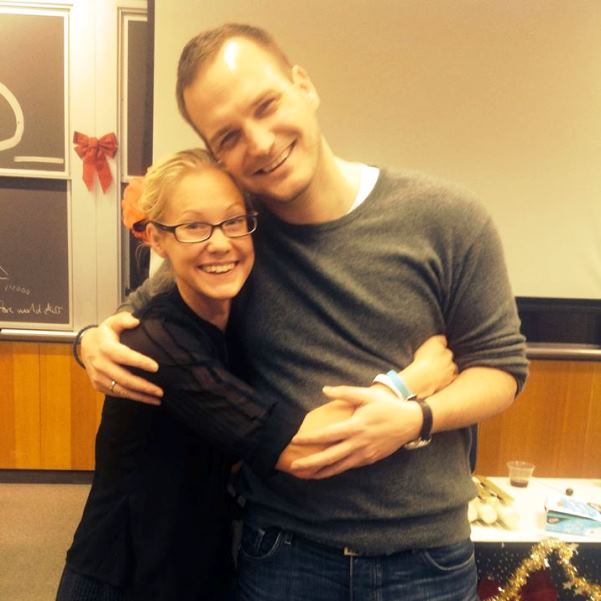
In MAPP, people hug each other at all times. Basically, our bodies are completely entangled while being on campus. Was a little strange at first – but then I´ve found this piece of research that shows how important hugs are for our health.
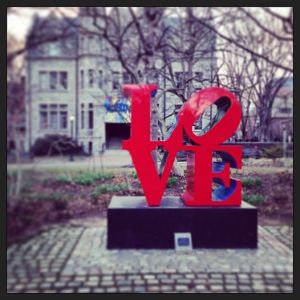
LOVE_Penn_PhiladelphiaLesson 2: Engaging in Small-Talk

In Germany, when meeting somebody again after several weeks, of course you´ll engage in some microscopic dose of small-talk. E.g., when somebody asks you “How was you flight?”, you´re supposed to reply something like this: “Oh, it was the worst thing ever. There was a delay of at least five minutes. And they didn’t have Becks beer on board. I did not get the window seat I wanted and the food servings were tiny. The guy next to me smelled like a dead rodent and I had already seen all of the HIMYM episodes they showed on board.” The other person will then reply: “Oh, I know exactly what you´re saying. It´s been even worse for me…………..”

In MAPP, when people ask how your flight was, you´re supposed to say “Awesome!” That´s it. And the other person will respond: “That´s awesome. Let me give you a hug…”

Was a little strange at first – but then I´ve found this piece of research that shows how mostly looking on the bright side of life is really beneficial for your psychological and physiological well-being.

Lesson 3: Taking a Break
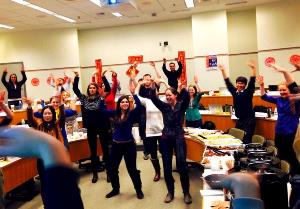
MAPP Energy BreakIn Germany, when you take a break (which we don´t do that often), you basically stop doings things. Maybe, you have a piece of Streusel-Kuchen, maybe you check your mobile phone for messages. And if you meet a German who is one of those rare positive outliers on extraversion, you might be able to get him engaged in a little small-talk – but don´t count on that.

In MAPP, when you take a break, you´re not allowed to sit down and just do nothing. Because breaks are supposed to be “energy breaks”. So basically, somebody will walk up front, put on some music that is not Rammstein, and then coerce all the other people in the room into frenetic singing and shouting, and moving their bodies in distinctly inappropriate ways. Afterwards, you return to your seat. But before that, you hug.

Was a little strange at first – but then I´ve found this piece of research that shows how taking short breaks from work for dancing is really good for your health and gets so creative juices flowing

Lesson 4: Answering “complicated” Questions

In Germany, when somebody asks you a (“complicated”) question, you answer. That´s it. If you don´t want to do something or disagree, you just say “Nein!” or “That´s not a good idea.” Works out fine.

In MAPP, when somebody asks you a (“complicated”) question, you´re supposed to say something like this: “Oh, that is a truly brilliant question (break into huge smile while speaking…). I really appreciate it. It´s just so thoughtful and deep. I could have never come up with that in a million years. By the way, I just love your hair today. So, about your question…”

When you want to say “No” to somebody, or “I think that´s a bad idea” things get a little more complicated. Because: You can´t. It´s sort of “not allowed”. So instead, you might want to start with something along the lines of the above-mentioned phrases. Now, proceed by putting on a (just slightly) less smiling face and say, e.g.: “Let me give you a little bit of context on that.”*** Then, in excruciating length and detail, you recount each and every item of information that may or may not be relevant to the current affair, starting roughly at Lincoln´s “Better Angels of our Nature” address. And basically, you keep on going until the other person has forgotten what she wanted in the first place. Afterwards, you hug.

Was a little strange at first – but then I´ve found this piece of research that shows how important it is to really be empathetic towards other people, and to engage in (what Positive Psychologists call) active-constructive responding.
MAPP White DogLesson 5: Finishing something

In Germany, when you´ve finished something, you start doing something else immediately (except for when we want to practice the art of Gemütlichkeit – but hey: drinking beer is also doing something…). That´s what we´re here for. We do stuff. We finish it. We do something else. I mean, one of the largest chains of building centers in Germany advertises the slogan “Es gibt immer was zu tun…” (“There´s always something to do…”).

In MAPP, when you´ve finished something, you cannot do something else immediately. Nohoo! Somebody will walk up to you and ask you to savor what you´ve just did. So you might have been to the rest room, reenter the classroom – and somebody will approach you and ask: “Nico, did you take enough time to savor that experience?” Not.

But savoring really is a big issue in MAPP. Now, that is really really un-German. I´ve understood that it´s close to the concept of being “gemütlich”, just (mostly…) without beer. Basically, it´s the opposite of feeling Weltschmerz. It´s about back-pedaling, admiring your recent accomplishments, and giving yourself (and the world in general…) a mental pat on the back – and a hug.

Was a little strange at first – but then I´ve found this piece of research that shows how taking your time to savor life and the beautiful things (and maybe even some of the not so beautiful things…) it entails is really important for our well-being and finding meaning in life.

So, that´s what I´ve learned. Here´s the management summary:

Wherever you are, it is your friends who make your world.

(William James)

Alternatively, in the words of Henry David Thoreau:

Nothing makes the earth seem so spacious as to have friends at a distance; they make the latitudes and longitudes.

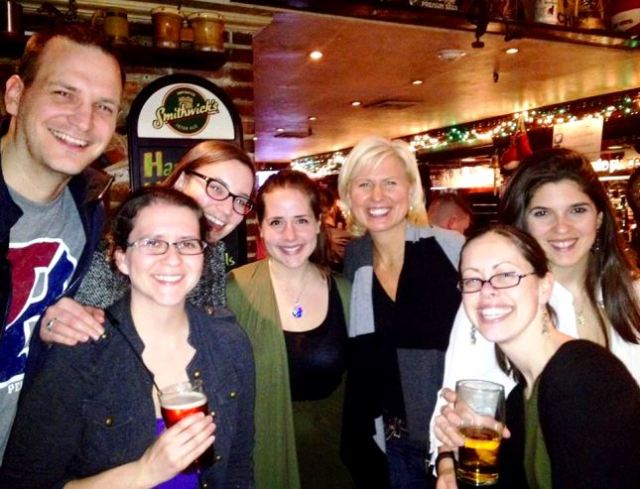
MAPP 9 & Co.: Thanks a million! Love you guys. Lots of hugs…

Nico
MAPP_White_dog


* But to be honest: that survey is from 2013, a year without any major soccer tournaments. That doesn´t really count…

**You will find 151 of those in Liv Hambrett´s hilarious and at the same time truly insightful piece What I Know About Germans.

*** Thank you for that one, James!

Art as Therapy: Is Mindfulness the Active Ingredient?

MAPP is a fulltime program – but combines onsite classes with long-distance learning periods. Part of the distance learning comprises a lot of reading (…who would have thought of that…) and writing essays about a wide array of positive psychology topics. I´ve decided to post some of those essays here on Mappalicious. Surely, they´re not the be-all and end-all of academic writing. But then again, it would also be a pity to bury them in the depths of my laptop…

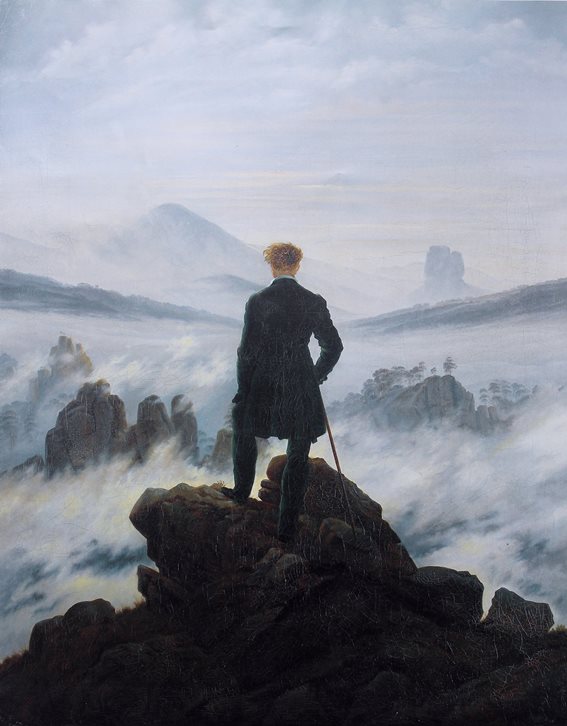
Wanderer über dem Nebelmeer

For the sake of forthrightness, let me first say that I feel anything but self-confident and adept to write this essay. I have sort of bumbled through art classes in high-school, and I´ve avoided going to museums as effectively as possible all my life. I´ve liked art – if at all – based on its aesthetic-appealing quality (my favorite painting probably is Caspar David Friedrich´s “Wanderer above the Sea of Fog”) which most likely makes me a cretin in the eyes of every true lover of art.

This being the case, I have to say I enjoyed reading de Botton and Armstrong´s (2013) oeuvre “Art as Therapy” due to the fact that it helped me to “get a grip” on that somewhat impalpable subject. It provided me with a functional set of tools to approach a painting, something which I clearly lacked so far. So, drawing on de Botton and Armstrong´s insights (which will be described in the following section) I would like to argue that exposing ourselves to works of art can enhance our well-being, and additionally help to understand the underlying nature of well-being by providing opportunities to exercise our capacity for mindfulness.

Art as a Tool to make up for our human Frailties

Creating art has been used as a mode of psychotherapy (or at least: part of a set of different interventions) for quite a while now, especially aiming at relieving the suffering from trauma and anxiety disorders. While it remains somewhat unclear how making art is helping people to cope with difficult experiences in their lives (Kapitan, 2012), meta-analyses show that art therapy seems to be able to help people with several different psychological disorders – even if effect sizes remain rather small (Reynolds, Nabors, & Quinlan, 2000; Slayton, D’Archer, & Kaplan, 2010). Therefore, de Botton and Armstrong´s book is by far not the only book by the name of “Art as Therapy”. Yet, when taking a closer look, it becomes clear that the authors do not aim at describing “art therapy” as a means to helping a clinical population. Rather, they want to provide tools for our personal development, for finding a “medicine” for our everyday human frailties.

Specifically, de Botton and Armstrong (2013) list seven human frailties – and additionally describe how exposing ourselves to art can serve to remedy maladies. I will briefly define them here. In the absence of supporting scientific literature for this specific take on art, I´ve looked up matching quotes* from a wide array of artists and writers that point towards the same set of insights.

Forgetting. The human mind is prone to forgetting – be it everyday things or really important lessons of life. As such, art can be a way of remembering and keeping memories alive.

(Painting is just another way of keeping a diary. – Pablo Picasso)

Pessimism. We often underestimate the amount of goodness in our lives and, conversely, overestimate the prevalence of bad events. The beauty of (some) art can help us to remember and appreciate what is right with human existence – it can act as a source of hope.

(The beauty one can find in art is one of the pitifully few real and lasting products of human endeavor. – Paul Getty)

Despair. We sometimes tend to feel separated from all other human beings, believing that our joys, but particularly our suffering, is agonizingly unique. Art connects us to the rest of mankind by displaying that (and how) a certain amount of suffering is a normal (and maybe even: necessary) element of the human condition.

(Without art, the crudeness of reality would make the world unbearable. – George Bernard Shaw)

Disintegration. Oftentimes, we think of ourselves as monadic entities, forgetting about the fragmentation of the human mind and soul, and that we are a process rather than a steady state. Art can help us to reacquaint with that fractal and ever-changing character of our existence.

(There is nothing worse than a sharp image of a fuzzy concept. – Ansel Adams)

Personal Blind Spots. We do not know many things about ourselves. And quite naturally, we do not know what we don´t know. Art can help us to raise our self-awareness by serving as a mirror that reflects more that can be seen when solely looking at the person that stands in front of that mirror.

(Art enables us to find ourselves and lose ourselves at the same time. – Thomas Merton)

Comfort Zone. We like to stay in our comfort zone, exposing ourselves to things that we already know, and people that are similar to us – thereby avoiding the risk of being taken by surprise. Exposing ourselves to art can lead us off the beaten track, guide us to find uncharted territory, thereby providing opportunities for personal growth and individuation.

(Art hurts. Art urges voyages – and it is easier to stay at home. – Gwendolyn Brooks)

Ennui. We tend to take the things (and people) in our lives for granted. Even awe-inspiring wonders of nature or magnificent works of architecture and technology can lose their magic when we fail to appreciate them in a condignly fashion. Works of art can revive that process of due appreciation, awe, and wonder.

(The purpose of art is washing the dust of daily life off our souls. – Pablo Picasso)

Mindfulness as a fundamental Ingredient to the “Medicine of Art”

When trying to view exposure to art through the lens of positive psychology (Seligman & Csikszentmihalyi, 2000) extracting the active ingredient, the “least common denominator” in de Botton and Armstrong´s (2013) cure for the seven human frailties, I feel they can be boiled down to the notion that exposing ourselves to art (and of course creating it) can be likened to a an exercise in (the art of) being mindful** – insofar as all the frailties have a common ground in a lack of this special state of mind (and heart):

  • When we forget something important in our lives, we are not mindful of what we (used to) know.
  • When we are overly pessimistic, we are not mindful of all that gives us a reason to hope.
  • When we give in to despair, we are not mindful of the true nature of human existence.
  • When we are overly sure of who we are, we are not mindful of the fuzziness and fluidity of “the self” – and what we could be instead.
  • When we only look at what we like, we are not mindful of what we dislike in ourselves.
  • When we always stay close to our comfort zone, we are not mindful of the possibilities and beauty that may lie beyond.
  • When we don´t appreciate the wonder of (human) life and everything it entails, we are not mindful of the improbability (and potentially: uniqueness) of it all.

Conclusion

By now I´ve realized that art can be a powerful teacher. Visiting the Barnes Foundation in Philadelphia and spending more than an hour with just one painting (in my case: “Unpleasant Surprise” by Henri Rousseau; see below) has strikingly shown me how I can use art to cultivate my capacity for mindfulness. But maybe it takes a really good to teacher in the first place to appreciate art as a teacher.

References

Brown, K. W., & Ryan, R. M. (2003). The benefits of being present: mindfulness and its role in psychological well-being. Journal of Personality and Social Psychology, 84(4), 822-848.

de Botton, A., & Armstrong, J. (2013). Art as Therapy. London: Phaidon Press.

Grossman, P., Niemann, L., Schmidt, S., & Walach, H. (2004). Mindfulness-based stress reduction and health benefits: A meta-analysis. Journal of Psychosomatic Research, 57(1), 35-43.

Kapitan, L. (2012). Does art therapy work? Identifying the active ingredients of art therapy efficacy. Art Therapy, 29(2), 48-49.

Reynolds, M. W., Nabors, L., & Quinlan, A. (2000). The effectiveness of art therapy: Does it work? Art Therapy, 17(3), 207-213.

Seligman, M. E. P., & Csikszentmihalyi, M. (2000). Positive psychology: An introduction. American Psychologist, 55(1), 5-14.

Slayton, S. C., D’Archer, J., & Kaplan, F. (2010). Outcome studies on the efficacy of art therapy: A review of findings. Art Therapy, 27(3), 108-118.

*All quotes found via http://www.brainyquotes.com.

**Mindfulness is “commonly defined as the state of being attentive to and aware of what is taking place in the present” (Brown & Ryan, 2003, p. 822) and is associated with a wide array of desirable psychological outcomes (Grossman, Niemann, Schmidt, & Walach, 2004).

“Focus on What´s Working”: New Management Article on Positive Psychology

***Mainly for readers who know German***

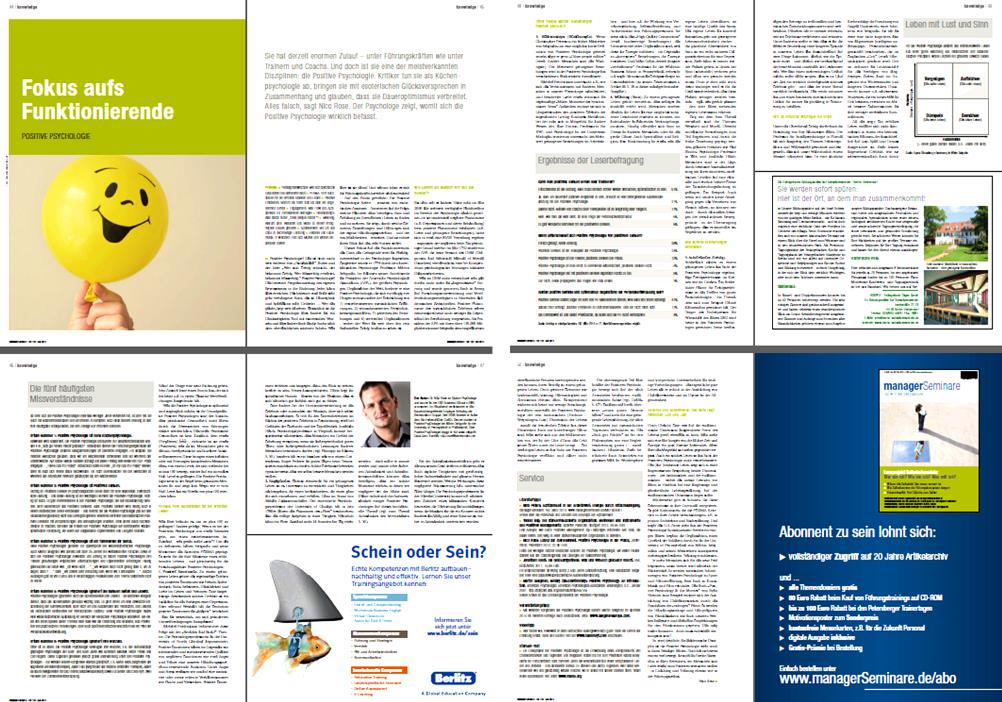
Yesterday, the new issue of “managerSeminare”, Germany´s premier monthly trade magazine on coaching, training, and HR topics was published. It features my 7-page article on the state-of-the-art of Positive Psychology, concisely covering a lot of the topics we´ve been learning in the MAPP program so far.

If you know some German: Enjoy!

Fokus aufs Funktionierende

The “Happy at Work Manifesto”: Do you have enough Arbejdsglaede?

Yesterday, I stumbled upon a guy named Alexander Kjerulf from Denmark (Germany´s northernmost neighboring country – just in case you were wondering…) who is leading a company by the wonderful name of Woohoo Inc. who are in the business of (what academics would call) Positive Organizational Scholarship – the science of happy and at the same time productive workplaces.

They have created a wonderful Happy at Work Manifesto which I´d like to share with you here:

HappyAtWorkManifestoEN-RGB

And if like this, you might also like Alexander´s TEDx talk:

That´s all for today. Enjoy!

P.S.

Remember, he´s Danish. Those guys know something about happiness. Denmark regularly pops up at the top of lists displaying the world´s happiest nations

Help them to make their Dream come true: Finding the Happiest Lifestyle – Happiness 101

Find the Happiest LifestyleThey are two ordinary but quite special young guys from Germany. Right now, they´ve entered the USA – and will soon stop by a place near you. Their plan: completing a road trip from “sea to shining sea” (and back). And while on their way, the need YOU!
Chris and Michael plan to do a lot of crazy sh.t on their trip – and they would like to interview 1,000 people while on the road to find out what “the happiest lifestyle” is. Personally, I suspect they are going to find more than one – but let´s leave that up to them.

Via this link, you can find all the relevant info on their project: Why they do it, where they will be travelling, and how you can help them on their way (Do you want to be interviewed? Do have 10 bucks to spare? Maybe invite them to Chipotle?)

While on their way, they are going to shoot lots of videos to share their experience. But let the kids speak for themselves – and enjoy!


What is “Awe”? See Pharrell Williams being overwhelmed by the very own Happiness he brought to this World

Somewhere in an outlying district of our emotional continuum lies the emotion of awe. In one of the rare academic papers on that subject, researchers Dacher Keltner and Jonathan Haidt write: “Two appraisals are present in all clear cases of awe: perceived vastness and a need for accommodation, defined as an inability to assimilate an experience into current mental structures”.

I repeat: perceived vastness and the inability to assimilate an experience in to current mental structures.

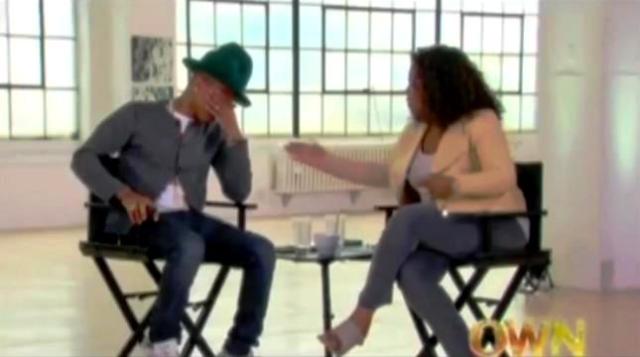
I´m pretty sure this is just what happened to singer/producer Pharrell Williams when Oprah Winfrey showed him a montage of videos from all over the world that portrays people dancing to his tune – and just being happy.

Pharrell Crying Happy

Isn´t that great? Being touched by realizing how you´ve been able to touch millions and millions of lives? To quote my hero Esa Saarinen: Good job, Pharrell!

By the way: If you´re interested to see how the Little Guru grooves to Pharrell – here you go: