Following your Bliss vs. following your Blisters

I´m sitting at “Vino Volo”, Philly airport right now. The 7th onsite of MAPP 2013/14 is over. It was another incredible, intensive, incomparable experience – not only thanks to the program itself, but due to the other participants. A big shout-out especially goes to Ann Brafford and Patricia De La Torre.

The hardest part always seems to choose what to write about afterwards. There´s so much good stuff out there – and I only have time to write about a few things. Yesterday afternoon, our guest lecturer was Yale´s Amy Wrzesniewski. Wrzesniewski is one of the world´s most renowned researchers on meaning and purpose on the job, (career) callings, and turning the job you have into the job you want (job crafting).

Towards the end of her lecture, she touched upon the topic that is displayed in the title of this post: Should we follow our bliss – or our blisters in order to have a fulfilling and successful (work) life? Both phrases were coined by mythologist and writer Joseph Campbell who, based on his literary studies, developed the theory of the Monomyth. The idea in short is that basically all great stories (from Homer´s Iliad to Harry Potter) are based on the same universal storytelling structure: the Hero´s Journey.

The following quote can be found in his book “The Power of Myth”:

If you follow your bliss, you put yourself on a kind of track that has been there all the while, waiting for you, and the life that you ought to be living is the one you are living. Wherever you are—if you are following your bliss, you are enjoying that refreshment, that life within you, all the time.

A lot of Campbell´s students obviously misinterpreted his quote as an advice to embrace hedonism as the path to happiness, to pursue “feeling good no matter what”. Late in his life and frustrated with this development, Campbell purportedly made the remark “I should have said, ‘Follow your blisters’.”

Had those students paid more attention to the structure of the Monomyth they would have grasped that the bliss in “follow your bliss” cannot be about pleasure alone. The Hero´s Journey is a path that entails great struggle, pain, and even losing (parts of) oneself: Luke Skywalker and Frodo Baggins both lose a part of their body before defeating evil for good.

This notion can be made clearer when replacing the term “bliss” with “passion”. Passion is based on the Latin word “passio” which means “suffering” or “enduring” (as in “The Passion of Christ”). Only much later did it acquire its meaning of “enthusiasm” and “strong liking”. Consider this image (source):

What success looks like

The drawing mirrors sayings such as “No Cross, no Crown” or “No Pain, no Gain”. Despite thousands of books offering us a shortcuts to “success and everything we ever wanted”, intuitively most of us know that the picture on the right is the real deal – and the one on the left (in 99,9% of all cases) is Bullshit (as defined by Harry G. Frankfurt).

Every melody would be played in C major. Every painting would depict beautiful water lilies. Every story would begin with “and they lived happily ever after”.

And how lackluster our lives would be if the left side were an effigy of truth: Every melody would be played in C major. Every painting would depict lovely water lilies. Every story would begin with “and they lived happily ever after”. Such a life would not be worth living.

Dear shortcut vendors, here´s what Yoda (picture source) has to say to you:

Yoda - Up the shut fuck you must

Field of Dreams: Positive Psychology at the Movies

As we´ve entered the second semester of the MAPP program, the subjects have changed. To put it black & white: while the first semester was (mostly) focused on the theory of Positive Psychology, the second semester zooms in on the application in different domains (e.g. healthcare, coaching, consulting with organizations). One of the courses explicitly focuses on the value of the “humanities” (music, art, philosophy, history, etc.) for enhancing “the good life”. That´s why I´ve been writing so much about my love for heavy metal in recent posts.

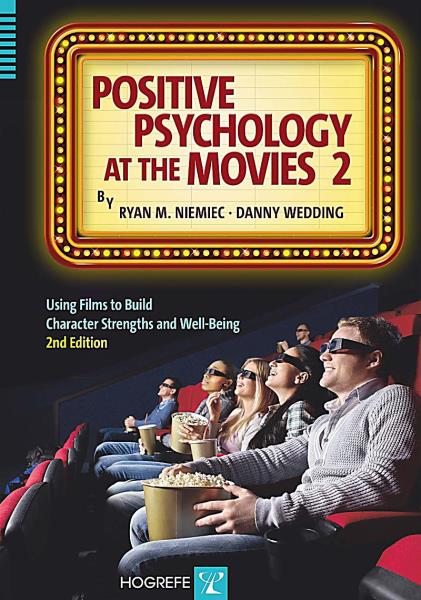
Positive Psychology at the MoviesNow, a lot of people may not like to go the theater, opera, or museums that much. But there are hardly any people that do not like to go the movies. As such, I am thrilled that some researchers explicitly focus on cultivating psychological well-being, meaning in life, and similar “positive constructs” via watching the “right kind” of movies. One of those people is Ryan Niemiec who also was a guest lecturer at our January onsite period. He´s the author of Positive Psychology at the Movies – and also happens to be the director of the VIA Institute on Character.

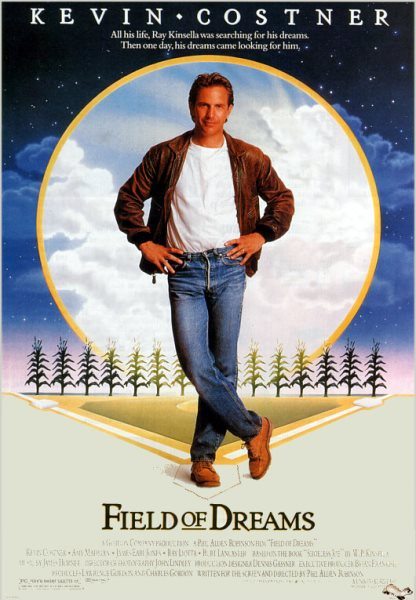
Field of DreamsDrawing on the insights of this branch of Positive Psychology, from now on, we´re going to have a movie night once every onsite. Last night, lead by Marty Seligman, we watched Field of Dreams (1989) starring Kevin Costner. Now this film is not that well-known in my home country Germany because baseball is just not a big thing in our culture.* Even though, I tremendously enjoyed watching that film since – at the end of the day – baseball is just used an analogy for conveying ideas about callings, purpose, meaning in life, reconciliation, and finding peace of mind (and heart).

Actually, the whole plot very much reminded me of a psychotherapeutic method by the name of Family Constellations that has become a sort of “movement” in Germany, but is really not well-known anywhere else. I do not wish to expand on this here – but if you´re interested to know more about this: here you´ll find a concise scientific paper in English on the underpinnings and application of this method.

So, it´s Saturday. If you go to the movies tonight, why not put on those “positive psychology glasses” and e.g., look for the expression of character strengths in the protagonists?

* The only baseball player that I really knew about before watching the movie is Yogi Berra – who is quite famous for his brainy quotes (Yogiisms) such as: “Always go to other people’s funerals, otherwise they won’t go to yours.”

P.S.

Another valuable resource is the film index at cinematherapy.com.

Do what you love, and do it often: The Holstee Manifesto

Today, I´d like to share with you the Hostee Manifesto, a clear proof for the fact that you do not have to be a positive psychologist to have a deep knowledge of positive psychology. It has been created by a group of young people, e.g., Fabian Pfortmüller,  who happens to be co-founder of Sandbox, a truly exceptional group of young global change-makers that I had the pleasure to spend an incredible weekend with in Lisbon in 2012.

I´ll let the words speak for themselves.

The Holstee Manifesto

Generation Y: Why we don´t want to lead … like you lead!

I know that about half of my pageviews come from Germany – so I´d like to share with you a presentation I just uploaded on Slideshare. It´s about Generation Y and the future of leadership – but there´s a strong link to positive psychology, especially on the subject of meaning in life.*

* To all English readers: I apologize – maybe I´ll put up a translated version someday…