Another 3 Positive Psychology-infused Books I´m really looking forward to

This is the magic of books: One can never have enough of them. After publishing two lists of recent and upcoming books that are infused by Positive Psychology over the last days (list one, list two) people kept pointing my attention towards more exciting stuff. So here´s another list of three books that you should definitely put on your reading list.

Scott Barry Kaufman & Carolyn Gregoire: Wired to Create: Unraveling the Mysteries of the Creative Mind. Scott Barry Kaufman is the scientific director of the Imagination Institute in the Positive Psychology Center and author of “Ungifted: Intelligence Redefined”. About the book:

“Based on psychologist Kaufman’s groundbreaking research and Gregoire’s popular article in the Huffington Post, Wired to Create offers a glimpse inside the “messy minds” of highly creative people. Revealing the latest findings in neuroscience and psychology, along with engaging examples of artists and innovators throughout history, the book shines a light on the practices and habits of mind that promote creative thinking.”

Jane McGonigal: SuperBetter: A Revolutionary Approach to Getting Stronger, Happier, Braver and More Resilient–Powered by the Science of Games. Jane McGonigal is a senior researcher at the Institute for the Future and the author of The New York Times bestseller “Reality Is Broken: Why Games Make Us Better and How They Can Change the World.” About the book:

“McGonigal reveals a decade’s worth of scientific research into the ways all games—including videogames, sports, and puzzles—change how we respond to stress, challenge, and pain. She explains how we can cultivate new powers of recovery and resilience in everyday life simply by adopting a more “gameful” mind-set.”

D. J. Moores, James O. Pawelski & others (Eds.): On Human Flourishing: A Poetry Anthology. James Pawelski is the Director of Education and Senior Scholar in the Positive Psychology Center at the University of Pennsylvania, where he serves as the founding director of the Master of Applied Positive Psychology (MAPP) program. About the book:

This collection of verse brings together poems of felicity, capturing what it means to be well in the fullest sense. Presented in 14 thematic sections, these works offer inspiring readings on wisdom, self-love, ecstasy, growth, righteousness, love and lust, inspiration, oneness with nature, hope, irreverence, awe, the delights of the senses, gratitude and compassion, relation to the sacred, justice, and unity.

Positive Psychology Books - 3

7 more essential Books on Positive Psychology for 2015/16

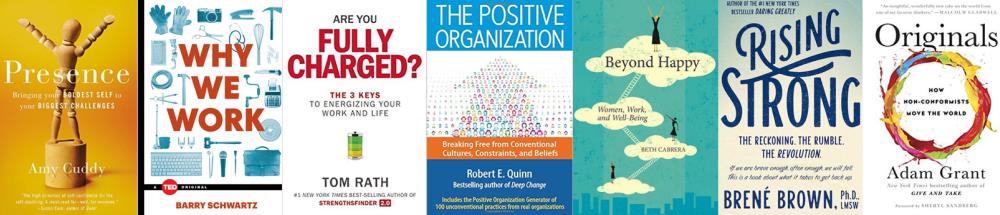
After publishing a list of 5 essential upcoming books on Positive Psychology a couple of days ago, several friendly people approached me (Thank you!) to point me towards further noteworthy books that have just been published or are already appearing on the publishing horizon (a.k.a. on Amazon for pre-order). So, if you´re looking for further entertainment, enlightenment, or just plain Positive Psychology science, here you go. There´s books on women´s careers, rising strong after setbacks, good work and great organizations, world-changing individuals, and much more (click to enlarge the image). Enjoy – and share the good news!

Positive Psychology Books 2015 & 2016

Positive Psychology books that have already been published

Brené Brown: Rising Strong. Brené Brown is a professor at the University of Houston Graduate College of Social Work and author of the No. 1 New York Times bestseller “The Gifts of Imperfection”. About the book:

“It is the rise from falling that Brown takes as her subject in Rising Strong. As a grounded theory researcher, Brown has listened as a range of people — from leaders in Fortune 500 companies and the military to artists, couples in long-term relationships, teachers, and parents — shared their stories of being brave, falling, and getting back up. She asked herself, What do these people with strong and loving relationships, leaders nurturing creativity, artists pushing innovation, and clergy walking with people through faith and mystery have in common? The answer was clear: They recognize the power of emotion and they’re not afraid to lean in to discomfort.” 

Beth Cabrera: Beyond happy: Women, Work, and Well-Being. Beth Cabrera is a senior scholar at the Center for the Advancement of Well-Being at George Mason University and works with companies to help them create positive work environments. About the book:

“Over the course of a decade, Beth Cabrera has surveyed and interviewed more than a thousand women to gather insight into how to effectively balance career and family responsibilities. Beyond Happy: Women, Work, and Well-Being gathers essential findings and offers women proven strategies for living more authentic, meaningful lives. Through the lens of shared experience, Cabrera thoughtfully examines the challenges women face and presents a simple yet powerful model for enhancing well-being that can both improve and transform lives.”

Tom Rath: Are you fully charged? Tom Rath is a Penn MAPP alum, now a regular guest lecturer in that program, and otherwise, regularly to be found at No. 1 spots on the New York Times bestseller lists with his heavily Positive Psychology-infused masterpieces. About the book:

The book “reveals the three keys that matter most for our daily well-being, as well as our engagement in our work. Drawing on the latest and most practical research from business, psychology, and economics, this book focuses on changes we can make to create better days for ourselves and others. Are You Fully Charged? will challenge you to stop pursuing happiness and start creating meaning instead, lead you to rethink your daily interactions with the people who matter most, and show you how to put your own health first in order to be your best every day.”

Barry Schwartz: Why we work. Barry Schwartz is a professor at Swarthmore College, author of the highly-acclaimed The Paradox of Choice and a regular New York Times contributor, and a regular guest lecturer in the Penn MAPP program. About the book:

“We’ve long been taught that the reason we work is primarily for a paycheck. In fact, we’ve shaped much of the infrastructure of our society to accommodate this belief. Then why are so many people dissatisfied with their work, despite healthy compensation? And why do so many people find immense fulfillment and satisfaction through “menial” jobs? Schwartz explores why so many believe that the goal for working should be to earn money, how we arrived to believe that paying workers more leads to better work, and why this has made our society confused, unhappy, and has established a dangerously misguided system.”

Robert E. Quinn: The Positive Organization: Breaking Free from Conventional Cultures, Constraints, and Beliefs. Robert E. Quinn is a professor at University of Michigan´s School of Business and author of “Deep Change”. About the book:

“Beholden to accepted assumptions about people and organizations, too many enterprises waste human potential. Robert Quinn shows how to defy convention and create organizations where people feel fully engaged and continually rewarded, where both individually and collectively they flourish and exceed expectations.”

Upcoming books on Positive Psychology

Amy CuddyPresence: Bringing Your Boldest Self to Your Biggest Challenges. Amy Cuddy is a professor at Harvard and best known for her research on body language and “power-posing” (watch her TED Talk here). About the book:

The book “shows us we need to stop worrying about the impression we’re making on others, and instead change the impression we’re making on ourselves. Cutting-edge science reveals that if we adopt behaviors reflecting power and strength, we liberate ourselves from the fears and doubts that obstruct us. By redirecting our thoughts, actions, and even physiology, we free ourselves to be our best.”

Adam M. Grant: Originals: How Non-Conformists Move the World. Adam Grant is a professor at Wharton Business School, author of the immensely successful book Give and Take, and regular guest lecturer in the Penn MAPP program. About the book:

“Using surprising studies and stories spanning business, politics, sports, and entertainment, Grant explores how to recognize a good idea, speak up without getting silenced, build a coalition of allies, choose the right time to act, and manage fear and doubt; how parents and teachers can nurture originality in children; and how leaders can fight groupthink to build cultures that welcome dissent.”

5 essential brand-new & upcoming Books on Positive Psychology

Are you eager to get some fresh perspectives on Positive Psychology? Here you go…

Recently published books on Positive Psychology

Michelle Gielan: Broadcasting Happiness: The Science of Igniting and Sustaining Positive Change. Michelle is a former CBS News anchor and is a Penn MAPP alum. About the book:

“In Broadcasting Happiness, Gielan shows us how our words can move people from fearbased mindsets, where they see obstacles as insurmountable, to positive mindsets, where they see that change is possible and take action. Using scientifically proven communication strategies, we have the ability to increase others’ happiness and success at work, as well as our own, instantly making us more effective leaders.”

Shannon Polly & Kathryn Britton (Eds.): Character Strengths Matter: How to Live a Full Life. Shannon and Kathryn are also Penn MAPP graduates working at the intersection of research and consulting. About the book:

The book brings Peterson´s and Seligman´s character strengths “to life with stories involving children, teenagers, adults, and elders and occurring in family life and business settings, in the present and in the distant past, in locations from China to the United States to the Middle East. Research shows that using character strengths in new ways for a week makes people happier up to six months later. This book includes many ideas for using your character strengths in new ways.”

J. Harold Ellens, Theo D. McCall & David Bryce Yaden (Eds.): Being Called: Scientific, Secular, and Sacred Perspectives. David was an assistant instructor in during my stay in the Penn MAPP program and has his own Mappsterview. About the book:

“This unique book is an essential resource for interdisciplinary research and scholarship on the phenomenon of feeling called to a life path or vocation at the interface of science and religion.”

Positive Psychology Books coming up in 2016

Emma Seppälä: The Happiness Track: How to Apply the Science of Happiness to Accelerate Your Success. Emma is the Science Director of Stanford’s Center for Compassion and Altruism Research and Education and founder of Fulfillment Daily. About the book:

“Drawing on the latest findings from the fields of cognitive psychology and neuroscience—research on happiness, resilience, willpower, compassion, positive stress, creativity, mindfulness—Seppälä shows that finding happiness and fulfillment may, in fact, be the most productive thing we can do to thrive professionally.”

Angela Duckworth: Grit: The Power of Passion and Perseverance. If you are remotely interested in Positive Psychology, it is not necessary to introduce Angela, but for the sake of consistency in this article, she´s a professor at Penn´s Positive Psychology Center and a close colleague of Martin Seligman. About the book:

“Why do some people succeed and others fail? Sharing new insights from her landmark research on grit, MacArthur “genius” Angela Duckworth explains why talent is hardly a guarantor of success. Rather, other factors can be even more crucial such as identifying our passions and following through on our commitments.”

New Positive Psychology Books

Want to be the Boss? Be Happy, Science says, and you´ll be a Good Leader

Happy BossFor a moment, think about a leadership person (a.k.a. boss) in your life that you really liked working for. How could that person be described, what kind of personality did he/she convey? Was he/she more the grumpy moaner – or rather an upbeat “Sunday´s child”?

Turns out that this question is not only about likeability but also about leadership effectiveness. In a recent meta-analysis* published in The Leadership Quarterly titled Is a happy leader a good leader? A meta-analytic investigation of leader trait affect and leadership, Dana L. Joseph and her colleagues found that – broadly speaking – happier leaders also tend to be more effective leaders. In the words of Joseph and her colleagues:

Our analyses show that leader trait affectivity, particularly leader trait positive affect, plays a significant role in predicting leadership criteria.

A happy boss is a good boss.

They also find that the relationship between leader happiness and effectiveness may not be a direct one. Rather, it seems that happy bosses predominantly engage in a special leadership style that has been coined transformational leadership. As opposed to more traditional leadership styles (telling people what to do and controlling them; management by objectives etc.), transformational leadership, according to Joseph et al., consists of the following dimensions:

  • idealized influence, or the extent to which a leader displays conviction and behaves in a way that causes followers to identify with him/her;
  • inspirational motivation, which involves communicating optimism and challenging followers to meet high standards;
  • intellectual stimulation, or the extent to which a leader takes risks, challenges assumptions, and encourages follower creativity;
  • and individualized consideration, which is characterized by follower mentoring, attending to follower needs, and listening to follower concerns.

Now, does that sound like the behavior of a boss we´d all like to work for? My answer is a clear yes. And it predominantly starts with that person´s happiness.

* A special type of study that statistically aggregates previous study results to provide an overview of a specific branch of research.

No Pain, no Gain? Think again! We are able to experience Post-Ecstatic Growth, Science says

Post Ex GrowthOriginally coined by German philosopher Nietzsche, the following quote has become a piece of common knowledge: “That which does not kill us makes us stronger”. Most people have – at one point or another – made the experience that going through really tough times may render us stronger than before, and not shattered as one would initially expect. In psychology, this mechanism is labeled Post-Traumatic Growth (PTG; here´s an overview of the idea).

Some people might even claim that there is no gain without pain. Turns out, that this view may be wrong, or at least incomplete. In a 2013 article published in the Journal of Positive Psychology titled Gains without pains? Growth after positive events, Ann Marie Roepke, Ph.D. student at Penn´s Positive Psychology Center, presents evidence for what she calls Post-Ecstatic Growth, based on a survey among some 600 people. Basically, Roepke had people name the one experience in peoples lives that they remember as the most positive (e.g., the birth of a child). Then, she asked people to specify which category best characterized their positive event, based on Seligman´s PERMA framework and which positive emotions had been evoked by the event (e.g., in awe, inspired, uplifted, joyful, content, fascinated etc.). Additionally, she assessed the outcome of that event, for instance, feelings of personal growth or “doors opening up” for new possibilities in life.

In short, Roepke found clear evidence for the existence of Post-Ecstatic Growth. Here are some excerpts from the discussion section of her article:

Positive events can, in fact, catalyze growth. Although hedonic happiness levels tend to return to baseline after positive events, important changes in eudaimonic well-being and in worldview may remain. Four domains of growth are particularly important after positive events:

  • new meaning and purpose in life;
  • higher self-esteem;
  • spiritual development;
  • and better relationships.

Some positive experiences are more likely to lead to (self-perceived) growth than others. […] Events that evoke stronger positive emotions are more closely linked to growth. This is consistent with Fredrickson’s broaden-and-build theory: positive events can provide opportunities to expand one’s thought-action repertoire, and this expansion can be perceived as growth. Indeed, participants who reported that a positive experience opened their eyes to new opportunities, goals, roles, and values also felt they had grown more. […] Inspiration, awe, and elevation are especially important positive emotions for growth. […] In contrast, more hedonic positive emotion (e.g. feeling joyful and content) predicts less growth.

Inspiration is related to meaning, a sense of connection to something greater than the self. Meaning, like inspiration, is closely tied to growth: meaningful experiences are associated with more growth than experiences of accomplishment, engagement, relationship, and hedonic positive emotion.

Roepke´s conclusion:

Our best moments can inspire us, connect us to something greater than ourselves, and open our eyes to new possibilities, ultimately giving rise to growth.

Hence, there is gain without pain. If we seek out the right positive experiences, we are able to experience gain from previous gains, possibly entering into an upward-spiral of growth.

Want to stay on top of Positive Psychology in Organizations? Here are 3 Reviews for you (PDF)

Happy ManagersBeing a manager in my day job, I am foremost interested in the application of Positive Psychology in organizations – and the science exploring these issues, Positive Organizational Scholarship. While there are a couple of good trade books on the subject, I also like to read original research papers which is always a great source for new ideas to blog about. As there are so many articles out there, the question is: Where should we start?

The (or at least my) answer is: Always start with review articles, and, if there are any, meta-analyses. Both are tremendously valuable in order to get an overview of a discipline in the shortest amount of time – as the authors first scan the extant data-bases for relevant articles, and then organize and summarize the current body of research. It´s a lot of hard work which is usually rewarded by receiving frequent citations over time. So, thanks to all those diligent, hard-working review writers out there!

Here´s a list of three reviews on Positive Psychology in organizations for you – the links will lead you to the respective PDFs. Enjoy!

Positive Psychology at the Movies: Character Strengths in “Love Actually”

Positive Psychology at the MoviesOne of the central concepts in Positive Psychology is the framework of 24 character strengths that have been outlined by Chris Peterson and Martin Seligman in their 2004 tome. It was the foundation for the VIA Institute on Character – where you can take a test (for free) to find out what your top strengths are.

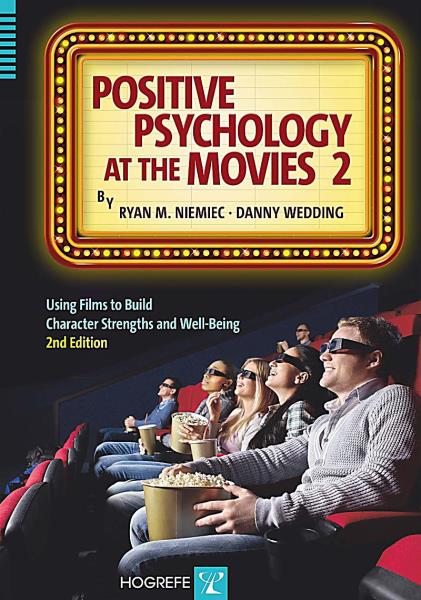
Ryan Niemiec, VIA´s Education Director, has published the book Positive Psychology at the Movies. It examines nearly 1,500 movies with regard to their display of the 24 character strengths throughout their plots. Frankly, so far I did not have the time to watch all of those movies – but considering general life expectancy, I will be able to so until I´m grey and old (don´t know where Ryan finds the time, considering how many books he publishes).

Anyway, I had an idea: instead of trying to find all of the character strengths throughout a ton of movies – would it be possible to find them all in just one? Therefore, I picked one of my all-time favorites, romantic (Christmas) comedy Love Actually, watched it for the hundredth time (or so…) – but for once, looked through the eyes of the VIA taxonomy. And tadaaa: I was able to spot all of them, even though I have to admit that two or three of the attributions may seem somewhat debatable.

Here´s what I´ve found:

  • Mark displays creativity when having arranged the special version of the Beatles´ “All you need is love” for Juliet and Peter´s wedding.
  • Karen displays perspective and humor when cheering up Daniel as he mourns for departed wife.
  • Mark displays creativity when having arranged the special version of the Beatles´ “All you need is love” for Juliet and Peter´s wedding.
  • Harry the Boss displays social intelligence and leadership when confronting his employee Sarah about her being in love with co-worker Carl.
  • Little Sam displays honesty and bravery when telling his step father Daniel about being in love with Joanna.
  • Little Sam displays spirituality when he tells his father about how he believes in love and that there’s one true love out there for each and every one of us.
  • Prime Minister David displays humor when he tries to cheer up Natalie after she told him how bad she has been treated by her ex-boyfriend.
  • The Prime Minister displays prudence and judgment when, at first, he does not want to confront the U.S. delegation during the meeting with U.K. ministers.
  • The Prime Minister displays leadership, humor, and bravery when confronting the POTUS at the press conference.
  • Jamie displays love of learning and perseverance when trying to learn Portuguese in order to be able to talk to Aurelia.Love Actually - Billy Mack
  • Colin displays zest, curiosity, hope, and bravery when deciding to leave the UK for Wisconsin.
  • Mark displays kindness, great honesty, love, and bravery when meeting Juliet at her house on Christmas Eve to confess his love, but also his approval of her living with Peter. (By the way, this is probably my all-time favorite movie scene).
  • Karen displays self-regulation and judgment when pulling herself together on Christmas Day after having found out Harry has cheated on her – in order not to spoil Christmas for their kids.
  • Sarah displays fairness and (the capacity to) love (and be loved) when spending Christmas together with her mentally ill brother.
  • John displays gratitude after having been kissed by “Just Judy” for the first time.
  • The school orchestra/choir displays teamwork when performing at the Christmas concert.
  • The whole audience displays appreciation of beauty and excellence when witnessing young Joanna sing “All I want for Christmas” at the school’s Christmas celebration.
  • Little Sam displays perseverance, and bravery when running to say good-bye to his love Joanna at the airport.
  • Jamie displays hope, bravery, and love when he leaves his family’s Christmas party to spontaneously board a plane to ask Portuguese housemaid Aurelia to marry him.
  • Billy Mack displays humility and gratitude when deciding to return to Joe, his ugly manager, instead of spending Christmas Eve at Elton John´s party.
  • Karen displays forgiveness when she consolingly welcomes her husband Harry at the airport after he has betrayed her.

What´s your favorite movie – and are you maybe going to see it with different eyes in the future?

Study: To Belong is to Matter: Sense of Belonging Enhances Meaning in Life

Nico Rose - Meaning in LifeOne of the central tenets in Positive Psychology goes as follows: Other People Matter. It was coined by the late Christopher Peterson as the shortest possible summary of research on human wellbeing. Peterson wanted to make the point that having healthy relationships with family, friends, and coworkers turns out to be the strongest predictor of happiness (and oftentimes: health) in most studies on human wellbeing.

A recent study by Nathaniel Lambert et. al titled To Belong is to Matter: Sense of Belonging Enhances Meaning in Life sheds additional light on this relationship. Here´s a shortened version of the article´s abstract:

We found correlational, longitudinal, and experimental evidence that a sense of belonging predicts how meaningful life is perceived to be. Additionally, we found a strong positive correlation between sense of belonging and meaningfulness. Furthermore, we found that initial levels of sense of belonging predicted perceived meaningfulness of life, obtained 3 weeks later. Furthermore, initial sense of belonging predicted independent evaluations of participants essays on meaning in life.

In short, what they are saying is:

Belonging = Meaning

Or, more precisely: If I matter to other people, my life matters.

Do you know “Action for Happiness”? Well, you should!

Action for Happiness - GREAT DREAMAction for Happiness is a Positive Psychology-infused movement based in the U.K. It was started, among others, by LSE professor Richard Layard (author of the book “Happiness: Lessons from a New Science”; see his TED talk here) and the organization´s patron is the Dalai Lama. What do they do? In their own words:

Action for Happiness is a movement of people committed to building a happier and more caring society. We want to see a fundamentally different way of life – where people care less about what they can get just for themselves and more about the happiness of others.

We bring together like-minded people from all walks of life and help them take practical action, drawing on the latest scientific research. We are  backed by leading experts from diverse fields including psychology, education, economics and social innovation.

Members of the movement make a simple pledge: to try to create more happiness in the world around them. We provide ideas and resources to enable people to take action at home, at work or in their community. Many of our members form local groups to take action together.

Here´s their introductory video on YouTube:

If you are interested in all things Positive Psychology, you should definitely check out their website; and of course, they share great content on Facebook and Twitter.

P.S.

There´s a similar, albeit smaller, movement here in Germany: HeartLeaders. The focus is on bringing Positive Psychology to organizations and workplaces, sharing great advice and tools, e.g., for employee recognition and appreciation.